Sattvic Cooking Without Onion and Garlic: A Practical Guide
Quick answer: Many Hindu families cook without onion and garlic for naivedyam, on fasting and festival days, during months such as Karthika and Shravana, or all year. The custom rests on the idea of sattvic (pure, calming) food. To cook well without them, build flavour with asafoetida, ginger, tomat
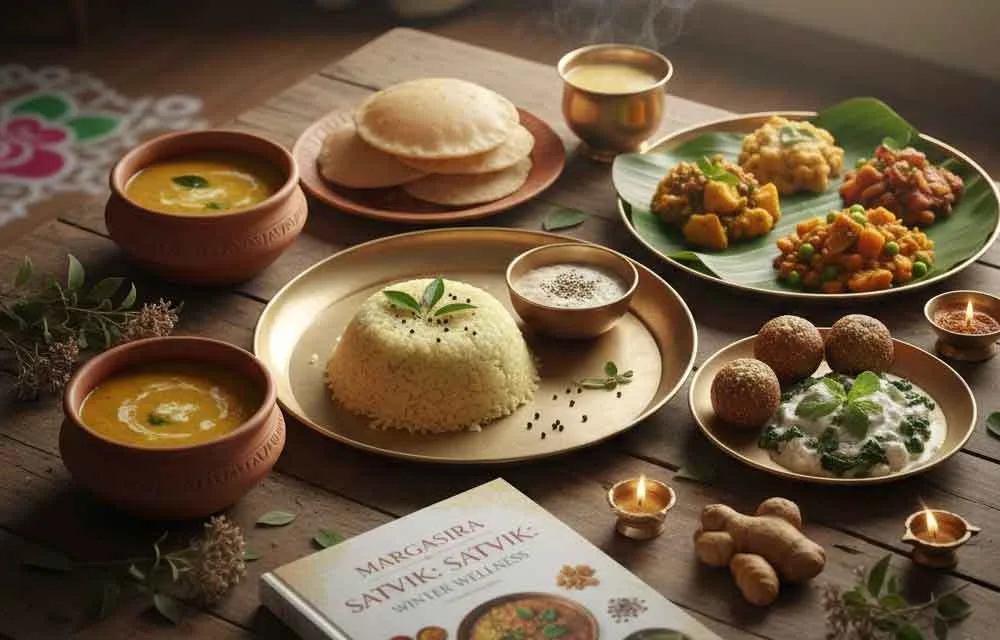
Quick answer: Many Hindu families cook without onion and garlic for naivedyam, on fasting and festival days, during months such as Karthika and Shravana, or all year. The custom rests on the idea of sattvic (pure, calming) food. To cook well without them, build flavour with asafoetida, ginger, tomato, cumin, curry leaves, coconut, tamarind and lemon. Most South Indian temple dishes already use no onion or garlic.
| Key facts | |
|---|---|
| Called | Sattvic or satvik cooking; "no onion no garlic" (NONG); Jain-style is a stricter, separate practice |
| Who keeps it | Many Vaishnava families and temples, many Brahmin households, and many families on puja and vrat days |
| When | Naivedyam; Ekadashi and other vrats; Navaratri; Karthika and Shravana months; shraddha days |
| Main flavour builders | Asafoetida (hing), ginger, tomato, cumin, mustard seeds, curry leaves, coconut, tamarind, lemon |
| Related | Dietary practices compared |
Why do many Hindus avoid onion and garlic?
The idea comes from the three gunas, the qualities of nature: sattva (clarity, calm), rajas (activity, passion) and tamas (heaviness, dullness). The Bhagavad Gita (17.8 to 17.10) describes sattvic foods as fresh, wholesome and pleasing, and contrasts them with foods that are too bitter, sour, salty, hot or stale.
The Gita does not name onion or garlic. Their exclusion comes from later texts on conduct and from the rules of particular traditions and temples, which class them as rajasic or tamasic and leave them out of food offered to the deity. Customs vary widely:
- Some families never use onion or garlic at all.
- Many leave them out only of naivedyam, or only on puja, vrat and festival days.
- Many South Indian temple kitchens cook without them, so temple-style dishes such as daddojanam, pulihora and sambar are naturally free of them.
- Months such as Karthika are kept by many families without onion and garlic; see Karthika Masam food rules.
This page describes a custom and how to cook within it. It makes no health claim for or against any ingredient.
How to build flavour without onion and garlic
Onion gives sweetness and body; garlic gives a sharp, savoury depth. Each has a substitute in the Indian kitchen.
| What onion or garlic usually does | What to use instead |
|---|---|
| Savoury depth (garlic) | A pinch of asafoetida (hing) fried in hot oil or ghee for a few seconds |
| Sweet, cooked base for a curry (onion) | Tomatoes cooked down until the oil separates; or grated bottle gourd, pumpkin or cabbage cooked soft |
| Body and thickness in a gravy | Cashew or melon-seed paste, coconut paste, roasted gram flour (besan), or yogurt |
| Fresh crunch in salads and raitas | Cucumber, carrot, radish, raw mango, pomegranate |
| Bite in chutneys | Ginger, green chilli, tamarind, roasted chana dal |
| Aroma | Cumin, mustard seeds, curry leaves, fennel, a little garam masala, coriander leaves |
Asafoetida: a little goes a long way. Fry a small pinch in the hot fat before the other spices; raw, it smells strong. Much compounded hing contains wheat or rice flour, so check the label if gluten matters.
Tomato: a few traditions also avoid tomato on certain fasting days. If yours does, use tamarind, lemon or yogurt for sourness.
A basic no-onion curry base
For a North Indian style gravy that serves 4, one common way:
- Heat 2 tablespoons of ghee or oil. Add 1 teaspoon cumin seeds, then a pinch of asafoetida.
- Add 1 tablespoon grated ginger and 1 chopped green chilli. Stir for 30 seconds.
- Add 2 medium tomatoes, pureed (about 250 g, 1 US cup). Cook on medium heat for 8 to 10 minutes until the paste thickens and oil shows at the edges.
- Add 1/2 teaspoon turmeric, 1 teaspoon ground coriander, 1/2 teaspoon chilli powder and salt. Cook 1 minute.
- Stir in 2 tablespoons of cashew paste (10 to 12 cashews soaked and ground) or 2 tablespoons of yogurt, whisked. Add water to the thickness you want.
- Add cooked paneer, potatoes, peas, chickpeas or mixed vegetables, and simmer 5 minutes. Finish with garam masala and coriander leaves.
The same base works for paneer, chole, rajma, aloo matar and dal makhani-style lentils.
South Indian dishes that never need onion or garlic
Many everyday South Indian dishes are already made without them, especially in temple and Brahmin home cooking:
- Rice dishes: pulihora (tamarind rice), daddojanam, lemon rice, coconut rice, ven pongal
- Sweets: paramannam, chakkara pongali, kesari
- No-cook: panakam, vadapappu and kosambari
- Everyday: sambar and rasam made the temple way (with hing), poriyal and thoran, kootu, majjiga pulusu or more kuzhambu, sundal
A week of no-onion, no-garlic meals
| Day | Lunch | Dinner |
|---|---|---|
| Monday | Rice, temple-style sambar, cabbage poriyal, curd | Chapati, aloo matar in the tomato-cashew base |
| Tuesday | Lemon rice, cucumber kosambari, papad | Moong dal khichdi with ghee, plain yogurt |
| Wednesday | Rice, tomato rasam, beans thoran, curd | Paneer in the tomato-cashew base, jeera rice |
| Thursday | Chana masala (no-onion base), rice | Ven pongal, coconut chutney |
| Friday | Pulihora, curd rice | Chapati, lauki (bottle gourd) sabzi, dal |
| Saturday | Rice, kootu, potato fry, curd | Vegetable upma, coconut chutney |
| Sunday | Rice, sambar, two vegetables, payasam | Puri, aloo sabzi (dry, with cumin and hing) |
Adjust for the days your family keeps vrat; Ekadashi and some other fasts also leave out grains.
Cooking this way abroad
- Asafoetida is sold at Indian grocers in the USA, UK, Canada, Australia, the Gulf and Southeast Asia. Buy a small tin; it keeps for months.
- Restaurants and ready meals: many restaurant gravies and ready-made pastes contain onion or garlic powder even when it is not obvious. Ask, or check the label for "onion powder", "garlic powder", "natural flavourings" and "spice extract".
- Jain-labelled food in Indian restaurants and grocers usually has no onion or garlic. Jain rules also leave out potatoes and other root vegetables, so the label tells you a dish is free of onion and garlic but not that it matches Hindu custom in every way.
- Stock cubes and soup bases almost always contain onion or garlic. Make plain vegetable stock with carrot, celery, tomato and herbs instead.
Frequently asked questions
Does the Bhagavad Gita forbid onion and garlic?
No. The Gita (17.8 to 17.10) describes sattvic, rajasic and tamasic food in general terms and does not name onion or garlic. Their exclusion comes from later conduct texts and from the rules of particular traditions and temples.
Is asafoetida a full substitute for garlic?
It gives a similar savoury note when fried in fat, but it is not the same. Use a small pinch; too much tastes bitter.
Are tomatoes sattvic?
Most families use tomatoes freely. A few traditions leave them out on some fasting days. Follow your own custom.
Is no-onion food the same as Jain food?
No. Jain food also leaves out potatoes, carrots, beetroot and other root vegetables, and follows other rules. Hindu no-onion cooking usually keeps root vegetables.
Can I offer food cooked with onion as naivedyam?
Many families would not. If you cook with onion for the family, set aside a portion of something cooked without it, or offer fruit or milk. See how to offer naivedyam at home.
Related guides
- Recipes hub
- How to offer naivedyam at home
- Dietary practices compared: sattvic, Jain, halal and more
- Karthika Masam food rules
- Daddojanam (temple-style curd rice)
- Panakam recipe
Sources
- Bhagavad Gita 17.8 to 17.10, text and translations at Gita Supersite, IIT Kanpur.
- HinduTone, Karthika Masam food rules, for month-long observances (kept consistent).
Customs differ by family, region and sampradaya; this guide describes common practice. Last reviewed: 12 November 2026.
Share this with family and friends
Send it on WhatsApp, post it, or copy the link.
More from Recipes
- Gujiya Recipe for Holi (Mawa Gujiya with a No-Khoya Option)
- Rauh di Kheer Recipe (Punjabi Rice Kheer Cooked in Sugarcane Juice)
- Medu Vadai Recipe (Ulundu Vadai for Pongal and Festival Days)
- Pongal Kootu Recipe (Mixed Vegetable and Dal Kootu)
- Sakkare Acchu Recipe (Karnataka Sugar Moulds for Sankranti)