Panakam Recipe (Jaggery, Ginger and Pepper Drink for Rama Navami)
Quick answer: Panakam is a no-cook drink of jaggery dissolved in water and flavoured with dry ginger, black pepper and cardamom, often with a squeeze of lemon. It is the best-known naivedyam for Sri Rama Navami in Telugu, Tamil and Kannada homes, offered with vadapappu and kosambari. Dissolve the ja
Quick answer: Panakam is a no-cook drink of jaggery dissolved in water and flavoured with dry ginger, black pepper and cardamom, often with a squeeze of lemon. It is the best-known naivedyam for Sri Rama Navami in Telugu, Tamil and Kannada homes, offered with vadapappu and kosambari. Dissolve the jaggery, strain out any grit, stir in the spices and offer it fresh.
| Key facts | |
|---|---|
| Dish | Sweet spiced jaggery water |
| Festival | Sri Rama Navami; also Narasimha Jayanti and summer pujas in many homes |
| Deity | Sri Rama; Lord Narasimha |
| Serves | 4 (small glasses) |
| Prep time | 10 minutes, plus 10 minutes to dissolve the jaggery |
| Cook time | 0 minutes (no cooking) |
| Allergens | None of the major allergens in the basic recipe; check jaggery and spice labels |
What is panakam?
Panakam (Telugu and Kannada; panagam in Tamil) comes from the Sanskrit panaka, a drink. It is jaggery water, sharpened with dry ginger and pepper and scented with cardamom. Nothing is cooked, so it can be made in minutes on the festival morning.
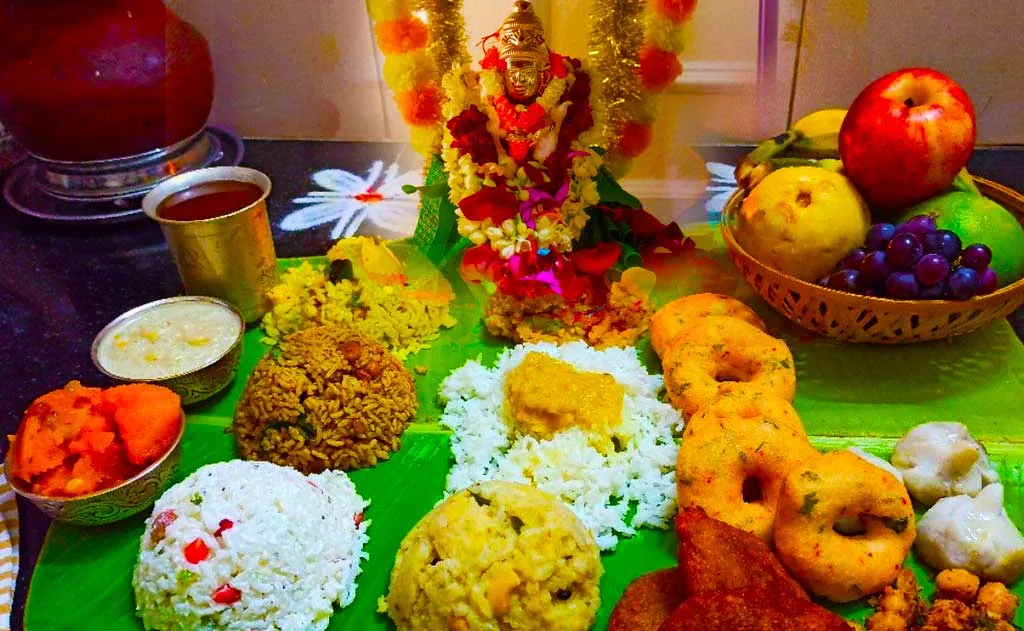
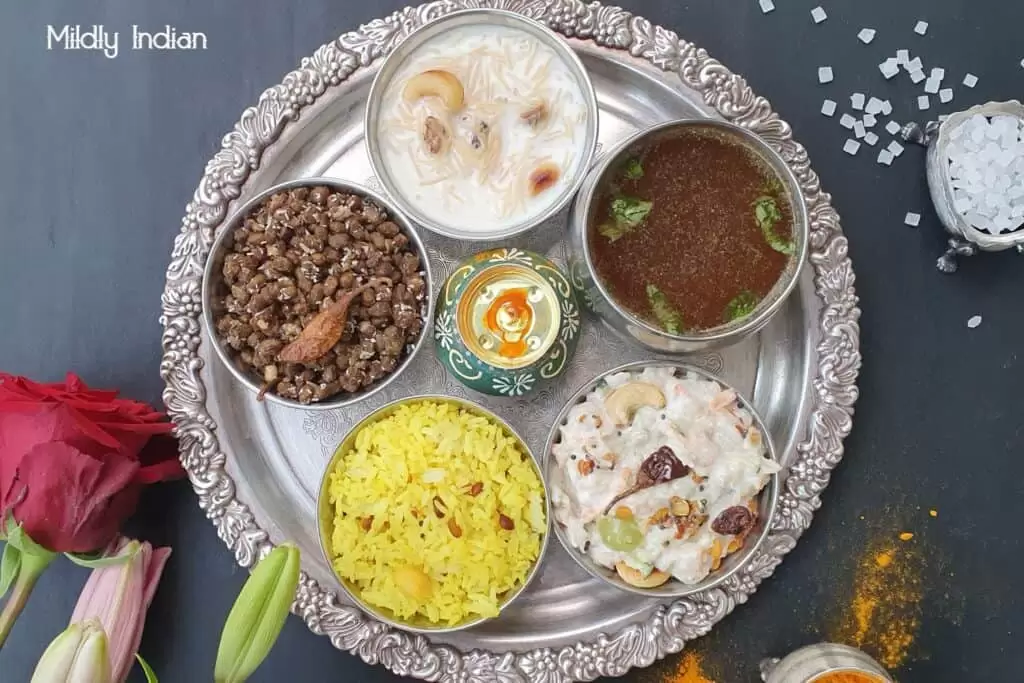
On Sri Rama Navami many South Indian families offer three simple things together: panakam, vadapappu and kosambari. Some add buttermilk (majjiga or neer mor). The festival falls in Chaitra, at the start of the hot season, and these offerings need no stove. That the drink was "Rama's favourite" is a popular saying, not something stated in the Valmiki Ramayana; families keep the custom because it is their tradition.
Panakam is also linked with Lord Narasimha. The hill shrine of Panakala Narasimha Swamy at Mangalagiri in Andhra Pradesh takes its name from the panakam offered there.
This page gives one common way to make it. Some homes leave out the lemon, some add a tulasi leaf or a pinch of edible camphor, and the sweetness varies. Follow your family's way where it differs.
Ingredients
- Jaggery, grated or crushed: 100 g (about 1/2 US cup, lightly packed)
- Water, drinking quality: 500 ml (about 2 US cups)
- Dry ginger powder (sonti or sukku): 1/4 teaspoon
- Black pepper, freshly crushed: 1/4 teaspoon
- Green cardamom: 2 pods, seeds crushed (or 1/4 teaspoon ground)
- Lemon juice (optional): 1 to 2 teaspoons
- Salt (optional): a small pinch
- Tulasi (holy basil) leaves (optional): 3 or 4
- Edible camphor (pacha karpuram, optional): a very small pinch
Use only food-grade edible camphor. Never use the camphor sold for aarti; it is not edible.
Method
- Put the jaggery in a bowl and pour the water over it.
- Leave it for 10 minutes, then stir until the jaggery has dissolved completely.
- Strain the jaggery water through a fine strainer or a clean muslin cloth to remove grit and fibres.
- Add the dry ginger, crushed pepper and cardamom. Stir well.
- Add the lemon juice and salt if your family uses them. Taste and adjust: add a little water if it is too sweet, or more jaggery if it is too thin.
- Drop in the tulasi leaves and the edible camphor, if using.
- Pour the naivedyam portion into a small clean cup or tumbler and offer it before anyone tastes the drink.
Notes for a smooth panakam
- Jaggery quality varies. Dark jaggery is stronger and earthier; pale jaggery is milder. Start with less and add more to taste.
- Lemon: many Telugu and Tamil homes add lemon; many others do not. Add it just before offering, as it can turn bitter if it stands for hours.
- Fresh ginger: if you have no dry ginger powder, crush a 1 cm piece of fresh ginger, stir it in and strain it out.
- Serving cold: the offering is made at room temperature. For the family afterwards you can chill it or add ice.
Panakam needs no cooking, so there is no pressure-cooker version. For a large group, multiply the quantities; the ratio stays the same.
Naivedyam notes
- Make panakam on the day, in a clean vessel, and offer it before tasting.
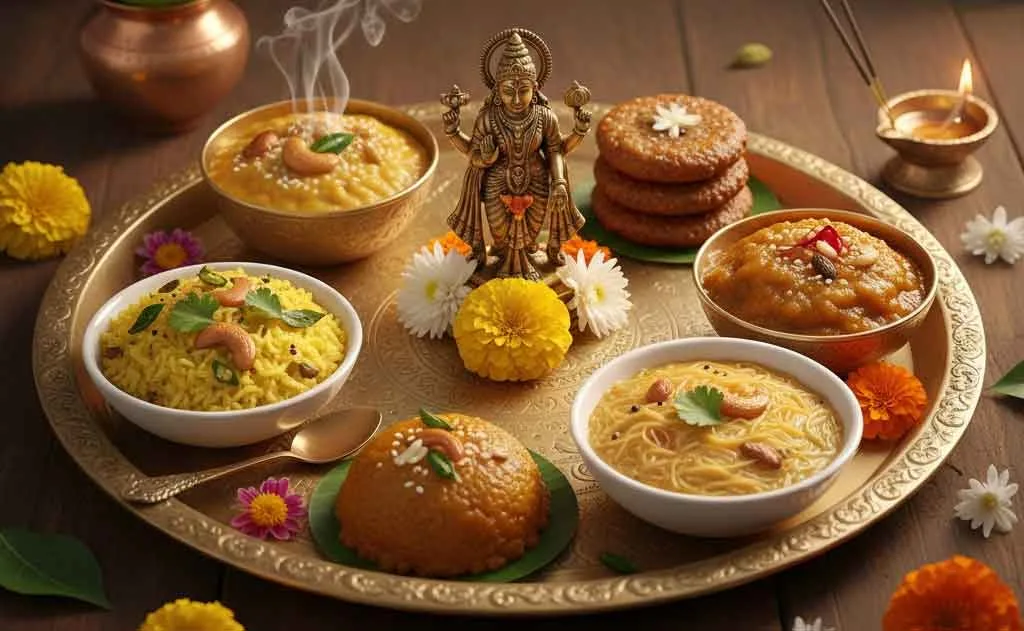
- It is usually offered beside vadapappu, kosambari and sometimes buttermilk, on a plate placed before the deity's image. See how to offer naivedyam at home.
- After the puja, panakam is shared as prasadam with family, neighbours and guests. At temples and community halls it is often given out in small cups.
- The festival date and puja time change every year; see Rama Navami 2027.
Jaggery and spice swaps for cooks abroad
| Where you live | Jaggery | Dry ginger and pepper |
|---|---|---|
| USA and Canada | Jaggery (gur, bellam) at Indian grocers; Mexican piloncillo or panela is a close substitute | Ground ginger from any supermarket works in place of sonti |
| UK | Jaggery at Indian grocers; dark muscovado sugar if you cannot find it | Ground ginger from supermarkets |
| Australia and New Zealand | Jaggery at Indian grocers; rapadura or panela in some health-food shops | Ground ginger from supermarkets |
| Gulf countries | Jaggery is easy to find at Indian supermarkets | Easy to find |
| Singapore and Malaysia | Indian jaggery in Little India markets; palm sugar (gula melaka) gives a different but pleasant flavour | Easy to find |
Brown sugar or palm sugar changes the taste but works if nothing else is available. Some families would use only jaggery for naivedyam.
Allergens and dietary notes
- The basic recipe contains none of the major food allergens.
- Some commercial jaggery is processed in facilities that handle other foods; check the label if allergies matter.
- Panakam is sweet: anyone who has been told to limit sugar should take a small cup and follow their own doctor's advice.
Storage
Drink panakam the same day. Keep any leftover covered in the fridge and use it within a day. Stir before serving, as the spices settle.
Frequently asked questions
Do you boil panakam?
No. Traditional panakam is not cooked. The jaggery is dissolved in drinking water and strained. If your water is not safe to drink untreated, boil it first and cool it before you start.
Why is panakam made on Rama Navami?
It is a long-standing custom in South Indian homes to offer panakam, vadapappu and kosambari on Rama Navami. The festival comes in the hot season, and these offerings need no cooking. The idea that Rama loved panakam is a popular saying rather than a statement from the Ramayana itself.
Can I use sugar instead of jaggery?
You can for the family drink, but it will taste different. Most families use jaggery for the naivedyam.
Is lemon part of traditional panakam?
Both ways are traditional. Many homes add lemon and many do not. Use what your family uses.
How much panakam should I make for a puja?
A small cup is enough for the offering. For the family and guests, plan about 120 ml (1/2 cup) per person.
Related recipes and guides
- Recipes hub
- Vadapappu and kosambari
- Daddojanam (curd rice)
- Panchamrit recipe
- Sri Rama Navami recipes and naivedyam
- Lord Rama: life and teachings
Sources
- HinduTone, Rama Navami 2027, for the festival and its dates.
- US Food and Drug Administration, Food Allergies, for the major allergens.
- US Food and Drug Administration, Safe Food Handling, for refrigerating leftovers.
Quantities are typical home proportions; jaggery sweetness varies, so adjust to taste. Last reviewed: 12 November 2026.
Share this with family and friends
Send it on WhatsApp, post it, or copy the link.
More from Recipes
- Cooking for Annadanam: A Menu and Quantities for 50 and 100
- Prasadam in an Instant Pot, Pressure Cooker or Rice Cooker
- Besan Laddu Recipe (Gram Flour Laddus for Naivedyam)
- Aravana Payasam Recipe (Sabarimala-Style Home Version)
- Boondi Laddu Recipe, with a Tirupati-Style Home Version