Ravana in the Ramayana: Scholar, King and Antagonist
Quick answer: Ravana is the ten-headed king of Lanka and the antagonist of the Ramayana. A grandson of the sage Pulastya, learned and powerful, he won a boon from Brahma that made him safe from gods and other divine beings, but not from humans. He carried off Sita, refused every warning to return he
Quick answer: Ravana is the ten-headed king of Lanka and the antagonist of the Ramayana. A grandson of the sage Pulastya, learned and powerful, he won a boon from Brahma that made him safe from gods and other divine beings, but not from humans. He carried off Sita, refused every warning to return her, and was killed by Rama in the war at Lanka, after which Rama had his funeral rites performed with honour.
Ravana is one of the most complex villains in Indian literature: Valmiki shows his splendour and learning as well as his cruelty and pride. This page follows his story in Valmiki's Ramayana, with kanda and sarga numbers from the edition on IIT Kanpur's site, and notes where later traditions add to it.
| Ravana at a glance | |
|---|---|
| Other names | Dashagriva and Dashanana (ten-headed), Lankeshvara (lord of Lanka), Paulastya (descendant of Pulastya) |
| Family | Son of the sage Vishravas and the rakshasi Kaikasi; grandson of Pulastya; half-brother of Kubera |
| Brothers and sister | Kumbhakarna, Vibhishana, Shurpanakha |
| Wife | Mandodari (chief queen) |
| Sons | Indrajit (Meghanada), Akshayakumara, Atikaya and others |
| Kingdom | Lanka |
| Killed by | Rama, with the Brahmastra (Yuddha Kanda, sarga 111) |
Birth, boon and Lanka
Ravana's early history is told in the Uttara Kanda. He is the son of the sage Vishravas, son of Pulastya, and the rakshasi Kaikasi. Through long austerities he won a boon from Brahma that he could not be killed by gods, demons, yakshas and other such beings; in his pride he did not think to ask protection from humans. He took Lanka and the flying chariot Pushpaka from his half-brother Kubera (see Kubera and Ravana).
The Bala Kanda already gives the reason for Rama's birth in the same terms: the gods, oppressed by Ravana, ask Vishnu to be born as a man, because a man is the one being Ravana's boon does not cover (Bala Kanda, sarga 15).
Tradition counts the Uttara Kanda as Valmiki's; many scholars regard it as later. See the Ramayana guide.
The abduction of Sita
After Rama destroys the army of Khara and Dushana at Janasthana, the survivor Akampana tells Ravana, and the rakshasa Maricha advises him against war (Aranya Kanda, sarga 31). Then Shurpanakha, disfigured by Lakshmana, comes to Lanka, condemns Ravana's carelessness as a king and describes Sita's beauty (sargas 32 to 34). Ravana forces Maricha, on pain of death, to lure Rama away as a golden deer (sargas 35 to 41), comes to Sita disguised as an ascetic and carries her off, fighting and mortally wounding Jatayu on the way (sargas 46 to 51). In Lanka he shows her his wealth and, when she refuses him, confines her in the Ashoka grove and gives her twelve months to yield (sargas 55 and 56; 3.56.24).
Warned again and again
Valmiki gives Ravana many chances to turn back:
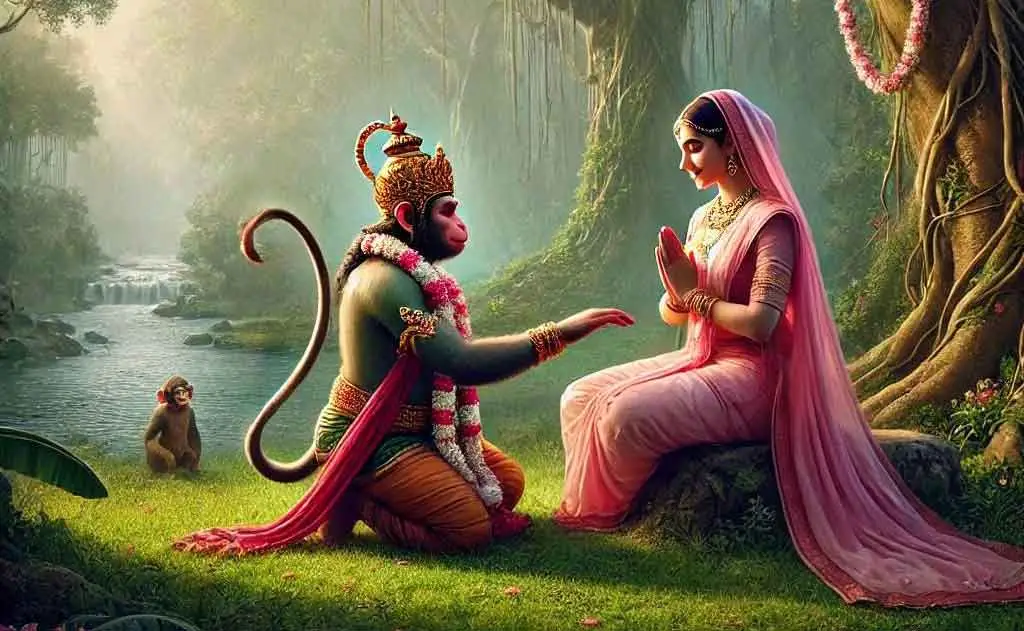
- Hanuman, brought before him, sees his splendour and marvels at it, and then warns him to return Sita (Sundara Kanda, sargas 49 to 51).
- Vibhishana, his younger brother, advises him in council to give Sita back and points to evil omens. Rebuked harshly, he leaves Lanka for Rama's camp (Yuddha Kanda, sargas 9 to 16).
- Malyavan, an elder rakshasa, urges peace (sarga 35).
- Kumbhakarna, woken to fight, tells him plainly that he has acted wrongly, but fights for him out of loyalty (sarga 63).
- Angada brings Rama's last offer before the battle (sarga 41).
Ravana also tells his council of a curse from Brahma that prevents him from taking any woman by force (Yuddha Kanda, sarga 13), which is why he tries to win Sita by threats and promises instead.
The war
Ravana sends his generals one after another (Yuddha Kanda, sargas 51 to 58). When he himself takes the field, Rama defeats him and lets him go, telling him to return rested (sarga 59). He has Kumbhakarna woken (sarga 60) and loses him, his sons and his son Indrajit (sargas 67 to 91). Maddened by grief at Indrajit's death, he sets out to kill Sita and is stopped by his minister Suparshva (sarga 93).
In the final battle he strikes Lakshmana down with a javelin (sargas 101 and 102). Rama fights him from Indra's chariot (sarga 103); before the last duel the sage Agastya teaches Rama the Aditya Hridayam (sarga 107). After a long fight, Rama kills Ravana with the Brahmastra (sarga 111).
After his death
Rama tells Vibhishana to perform his brother's funeral rites, saying that enmity ends with death (6.112.25). Ravana's queens and Mandodari lament him (sargas 113 and 114). Vibhishana becomes king of Lanka.
Scholar and devotee: what later traditions say
- Learning. Valmiki's Hanuman admires Ravana's majesty (Sundara Kanda, sarga 49), and Ravana is described as learned in the Vedas. Later tradition makes him a great scholar of music, medicine and astrology.
- Devotion to Shiva. The Shiva Tandava Stotram is attributed to Ravana by tradition. The story of Ravana lifting Mount Kailasa is told in the Uttara Kanda.
- The ten heads are read in many ways, from his ten-fold learning to his ten senses unchecked; see the ten heads of Ravana.
- Ravana teaching Lakshmana on his deathbed is a popular later story, not in Valmiki.
- Regional views. In some regions and communities Ravana is honoured; in others his effigy is burned at Dussehra. See Ravana Dahan.
Frequently asked questions
Who was Ravana's father?
The sage Vishravas, son of Pulastya. His mother was the rakshasi Kaikasi (Uttara Kanda).
Why could only a human kill Ravana?
His boon from Brahma protected him from gods and other divine and demonic beings, but he did not ask protection from humans (Bala Kanda, sarga 15).
How did Rama kill Ravana?
With the Brahmastra, in the final duel (Yuddha Kanda, sarga 111).
Did Ravana touch Sita?
Valmiki says Ravana seized her when he carried her off (Aranya Kanda, sarga 49). In Lanka he did not force her, and he tells his council of a curse from Brahma that prevents him from taking any woman by force (Yuddha Kanda, sarga 13).
Was Ravana a devotee of Shiva?
So tradition holds: the Shiva Tandava Stotram is attributed to him, and the Uttara Kanda tells of his encounter with Shiva at Kailasa.
Related reading
- Ramayana: The Complete Guide
- Yuddha Kanda summary
- Aranya Kanda summary
- Sita: Her Life in the Ramayana
- Ten heads of Ravana: meaning and interpretations
Sources
- Valmiki Ramayana, Sanskrit text with English translation (Rashtriya Sanskrit Vidyapeetha, Tirupati), IIT Kanpur: heritage.iitk.ac.in/VRAM. References are kanda and sarga in this edition.
- John Brockington, The Sanskrit Epics (Brill, 1998), for the scholarly view of the Uttara Kanda.
Last reviewed: 12 November 2026.
Share this with family and friends
Send it on WhatsApp, post it, or copy the link.
More from Stories
- Ghatotkacha in the Mahabharata: Birth, Battles and Death
- Makar Sankranti and Pongal Stories, With Their Sources
- Lava and Kusha: The Twin Sons of Rama and Sita
- Sita's Agni Pariksha: What Valmiki, the Adhyatma Ramayana and Tulsidas Say
- Uttara Kanda Summary: The Last Book of the Ramayana and the Debate Over Its Authorship