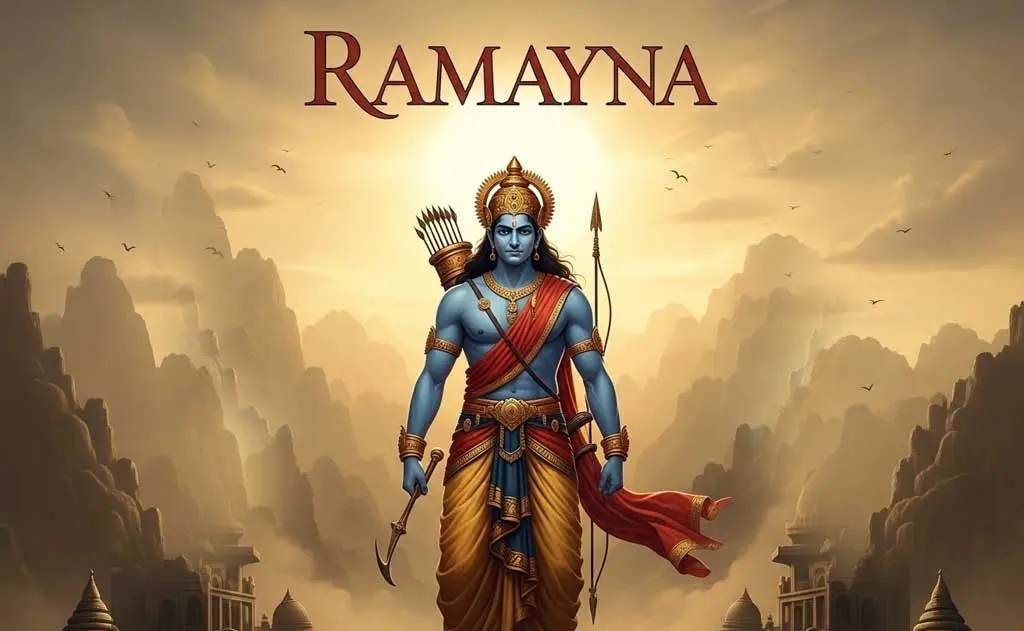
Ramayana: The Complete Guide
Quick answer: The Ramayana is the Sanskrit epic of Rama, prince of Ayodhya, ascribed to the sage Valmiki. It tells how Rama is exiled to the forest for fourteen years with his wife Sita and brother Lakshmana, how Ravana, king of Lanka, carries Sita away, and how Rama, with Hanuman and the vanara arm
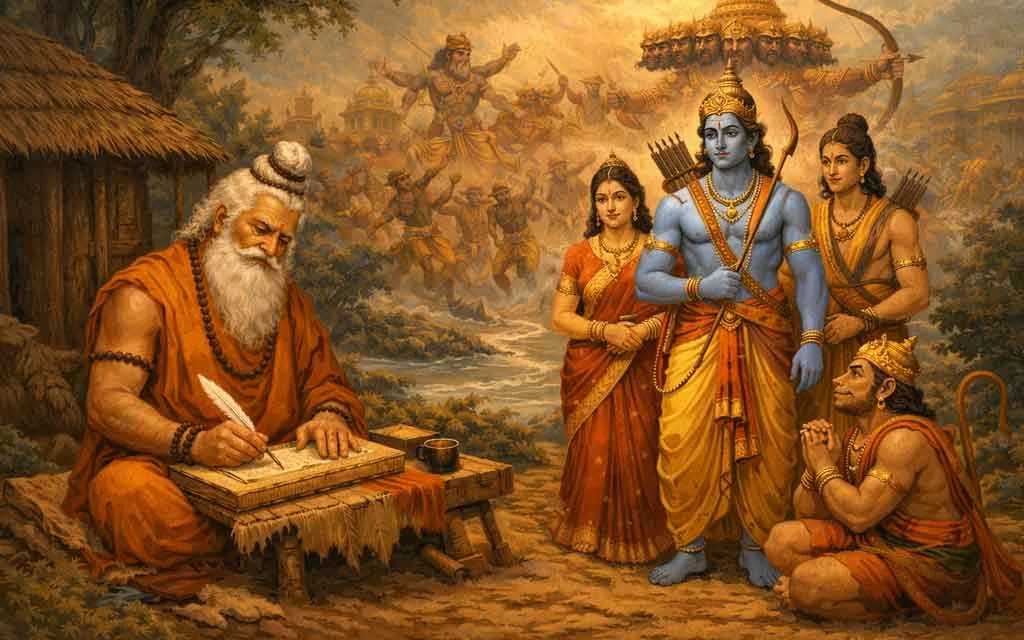
Quick answer: The Ramayana is the Sanskrit epic of Rama, prince of Ayodhya, ascribed to the sage Valmiki. It tells how Rama is exiled to the forest for fourteen years with his wife Sita and brother Lakshmana, how Ravana, king of Lanka, carries Sita away, and how Rama, with Hanuman and the vanara army, defeats Ravana and returns to rule. It has seven books called kandas.
Hindus call the Ramayana the adi kavya, the first poem, and Valmiki the adi kavi, the first poet. Over two thousand years it has been retold in almost every Indian language and across Southeast Asia, sung in temples and homes, and acted every autumn in the Ramlila. This guide explains what the epic contains and how its versions relate to each other, and it links to every Ramayana page on HinduTone.
| The Ramayana at a glance | |
|---|---|
| Traditional author | Valmiki |
| Language | Sanskrit |
| Books | Seven kandas: Bala, Ayodhya, Aranya, Kishkindha, Sundara, Yuddha, Uttara |
| Chapters | 648 sargas in the edition on IIT Kanpur's Valmiki Ramayana site (77, 119, 75, 67, 68, 131 and 111); other editions differ |
| Length | Traditionally 24,000 verses; the Baroda critical edition is shorter |
| Main characters | Rama, Sita, Lakshmana, Bharata, Hanuman, Sugriva, Ravana, Vibhishana |
| Dating | Hindu tradition places Rama in the Treta Yuga; scholars usually date the composition of the text between about the 5th century BCE and the early centuries CE, with the first and last books later than the core |
| Best-known later versions | Tulsidas's Ramcharitmanas (Awadhi), Kamban's Ramavataram (Tamil), the Adhyatma Ramayana (Sanskrit), the Ranganatha and Molla Ramayanas (Telugu) |
New to the Ramayana? Start here
- Read the story once, simply: Ramayana story in simple English, kanda by kanda.
- Then follow it book by book: Bala, Ayodhya, Aranya, Kishkindha, Sundara and Yuddha Kanda summaries.
- Meet the main characters: Rama, Sita, Hanuman and Ravana.
- When you want the full text, choose a complete translation of Valmiki and read a little every day.
The story in one paragraph
King Dasharatha of Ayodhya has four sons: Rama, Bharata, Lakshmana and Shatrughna. Rama wins Sita, daughter of King Janaka, by breaking Shiva's bow. On the eve of Rama's coronation, Queen Kaikeyi claims two boons that Dasharatha once promised her: Bharata as king and Rama in the forest for fourteen years. Rama goes, with Sita and Lakshmana; Dasharatha dies of grief; Bharata refuses the throne and rules in Rama's name with Rama's sandals on the throne. In the forest Ravana carries Sita off to Lanka. Rama allies with the vanara king Sugriva; Hanuman crosses the sea, finds Sita and burns Lanka; the army builds a bridge to Lanka, and in the war Rama kills Ravana. Sita is restored, and Rama returns to Ayodhya to be crowned.
The seven kandas of Valmiki's Ramayana
| Kanda | What happens | Sargas (IITK edition) |
|---|---|---|
| Bala Kanda (Book of Youth) | Valmiki and Narada; the birth of the four princes; Vishvamitra takes Rama and Lakshmana to protect his sacrifice; Ahalya; the breaking of Shiva's bow; the four weddings | 77 |
| Ayodhya Kanda | The planned coronation, Kaikeyi's boons, the exile, Dasharatha's death, Bharata's refusal and the sandals | 119 |
| Aranya Kanda (Book of the Forest) | Life among the sages, Shurpanakha, the golden deer, the abduction of Sita, Jatayu, Shabari | 75 |
| Kishkindha Kanda | Meeting Hanuman and Sugriva, the death of Vali, the search parties, Sampati's news | 67 |
| Sundara Kanda | Hanuman crosses the sea, finds Sita, burns Lanka and returns with her jewel | 68 |
| Yuddha Kanda (Book of the War) | Vibhishana joins Rama, the bridge, the battle, the deaths of Kumbhakarna, Indrajit and Ravana, Sita's ordeal by fire, the return and coronation | 131 |
| Uttara Kanda (Later Book) | Ravana's earlier history, Sita's banishment, the birth of Lava and Kusha, Sita's return to the earth and Rama's departure | 111 |
Tradition counts all seven books as Valmiki's. Many scholars regard the Bala and Uttara Kandas as later additions to an older core of five books. Both views are held by serious readers.
For the full chapter-by-chapter retelling on this site, see Valmiki Ramayana: the complete story, chapter by chapter.
The main characters
Ayodhya. Rama, eldest son of Dasharatha and Kausalya; Sita, his wife; Lakshmana and Shatrughna, sons of Sumitra; Bharata, son of Kaikeyi; Urmila, Lakshmana's wife; the sages Vasishtha and Vishvamitra.
The forest and Kishkindha. The vulture Jatayu and his brother Sampati; Shabari; Hanuman; Sugriva and his brother Vali; Angada, Vali's son; Jambavan, king of the bears; Nala, who builds the bridge.
Lanka. Ravana, the ten-headed king (see the ten heads of Ravana and how Ravana took Lanka from Kubera); his brothers Kumbhakarna and Vibhishana; his son Indrajit (Meghanada); his queen Mandodari; his sister Shurpanakha.
One story, many Ramayanas
Valmiki's is the oldest surviving Ramayana, but it is not the only one Hindus read and recite. Each of the following is a work in its own right, and each changes the story in places:
- Ramcharitmanas, by Tulsidas, in Awadhi (16th century). The Ramayana of most North Indian homes; its Sundar Kand is sung on Tuesdays and Saturdays.
- Kamba Ramayanam (Ramavataram), by Kamban, in Tamil (dated variously between the 9th and 12th centuries).
- Adhyatma Ramayana, in Sanskrit, which presents Rama as the Supreme and is read in Kerala in the month of Karkidakam in the Malayalam version of Thunchaththu Ezhuthachan.
- Ranganatha Ramayanam and Molla Ramayanam in Telugu.
- Ramlila performances, the stage tradition of North India; see Ramlila in India and beyond.
- Ramayanas beyond India: the Ramakien of Thailand, the Reamker of Cambodia and the Kakawin Ramayana of Java.
For an overview of the regional versions, read Ramayana variations across Indian traditions.
Not in Valmiki, though widely told. The Lakshmana Rekha drawn around the cottage; Shabari tasting the berries before offering them to Rama; Ahalya turned to stone (in Valmiki she does penance unseen, living on air). These are later and regional traditions, and HinduTone labels them as such.
Reading and reciting the Ramayana
- Daily reading. Many families read a few sargas a day and finish the whole epic in a year, or read one kanda in a set period.
- Sundara Kanda parayanam. The fifth book is often read on its own as a devotional reading.
- Stotras from the Ramayana tradition. The Rama Raksha Stotram is attributed to the sage Budha Kaushika and is recited for protection.
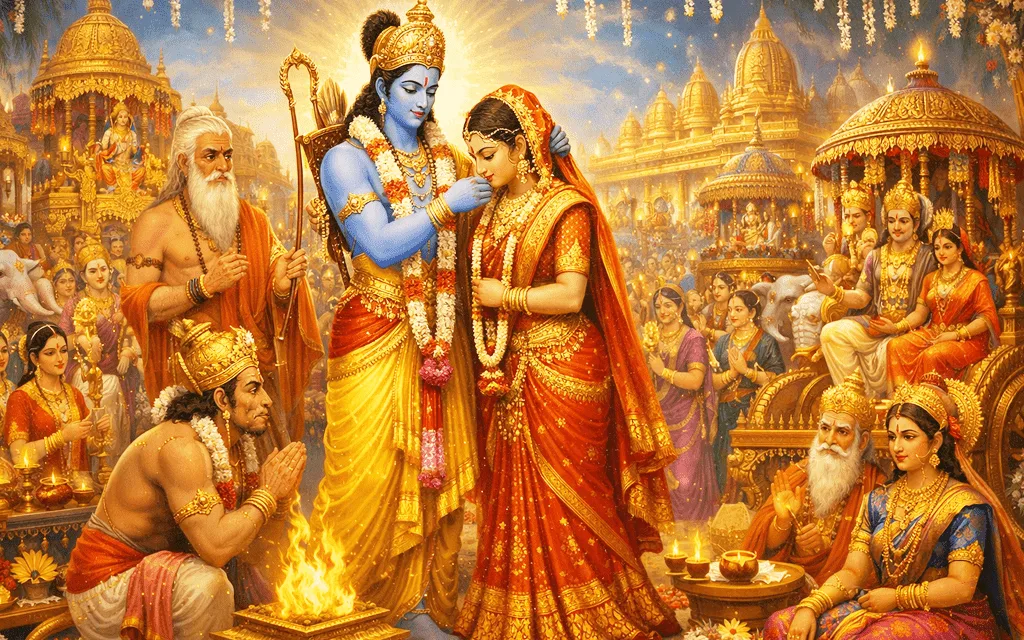
- Festivals. Sri Rama Navami (Rama's birth), Vivah Panchami (the wedding of Rama and Sita, see Ram Sita Vivah Katha), Dussehra (the victory over Ravana) and Diwali (the return to Ayodhya in North Indian tradition).
Ramayana places
Ayodhya on the Sarayu; Mithila (Janakpur in Nepal); Chitrakuta; Panchavati near Nashik; Kishkindha near Hampi; Rameswaram and Dhanushkodi; and Bhadrachalam on the Godavari, a great centre of Rama worship in Telugu country (see the Bhadrachalam temple guide). For the traditional route of the exile, see the route travelled by Sri Rama during the vanavasa.
Frequently asked questions
Who wrote the Ramayana?
Tradition ascribes it to Valmiki, who also appears in it: in the Uttara Kanda, Sita lives in his hermitage. Scholars see the text as composed over several centuries.
How many kandas are there?
Seven: Bala, Ayodhya, Aranya, Kishkindha, Sundara, Yuddha and Uttara.
How many verses does the Ramayana have?
Traditionally 24,000. The number varies with the edition; the critical edition prepared at Baroda is shorter.
How long was Rama's exile?
Fourteen years.
Is the Ramcharitmanas the same as the Ramayana?
It is a different poem on the same story, written by Tulsidas in Awadhi in the 16th century, many centuries after Valmiki's text. It differs in many details and in its devotional emphasis.
What is the difference between the Ramayana and the Mahabharata?
The Ramayana tells one hero's story with a clear ideal of dharma; the Mahabharata, about four times longer, tells the story of a family at war and dwells on hard moral choices. See the Mahabharata guide.
Which kanda should I read first?
The Sundara Kanda is the usual first choice for devotional reading. For the story, begin at the Bala Kanda or with a simple retelling.
Is the Ramayana history?
Hindu tradition regards it as itihasa, an account of what happened, set in the Treta Yuga. Historians treat it as an epic poem whose historical basis cannot be established. Both views are widely held.
Sources
- Valmiki Ramayana, Sanskrit text with English translation (Rashtriya Sanskrit Vidyapeetha, Tirupati), IIT Kanpur: heritage.iitk.ac.in/VRAM. Sarga counts from this site's chapter list, checked 12 November 2026.
- The Valmiki Ramayana, critical edition, ed. G. H. Bhatt and others (Oriental Institute, Baroda, 1960 to 1975).
- John Brockington, The Sanskrit Epics (Brill, 1998), for dating and the later layers.
- Paula Richman (ed.), Many Ramayanas: The Diversity of a Narrative Tradition in South Asia (University of California Press, 1991).
Last reviewed: 12 November 2026.
Share this with family and friends
Send it on WhatsApp, post it, or copy the link.
More from Stories
- Kishkindha Kanda Summary: Hanuman, Sugriva and the Death of Vali
- Aranya Kanda Summary: The Forest Years and Sita's Abduction
- Ayodhya Kanda Summary: Kaikeyi's Boons and Rama's Exile
- Bala Kanda Summary: Rama's Birth, Youth and Wedding
- Mahabharata Story Summary: From Shantanu to the Final Journey