Bhog Khichuri and Labra Recipe for Durga Puja
Quick answer: Bhog khichuri is the Bengali festival khichdi of fragrant short-grain rice and dry-roasted moong dal, cooked with ghee, ginger, cumin and vegetables, without onion or garlic. It is offered to Goddess Durga, above all on Ashtami, with labra, a mixed-vegetable dish seasoned with panch ph
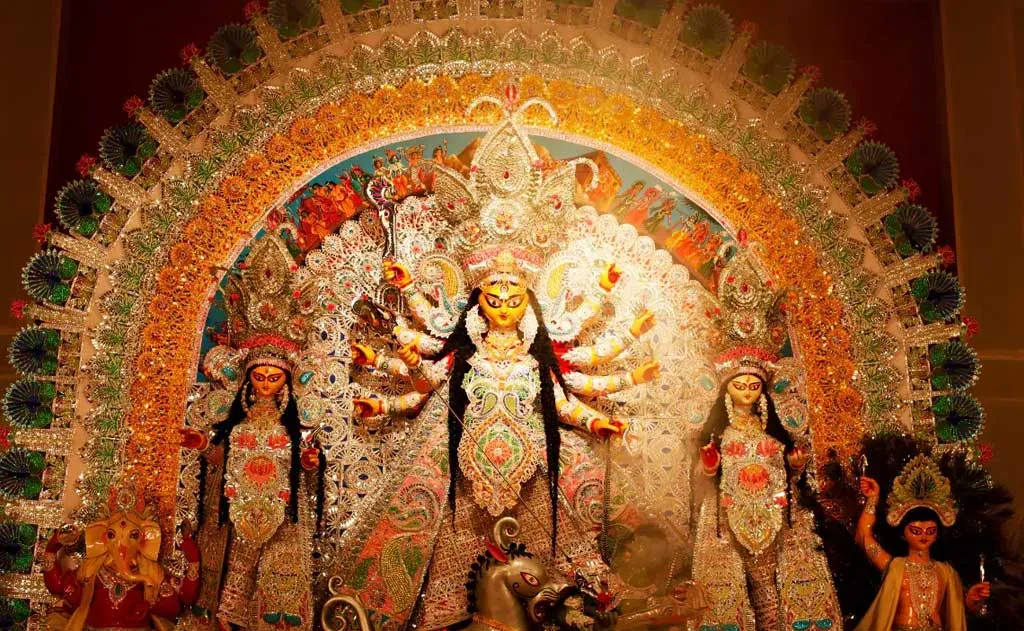
Quick answer: Bhog khichuri is the Bengali festival khichdi of fragrant short-grain rice and dry-roasted moong dal, cooked with ghee, ginger, cumin and vegetables, without onion or garlic. It is offered to Goddess Durga, above all on Ashtami, with labra, a mixed-vegetable dish seasoned with panch phoron. Roast the dal until it smells nutty; that is what gives bhog khichuri its taste.
| Key facts | |
|---|---|
| Dish | Rice and roasted moong dal khichdi (bhog khichuri) with mixed vegetables (labra) |
| Festival | Durga Puja (especially Ashtami), Kojagari Lakshmi Puja, Saraswati Puja, Bengali community pujas |
| Deity | Durga, Lakshmi, Saraswati |
| Serves | 6 |
| Prep time | 20 minutes |
| Cook time | 45 minutes for both dishes |
| Allergens | Milk (ghee); legumes (moong dal); some asafoetida contains wheat |
What are bhog khichuri and labra?
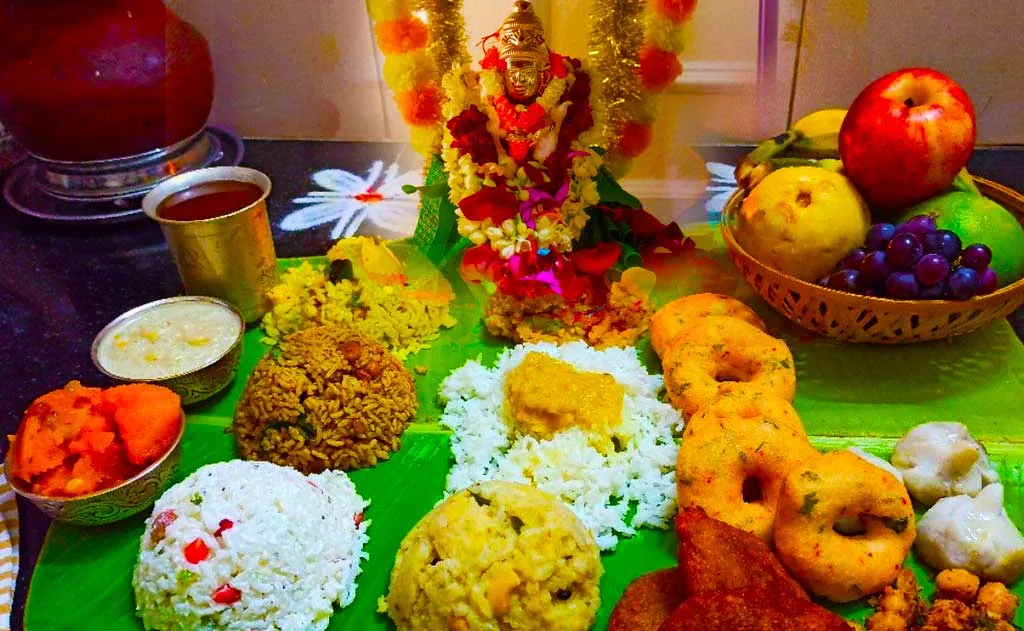
In Bengal, bhog is the food offered to the deity, and khichuri is the Bengali word for khichdi. At Durga Puja, community and household pujas cook a large pot of khichuri as the goddess's bhog and serve it to everyone after the offering, usually with labra (a mixed vegetable dish), fried vegetables (bhaja), a sweet tomato or dates chutney and payesh. Bengali families serve the same menu at Kojagari Lakshmi Puja and Saraswati Puja.
The bhog version differs from an everyday khichdi: it uses no onion or garlic, the moong dal is dry-roasted first, and it is finished with ghee. The rice is traditionally gobindobhog, a small fragrant Bengal rice.
These are one common way to make each dish. Every para (neighbourhood) puja and every family has its own version; follow yours where it differs.
Ingredients
For the bhog khichuri
- Gobindobhog rice (or another short-grain fragrant rice): 200 g (1 US cup)
- Split yellow moong dal: 200 g (1 US cup)
- Water: 1.5 to 1.75 litres (6 to 7 US cups), hot
- Potatoes, peeled and halved: 2 medium (about 300 g)
- Cauliflower florets: 200 g (about 2 US cups)
- Green peas, fresh or frozen: 100 g (3/4 US cup)
- Tomato, chopped (optional): 1 medium
- Ghee: 3 tablespoons (about 40 ml), plus 1 tablespoon to finish
- Bay leaves: 2
- Whole cumin seeds: 1 teaspoon
- Dried red chillies: 2
- Cinnamon: 2 cm stick; green cardamom: 3 pods; cloves: 3
- Fresh ginger paste: 1 tablespoon (about 15 g)
- Ground turmeric: 1 teaspoon
- Ground cumin: 1 teaspoon
- Green chillies, slit: 2
- Salt: 2 teaspoons, or to taste
- Sugar: 1 teaspoon
- Garam masala (optional): 1/2 teaspoon
For the labra
- Mixed vegetables cut into 3 cm pieces: about 750 g (6 US cups) in total, for example pumpkin, potato, sweet potato, eggplant (brinjal), radish, flat beans and raw banana
- Mustard oil or another oil: 2 tablespoons (30 ml)
- Panch phoron (Bengali five-spice): 1 teaspoon
- Dried red chilli: 1
- Ground turmeric: 1/2 teaspoon
- Ginger paste: 1 teaspoon
- Salt: 1 teaspoon, or to taste
- Sugar: 1 teaspoon
- Ghee: 1 teaspoon to finish
Method
- Roast the dal. Dry-roast the moong dal in a heavy pan on medium-low heat, stirring constantly, for 6 to 8 minutes until it turns light golden and smells nutty. Tip it out to cool, then wash it with the rice and drain.
- Fry the vegetables. In a large heavy pot, heat 1 tablespoon of ghee. Fry the potatoes and cauliflower with a pinch of turmeric and salt for 4 to 5 minutes until lightly browned. Lift them out.
- Temper. Add 2 tablespoons of ghee. Add the bay leaves, cumin seeds, red chillies, cinnamon, cardamom and cloves and let them sizzle for 30 seconds.
- Add the ginger paste, turmeric, ground cumin and green chillies, with a splash of water. Stir for a minute until the raw smell of ginger goes. Add the tomato, if using, and cook until soft.
- Cook the khichuri. Add the drained rice and dal and stir for 2 minutes. Pour in about 1.5 litres of hot water, add salt and sugar, and bring to a boil.
- Lower the heat, partly cover and simmer for 15 minutes, stirring now and then.
- Add the fried potatoes, cauliflower and the peas. Cook another 10 to 12 minutes until the rice and dal are soft and the vegetables are done. Add more hot water if it becomes too thick; bhog khichuri should be soft and flowing, not dry.
- Stir in the last tablespoon of ghee and the garam masala. Turn off the heat.
- Make the labra. Heat the oil in a wide pan (if using mustard oil, heat until it just smokes, then lower the heat). Add the panch phoron and red chilli and let them crackle.
- Add the firmer vegetables first (potato, sweet potato, raw banana, radish), then the softer ones (pumpkin, eggplant, beans). Add turmeric, ginger paste and salt. Stir, cover and cook on low heat for 15 to 20 minutes, with a splash of water if needed, until everything is tender and the pumpkin starts to break down.
- Add the sugar and ghee, mix gently and turn off the heat.
- Set aside the bhog portions of khichuri and labra in clean bowls and offer them before anyone tastes.
Notes and variations
- Consistency: khichuri thickens a great deal as it stands. Families who serve it later keep a kettle of hot water to loosen it.
- Roasting: roast the dal patiently on medium-low heat; burnt dal makes the whole pot bitter.
- Gobindobhog substitute: any small-grain fragrant rice works. Basmati is drier and less traditional, but usable.
- Vegetables in labra follow the season; the dish is meant to use many vegetables together.
- Mustard oil: many Bengali kitchens use it for labra. Ghee and other oils are also used.
Pressure-cooker and Instant Pot versions
Pressure cooker (5 litre or larger): Follow steps 1 to 4 in the cooker. Add the rice, dal, potatoes, cauliflower, salt, sugar and 1.25 litres (5 cups) of hot water. Cook for 2 whistles on medium heat and let the pressure drop naturally. Open, add the peas and a little hot water, and simmer 3 minutes. Finish with ghee.
Instant Pot (6 quart): Use Sauté for steps 1 to 4. Add rice, dal, vegetables and 5 cups of water, then Pressure Cook (high) for 6 minutes with a 10-minute natural release. Stir in the peas and ghee on Sauté.
The labra is best made in an open pan.
Naivedyam notes
- Bhog is cooked without onion and garlic, and without tasting.
- At community pujas the bhog is offered to the goddess first, then served to everyone seated in rows, usually on leaf plates.
- For the Durga Puja dates and Sandhi Puja timing in a given year, see Sandhi Puja. For other Lakshmi bhog customs, see Kojagari Lakshmi Puja.
- See how to offer naivedyam at home for the steps of the offering.
Swaps for cooks abroad
| Where you live | Gobindobhog rice | Panch phoron and mustard oil |
|---|---|---|
| USA and Canada | Bengali and Bangladeshi grocers; otherwise any small-grain fragrant rice | Indian and Bangladeshi grocers. Some mustard oil sold in the USA is labelled "for external use only"; use another oil for cooking if so |
| UK | Bangladeshi and Indian grocers, widely available | Easy to find |
| Australia and New Zealand | Indian and Bangladeshi grocers | Indian grocers |
| Gulf countries | Bangladeshi and Indian supermarkets | Easy to find |
| Singapore and Malaysia | Indian grocers in Little India; otherwise short-grain fragrant rice | Easy to find |
To make panch phoron yourself, mix equal parts of cumin seeds, fennel seeds, black mustard seeds, nigella seeds (kalonji) and fenugreek seeds.
Allergens and dietary notes
- Milk: ghee. Use oil throughout for a vegan version for the family.
- Legumes: moong dal.
- Mustard: mustard seeds in panch phoron and mustard oil. Mustard is a regulated allergen in the UK, the EU and Canada.
- Gluten: rice and dal are gluten-free; if you add asafoetida, check that it contains no wheat.
Storage
Cool leftovers quickly and refrigerate within 2 hours in shallow containers; use within 2 days. Reheat with hot water until steaming throughout. Cooked rice left at room temperature for long periods is a known food-safety risk, so do not leave a big pot standing out for hours after the puja.
Frequently asked questions
What makes bhog khichuri different from ordinary khichdi?
The moong dal is dry-roasted first, the dish is cooked with ghee and whole spices, no onion or garlic is used, and it is made soft and flowing. It is first offered to the deity.
Which day of Durga Puja is khichuri bhog served?
Many pujas serve khichuri bhog on Ashtami, and some on other days too. Practice varies by puja committee and family.
Can I use basmati rice?
Yes, though gobindobhog or another small fragrant rice is traditional and gives a softer, more aromatic khichuri.
What is labra?
A Bengali mixed-vegetable dish seasoned with panch phoron, cooked until the vegetables are soft and pumpkin melts into them. It is a standard partner to bhog khichuri.
How do I scale bhog khichuri for a community puja?
Multiply the quantities and use a wide, heavy pot, stirring often. For planning large quantities, allow about 60 to 70 g of rice and the same of dal per person. Cook in batches if your largest pot is less than twice the volume of the raw ingredients and water.
Related recipes and guides
- Recipes hub
- Types of payasam, kheer and payesh
- Naivedyam by festival
- Bijoya Dashami sweets: narkel naru and nimki
- Navratri bhog and prasad
- Sattvic cooking without onion and garlic
Sources
- US Food and Drug Administration, Safe Food Handling, for cooling and refrigerating cooked food.
- Food Standards Agency (UK), Allergen guidance for consumers, for mustard among the regulated allergens.
Quantities are typical home proportions. Last reviewed: 12 November 2026.
Share this with family and friends
Send it on WhatsApp, post it, or copy the link.
More from Recipes
- Cooking for Annadanam: A Menu and Quantities for 50 and 100
- Prasadam in an Instant Pot, Pressure Cooker or Rice Cooker
- Coconut Laddu Recipe with Jaggery (Kobbari Laddu, Nariyal Ladoo)
- Besan Laddu Recipe (Gram Flour Laddus for Naivedyam)
- Boondi Laddu Recipe, with a Tirupati-Style Home Version