
How to Offer Naivedyam at Home: A Simple Step-by-Step Guide
Quick answer: Naivedyam is food offered to the deity before anyone eats it. To offer it at home, cook or set aside a clean portion without tasting it, place it before the deity on a plate or leaf, sprinkle a little water around it, offer it with a prayer and a tulasi leaf or flower, offer water, wai
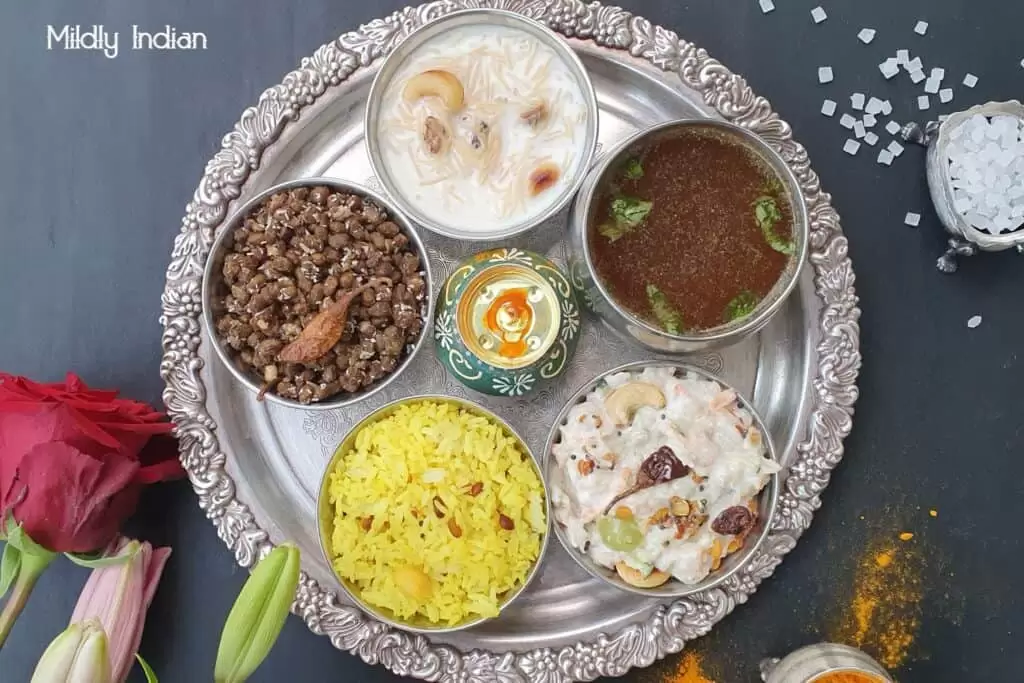
Quick answer: Naivedyam is food offered to the deity before anyone eats it. To offer it at home, cook or set aside a clean portion without tasting it, place it before the deity on a plate or leaf, sprinkle a little water around it, offer it with a prayer and a tulasi leaf or flower, offer water, wait a few minutes, then take it back and share it as prasadam. Customs vary by family and tradition.
| Key facts | |
|---|---|
| Word | Naivedya or naivedyam (Sanskrit, "that which is offered") |
| Also called | Bhog (North India), nivedana |
| Place in the puja | After the lamp and incense, before the final aarti, in the common sixteen-step puja |
| After offering | The food becomes prasadam (also prasad), shared as a blessing |
| Typical foods | Cooked rice dishes, sweets, fruit, milk, jaggery, coconut, panakam, soaked dal |
What is naivedyam?
Naivedyam is the offering of food to God. In the common sixteen-step home puja (shodashopachara, "sixteen services"), it comes after the lamp (deepa) and incense (dhupa): the deity is treated as an honoured guest, and a guest is fed. The food is not "eaten" by the image. It is offered with devotion, and what returns is received as the deity's grace, prasadam.
The difference between the two words, and how the tradition understands it, is explained in prasadam and naivedyam. This page is the practical side: what to offer and how.
What can I offer?
Anything vegetarian, clean and offered with care. Some common choices:
| Occasion | Common naivedyam |
|---|---|
| Daily puja, short on time | A banana or other fruit, a few raisins, a piece of jaggery, a cup of milk, or a spoon of sugar |
| Daily cooked meal | A small portion of the rice, dal and vegetables cooked for the family, set aside before anyone eats |
| Festival rice dishes | Daddojanam (curd rice), pulihora, paramannam, chakkara pongali |
| No-cook offerings | Panakam, vadapappu and kosambari, panchamrit, fruit, coconut |
| Navaratri | Sundal, payasam, and the day-wise bhog in Navratri bhog and prasad |
Families and temple traditions have their own lists for each deity and festival. A simple offering made with attention is always acceptable; the Bhagavad Gita (9.26) speaks of Krishna accepting even a leaf, a flower, a fruit or water offered with devotion.
Keeping the offering pure
Most traditions ask for the same few things. How strictly they are kept varies.
- Do not taste it. Cook without tasting, or set the naivedyam portion aside before anyone eats. Use a separate clean spoon to serve it.
- Cook clean. Bathe before cooking if you can, wash your hands, and keep the kitchen and vessels clean.
- Vegetarian only. No meat, fish or eggs. Many families also leave out onion and garlic from naivedyam, and some from the whole kitchen on puja days; see sattvic cooking without onion and garlic.
- Fresh food. Offer food cooked that day. Many families avoid leftovers, food that has been tasted, and food already served on a plate.
- Store-bought sweets. Many families offer sweets from a shop on festivals, especially abroad. Others offer only home-made food or fruit. Both are common; follow your custom.
How to offer naivedyam: step by step
- Set the plate. Put a small portion of each item on a clean plate, banana leaf or set of small bowls. Place it in front of the deity.
- Add tulasi or a flower. For Vishnu and his avatars, a tulasi leaf is placed on the food. For other deities, many families use a flower or a few grains of akshata (rice with turmeric).
- Sprinkle water. With your right hand, sprinkle a little water around the plate. Many families do this in a clockwise circle. It marks the offering as purified and given.
- Offer it. Hold your right hand over the food, palm open, or wave the food gently towards the deity. Offer it in your own words or with the prayer your family uses. A common closing phrase in Sanskrit pujas is naivedyam samarpayami, "I offer this food". Some traditions also make five small offerings to the five vital breaths (prana, apana, vyana, udana, samana); follow your priest's book for the exact words.
- Offer water. Place a small cup of water beside the food, or sprinkle a little water again, for the deity to "drink" and rinse.
- Give the deity a moment. Many families step away or close the curtain or shrine door for a few minutes. Others continue at once. A common practice is to wait for the time it would take to eat a small meal, around five to fifteen minutes.
- Tambulam and aarti. If your puja includes it, offer betel leaves and areca nut (tambulam), then do the aarti.
- Take it back as prasadam. Remove the plate with respect, and mix the offered portion back into the main dish so that everything becomes prasadam. Then serve the family.
After the offering: sharing prasadam
- Prasadam is shared, not wasted. Offer it first to elders and guests, and keep some for neighbours or friends.
- Receive it with the right hand, or with both hands cupped.
- If any is left, eat it later, give it away, or place it where birds or animals can eat it. Most families do not throw prasadam in the bin.
- Abroad, take care with local rules: in an apartment, compost or food-waste bins are a respectful choice when nothing else is possible.
Naivedyam in a small home abroad
- Time: on a working day, offer fruit, milk or a portion of the family meal in the morning, and keep cooked dishes for the weekend or festival.
- Space: a shelf altar is enough. Use a small steel plate kept for puja use.
- Ingredients: most naivedyam dishes need only rice, dal, jaggery, milk and simple spices, all sold at Indian grocers in the USA, UK, Canada, Australia, the Gulf and Southeast Asia. Each recipe page on HinduTone lists local swaps.
- Food safety: offered food has often stood at room temperature. Refrigerate leftovers within 2 hours (1 hour in hot weather above 32°C or 90°F).
Frequently asked questions
Does God really eat the naivedyam?
The tradition does not say the image eats the food. It teaches that God accepts the devotion with which it is offered, and that the food returns as grace. The Bhagavad Gita (9.26) puts the emphasis on the devotion of the giver.
How long should naivedyam be kept before the deity?
There is no single rule. Many families wait five to fifteen minutes; some take it back at once after the prayer; temples follow their own schedules. Follow your family's or priest's practice.
I tasted the food by mistake. Can I still offer it?
Most families would not offer food that has been tasted. Offer fruit, milk or a fresh small portion instead, and use the tasted dish for the family meal.
Can I offer naivedyam without cooking?
Yes. Fruit, milk, jaggery, sugar crystals (mishri), coconut, soaked dal and panakam are all traditional uncooked offerings.
Can I offer onion and garlic dishes?
Many families never offer onion or garlic; others do not mind in everyday meals. If you are unsure, leave them out of the naivedyam portion.
Is prasadam from my home puja the same as temple prasadam?
Both are prasadam, food that has been offered to God. Temple prasadam is prepared by temple cooks under the temple's rules; home prasadam follows your family's way.
Related guides
- Recipes hub
- Prasadam and naivedyam: the connection
- Panchamrit recipe
- Daddojanam (temple-style curd rice)
- Sattvic cooking without onion and garlic
- Annadanam in Hinduism
Sources
- Bhagavad Gita 9.26, verse and translations at Gita Supersite, IIT Kanpur.
- TTD News, "Naivedyam Samarpayami": ritual of offering food to the Lord, for temple naivedyam at Tirumala.
- US Food and Drug Administration, Safe Food Handling, for the 2-hour and 1-hour refrigeration rules.
Customs of naivedyam vary by family, region and sampradaya. This guide describes common practice; it is not binding on any tradition. Last reviewed: 12 November 2026.
Share this with family and friends
Send it on WhatsApp, post it, or copy the link.
More from Recipes
- Cooking for Annadanam: A Menu and Quantities for 50 and 100
- Prasadam in an Instant Pot, Pressure Cooker or Rice Cooker
- Paal Payasam Recipe (Kerala-Style Rice and Milk Payasam)
- Coconut Laddu Recipe with Jaggery (Kobbari Laddu, Nariyal Ladoo)
- Besan Laddu Recipe (Gram Flour Laddus for Naivedyam)


