Vadapappu and Kosambari Recipe for Rama Navami Naivedyam
Quick answer: Vadapappu is split yellow moong dal soaked until soft and lightly seasoned. Kosambari is the Karnataka salad of soaked moong dal with cucumber, fresh coconut, lemon and a mustard-seed tempering. Neither is cooked. Both are classic Rama Navami offerings, set beside panakam. Soak the dal
Quick answer: Vadapappu is split yellow moong dal soaked until soft and lightly seasoned. Kosambari is the Karnataka salad of soaked moong dal with cucumber, fresh coconut, lemon and a mustard-seed tempering. Neither is cooked. Both are classic Rama Navami offerings, set beside panakam. Soak the dal for 1 to 2 hours, drain it well and mix just before the puja.
| Key facts | |
|---|---|
| Dish | Soaked moong dal (vadapappu) and moong dal salad (kosambari) |
| Festival | Sri Rama Navami; vadapappu also on Nagula Chavithi; kosambari at many Karnataka festivals and weddings |
| Deity | Sri Rama, and other deities by family custom |
| Serves | 4 (as an offering and a side) |
| Prep time | 15 minutes, plus 1 to 2 hours soaking |
| Cook time | 5 minutes (tempering only) |
| Allergens | Legumes (moong dal); coconut in kosambari |
What are vadapappu and kosambari?
Vadapappu (Telugu: vada or vadi, soaked, and pappu, dal) is the simplest naivedyam there is: split moong dal soaked in water. Some families offer it plain. Others add a pinch of salt, grated cucumber or carrot, a little green chilli and a squeeze of lemon. The same soaked dal is offered on Nagula Chavithi.
Kosambari (Kannada; kosumalli in Tamil) builds on the same soaked dal. Cucumber, fresh coconut, coriander leaves and lemon are added, with a small tempering of mustard seeds and curry leaves. In Karnataka it is served at festivals, temple meals and wedding feasts, and on Rama Navami it is offered with panakam.
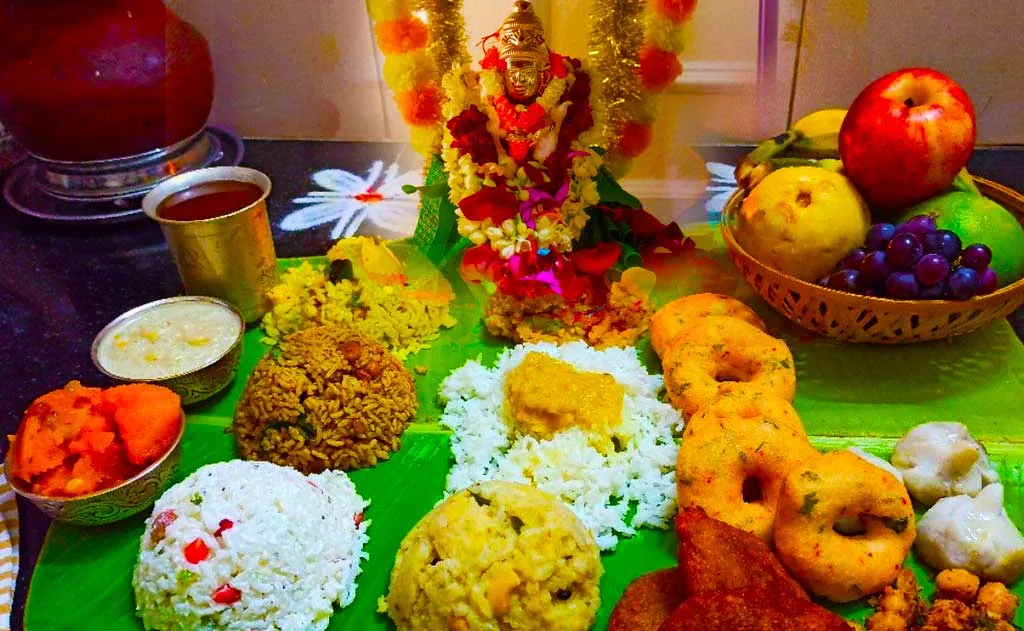
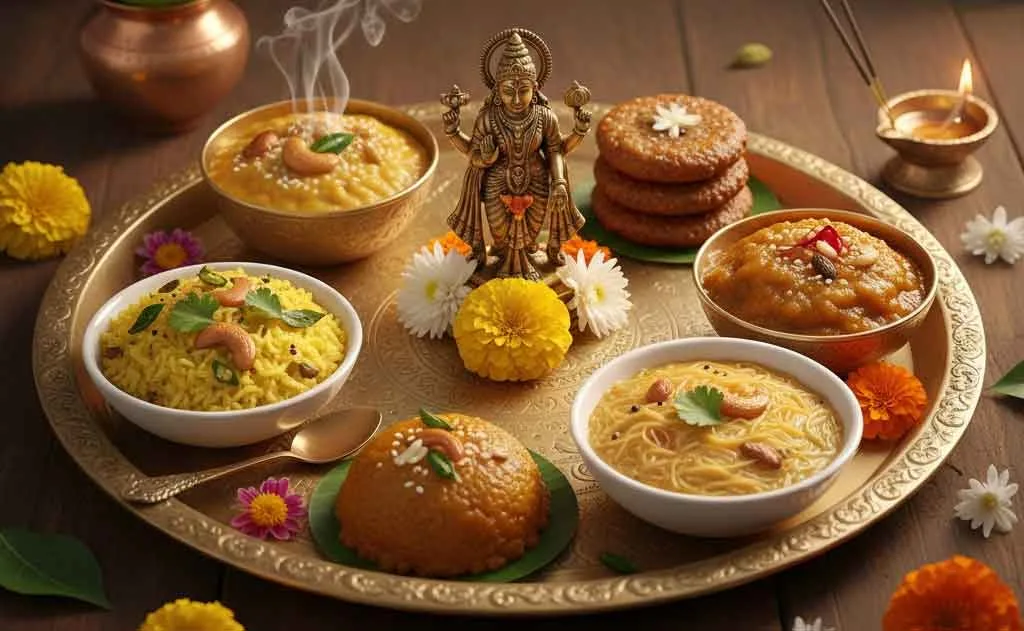
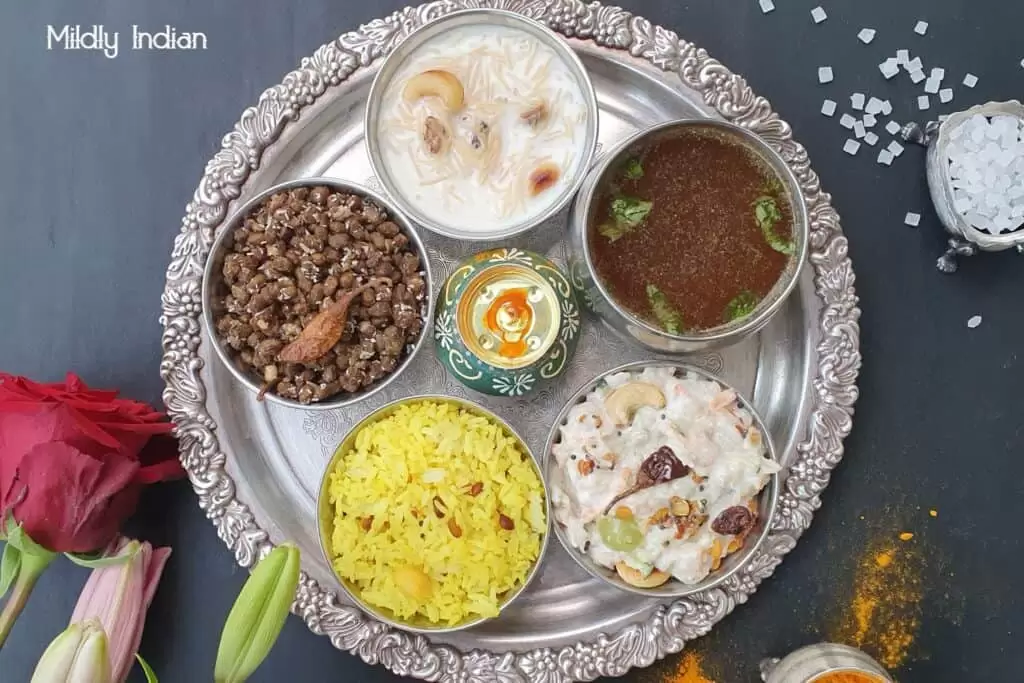
On Rama Navami the three dishes are often offered together. They need no stove, which suits a festival in the hot month of Chaitra. The recipes below are one common way; families vary in what they add, so follow your elders where they do it differently.
Ingredients
For vadapappu
- Split yellow moong dal (pesara pappu, without skin): 50 g (1/4 US cup)
- Water for soaking: 500 ml (2 US cups)
- Salt (optional): a pinch
- Cucumber, finely grated (optional): 2 tablespoons
- Lemon juice (optional): 1/2 teaspoon
For kosambari
- Split yellow moong dal: 100 g (1/2 US cup)
- Water for soaking: 750 ml (3 US cups)
- Cucumber, finely chopped: 1 medium (about 150 g, 1 US cup chopped)
- Fresh grated coconut: 30 g (1/3 US cup)
- Carrot, grated (optional): 1 small (about 50 g, 1/3 US cup)
- Green chilli, very finely chopped: 1
- Coriander leaves, chopped: 2 tablespoons
- Lemon juice: 1 tablespoon (15 ml), or to taste
- Salt: 1/2 teaspoon, or to taste
- Oil or ghee for tempering: 2 teaspoons
- Mustard seeds: 1/2 teaspoon
- Curry leaves: 6 to 8
- Asafoetida (hing): a pinch
Method
- Rinse the moong dal for both dishes two or three times. Soak the vadapappu dal and the kosambari dal in separate bowls of water for 1 to 2 hours, until a grain crushes easily between your fingers but still holds its shape.
- Drain both well in a strainer. Shake off the water; wet dal makes kosambari soggy.
- Vadapappu: put the drained dal in a small bowl. Add the salt, grated cucumber and lemon juice if your family uses them, or leave it plain. Mix lightly.
- Kosambari: put the second batch of drained dal in a mixing bowl. Add the cucumber, coconut, carrot, green chilli and coriander leaves.
- Heat the oil or ghee in a small pan. Add the mustard seeds. When they crackle, add the curry leaves and asafoetida, then turn off the heat.
- Pour the tempering over the kosambari.
- Add the salt and lemon juice just before offering, and mix. Salt draws water out of the cucumber, so adding it at the end keeps the salad crisp.
- Place small portions of vadapappu and kosambari on the naivedyam plate with the panakam, and offer them before anyone tastes.
Notes and variations
- Soaking time: moong dal softens faster in warm weather. Over-soaked dal turns mushy; check it after an hour.
- Kosambari with chana dal: some Karnataka homes make a second kosambari with soaked split chana dal (Bengal gram). It needs 2 to 3 hours of soaking and stays firmer.
- Without chilli: for a mild naivedyam, leave out the green chilli and use a little ginger instead.
- Raw mango: in season, a little grated raw mango is a common addition in Karnataka homes.
- Pomegranate: some cooks add pomegranate seeds for the family portion.
There is nothing to pressure-cook here. If you prefer the dal softer, steam the soaked dal for 2 to 3 minutes and cool it before mixing; some families do not offer steamed dal as vadapappu, so follow your custom.
Naivedyam notes
- Make both on the festival morning and keep them covered until the offering.
- Many families make the Rama Navami naivedyam without onion and garlic, and kosambari never uses them.
- The offering usually goes on one plate: panakam, vadapappu, kosambari, fruit, and sometimes buttermilk. See how to offer naivedyam at home.
- For this year's festival date and puja time, see Rama Navami 2027.
Swaps for cooks abroad
| Where you live | Split moong dal | Fresh coconut | Cucumber |
|---|---|---|---|
| USA and Canada | Indian grocers ("moong dal, yellow"); some large supermarkets in the international aisle | Frozen grated coconut at Indian grocers; or unsweetened desiccated coconut soaked in warm water for 10 minutes | English or Persian cucumbers; peel waxed ones |
| UK | Indian grocers and larger supermarkets | Frozen grated coconut, or soaked desiccated coconut (creamed coconut is too rich) | Any cucumber |
| Australia and New Zealand | Indian grocers | Frozen grated coconut or soaked desiccated coconut | Lebanese cucumbers are a good size |
| Gulf countries | Easy to find | Fresh coconut and frozen grated coconut are widely sold | Local cucumbers |
| Singapore and Malaysia | Easy to find | Freshly grated coconut is sold in wet markets | Local cucumbers |
Do not use whole green moong (with skin) for vadapappu; it takes much longer to soften and is a different dish.
Allergens and dietary notes
- Moong dal is a legume. People with legume allergies should take care.
- Coconut is a fruit, not a true nut, and most people with tree-nut allergies can eat it, but a few react to it. Leave it out if unsure.
- Asafoetida often contains wheat flour; check the label for gluten.
- Both dishes are vegan if you temper with oil.
Storage
Vadapappu and kosambari are best eaten within a few hours. Raw soaked dal spoils quickly at room temperature: refrigerate leftovers within 2 hours and use them within a day. Kosambari gets watery in the fridge; drain it before serving.
Frequently asked questions
Is vadapappu cooked?
No. Vadapappu is soaked, not cooked. That is why it is quick to make and why it should be eaten the same day.
What is the difference between vadapappu and kosambari?
Vadapappu is the soaked dal itself, plain or very lightly seasoned. Kosambari is a salad built on that dal, with cucumber, coconut, lemon and a tempering.
Can I soak the dal overnight?
It is better not to. Moong dal can go mushy and start to sour if soaked for many hours, especially in warm weather. One to two hours is enough.
Why are these offered on Rama Navami?
They belong to the old South Indian custom of offering panakam, vadapappu and kosambari on Rama Navami. The festival falls in the hot season, and none of the three needs cooking. Customs vary by family and region.
Can children eat kosambari?
Yes, it is a common family dish. Chop the cucumber small and leave out the chilli for young children.
Related recipes and guides
- Recipes hub
- Panakam recipe
- Daddojanam (temple-style curd rice)
- Nagula Chavithi naivedyam: chalimidi, chimmili and vadapappu
- Navaratri sundal recipes
- Sri Rama Navami recipes and naivedyam
Sources
- HinduTone, Nagula Chavithi naivedyam, for vadapappu as soaked moong dal (kept consistent).
- US Food and Drug Administration, Food Allergies, for the major food allergens.
- US Food and Drug Administration, Safe Food Handling, for refrigerating within 2 hours.
Quantities are typical home proportions. Last reviewed: 12 November 2026.
Share this with family and friends
Send it on WhatsApp, post it, or copy the link.
More from Recipes
- Cooking for Annadanam: A Menu and Quantities for 50 and 100
- Prasadam in an Instant Pot, Pressure Cooker or Rice Cooker
- Coconut Laddu Recipe with Jaggery (Kobbari Laddu, Nariyal Ladoo)
- Aravana Payasam Recipe (Sabarimala-Style Home Version)
- Boondi Laddu Recipe, with a Tirupati-Style Home Version