Boondi Laddu Recipe, with a Tirupati-Style Home Version
Quick answer: Boondi laddu is made by frying tiny drops of gram-flour batter (boondi), soaking them in a sugar syrup cooked to a one-string consistency, and shaping the mixture into balls with ghee, cardamom, cashews and raisins. It is offered on Hanuman Jayanti, Ganesh Chaturthi, Diwali and many ot
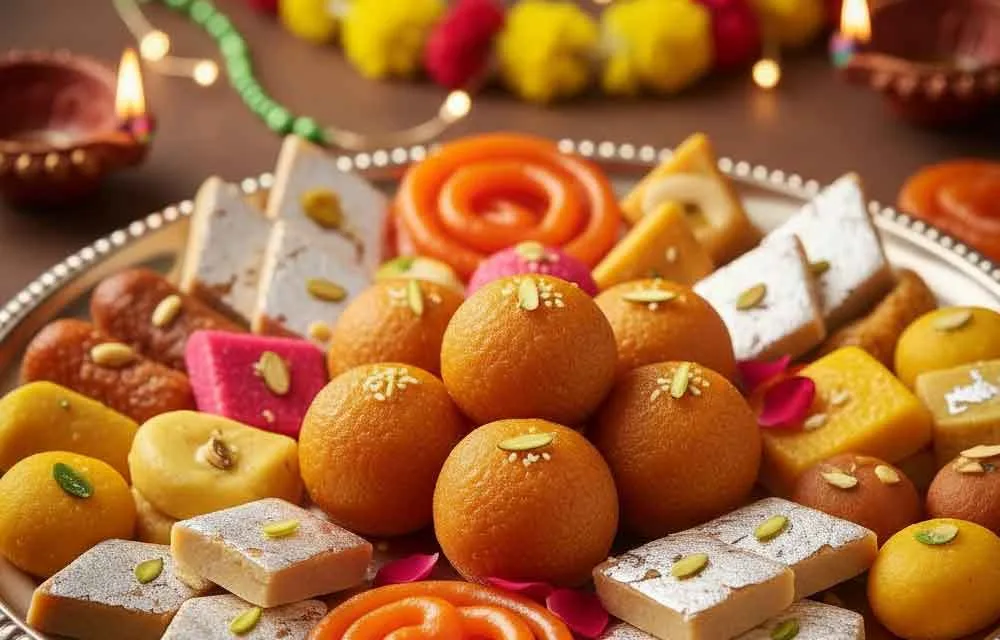
Quick answer: Boondi laddu is made by frying tiny drops of gram-flour batter (boondi), soaking them in a sugar syrup cooked to a one-string consistency, and shaping the mixture into balls with ghee, cardamom, cashews and raisins. It is offered on Hanuman Jayanti, Ganesh Chaturthi, Diwali and many other festivals. A richer version with sugar candy and more ghee is made at home in the style of the Tirupati laddu; it is not the temple's laddu.
| Key facts | |
|---|---|
| Dish | Fried gram-flour pearls bound with sugar syrup and ghee |
| Festivals | Hanuman Jayanti, Ganesh Chaturthi, Diwali, Dussehra, weddings and temple festivals |
| Deity | Hanuman, Ganesha, Venkateswara, and others by custom |
| Yield | 14 laddus of about 50 g each |
| Prep time | 15 minutes |
| Cook time | 45 minutes |
| Allergens | Chickpea (gram flour), milk (ghee), tree nuts (cashews, almonds) |
What is boondi laddu?
Boondi means "drops": a thin batter of gram flour (besan, chickpea flour) is pressed through a perforated ladle into hot fat, where it fries into small pearls. Soaked in syrup and pressed together while warm, the pearls make boondi laddu, also called motichoor when the pearls are very fine. In Telugu it is boondi laddu or laddu; in Tamil boondi laddu or laddu.
The best-known laddu of all is the Tirupati laddu (Sri Vari laddu), offered to Lord Venkateswara at Tirumala and given to pilgrims as prasadam. It holds a Geographical Indication (GI) tag granted in 2009, which means only laddus made by Tirumala Tirupati Devasthanams (TTD) may be sold under that name. TTD's fixed list of ingredients and proportions is known as the dittam; news reports describe it as including gram flour, sugar candy, cashews, raisins and almonds, with ghee and sugar. The exact proportions and method are TTD's own. For the laddu's history, types and how to receive it, see the Tirupati laddu guide.
The home recipe below is a boondi laddu. The Tirupati-style version after it is a richer home sweet inspired by the same ingredients, not the temple prasadam and not a copy of the temple recipe.
Ingredients
For the boondi
- Gram flour (besan): 150 g (about 1 1/4 US cups)
- Water: 180 to 200 ml (3/4 US cup, plus a little)
- Baking soda (optional): a pinch
- Ghee or oil for deep-frying: enough for 5 cm (2 inches) in a wide pan
For the syrup and finishing
- Sugar: 250 g (1 1/4 US cups)
- Water: 120 ml (1/2 US cup)
- Lemon juice: 1/2 teaspoon (stops the syrup from crystallising)
- Ghee: 2 tablespoons (about 25 ml)
- Green cardamom, ground: 1/2 teaspoon
- Cashews, halved: 2 tablespoons (about 20 g)
- Raisins: 1 tablespoon (about 12 g)
- Edible camphor (pacha karpuram, optional): a very small pinch
- Saffron or a pinch of food colour (optional)
Method
- Make the batter. Whisk the gram flour with the water and baking soda into a smooth, lump-free batter that flows like thin pancake batter. Rest it for 10 minutes.
- Make the syrup. Heat the sugar and water in a pan until the sugar dissolves. Add the lemon juice and boil for 5 to 7 minutes, until a drop pressed between thumb and finger forms one thin thread when you pull them apart (one-string consistency). Turn off the heat and keep the syrup warm.
- Heat the fat. Heat the ghee or oil to medium hot, about 170 to 175°C (340 to 350°F). A drop of batter should rise steadily, not burn.
- Fry the boondi. Hold a perforated ladle (boondi jhara) about 15 cm above the pan. Pour a ladle of batter on it and tap the edge gently so drops fall into the fat. Fry for 1 to 2 minutes until the pearls are set and crisp at the edges but still pale golden. Do not brown them.
- Lift them out with a slotted spoon, drain for a few seconds, and drop them straight into the warm syrup. Repeat with all the batter, wiping the ladle clean each time.
- Season. Fry the cashews and raisins in 1 tablespoon of ghee and add them to the boondi with the cardamom, edible camphor and the rest of the ghee. Mix well.
- Rest. Leave the mixture for 10 to 15 minutes, stirring once or twice, until the boondi has soaked up the syrup and is cool enough to handle.
- Shape. Grease your palms with a little ghee. Take a handful (about 50 g) and press it firmly into a round ball. If the mixture will not hold, sprinkle a spoonful of hot water or warm syrup and press again.
- Set aside the naivedyam laddus on a clean plate before anyone tastes.
Tips and variations
- Batter too thick? The boondi will have tails instead of round pearls. Add a spoon of water and test again.
- Syrup too thick? The laddus will be dry and crumbly. Sprinkle hot water and press again. Too thin, and they will not hold; warm the mixture briefly to thicken it.
- Motichoor: use a ladle with very fine holes for tiny pearls, and add a few drops of saffron or orange colour.
Tirupati-style home version
This is a home recipe inspired by the ingredients reported for the Tirupati laddu. It is not the temple's laddu, which only TTD makes.
- Make the boondi as above but fry it in ghee, and fry it slightly crisper.
- Use 300 g (1 1/2 cups) sugar and 150 ml water for a slightly thicker syrup.
- After soaking, add 4 tablespoons of ghee instead of 2, with 2 tablespoons each of cashews and raisins, 1 tablespoon of slivered almonds, 2 tablespoons of crushed sugar candy (kalakanda or mishri), 3/4 teaspoon of cardamom and a tiny pinch of edible camphor.
- Shape larger laddus of about 150 to 175 g each, pressing very firmly.
There is no pressure-cooker or Instant Pot version; boondi must be fried. An air fryer does not work for boondi, as the batter is too thin.
Naivedyam notes
- Make laddus a day before the festival if you need to; they keep well. Offer them before anyone tastes.
- For Hanuman, many families offer boondi or besan laddus on Tuesdays and Hanuman Jayanti; see Hanuman Jayanti.
- For Ganesha, laddus are offered with modak; see Ganesh Chaturthi naivedyam.
- Laddu prasadam you bring home from a temple is the temple's own; the home version is your family's offering.
Swaps for cooks abroad
| Where you live | Gram flour (besan) | Ghee | Perforated ladle |
|---|---|---|---|
| USA and Canada | Indian grocers. "Chickpea flour" from supermarkets is made from white chickpeas and gives a slightly different texture, but works | Indian grocers; clarified butter from supermarkets | Indian grocers; a metal colander with round holes works |
| UK | Indian grocers and many supermarkets (gram flour) | Widely sold | Indian grocers, or a colander |
| Australia and New Zealand | Indian grocers ("besan") | Indian grocers and supermarkets | Indian grocers, or a colander |
| Gulf countries | Easy to find | Easy to find | Easy to find |
| Singapore and Malaysia | Indian grocers in Little India | Easy to find | Easy to find |
Allergens and dietary notes
- Chickpea (gram flour): a legume. People with chickpea or other legume allergies should avoid it.
- Milk: ghee. Fry in oil and bind with oil for a dairy-free version, though most families use ghee for naivedyam.
- Tree nuts: cashews, and almonds in the Tirupati-style version.
- Gluten: pure gram flour is gluten-free, but it is often milled alongside wheat; check the label.
Storage
Boondi laddus keep for about a week at room temperature in an airtight box in a cool, dry place, and up to two weeks in the fridge. Bring refrigerated laddus to room temperature before serving.
Frequently asked questions
Is the home recipe the same as the Tirupati laddu?
No. The Tirupati laddu is made only by TTD at Tirumala to its own fixed recipe, and it holds a GI tag. Home versions use similar ingredients but are not the temple prasadam.
Why do my laddus fall apart?
The syrup was too thick, or the boondi cooled before shaping. Sprinkle a little hot water or warm syrup on the mixture and press the laddus firmly while warm.
Can I make boondi laddu with jaggery?
Yes, a jaggery syrup works and gives a darker laddu. Cook the jaggery syrup to one-string consistency and strain it first.
What is the difference between boondi laddu and besan laddu?
Boondi laddu is made from fried gram-flour pearls soaked in syrup. Besan laddu is made from gram flour roasted in ghee and mixed with powdered sugar; it needs no frying.
How long before the festival can I make laddus?
Up to two or three days at room temperature, kept airtight. Many families prefer to make naivedyam fresh on the day.
Related recipes and guides
- Recipes hub
- Naivedyam by festival
- TTD Tirupati laddu prasadam guide
- Temple prasadams of India
- Rava laddu
- How to offer naivedyam at home
Sources
- Deccan Chronicle, TTD serves legal notices on misuse of Tirupati laddu's GI tag, 6 June 2025: GI tag secured in 2009; the dittam includes "cashews, raisins, almonds, sugar candy and gram flour".
- US Food and Drug Administration, Food Allergies, for the major allergens.
Quantities are typical home proportions. Last reviewed: 12 November 2026.
Share this with family and friends
Send it on WhatsApp, post it, or copy the link.
More from Recipes
- Cooking for Annadanam: A Menu and Quantities for 50 and 100
- Prasadam in an Instant Pot, Pressure Cooker or Rice Cooker
- Paal Payasam Recipe (Kerala-Style Rice and Milk Payasam)
- Poornalu (Boorelu) Recipe: Telugu Sweet for Festivals
- Bhog Khichuri and Labra Recipe for Durga Puja