Paal Payasam Recipe (Kerala-Style Rice and Milk Payasam)
Quick answer: Paal payasam (Malayalam palpayasam, "milk payasam") is rice cooked very slowly in a large amount of milk with sugar until it is creamy, thick and lightly coloured. It is the famous offering of the Ambalappuzha Sri Krishna temple in Kerala and a standard sweet of the Kerala sadya. This
Quick answer: Paal payasam (Malayalam palpayasam, "milk payasam") is rice cooked very slowly in a large amount of milk with sugar until it is creamy, thick and lightly coloured. It is the famous offering of the Ambalappuzha Sri Krishna temple in Kerala and a standard sweet of the Kerala sadya. This is a home-style version; the temple's palpayasam is its own prasadam. Use full-fat milk, a heavy pot and patience: about 1 1/2 hours of simmering.
| Key facts | |
|---|---|
| Dish | Rice, milk and sugar, simmered long; no jaggery, usually no ghee or nuts in the classic version |
| Temple | Ambalappuzha Sri Krishna temple, Alappuzha district, Kerala (Travancore Devaswom Board) |
| Festivals | Onam sadya, Vishu, temple festivals, birthdays, Krishna pujas |
| Deity | Krishna; offered to all deities |
| Serves | 6 |
| Prep time | 10 minutes |
| Cook time | 90 minutes |
| Allergens | Milk |
What is paal payasam?
Kerala has many payasams; paal (milk) payasam is the plainest and, for many, the finest: rice, milk and sugar only. It is cooked so long that the milk thickens, sweetens and takes on a pale cream-to-pinkish colour from the slow cooking of milk and sugar together.
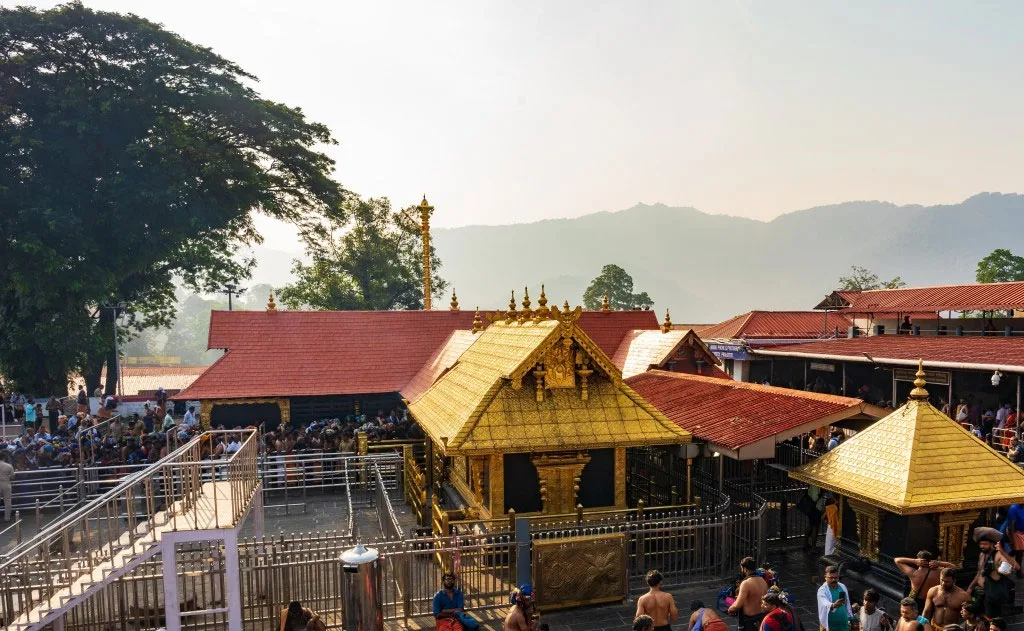
The Sri Krishna temple at Ambalappuzha is known above all for its palpayasam, its main offering, which is given out through the Travancore Devaswom Board's counters. Temple legends explain how this came to be; they are told in several versions and are traditional stories rather than history. The temple's recipe and method are its own, and only the temple's palpayasam is the prasadam.
For the other Kerala payasams, such as ada pradhaman and palada, see types of payasam and kheer.
Ingredients
- Raw rice (Kerala unakkalari, ponni, or any short-grain rice): 60 g (a little under 1/3 US cup)
- Full-fat milk: 1.5 litres (about 6 1/3 US cups)
- Water: 500 ml (about 2 US cups)
- Sugar: 150 to 200 g (3/4 to 1 US cup)
- Green cardamom, ground (optional; the classic temple-style version uses none): 1/4 teaspoon
Method
- Wash the rice and drain it.
- In a heavy, wide pot (a thick-bottomed steel pot or a bell-metal uruli), bring the milk and water to a boil, stirring.
- Add the rice and lower the heat so the milk simmers steadily but does not boil over.
- Simmer for 60 to 70 minutes, stirring every few minutes and scraping the bottom and sides. The water evaporates first and then the milk slowly reduces.
- When the rice is completely soft and the milk has reduced by about half, add the sugar.
- Continue simmering, stirring often, for another 20 to 25 minutes, until the payasam is creamy, coats the back of a spoon and has a pale beige or light pinkish tint.
- Add cardamom if your family uses it. Turn off the heat.
- Set aside the naivedyam portion in a clean bowl before anyone tastes.
Tips and variations
- Why water with the milk? It lets the rice cook fully before the milk thickens, and it reduces the risk of scorching.
- Scorching: if the bottom catches, do not scrape the burnt layer into the payasam; pour the good part into a clean pot and continue.
- Colour: the light colour comes only from long cooking. Do not add colouring.
- Richer payasam: some cooks finish with a spoon of ghee, cashews and raisins. The plain version is the classic one.
Pressure-cooker and Instant Pot versions
Pressure cooker (5 litre or larger): put the washed rice, 1 litre of milk and the water in the cooker. Close, bring to the first whistle on high, then lower the heat to the minimum and cook for 30 to 40 minutes without further whistles. Let the pressure drop naturally. Open, add the remaining 500 ml milk and the sugar, and simmer in the open cooker for 15 to 20 minutes. Many Kerala homes use this method. Never fill the cooker more than half full with milk.
Instant Pot (6 quart): use the Porridge setting (or Pressure Cook, high) for 20 minutes with rice, 1 litre milk and water, then a full natural release. Add the rest of the milk and sugar and reduce on Sauté, stirring, for 15 to 20 minutes.
Naivedyam notes
- Paal payasam is offered warm or at room temperature.
- In the Onam sadya it is served towards the end of the meal with the pradhamans; see Onam and the sadya.
- Palpayasam from Ambalappuzha is the temple's prasadam; a home version is your family's offering.
- See how to offer naivedyam at home.
Swaps for cooks abroad
| Where you live | Rice | Milk |
|---|---|---|
| USA and Canada | Ponni, sona masoori or Calrose | Whole milk; avoid ultra-pasteurised if you can, as it thickens differently |
| UK | Kerala or South Indian rice from Asian grocers; pudding rice works | Whole (blue-top) milk |
| Australia and New Zealand | Calrose or South Indian rice | Full-cream milk |
| Gulf countries | Kerala unakkalari and ponni are easy to find | Full-fat fresh milk |
| Singapore and Malaysia | Ponni or other short-grain rice | Full-cream fresh milk |
Allergens and dietary notes
- Milk. There is no good dairy-free substitute for this dish; for a dairy-free payasam, make a coconut-milk pradhaman instead.
- Gluten-free and nut-free in the classic version.
Storage
Refrigerate within 2 hours and use within 2 days. It thickens in the fridge; loosen it with warm milk.
Frequently asked questions
Is this the Ambalappuzha temple's palpayasam?
No. The temple's palpayasam is its own prasadam, given out through the Devaswom Board's counters. This is a home-style Kerala paal payasam.
Why is my paal payasam white, not pinkish?
It needs longer, slower cooking after the sugar goes in. The colour develops as the milk and sugar cook together.
Can I use condensed milk to save time?
You can, for a quick payasam, but it is a different dish from slow-cooked paal payasam.
What is the difference between paal payasam and kheer?
Very little in principle: both are rice, milk and sugar. Kerala paal payasam is usually cooked longer, with more milk, and without nuts or saffron.
Which rice is best?
A short-grain or broken raw rice that softens well. Kerala homes use unakkalari or similar.
Related recipes and guides
- Recipes hub
- Types of payasam and kheer
- Temple prasadams of India
- Paramannam recipe
- Aravana payasam (Sabarimala-style)
- How to offer naivedyam at home
Sources
- Onmanorama, Bakery sells Ambalapuzha palpayasam; Devaswom Board in action, 5 September 2019: palpayasam, "made of sweetened rice and milk", is the temple's main offering, given out "only through the counters of the Devaswom Board".
- US Food and Drug Administration, Safe Food Handling.
Quantities and times are typical home proportions. Last reviewed: 12 November 2026.
Share this with family and friends
Send it on WhatsApp, post it, or copy the link.
More from Recipes
- Cooking for Annadanam: A Menu and Quantities for 50 and 100
- Besan Laddu Recipe (Gram Flour Laddus for Naivedyam)
- Famous Temple Prasadams of India and What They Are Made Of
- Bhog Khichuri and Labra Recipe for Durga Puja
- Naivedyam by Festival: What to Cook for Each Hindu Festival