Gujiya Recipe for Holi (Mawa Gujiya with a No-Khoya Option)
Quick answer: Gujiya is a half-moon pastry of maida and ghee, filled with roasted khoya (mawa), sugar, coconut and nuts, sealed with a crimped edge and fried slowly until crisp. In Uttar Pradesh, Bihar, Rajasthan and much of North India it is the sweet most families make for Holi, and it is made aga
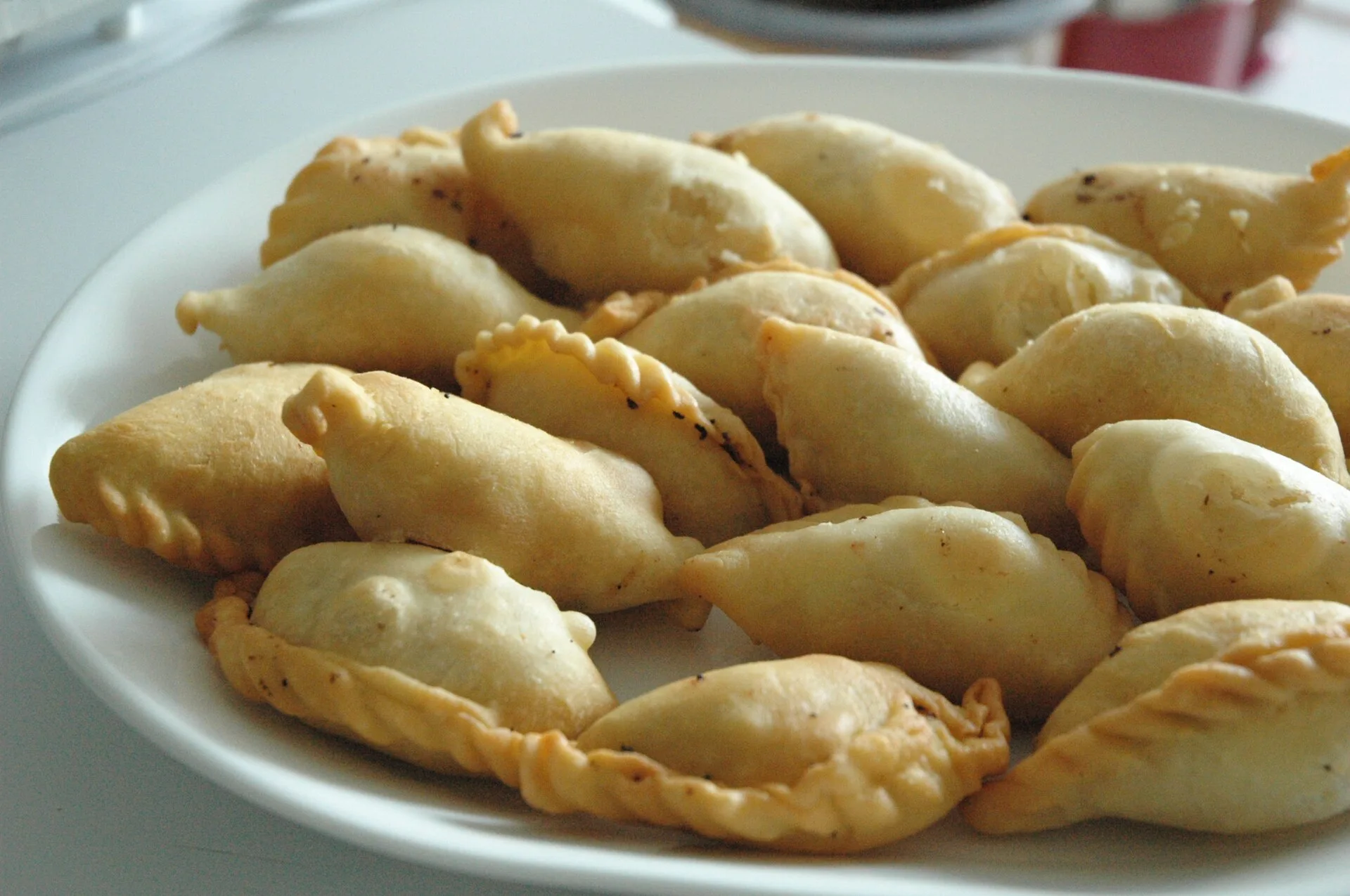
Quick answer: Gujiya is a half-moon pastry of maida and ghee, filled with roasted khoya (mawa), sugar, coconut and nuts, sealed with a crimped edge and fried slowly until crisp. In Uttar Pradesh, Bihar, Rajasthan and much of North India it is the sweet most families make for Holi, and it is made again at Diwali. The keys: a firm dough, a filling cooled completely, a well-sealed edge and gentle frying.
Kitchen note: This recipe is not yet kitchen-tested by a HinduTone cook. The quantities and timings follow common home methods; judge doneness by look and texture, and adjust for your stove and ingredients.
| Key facts | |
|---|---|
| Dish | Fried pastry with a sweet khoya, coconut and nut filling |
| Region | North India (Uttar Pradesh, Bihar, Rajasthan); related pastries across India |
| Main occasions | Holi, also Diwali and, in Bihar, Chhath (sources below) |
| Makes | About 18 to 20 gujiyas (approximate) |
| Time | About 50 minutes prep including dough resting; about 45 minutes frying |
Gujiya and Holi
Food writers describe gujiya as part of Holi in the way gulal is: Scroll called it "as ubiquitous as gulal during Holi", and BBC Travel profiled it as "a flaky pastry to celebrate Holi". Families make them in batches in the days before the festival and offer them to guests who come to play colours. Fillings vary by home, from khoya and dried fruit to sweetened coconut or semolina.
The same kind of pastry has other names across India: karanji in Maharashtra, ghughra in Gujarat, kajjikayalu in Andhra Pradesh and karjikayi in Karnataka. For the Holi date and Holika Dahan timings, see Holi 2027.
Ingredients
- For the dough: 2 cups (250 g) maida (plain flour)
- 1/4 cup (55 g) ghee, melted
- A pinch of salt
- About 1/2 cup (120 ml) water
- For the filling: 200 g khoya (mawa), crumbled or grated
- No-khoya option: 1 cup (100 g) milk powder, 2 tablespoons ghee and 1/4 cup (60 ml) milk, cooked into a quick mawa
- 1/2 cup (60 g) powdered sugar
- 2 tablespoons desiccated coconut
- 2 tablespoons chopped almonds and cashews
- 1 tablespoon raisins
- 1/2 teaspoon cardamom powder
- Ghee or oil for deep-frying
Method
- Rub the melted ghee and salt into the maida until a handful holds its shape when pressed. Add the water a little at a time and knead to a firm, smooth dough. Cover and rest for 30 minutes.
- Roast the khoya in a heavy pan on low heat for 5 to 7 minutes, stirring, until it turns pale cream and loosens. Let it cool.
- No-khoya option: warm the ghee and milk, add the milk powder and stir on low heat for 3 to 4 minutes until it forms a soft, crumbly mass. Cool and use in place of khoya.
- When the mawa is completely cool, mix in the powdered sugar, coconut, nuts, raisins and cardamom.
- Divide the dough into small balls and roll each into a thin round about 10 cm across.
- Put a spoonful of filling on one half, moisten the edge with water, fold over and press to seal. Crimp the edge by hand or trim it in a gujiya mould.
- Keep the shaped gujiyas under a damp cloth while you finish the rest.
- Fry a few at a time on low to medium heat for 6 to 8 minutes, turning, until crisp and light golden.
- Drain on a rack and cool completely before storing.
Tips
- Roll the pastry thin but not paper-thin, and do not overfill.
- Low heat gives a crisp shell with tiny blisters; very hot oil browns the outside and leaves the inner layers soft.
- If gujiyas open in the oil, the edge was not sealed firmly, the filling was too moist, or they were overfilled.
- For a longer-keeping batch, use a dry filling of roasted semolina, desiccated coconut, powdered sugar and nuts instead of khoya.
- Abroad, frozen khoya and gujiya moulds are sold in most Indian grocery stores.
Storage and allergens
Mawa gujiya keeps about 5 to 7 days in an airtight tin in a cool place; refrigerate it in warm weather. Gujiyas with a dry semolina and coconut filling keep about 2 weeks. The recipe contains wheat (gluten), milk and tree nuts (almonds, cashews); tell guests, and leave out the nuts or label the batch when you share it.
Sources
- Priyadarshini Chatterjee, "From Thandai to Puran Poli: Every Holi treat has a colourful story behind it", Scroll, 21 March 2019: https://scroll.in/magazine/916542/scroll_in (accessed 12 November 2026)
- BBC Travel, "Gujiya: A flaky pastry to celebrate Holi", 7 March 2023: https://www.bbc.com/travel/article/20230307-gujiya-a-flaky-pastry-to-celebrate-holi (cited by Wikipedia, "Gujhia"; accessed 12 November 2026)
- Wikipedia, "Gujhia" (regional names; Holi, Diwali and Chhath in Uttar Pradesh, Rajasthan, Gujarat and Bihar): https://en.wikipedia.org/wiki/Gujhia (accessed 12 November 2026)
- US Food and Drug Administration, "Food Allergies": https://www.fda.gov/food/nutrition-food-labeling-and-critical-foods/food-allergies (accessed 12 November 2026)
Last reviewed: 12 November 2026.
Related guides
- North Indian Diwali sweets: mawa gujiya, mathri, coconut ladoo and kaju katli, the Diwali roundup this recipe comes from
- Maharashtrian Diwali faral with karanji
- Telugu Deepavali recipes with kajjikayalu
- Puran poli recipe, the Holi sweet of Maharashtra
- Holi 2027
- All recipes
Share this with family and friends
Send it on WhatsApp, post it, or copy the link.
More from Recipes
- Nolen Gur Payesh Recipe (Bengali Rice Pudding with Date-Palm Jaggery)
- Dudh Puli Recipe (Bengali Rice Dumplings in Thickened Milk with Nolen Gur)
- Bhapa Pitha Recipe (Bengali Steamed Rice Cakes with Coconut and Nolen Gur)
- Kakara Pitha Recipe (Odia Fried Pitha with Coconut Filling)
- Arisa Pitha Recipe (Odia Rice-Flour and Jaggery Cakes)