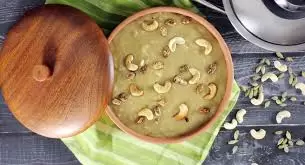
Rauh di Kheer Recipe (Punjabi Rice Kheer Cooked in Sugarcane Juice)
Quick answer: Rauh di kheer is a Punjabi kheer of rice simmered slowly in fresh sugarcane juice, often with roasted peanuts, and no milk. Families cook it on Lohri, the last day of the month of Poh, keep it overnight and eat it cold on Maghi morning. It takes about 15 minutes to prepare and 1.5 to 2
Quick answer: Rauh di kheer is a Punjabi kheer of rice simmered slowly in fresh sugarcane juice, often with roasted peanuts, and no milk. Families cook it on Lohri, the last day of the month of Poh, keep it overnight and eat it cold on Maghi morning. It takes about 15 minutes to prepare and 1.5 to 2 hours to cook.
Kitchen note: This recipe is not yet kitchen-tested by a HinduTone cook. The quantities and timings follow common home methods; judge doneness by look and texture, and adjust for your stove and ingredients.
| Key facts | |
|---|---|
| Dish | Rice cooked slowly in sugarcane juice, with roasted peanuts |
| Other names | Roh di kheer; often called sugarcane-juice kheer |
| Region | Punjab |
| Festival role | Cooked on Lohri, eaten cold on Maghi, the first day of Magh |
| Lohri in India | Thursday 14 January 2027 per the panchang (Drik Panchang, New Delhi); Punjab's 2027 holiday list not yet published |
| Maghi (Makar Sankranti) | 15 January in India per the panchang; some government lists mark 14 January |
| Serves | 4 to 6 |
| Prep time | 15 minutes, plus 30 minutes soaking |
| Cook time | 1.5 to 2 hours |
| Allergens | Peanuts; dairy only if you add milk, ghee or the curd served alongside |
What is rauh di kheer?
Rauh (also written roh) is the Punjabi word for sugarcane juice, and kheer is a slow-cooked rice pudding. Most kheer is made with milk and sugar. Rauh di kheer uses neither: the rice cooks in the juice itself, which slowly thickens and darkens to a deep brown. The Tribune's January 2025 report from Amritsar describes it as rice, sugarcane juice and lightly roasted peanuts, cooked slowly on low heat.
It is a Punjabi winter dish, cooked in Hindu and Sikh homes alike. For other rice puddings across India, see our guide to payasam and kheer types.
Why is it made for Lohri and Maghi?
Lohri, the Punjabi bonfire festival kept by Hindus and Sikhs, falls on the last day of the month of Poh. Maghi, the next day, is the first day of Magh and the Punjabi name for Makar Sankranti. The Tribune reports that the kheer is traditionally made on the last day of Poh and served on the first day of Magh. In other words, it is cooked in Poh and eaten in Magh.
The kheer is left to stand overnight and served cold on Maghi morning. Some families eat it with curd mixed with red chilli, which offsets the sweetness. A Punjabi teacher quoted by The Tribune explained the cold serving by saying that Maghi marks the turn towards warmer days.
Before the festival, sugarcane-juice sellers in Amritsar see long queues from early morning, and the Golden Temple's community kitchen (langar) has served roh di kheer to devotees daily in the days leading up to Lohri and Maghi. A Guru Nanak Dev University professor quoted by The Tribune described the dish as traditional rather than religious. Families keep it in their own way.
Read more about the festival days in our Lohri and Maghi guide, and about Sankranti in neighbouring states in our Maghi and Sakrat guide for Haryana, Delhi and Himachal.
Ingredients
| Ingredient | Metric | US measure |
|---|---|---|
| Fresh sugarcane juice, strained | 1.5 litres | about 6 1/3 cups |
| Rice (short-grain, or broken basmati) | 75 g | about 1/3 cup plus 1 tablespoon |
| Peanuts, lightly roasted and skinned | 40 g | about 1/4 cup |
| Green cardamom, crushed (optional) | 2 pods | 2 pods |
| Raisins or chopped almonds (optional) | 2 tablespoons | 2 tablespoons |
The juice is the only sweetener. Do not add sugar or jaggery until you have tasted the finished kheer; fresh cane juice is usually sweet enough.
A rough ratio: about 20 parts juice to 1 part rice by weight. Less juice gives a thicker kheer; more juice needs longer cooking.
How to make rauh di kheer on the stovetop
- Wash and soak the rice. Rinse the rice two or three times until the water runs fairly clear. Soak it in plain water for 30 minutes, then drain.
- Strain the juice. Pour the sugarcane juice through a fine sieve or a clean muslin cloth to catch fibre and grit.
- Bring the juice to a boil. Use a heavy, wide pot, at least twice the volume of the juice, because cane juice foams up as it heats. Bring it to a boil on medium heat.
- Skim the froth. A grey-brown scum rises as the juice boils. Lift it off with a spoon for the first few minutes; this gives a cleaner taste.
- Add the rice. Stir in the drained rice and the cardamom. Turn the heat to low.
- Simmer slowly. Cook uncovered, or with the lid ajar, for 1.5 to 2 hours. Stir every 10 minutes at first and more often towards the end, scraping the base so nothing sticks. The juice will darken from greenish-gold to brown; this is normal.
- Add the peanuts. About 20 minutes before the end, stir in the roasted peanuts and any raisins or almonds.
- Check doneness. The rice should be very soft and breaking, and the liquid should coat the back of a spoon like thin custard. It thickens a lot as it cools, so stop while it still flows.
- Cool and chill. Let it cool in the pot for a short while, then transfer to a clean bowl and refrigerate within two hours. Serve cold the next morning.
If it is too thick once chilled, stir in a little fresh or boiled-and-cooled juice, or a spoon of water.
Pressure cooker method
The long, open simmer is what darkens and thickens the juice, so a pressure cooker only shortens the rice part.
- Put the soaked rice and about 500 ml (2 cups) of the strained juice in the cooker. The cooker should be no more than half full, because sugary liquids foam.
- Cook on low heat for 1 whistle (about 8 minutes at pressure). Let the pressure drop on its own; do not force-release, or the foam may spray out of the vent.
- Meanwhile, boil and skim the remaining juice in a wide open pot.
- Add the cooked rice to the open pot and simmer on low for 40 to 60 minutes, stirring often, until it thickens. Add the peanuts near the end.
Instant Pot or electric multicooker
- Use the sauté setting to bring the strained juice to a boil and skim off the froth.
- Add the soaked rice, close the lid with the vent on sealing, and cook on porridge or pressure cook (high) for about 12 minutes. Let the pressure release naturally.
- Open, switch back to sauté on low, and simmer with the lid off, stirring often, for 20 to 30 minutes until it thickens. Add the peanuts.
Do not fill the inner pot more than half full. A rice cooker is not a good choice here: the juice foams and boils over before the rice is done.
Buying and handling fresh sugarcane juice
Fresh sugarcane juice does not keep. A 2022 scientific review in Ultrasonics Sonochemistry notes that fresh juice spoils within a day at 30 °C, through enzyme browning and microbial growth, and it starts to change much sooner than that. At home this means:
- Buy it fresh, on the day you cook. Ask for juice pressed in front of you, from clean stalks, on a clean machine.
- Skip the ice and the lemon. Ask the seller to leave out ice, ginger and lemon; the plain juice gives the cleanest flavour.
- Keep it cold and cook it soon. Carry it home in a closed, clean container, keep it in the fridge and start cooking within a few hours. If it smells sour or fizzy, do not use it.
- Freshly pressed juice is untreated. The US Food and Drug Administration advises that untreated juice should be kept refrigerated, and warns that it can carry harmful bacteria, which are a particular risk for children, older adults, pregnant women and people with weakened immune systems. In this recipe the long simmer cooks the juice through; do not taste or serve the juice raw to those groups.
Will the kheer curdle?
This version uses no milk, so there is nothing to curdle. If your family likes a creamier kheer and adds milk, do not pour cold milk into the hot juice. Let the kheer cool first, then test a spoonful with a little milk before mixing in the rest; some batches of juice can split milk.
Where to find sugarcane juice abroad
Freshly pressed juice is the first choice, but it is hard to find in many countries in January. Any packaged juice must be plain sugarcane juice: read the label for added sugar, flavourings or preservatives, and taste before you cook.
| Region | Where to look | Notes |
|---|---|---|
| USA and Canada | Frozen sugarcane juice in Indian, South Asian, South-East Asian and Latin American grocers; fresh stalks in some Asian and Latin markets | Thaw frozen juice in the fridge and cook the same day |
| UK | Frozen or canned sugarcane juice in some Asian supermarkets; occasional fresh juice stalls in South Asian shopping streets | Canned juice is often sweetened; reduce or skip any added sweetener |
| Australia | Frozen juice in Asian grocers; fresh juice at some markets in warmer months | January is summer there, so fresh cane is easier to find |
| The Gulf | Fresh juice shops in many South Asian neighbourhoods | Ask for no ice and no lemon |
| South-East Asia | Fresh sugarcane juice is a common street drink; bottled juice in supermarkets | Ask for plain juice with no ice |
You can also juice peeled sugarcane stalks at home in a heavy-duty juicer or press, if yours can take them; cut the stalks into short pieces and strain well.
No sugarcane juice at all? Rice cooked with jaggery dissolved in water, sometimes called gur wale chawal, is a different dish, but it is the closest pantry stand-in. It will not have the fresh cane flavour, so call it by its own name rather than rauh di kheer.
Naivedyam notes
Rauh di kheer is first a household and seasonal dish. Lohri bonfire offerings are dry foods such as peanuts, popcorn and rewri, not kheer. If your family places food before its home shrine, gurdwara or temple on Maghi, follow its own practice; cook in clean vessels and set a portion aside before anyone tastes.
Common mistakes
- Too small a pot: cane juice foams up as it boils and spills. Use a wide, deep pot.
- High heat: the sugars catch and burn at the base, and the kheer tastes bitter. Keep it low and stir.
- Stopping too late: it sets much thicker in the fridge. Stop while it still flows.
- Old juice: sour or fizzy juice gives a sour kheer. Buy it on the day.
- Adding sugar early: fresh juice is usually sweet enough. Taste at the end.
- Not skimming: the froth gives a muddy taste. Skim in the first minutes.
Storage
Refrigerate within two hours of cooking, in a covered container. It keeps for about two days in the fridge. Serve it cold or at cool room temperature; there is no need to reheat. It does not freeze well, because the rice turns grainy.
Allergens and diet
- Peanuts are in the traditional version. For a peanut-free kheer, leave them out or use another nut only if no one at the table is allergic to tree nuts.
- Dairy-free and vegan as written. The curd served alongside, any milk added, and ghee used for roasting nuts contain dairy.
- Gluten-free as written (rice, juice, peanuts). Check packaged juice for additives.
Serving ideas
Serve a small bowl cold on Maghi morning, on its own or with a spoon of curd mixed with a pinch of red chilli powder, as some Punjabi families do. Round off the festival meal with sarson da saag and makki di roti, and keep a tin of atta pinni for visitors.
Frequently asked questions
What does rauh mean?
Rauh, or roh, is the Punjabi word for sugarcane juice. Rauh di kheer means kheer made in sugarcane juice.
Is rauh di kheer made with milk?
The traditional version described in Punjab is rice, sugarcane juice and roasted peanuts, with no milk. Some families add milk for a creamier kheer; add it only after the kheer has cooled, and test a spoonful first.
Why is it eaten cold?
Custom is to cook it on Lohri, leave it overnight and eat it on Maghi morning. People quoted by The Tribune link the cold serving to Maghi marking the turn towards warmer days.
Can I use packaged sugarcane juice?
Yes, if it is plain sugarcane juice. Frozen juice is closest to fresh. Canned juice is often sweetened, so taste it first and add no extra sugar.
Why did my kheer turn dark brown?
Sugarcane juice darkens naturally as it is cooked and as it is exposed to air. A deep brown colour is expected. A bitter taste, though, means it caught at the base.
When should I make it for Lohri 2027?
Lohri is Thursday 14 January 2027 in India per the panchang, so cook it that evening and serve it on Maghi morning. Abroad, confirm the dates with your local panchang, gurdwara or temple priest.
Is rauh di kheer only a Sikh dish or only a Hindu dish?
Neither. It is a Punjabi seasonal dish cooked by Hindu and Sikh families alike, and the Golden Temple's langar has served it to all visitors in the days before Lohri and Maghi.
Sources
- The Tribune, "Residents keep alive tradition of cooking 'rauh di kheer'", Manmeet Singh Gill, Amritsar, 14 January 2025: https://www.tribuneindia.com/news/amritsar/residents-keep-alive-tradition-of-cooking-rauh-di-kheer (accessed 12 November 2026)
- The Tribune, "'Roh di kheer' to kite flying, Lohri celebrated with enthusiasm", Amritsar, 14 January 2025: https://www.tribuneindia.com/news/punjab/roh-di-kheer-to-kite-flying-lohri-celebrated-with-enthusiasm (accessed 12 November 2026)
- Drik Panchang, Lohri 2027 and Makar Sankranti 2027, New Delhi (via HinduTone's 2027 date sheet, verified October 2026)
- Mukhtar K. et al., "Potential impact of ultrasound, pulsed electric field, high-pressure processing and microfludization against thermal treatments preservation regarding sugarcane juice", Ultrasonics Sonochemistry 90 (2022) 106194: https://pmc.ncbi.nlm.nih.gov/articles/PMC9576986/ (accessed 12 November 2026)
- US Food and Drug Administration, "What You Need to Know About Juice Safety" (content current as of 5 March 2024): https://www.fda.gov/food/buy-store-serve-safe-food/what-you-need-know-about-juice-safety (accessed 12 November 2026)
- US Food and Drug Administration, "Safe Food Handling": https://www.fda.gov/food/buy-store-serve-safe-food/safe-food-handling (accessed 12 November 2026)
- US Food and Drug Administration, "Food Allergies": https://www.fda.gov/food/nutrition-food-labeling-and-critical-foods/food-allergies (accessed 12 November 2026)
Last reviewed: 12 November 2026.
Related guides
Share this with family and friends
Send it on WhatsApp, post it, or copy the link.
More from Recipes
- Pongal Kootu Recipe (Mixed Vegetable and Dal Kootu)
- Sakkare Acchu Recipe (Karnataka Sugar Moulds for Sankranti)
- Nolen Gur Payesh Recipe (Bengali Rice Pudding with Date-Palm Jaggery)
- Dudh Puli Recipe (Bengali Rice Dumplings in Thickened Milk with Nolen Gur)
- Bhapa Pitha Recipe (Bengali Steamed Rice Cakes with Coconut and Nolen Gur)