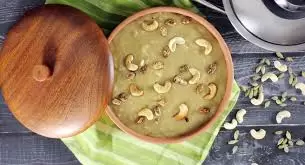
Puran Poli Recipe (Maharashtrian Chana Dal and Jaggery Flatbread)
Quick answer: Puran poli is a soft wheat flatbread stuffed with puran, a sweet paste of chana dal (split chickpeas) cooked with jaggery and spiced with cardamom and nutmeg. It is roasted on a griddle and served with ghee. In Maharashtra it is the classic sweet of Holi and Gudi Padwa. For Makar Sankr

Quick answer: Puran poli is a soft wheat flatbread stuffed with puran, a sweet paste of chana dal (split chickpeas) cooked with jaggery and spiced with cardamom and nutmeg. It is roasted on a griddle and served with ghee. In Maharashtra it is the classic sweet of Holi and Gudi Padwa. For Makar Sankranti, Marathi homes make gul poli, a different sesame and jaggery flatbread.
Kitchen note: This recipe is not yet kitchen-tested by a HinduTone cook. The quantities and timings follow common home methods; judge doneness by look and texture, and adjust for your stove and ingredients.
| Key facts | |
|---|---|
| Dish | Wheat flatbread with a cooked chana dal and jaggery filling |
| Region | Maharashtra; close relatives across South and West India |
| Main occasions | Holi and Gudi Padwa (sources below); also weddings and family festivals |
| Makes | 10 to 12 polis |
| Prep time | 30 minutes, plus 2 hours soaking the dal and 1 hour resting the dough |
| Cook time | 40 minutes for the filling; 3 to 4 minutes per poli |
| Allergens | Wheat (gluten), milk (ghee) |
| Vegan | Yes, with oil in place of ghee |
What is puran poli and when is it made?
In Marathi, puran is the sweet filling and poli is a flatbread. The filling is chana dal boiled soft, cooked down with jaggery until thick, and mashed smooth. A ball of it is sealed inside a soft dough, rolled thin and cooked on a griddle.
Maharashtra Tourism, the state government's tourism site, lists puran poli among the foods of Gudi Padwa, the Marathi new year in spring, and calls it a must-have on that day. Writing in Scroll, the food writer Priyadarshini Chatterjee describes making puran poli as a Holi tradition in Maharashtra. Many families also make it for weddings and other festive meals; which days a family chooses is a matter of household custom.
Is puran poli made for Makar Sankranti?
It is not the dish usually named for Sankranti. Maharashtra Tourism's Makar Sankranti page lists gul poli, tilgul ladoos and jaggery with bhakri as the festival's foods, and does not mention puran poli. Some families may still cook it at Sankranti, as they do for many festive meals, but if you want the Marathi Sankranti flatbread, make our gul poli recipe. For the day-by-day customs, see Makar Sankranti in Maharashtra.
How is puran poli different from gul poli and bobbatlu?
| Puran poli | Gul poli | Bobbatlu | |
|---|---|---|---|
| Region | Maharashtra | Maharashtra | Andhra Pradesh and Telangana |
| Filling | Chana dal cooked with jaggery, mashed | Grated jaggery, roasted sesame and roasted gram flour, not cooked before stuffing | Chana dal and jaggery, like puran |
| Dough | Usually wheat flour, sometimes mixed with plain flour | Whole-wheat flour with hot oil | Usually a very soft, oily plain-flour dough |
| Texture | Soft and tender | Thin, crisp edges with a molten jaggery layer | Soft and thin |
| Main occasions | Holi, Gudi Padwa, family festivals | Makar Sankranti | Ugadi and Sankranti in Telugu homes |
| Keeps | Best within a day or two | Several days | Best within a day or two |
Telugu bobbatlu are the closest cousin: the same idea of a chana dal and jaggery filling, with a different dough and rolling style. Karnataka's obbattu or holige belong to the same family.
Ingredients
For the puran (filling)
| Ingredient | Metric | US measure |
|---|---|---|
| Chana dal (split chickpeas) | 200 g | 1 cup |
| Water for cooking the dal | about 750 ml | about 3 cups |
| Jaggery, grated | 200 g | 1 cup, lightly packed |
| Cardamom powder | 2 g | 1/2 teaspoon |
| Nutmeg, freshly grated | 1 g | 1/4 teaspoon |
| Dry ginger powder (optional) | a pinch | a pinch |
| Ghee | 15 ml | 1 tablespoon |
For the dough
| Ingredient | Metric | US measure |
|---|---|---|
| Whole-wheat flour (atta), or half atta and half plain flour | 240 g | 2 cups |
| Turmeric | a pinch | a pinch |
| Salt | a pinch | a pinch |
| Oil | 60 ml | 1/4 cup |
| Water | about 160 ml | about 2/3 cup |
| Rice flour or atta, for dusting | 30 g | 1/4 cup |
| Ghee, for roasting and serving | as needed | as needed |
Use about equal weights of dal and jaggery for a classic sweetness. Families vary this; some use a little less jaggery or mix in some sugar.
How to make the puran
Stovetop method
- Rinse the chana dal and soak it in plenty of water for 2 hours.
- Drain, put it in a heavy pan with the cooking water and simmer, partly covered, until a grain mashes completely between your fingers, 40 to 50 minutes. Skim any foam.
- Drain the dal well in a sieve. Keep the drained water if you want to make a spiced dal with it for the same meal.
- Return the dal to the pan with the jaggery. The jaggery melts and the mixture turns loose at first.
- Cook on medium-low heat, stirring constantly, especially at the bottom. In 15 to 20 minutes it thickens and starts to leave the sides of the pan.
- Doneness test: stand a spoon upright in the centre of the pan. If it stays standing, the puran is ready. If it falls over, cook a few minutes more.
- Stir in the ghee, cardamom, nutmeg and dry ginger. Take it off the heat.
- While still warm, mash it smooth with a potato masher, or pass it through a puran grinder (a hand mill sold for this purpose) or a food processor. Lumps tear the dough when you roll.
- Cool completely. It firms up as it cools. Divide into 10 to 12 balls.
Pressure cooker method
- Soak the dal as above. Put it in the cooker with about 500 ml (2 cups) water.
- Cook on medium heat for 4 to 5 whistles, then let the pressure release on its own. The dal should be very soft but still hold its shape before mashing.
- Drain well and continue from step 4 of the stovetop method.
Instant Pot
- Soak the dal. Pressure cook with 500 ml (2 cups) water on high for 10 to 12 minutes, then let the pressure release naturally for 10 minutes.
- Drain well. Cook the dal and jaggery on the Sauté setting or, better, in a heavy pan on the stove, stirring constantly. A wide pan lets the moisture escape faster, and the mixture catches easily on the pot's base.
Melted jaggery and thick dal splutter. Use a long-handled spoon, keep children back from the stove and do not taste the puran until it has cooled.
How to make the dough
- Mix the flour, turmeric and salt. Add water little by little and knead a soft, sticky dough, softer than chapati dough.
- Add the oil a spoon at a time, kneading after each addition, until the dough is smooth, stretchy and soft.
- Cover and rest for at least 1 hour. A long rest makes the dough stretch around the filling without tearing.
- Divide into the same number of balls as the filling, each a little smaller than a filling ball.
How to roll and cook puran poli
- Oil your palms. Flatten a dough ball into a 7 to 8 cm disc and place a filling ball in the centre.
- Bring the dough up around the filling, pinch to seal and press away any extra dough at the top. Flatten gently into a thick disc.
- Dust well with rice flour or atta. Roll lightly from the centre outward into a round about 18 cm across, turning it often. Light pressure keeps the filling from breaking through.
- Heat a griddle (tava) on medium heat. Shake off excess flour and place the poli on it.
- Cook until small brown spots appear underneath, about 1 minute. Turn, cook the second side, then spread a little ghee on each side and press gently with a spatula until both sides are golden and spotted.
- Stack on a plate and keep covered with a cloth so the polis stay soft.
Puran poli for naivedyam
Some families offer puran poli to the household deity before the festive meal. Whether it is offered, and in what form, follows your family custom. Keep a portion aside before anyone tastes it, as is usual for naivedyam (food offered to the deity), and ask your family priest if you are unsure. For Sankranti offerings, see our Makar Sankranti puja at home guide.
Substitutions abroad
| Region | Chana dal | Jaggery | Other notes |
|---|---|---|---|
| USA and Canada | Indian grocers; sold as chana dal or split Bengal gram. Yellow split peas are not the same and cook to a different texture | Indian grocers; piloncillo or panela as a swap | Use chapati flour, or half whole-wheat and half all-purpose flour |
| UK | Supermarkets and Indian shops stock chana dal | Indian shops; panela in Latin American shops | Chapati flour is easy to find |
| Australia | Indian grocers | Indian grocers | A mix of wholemeal and plain flour works |
| The Gulf | Easy to find | Easy to find | Cook the puran in a wide pan to drive off moisture faster in humid weather |
| South-East Asia | Little India shops | Palm sugar is softer and sweeter; use a little less and cook the puran longer | Store the cooled puran in the fridge in hot weather |
Vegan option
Use oil in place of ghee in the filling and on the griddle. The dough already uses oil. Serve with a little coconut oil or plain.
Common mistakes
- Watery puran: the dal was not drained, or the mixture was not cooked long enough. Cook until a spoon stands upright.
- Grainy puran: the dal was undercooked. Cook it until it mashes completely before adding jaggery.
- Dough tears while rolling: the dough was too stiff or not rested. Make it soft with enough oil and rest it for an hour.
- Filling breaks out: the puran had lumps or you pressed too hard. Mash it smooth and roll gently with plenty of dusting flour.
- Burnt spots before the inside heats: the griddle was too hot. Keep it at medium.
Storage
Cooled puran keeps in an airtight container in the fridge for 3 to 4 days, and can be frozen for about a month; thaw in the fridge. Cooked polis are best the same day. Keep leftovers covered at room temperature for a day in cool weather, or refrigerate for 2 to 3 days. Warm on a griddle with a little ghee.
Allergens
Contains wheat (gluten) and milk (ghee). Chana dal is a legume. Sesame and peanuts are not in this recipe, but check that your flours and jaggery come from a kitchen without cross-contact if you cook for someone with allergies. Sesame is a major allergen in the USA and is on the UK's list of 14 allergens. There is no reliable gluten-free version of this flatbread.
Frequently asked questions
Is puran poli the same as gul poli?
No. Puran poli has a cooked chana dal and jaggery filling and is soft. Gul poli has an uncooked filling of grated jaggery, sesame and gram flour, turns slightly crisp and is the Maharashtrian Sankranti flatbread.
Is puran poli a Makar Sankranti dish?
Maharashtra Tourism names puran poli for Gudi Padwa and gul poli for Makar Sankranti. Scroll describes puran poli as a Holi tradition in Maharashtra. Some families may make it at Sankranti too, but it is not the dish usually named for that festival.
Why is my puran sticky and hard to roll?
It was not cooked long enough. Return it to a heavy pan and cook on low heat, stirring, until a spoon stands upright, then cool it fully before stuffing.
Can I make puran poli with only plain flour?
Yes. Many cooks use plain flour or a mix for a thinner, softer poli. Whole-wheat flour gives a more rustic poli and needs a softer dough and a longer rest.
How is puran poli served?
Warm, with a spoon of ghee on top. Some families serve it with warm milk, and many serve it with a thin spiced dal on the side.
Can I make the puran ahead?
Yes. Make it a day or two ahead and refrigerate. Bring it to room temperature before stuffing.
Sources
- Maharashtra Tourism (Government of Maharashtra), "Gudi Padwa" (puran poli listed as a must-have festival food): https://maharashtratourism.gov.in/festivals/gudi-padwa/ (accessed 12 November 2026)
- Maharashtra Tourism (Government of Maharashtra), "Makar Sankranti" (festival foods: tilgul, gul poli, jaggery with bhakri): https://maharashtratourism.gov.in/festivals/makar-sankranti/ (accessed 12 November 2026)
- Priyadarshini Chatterjee, "From Thandai to Puran Poli: Every Holi treat has a colourful story behind it", Scroll, 21 March 2019: https://scroll.in/magazine/916542/scroll_in (accessed 12 November 2026)
- US Food and Drug Administration, "Food Allergies": https://www.fda.gov/food/nutrition-food-labeling-and-critical-foods/food-allergies (accessed 12 November 2026)
- Food Standards Agency (UK), "Food allergy and intolerance advice for consumers": https://www.gov.uk/government/publications/food-allergy-and-intolerance-advice-for-consumers (accessed 12 November 2026)
Last reviewed: 12 November 2026.
Related guides
Share this with family and friends
Send it on WhatsApp, post it, or copy the link.
More from Recipes
- Rauh di Kheer Recipe (Punjabi Rice Kheer Cooked in Sugarcane Juice)
- Medu Vadai Recipe (Ulundu Vadai for Pongal and Festival Days)
- Sakkare Acchu Recipe (Karnataka Sugar Moulds for Sankranti)
- Dudh Puli Recipe (Bengali Rice Dumplings in Thickened Milk with Nolen Gur)
- Bhapa Pitha Recipe (Bengali Steamed Rice Cakes with Coconut and Nolen Gur)