
Ayyappa Deeksha in Modern Life: How Youth Can Balance Bhakti and Career
The distant sound of "Swamiye Saranam Ayyappa" echoes through corporate corridors, college campuses, and even international airports during the pilgrimage…
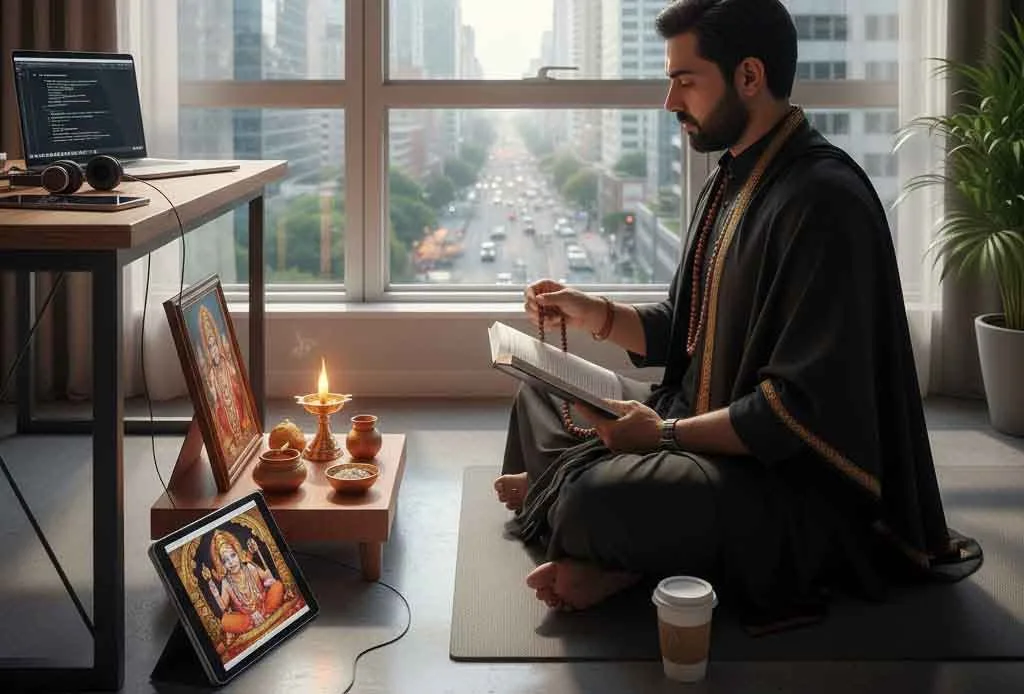
The distant sound of "Swamiye Saranam Ayyappa" echoes through corporate corridors, college campuses, and even international airports during the pilgrimage…
The distant sound of "Swamiye Saranam Ayyappa" echoes through corporate corridors, college campuses, and even international airports during the pilgrimage season. For today's youth—whether navigating demanding careers, studying abroad, or building startups—the 41-day Ayyappa Deeksha presents both a spiritual calling and a practical challenge. How does one maintain the sanctity of this ancient vratham while meeting deadlines, attending client meetings, or managing a hybrid work schedule?
The Modern Ayyappa Devotee: A New Reality
Unlike previous generations who could take extended leave or focus solely on spiritual practices, today's young devotees face unique circumstances. They're video conferencing with global teams at midnight, traveling across time zones, working in diverse office environments, and living in places where finding a Sabarimala-bound group requires digital coordination rather than neighborhood gatherings.
Yet, thousands of young professionals successfully complete the Deeksha each year, proving that devotion and ambition need not conflict. The key lies in understanding that Ayyappa Swamy's teachings—discipline, self-control, and inner transformation—align remarkably well with the qualities needed for professional success.
Practical Strategies for Office-Going Devotees
Early Morning Discipline
The corporate world respects those who arrive early and leave with their work done. Use this to your advantage. Wake up at 4:30 or 5:00 AM for your prayers, giving you uninterrupted spiritual time before the workday begins. Many successful devotees report that this practice not only fulfills their vratham requirements but also makes them more focused and productive throughout the day.
Dress Code Navigation
Most modern workplaces are understanding about religious observances. Wear your black or blue attire—many companies allow dark-colored business attire that aligns with Deeksha requirements. Keep a neat appearance, as cleanliness and dignity are themselves forms of devotion. For client-facing roles or formal meetings, you can wear dark suits or conservative colors that respect both professional and spiritual commitments.
If your workplace has a strict uniform policy, have a transparent conversation with HR before beginning your Deeksha. Most organizations appreciate advance notice and will accommodate religious practices.
Food and Fasting in Office Settings
The sattvic diet required during Deeksha—avoiding non-vegetarian food, alcohol, and certain pungent vegetables—is increasingly mainstream. Many urban cafeterias now offer vegan and vegetarian options. Pack your lunch if needed, focusing on simple foods like rice, dal, vegetables, and fruits.
For team lunches or client dinners, politely explain your dietary observance. In today's diverse workplace culture, most colleagues respect religious practices. Order vegetarian meals without guilt or excessive explanation—confidence in your choices often invites respect rather than questions.
Managing Business Travel
Traveling for work during Deeksha requires planning but is entirely manageable. Research temples near your destination where you can offer evening prayers. Many international cities have Hindu temples or prayer spaces. Hotel rooms can serve as personal shrines—carry a small photo or symbol of Ayyappa Swamy, and maintain your prayer routine even in unfamiliar surroundings.
Book accommodation with kitchen facilities when possible to prepare your own meals, or identify restaurants serving sattvic food. Apps and online communities can help you locate vegetarian-friendly places worldwide.
Maintaining Spiritual Practices in a Digital Age
Time Zone Challenges
For those working abroad or with international teams, maintaining traditional prayer times (early morning and evening) might conflict with meetings. Adapt intelligently: if you must attend a 6 AM call with your India office while in the US, complete your abbreviated prayers before the call and do your full puja later when time permits. Lord Ayyappa values sincere effort over rigid timing.
Virtual Sangham (Community)
Traditionally, devotees drew strength from local Ayyappa groups. Today, create or join online communities—WhatsApp groups, Discord servers, or social media circles—where fellow devotees share experiences, remind each other of practices, and provide support. Virtual satsangs on weekends can replicate the community feeling even when physically distant.
Meditation and Mindfulness Apps
Use technology to your advantage. Set reminders for prayer times, use meditation apps for guided sessions, and listen to Ayyappa bhajans during your commute or workout. Transform idle time—whether on the subway or waiting for a meeting—into moments of contemplation.
Balancing Family Expectations
Young devotees often face pressure from both traditional family members who expect strict adherence and modern partners or roommates unfamiliar with the practices.
Communication is Key
Before starting your Deeksha, have honest conversations with your family, partner, or roommates about what the 41 days will involve. Explain the significance, the rules you'll follow, and how it might temporarily affect household routines. Most people become supportive when they understand the depth of your commitment.
Shared Spaces, Personal Boundaries
If you share living space with non-devotees, create a dedicated prayer corner for yourself. You're not imposing your practices on others, just honoring your own spiritual path. Many young devotees find that their disciplined routine during Deeksha actually inspires roommates to adopt healthier habits themselves.
The Professional Benefits of Deeksha Discipline
Interestingly, many corporate professionals report that Deeksha practices enhance rather than hinder their careers:
- Enhanced Focus: The mental discipline from daily prayer and meditation improves concentration during work hours
- Better Health: The sattvic diet and avoidance of alcohol often lead to improved energy levels and clearer thinking
- Stress Management: Regular spiritual practice provides emotional resilience during high-pressure situations
- Time Management: Successfully balancing Deeksha and work demands develops exceptional organizational skills
- Respect from Peers: Colleagues often admire the dedication and self-control required to maintain such practices
Addressing Common Challenges
Handling Peer Pressure
Whether it's colleagues suggesting after-work drinks or friends planning non-vegetarian dinners, peer pressure is real. Stand firm but friendly. A simple "I'm observing a personal spiritual practice for 41 days" usually suffices. True friends respect boundaries; professional relationships actually strengthen when you demonstrate commitment and discipline.
Energy and Performance Concerns
Some worry that dietary restrictions or early waking might affect work performance. In reality, most devotees report the opposite—increased energy and mental clarity. The key is adequate sleep (adjust your bedtime earlier) and proper nutrition within sattvic guidelines. Include protein-rich lentils, dairy, nuts, and balanced meals.
The Completeness Question
Some young devotees feel conflicted about whether their modified approach is "authentic" enough. Remember that Ayyappa Swamy values the purity of intention over rigid external observances. The core principles—celibacy, truthfulness, compassion, humility, and devotion—can be maintained in any environment. You're not diluting the practice; you're adapting it to serve its true purpose: inner transformation.
Creating a Sustainable Practice
The beauty of undertaking Ayyappa Deeksha as a young professional is that it teaches sustainable spirituality. You learn that devotion isn't about withdrawing from the world but about bringing consciousness and values into every action—whether closing a business deal, coding software, treating patients, or teaching students.
Many devotees find that practices adopted during Deeksha—early rising, meditation, mindful eating, controlled speech—become lifelong habits that enhance both spiritual and professional life. The 41 days become training for a more conscious existence year-round.
A Path Forward
For today's youth, Ayyappa Deeksha isn't about choosing between material and spiritual success—it's about integrating both into a meaningful life. The corporate world needs people with strong values, self-discipline, and inner peace. The spiritual path needs practitioners who engage with the real world rather than escaping it.
When you walk the Pathinettam Padi (18 sacred steps) at Sabarimala after completing your Deeksha while successfully managing your career and relationships, you'll realize something profound: the pilgrimage wasn't just to the mountain shrine. The real journey was learning to carry the divine within you through every boardroom, every deadline, every challenge.
"Swamiye Saranam Ayyappa" isn't just a chant—it's a reminder that surrender to the divine and engagement with the world can coexist beautifully. Today's youth aren't compromising their faith by adapting it to modern life; they're demonstrating its timeless relevance and transformative power in an ever-changing world.
The vratham continues, even in the most unexpected places—a silent prayer before a presentation, a moment of gratitude during a commute, the discipline to choose right action over convenient action. This is Ayyappa Deeksha in the 21st century: ancient wisdom, modern application, eternal transformation.
Frequently Asked Questions
What is Ayyappa Deeksha in Modern Life?
The distant sound of "Swamiye Saranam Ayyappa" echoes through corporate corridors, college campuses, and even international airports during the pilgrimage season. For today's youth—whether navigating demanding careers, studying abroad, or building startups—the 41-day Ayyappa Deeksha presents both a spiritual calling and a practical challenge.
What are the key points about Ayyappa Deeksha in Modern Life?
How does one maintain the sanctity of this ancient vratham while meeting deadlines, attending client meetings, or managing a hybrid work schedule? The Modern Ayyappa Devotee: A New Reality Unlike previous generations who could take extended leave or focus solely on spiritual practices, today's young devotees face unique circumstances.
Why does Ayyappa Deeksha in Modern Life matter in Hinduism?
It reflects core values of Sanatana Dharma and offers practical and spiritual guidance that remains relevant across generations.
How can devotees apply Ayyappa Deeksha in Modern Life in daily life?
By reflecting on its teaching, incorporating the related practices or observances into daily routine, and approaching it with sincere devotion and understanding.
You might also like

Ayyappa Deeksha for NRIs: 41 Days of Vratham in USA, UK, Singapore & Malaysia – Real Stories from the Global Diaspora
Shani Deva Temples Worldwide & Must-Performed Rituals — Complete Devotee's Guide

Sacred Hindu Festivals & Temple News: Divine Week — May 2026