Makara Jyothi: The Divine Light of Sabarimala
The Sacred Illumination In the mystical hills of the Western Ghats, where the divine presence of Lord Ayyappa pervades every tree and stream, a celestial…
The Sacred Illumination
In the mystical hills of the Western Ghats, where the divine presence of Lord Ayyappa pervades every tree and stream, a celestial phenomenon occurs that fills millions of hearts with boundless devotion and spiritual ecstasy. This is the Makara Jyothi, the sacred light that appears on the holy day of Makaravilakku, illuminating not just the physical darkness of the Ponnambalamedu hills but also the spiritual darkness within countless souls seeking the Lord's blessings.
The Divine Setting: Sabarimala
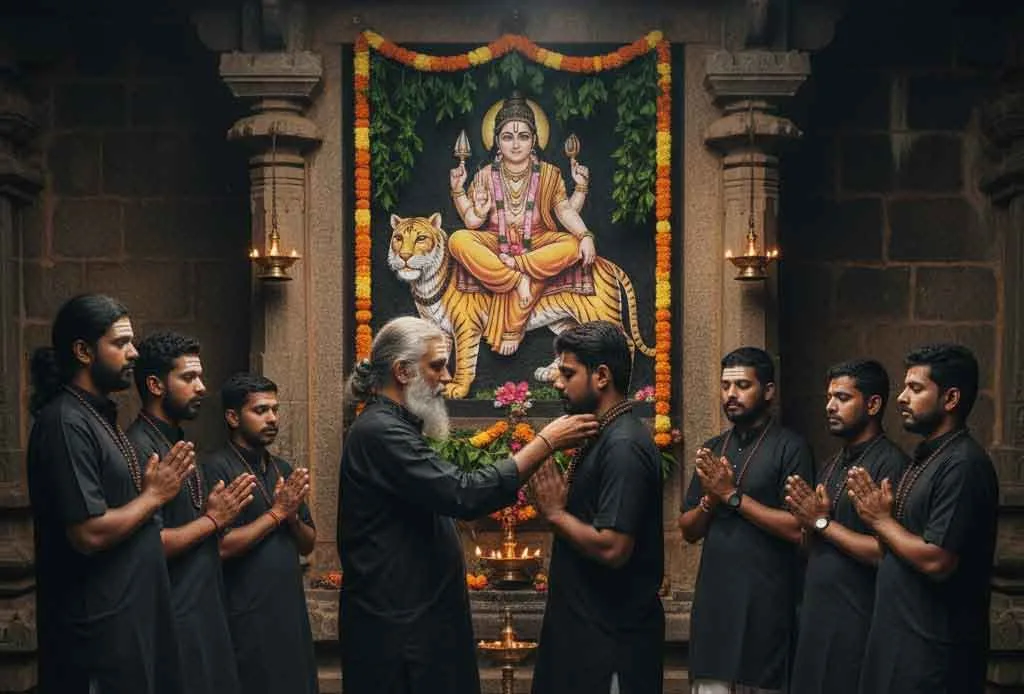
Sabarimala, nestled in the Periyar Tiger Reserve of Kerala's Pathanamthitta district, is one of the most revered pilgrimage sites in the Hindu world. The temple dedicated to Lord Ayyappa, the divine son of Shiva and Mohini (Vishnu's female form), sits atop the Sabari hills at an elevation of 468 meters. The very atmosphere here vibrates with spiritual energy, accumulated over centuries of prayers, austerities, and divine grace.
Lord Ayyappa, the eternal celibate deity, the compassionate protector of dharma, resides here in His sanctum sanctorum, blessing devotees who undertake the arduous pilgrimage with strict observances and pure hearts. The Lord is known by many sacred names—Hariharaputra, Dharma Sastha, Manikandan—each revealing a different aspect of His divine nature.
The Sacred Timing: Makar Sankranti
The Makara Jyothi appears on Makar Sankranti, the auspicious day when the Sun transitions into the zodiac sign of Makara (Capricorn). This typically occurs on January 14th or 15th each year, marking a cosmically significant moment in the Hindu calendar. Makar Sankranti represents the movement from darkness to light, from ignorance to knowledge, and symbolizes the beginning of the Sun's northward journey (Uttarayana).
In the context of Sabarimala, this celestial event takes on profound spiritual significance. It marks the culmination of the main pilgrimage season that begins in November with the Mandala Pooja and reaches its zenith during the Makaravilakku festival.
The Miraculous Appearance
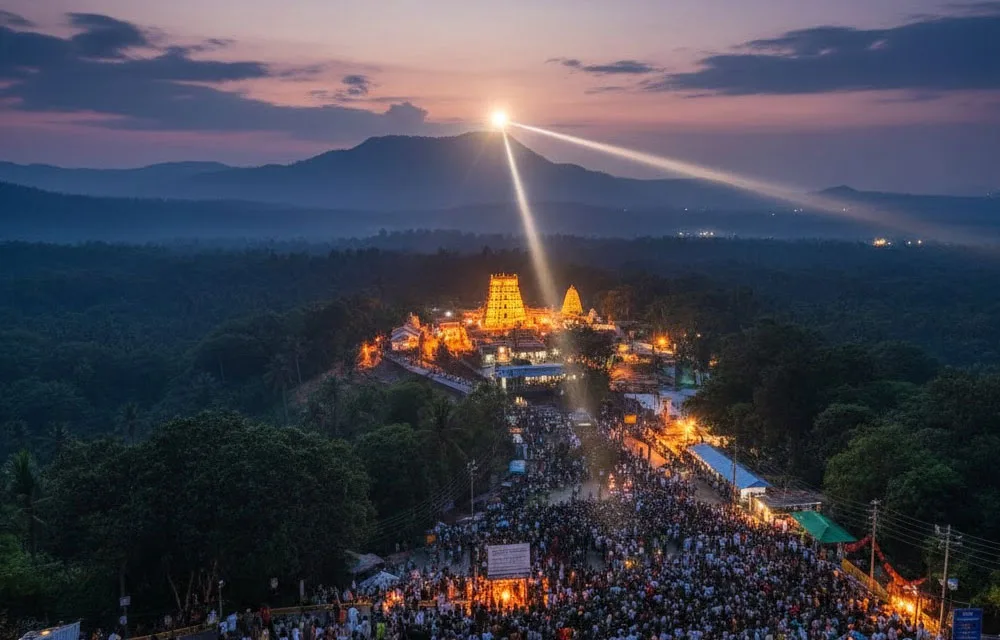
As twilight descends on Makar Sankranti evening, millions of pilgrims gather at Sabarimala, their eyes fixed toward the distant Ponnambalamedu hills. The air is thick with anticipation, charged with collective devotion. Pilgrims who have observed 41 days of strict austerities—maintaining celibacy, following vegetarian diets, sleeping on the floor, abstaining from worldly pleasures—stand united in their yearning for a glimpse of the divine light.
The chanting of "Swamiye Saranam Ayyappa" (Lord Ayyappa is my refuge) rises like waves from the assembled devotees. The mantras reverberate through the mountains, creating a symphony of faith that seems to touch the heavens themselves.
Then, as if in response to this collective prayer, the Makara Jyothi appears—a brilliant, celestial light manifesting on the Ponnambalamedu hills, approximately 8 kilometers from the main temple. The light typically appears three times, each manifestation lasting a few moments, blazing with divine radiance against the darkening sky.
The Divine Symbolism
The appearance of Makara Jyothi carries profound spiritual symbolism that resonates through the ages:
The Light of Knowledge: Just as the Jyothi illuminates the darkness of night, Lord Ayyappa's grace dispels the darkness of ignorance, attachment, and ego from the devotee's heart. The light represents the eternal truth that God is Jyoti Swaroopa—the embodiment of divine luminescence.
Divine Assurance: The appearance of the Jyothi is understood as Lord Ayyappa's direct blessing and acknowledgment of His devotees' sincere penance and devotion. It is His way of saying, "I am here. I see your devotion. I bless you."
Unity in Diversity: The Makara Jyothi appears before millions gathered from all corners of India and beyond, transcending barriers of caste, creed, economic status, and social position. Before the Lord's light, all are equal pilgrims on the spiritual path.
Cosmic Alignment: The timing with Makar Sankranti represents the perfect alignment of celestial energies with earthly devotion, a moment when the veil between the material and spiritual realms becomes thin.
The Pilgrimage: A Journey of Transformation
To truly understand the significance of Makara Jyothi, one must appreciate the extraordinary pilgrimage that devotees undertake. The journey to Sabarimala is not merely a physical trek but a profound spiritual transformation.
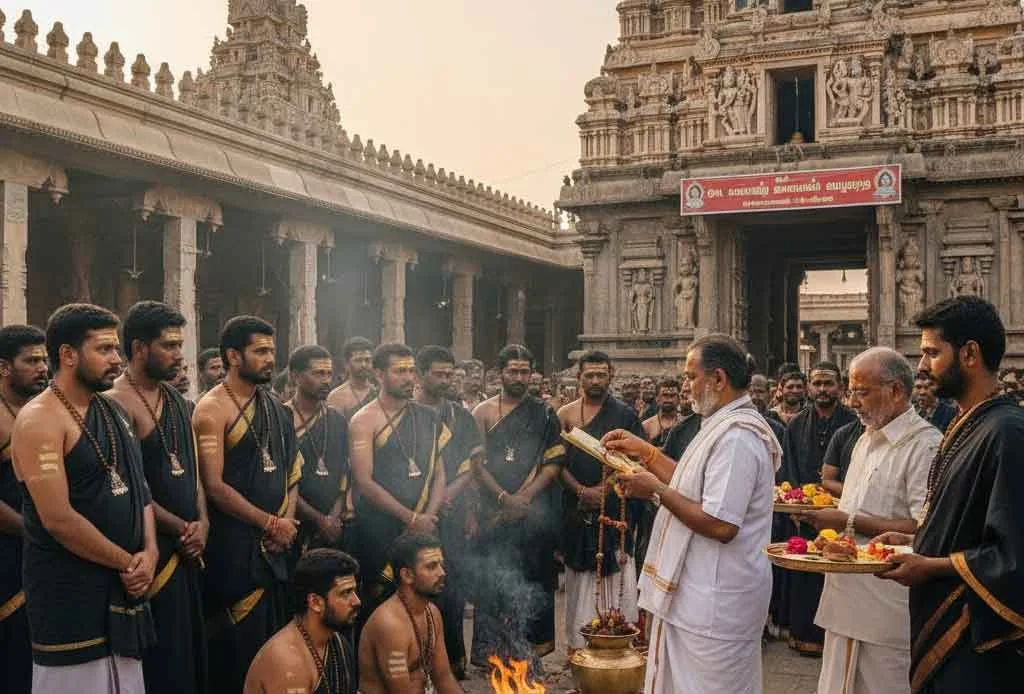
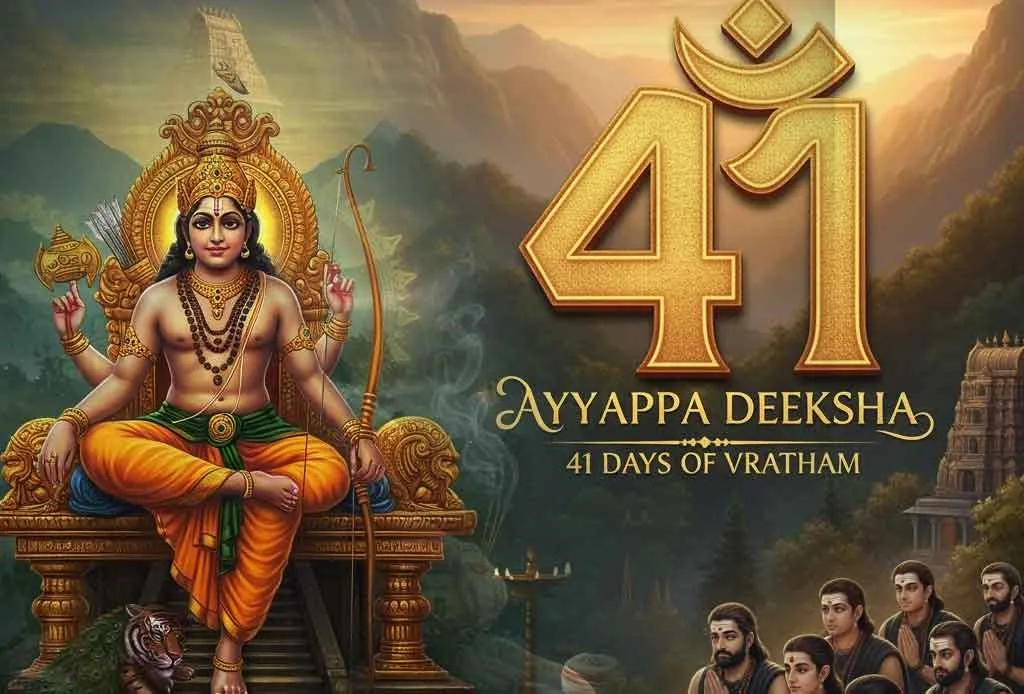
The 41-Day Vratham: Devotees observe strict austerities for 41 days before beginning their pilgrimage. During this period, they wear black or blue clothes, abstain from meat and alcohol, avoid shaving, sleep on hard surfaces, and wake before dawn for prayers. They address each other as "Swami," recognizing the divine spark within every fellow pilgrim.
The Irumudi: Each pilgrim carries the Irumudi, a sacred two-compartmented cloth bundle containing offerings for the Lord. The front compartment holds items for the Lord, while the back contains the pilgrim's basic necessities. This symbolizes surrender—offering the divine first priority while carrying one's worldly needs behind.
The Sacred Path: The traditional forest route, though challenging, is itself a meditation. Climbing the steep steps, crossing streams, and walking through dense forests, pilgrims repeat the sacred mantra "Swamiye Saranam Ayyappa" with every step. The physical exertion burns away impurities, while the constant chanting purifies the mind.
The Eighteen Steps: Upon reaching the temple, pilgrims must climb the sacred eighteen golden steps, which represent various aspects of spiritual knowledge—the five senses, eight types of pride, three qualities of nature (gunas), and knowledge-ignorance. Climbing these steps signifies transcending worldly attachments.
The Mystical Experience
For those who witness the Makara Jyothi, the experience is often described as transcendent and deeply moving. As the light appears, a wave of emotion sweeps through the crowd. Strong men weep with devotion, their hearts overflowing. Many report feeling an overwhelming sense of peace, as if Lord Ayyappa Himself has touched their souls.
Devotees believe that seeing the Makara Jyothi brings immense spiritual merit, washing away sins and obstacles accumulated over lifetimes. The darshan (sacred viewing) of this divine light is considered equal to receiving direct blessings from Lord Ayyappa Himself.
Some mystics and spiritual seekers report experiencing divine visions during this moment—seeing the form of Lord Ayyappa in meditation, feeling His presence tangibly, or receiving spiritual insights that guide their lives thereafter.
The Scientific Perspective and Faith
In the modern age, some have attempted to explain the Makara Jyothi through rational or scientific means, suggesting it might be a man-made light or a natural phenomenon. However, for millions of devoted pilgrims, such explanations miss the deeper truth.
Faith transcends empirical proof. The devotees who have observed rigorous austerities, who have climbed the mountains with prayers on their lips, who have surrendered their egos at the Lord's feet—for them, the Makara Jyothi is unquestionably divine. Whether explained by science or miracle, the spiritual experience and transformation it catalyzes remain profoundly real.
The Bhagavad Gita teaches us that the Lord appears to His devotees in whatever form they worship Him. For the millions who call out "Swamiye Saranam Ayyappa," the Makara Jyothi is Lord Ayyappa's divine response, His luminous blessing manifesting in visible form.
The Legend of Lord Ayyappa
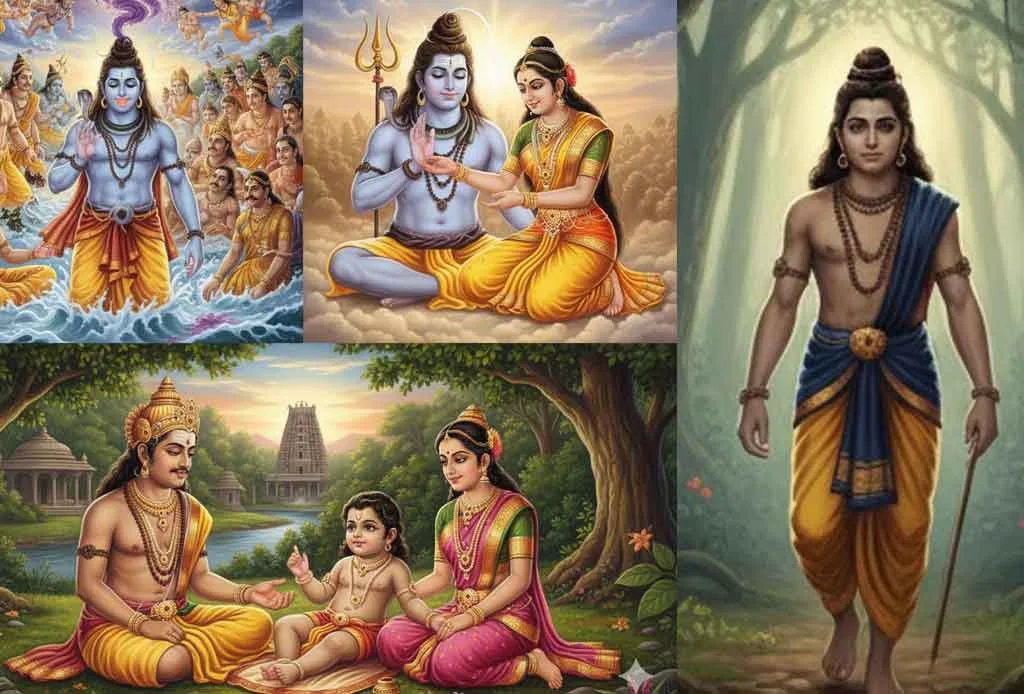
Understanding Makara Jyothi's significance requires knowing Lord Ayyappa's divine story. According to sacred texts and tradition, Lord Ayyappa was born from the union of Shiva and Mohini (Vishnu's enchanting female form) to destroy the demoness Mahishi, who could only be killed by the son of Shiva and Vishnu.
Ayyappa was found as an infant by King Rajasekhara of Pandalam, who adopted and raised Him. The divine child performed numerous miracles, including healing the king's original son and ultimately defeating Mahishi, thus restoring dharma.
After fulfilling His divine mission, Lord Ayyappa chose to remain at Sabarimala, blessing all who seek Him with sincere devotion. The goddess Mahishi, upon being slain by Ayyappa, realized His divine nature and requested that she be allowed to be near Him. The Lord granted her wish, and she manifests as the deity Malikapurathamma at a nearby shrine.
Lord Ayyappa vowed to remain celibate, dedicating Himself entirely to protecting and blessing His devotees. This is why the pilgrimage traditionally excluded women of menstruating age, though this practice has been subject to recent legal and social debates.
The Rituals and Observances
The Makaravilakku festival at Sabarimala is marked by several sacred rituals:
Makaravilakku Deeparadhana: Special prayers and lamp lighting ceremonies occur at the temple, creating a divine atmosphere.
Thiruvabharanam: The sacred ornaments of Lord Ayyappa are brought in a grand procession from the Pandalam Palace to Sabarimala, arriving just before the appearance of Makara Jyothi. This procession is itself a major event, with thousands witnessing the sacred jewels' journey.
Padi Puja: Special worship is conducted at the eighteen sacred steps, honoring their spiritual significance.
Guruthi Pooja: Traditional offerings are made to propitiate divine energies and ensure the welfare of all pilgrims.
The Unifying Power of Devotion
One of the most beautiful aspects of the Sabarimala pilgrimage and Makara Jyothi is its unifying power. People from all walks of life—rich and poor, educated and uneducated, young and old—stand together as equals before the Lord. Social hierarchies dissolve. Political differences vanish. Economic disparities become meaningless.
In addressing each other as "Swami" and maintaining the vratham's discipline together, pilgrims experience true brotherhood. This temporary dissolution of worldly distinctions offers a glimpse of the spiritual truth that all beings are fundamentally one, united in the divine consciousness.
The Spiritual Lessons
The Makara Jyothi and the Sabarimala pilgrimage teach profound spiritual lessons:
Discipline and Austerity: The 41-day vratham demonstrates that spiritual progress requires sustained discipline and sacrifice of immediate pleasures for higher goals.
Surrender and Humility: Carrying the Irumudi, climbing the steps barefoot, and maintaining simplicity throughout the journey cultivate humility and ego-dissolution.
Unity Consciousness: Experiencing divine grace alongside millions of fellow devotees expands one's sense of self beyond individual identity to cosmic unity.
Faith Beyond Reason: The devotion displayed at Sabarimala exemplifies how faith can transcend rational understanding, accessing truths that logic alone cannot reach.
Perseverance: The physical challenges of the pilgrimage mirror life's spiritual challenges, teaching that perseverance in devotion leads to ultimate realization.
The Eternal Light Within
While millions travel to Sabarimala to witness the external Makara Jyothi, spiritual masters remind us that the true Jyothi resides within each human heart. Lord Ayyappa's light appearing on the mountain is a reflection of the divine light that eternally burns in the cave of the heart.
The Upanishads declare "Tat Tvam Asi"—Thou Art That. The light you seek outside is the very light of consciousness within you. The pilgrimage's ultimate purpose is not just to see an external light but to awaken the inner light of self-realization.
The Global Spiritual Phenomenon
Sabarimala attracts one of the largest annual gatherings of pilgrims in the world, with estimates ranging from 40 to 50 million visitors during each pilgrimage season. This makes it comparable to the Kumbh Mela in terms of religious participation, marking it as a truly global spiritual phenomenon.
The dedication shown by these millions—many traveling thousands of kilometers, enduring significant hardships, spending their hard-earned money—testifies to the profound spiritual hunger in humanity and the power of Lord Ayyappa's grace to satisfy that hunger.
A Prayer for All Seekers
The traditional prayer sung by devotees captures the essence of the Sabarimala pilgrimage:
"Swamiye Saranam Ayyappa" (Lord Ayyappa is my refuge)
This simple yet profound mantra encapsulates complete surrender to the divine. It acknowledges that in this vast, often confusing universe, there is one constant refuge—the Lord's grace. Whether we call Him Ayyappa, Shiva, Vishnu, or any other name, the divine reality remains our ultimate shelter.
Conclusion: The Light That Transforms
The Makara Jyothi is more than a spectacular visual phenomenon. It is a divine communication, a blessing made visible, a reminder that in the darkest moments of life, the Lord's light continues to shine, guiding sincere seekers home to truth.
For those who have witnessed it, the memory of that sacred light remains etched in consciousness, a source of strength during difficult times, a reminder of divine presence during moments of doubt, and a beacon calling them back to spiritual practice when worldly distractions threaten to overwhelm.
The Makara Jyothi teaches us that no matter how dark the night, no matter how challenging the path, the divine light eternally shines. We need only climb the mountain of spiritual discipline, carry the Irumudi of sincere devotion, and keep our eyes fixed on the eternal truth.
As millions stand in the sacred hills of Sabarimala, witnessing that brilliant light pierce the darkness, they experience a truth beyond words—that God is not distant or abstract, but intimately present, responding to devotion with grace, appearing as light to those who walk in darkness, and blessing all who seek refuge in His eternal love.
Swamiye Saranam Ayyappa!
May the divine light of Lord Ayyappa illuminate the hearts of all beings, dispelling ignorance and bestowing eternal peace and bliss.
Also read: Makara Jyothi 2027 explained, Makaravilakku 2027 and the Thiruvabharanam procession.
Frequently Asked Questions
When does the Makara Jyothi appear at Sabarimala?
It appears on the evening of Makar Sankranti, when the Sun enters Makara (Capricorn), typically January 14 or 15. It marks the culmination of the pilgrimage season that begins in November with Mandala Pooja.
Where is the Makara Jyothi seen from?
Pilgrims gather at Sabarimala and look toward the Ponnambalamedu hills, about 8 kilometers from the main temple. The light typically appears three times, each lasting a few moments.
What does the Makara Jyothi symbolize?
Devotees see it as Lord Ayyappa's blessing and acknowledgment of their penance, and as the light of knowledge dispelling ignorance and ego. It also reflects unity, since all pilgrims stand equal before it.
What is the 41-day vratham before Sabarimala?
Devotees observe strict austerities for 41 days: wearing black or blue clothes, avoiding meat, alcohol and shaving, sleeping on hard surfaces and waking before dawn. They address each other as Swami.
What is the Irumudi carried to Sabarimala?
The Irumudi is a sacred two-compartment cloth bundle. The front holds offerings for the Lord and the back holds the pilgrim's own necessities, symbolizing surrender.
What is said about scientific explanations of the Makara Jyothi?
Some have suggested it is a man-made light or a natural phenomenon. For devotees, it remains Lord Ayyappa's divine response, and the faith and transformation it brings are what matter to them.
Share this with family and friends
Send it on WhatsApp, post it, or copy the link.
More from Sabarimala Yatra
- Sabarimala Mandala Season 2026 Preparations: Security Review, Aravana Contracts and AI Crowd Control at Nilakkal
- Kanni Ayyappan and the Guru Swami: A First-Timer's Guide to Sabarimala 2026-27
- Malikappuram Devi at Sabarimala: The Story of Malikappurathamma, Her Shrine and Its Significance
- Thiruvabharanam: The Sacred Ornaments of Lord Ayyappa and the Procession from Pandalam to Sabarimala
- Makara Jyothi 2027: What It Means, How It Differs from Makaravilakku, and How Devotees Behold It at Sabarimala
You might also like
Ayyappa Swamy Story: From Manikanta's Birth to Divine Sabarimala Darshan
Ayyappa Swami Mala Dharana Rituals for Hindu Devotees in Tamil Nadu
Ayyappa Deeksha for NRIs: 41 Days of Vratham in USA, UK, Singapore & Malaysia – Real Stories from the Global Diaspora