Makara Jyothi 2025: Date, Significance, and Hidden Spiritual Meaning
When is Makara Jyothi 2025? Makara Jyothi 2025 falls on January 14, coinciding with Makar Sankranti, the day when the sun transitions from Sagittarius (Dhanu…
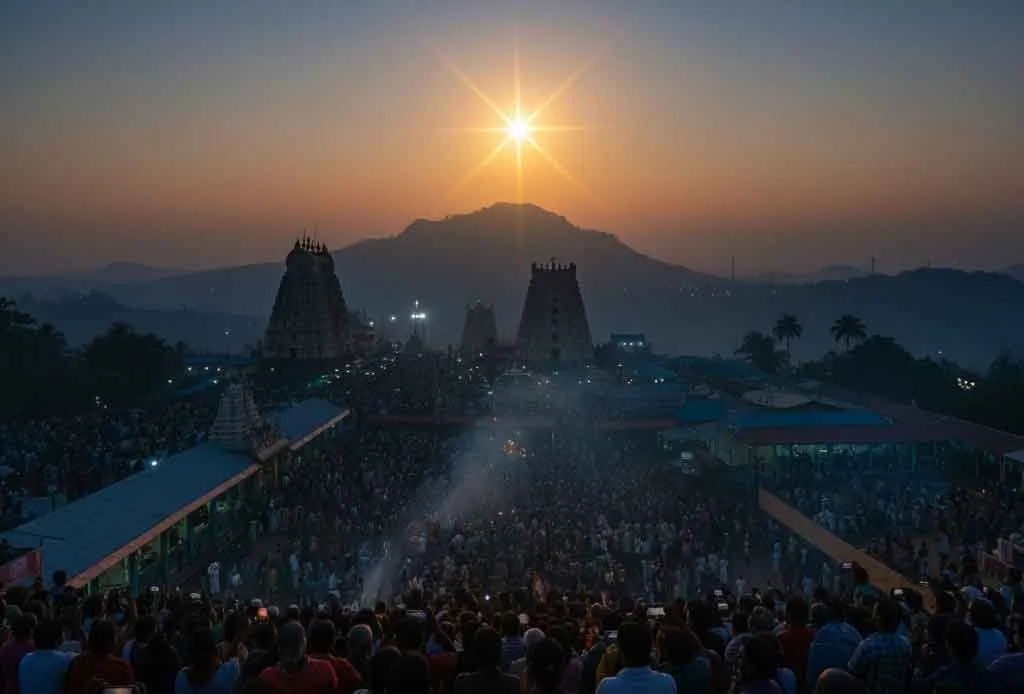
When is Makara Jyothi 2025? Makara Jyothi 2025 falls on January 14, coinciding with Makar Sankranti, the day when the sun transitions from Sagittarius (Dhanu…
When is Makara Jyothi 2025?
Makara Jyothi 2025 falls on January 14, coinciding with Makar Sankranti, the day when the sun transitions from Sagittarius (Dhanu rashi) to Capricorn (Makara rashi). The sacred light will appear at approximately 6:00 PM IST, with the Makara Vilakku Sankranti Moment occurring at 09:03 AM.
This date marks the culmination of one of the world's most significant pilgrimages, as millions of devotees gather at the Sabarimala Temple in Kerala to witness this divine phenomenon.
What is Makara Jyothi?
Makara means Capricorn (the zodiac sign) and Jyothi means light in Sanskrit. Makara Jyothi is considered a divine manifestation of Lord Ayyappa, appearing as a celestial star or flame that shines on the Ponnambalamedu hill near Sabarimala Temple.
The Dual Phenomenon
The Makara Jyothi celebration actually involves two distinct elements:
- Makara Jyothi (The Celestial Star): The celestial star Sirius that can be seen above Ponnambalamedu hill when viewed from Sabarimala
- Makaravilakku (The Sacred Flame): The sacred light that appears three times from the distant hill of Ponnambalamedu, visible between 6 PM and 7 PM IST
For devotees, witnessing this light brings immense spiritual merit and divine grace, symbolizing the deity's blessings, spiritual illumination, and the victory of good over evil.
The Complete Story of Lord Ayyappa and Makara Jyothi
The Divine Birth of Ayyappa
Lord Ayyappa, also known as Manikantha or Hariharaputra, was born from the union of Lord Shiva (Hara) and Mohini, the female form of Lord Vishnu (Hari). This unique divine birth was destined for a sacred purpose.
The Legend of Mahishi
Mahishi, sister of the demon Mahishasura (who was slain by Goddess Durga), sought revenge against the Devas. Through intense penance, she secured a boon from Lord Brahma that only the offspring of Vishnu and Shiva could slay her. Armed with this seemingly impossible condition, Mahishi invaded Devaloka and began harassing the Devas.
The King of Pandalam's Discovery
King Rajashekara of Pandalam, a childless devotee of Lord Shiva, discovered an infant on the banks of River Pampa during a hunting expedition. The king named the boy Manikantha (meaning one with a bell around his neck) and raised him as his own son.
The Young Prince's Divine Powers
As a child, Manikandan was exceptionally intelligent and excelled in martial arts and scriptures, displaying superhuman talents that amazed his teachers. When his guru realized Manikandan's divine nature, he requested a blessing for his blind and mute son, which Manikandan granted, restoring both sight and speech.
The Queen's Plot
When Manikantha was 12 years old and the king wanted to anoint him as heir, the queen objected, favoring her younger biological child. Plotting to eliminate Manikantha, the queen feigned illness and demanded tiger's milk as a cure, expecting him to perish in the attempt.
The Battle with Mahishi
As Manikandan ventured into the forest, he witnessed the atrocities of demoness Mahishi in Devaloka. Outraged by injustice, Manikandan hurled Mahishi onto earth where she fell on the banks of Azhutha River. A fierce battle ensued, culminating in Manikandan mounting Mahishi's chest and performing a violent dance that reverberated through earth and heaven, ultimately defeating her.
The Triumphant Return
After defeating Mahishi, Manikandan returned to the kingdom riding on the back of a tiger, accompanied by other tigers and tigresses who were actually Lord Indra and the Devas in disguise. The queen's deception was exposed, and Manikandan's divine purpose was revealed.
Establishment at Sabarimala
After fulfilling his divine mission, Ayyappan chose the path of renunciation and retreated to Sabarimala forests for meditation and spiritual enlightenment. It is believed that on Makaravilakku day, Lord Ayyappa merged with the main idol in the Sabarimala Temple.
The Sacred Pilgrimage: Mandala Vratham
The 41-Day Penance
Devotees undergo a strict 41-day penance known as Mandala Vratham, which involves abstaining from worldly pleasures, practicing celibacy, and adhering to a disciplined lifestyle. Pilgrims wear black attire symbolizing renunciation and carry the traditional Irumudi Kettu – a two-compartment bag containing offerings for Lord Ayyappa.
The 18 Sacred Steps
The journey involves climbing the 18 sacred steps, each representing a facet of self-discipline and spiritual growth. These steps are considered so sacred that only those who have completed the 41-day vratham are permitted to ascend them.
The Pilgrimage Season 2024-2025
The Mandala Pooja season ran from November 15 to December 26, 2024, followed by the Makara Vilakku pilgrimage from December 30, 2024, to January 20, 2025.
The Makaravilakku Festival Rituals
Thiruvabharanam Procession
The most significant ritual is the evening deeparadhana (lamp-worship), during which Lord Ayyappa is adorned with the Thiruvabharanam, a set of gold ornaments specially brought from Pandalam Palace. The sacred ornaments are carried in a grand procession called Ghoshayatra from Pandalam Palace, accompanied by the Travancore Devaswom Board representatives.
The Eagle and Divine Signs
Before the evening worship, an eagle is often seen flying over the temple, followed by the appearance of the Makara Star (Makara Jyothi) in the sky. According to tradition, this eagle is believed to be Garuda, the vehicle of Lord Vishnu, who accompanies the Thiruvabharanam throughout its journey and circles the Sannidhanam nine times to pay respect to Lord Ayyappa.
The Sacred Light Appears
The Makaravilakku light appears three times on the evening of January 14, 2025, between 6 PM and 7 PM IST from the Ponnambalamedu hill. As the light appears, the atmosphere resonates with fervent chants of "Swamiye Saranam Ayyappa" from millions of devotees.
Kuruthi Puja
The festival concludes with Kuruthi Puja, another popular ritual observed during Makaravilakku, signifying the festival's end and the completion of devotees' 41-day discipline.
Hidden Spiritual Meanings
Astronomical Significance
The name Makara Vilakku refers to the appearance of the sacred light coinciding with the sun's transition into Capricorn (Makara), marking the beginning of the auspicious Uttarayana period. This cosmic moment is considered highly auspicious, as it marks the sun's transition into the zodiac sign of Capricorn.
Symbol of Spiritual Illumination
The sighting of Makara Jyothi is considered an auspicious omen, signifying purity, enlightenment, and spiritual awakening – a moment of transcendence and divine communion for pilgrims who witness it. For devotees, witnessing this light is a moment of profound spiritual awakening and fulfillment.
Victory of Good Over Evil
The Makara Jyothi symbolizes the deity's blessings, spiritual illumination, and the victory of good over evil, associated with Lord Ayyappa's triumph over the demoness Mahishi and representing divine protection and victory.
Unity and Equality
The festival emphasizes the idea of unity and equality among all devotees, regardless of caste, creed, or background, aligning with Ayyappa's teachings that promote the notion that true devotion transcends societal divisions. Lord Ayyappa is believed to be a symbol of unity, transcending the boundaries of caste, creed, and religion.
The Path to Self-Realization
Makaravilakku carries profound spiritual teachings for devotees, encouraging introspection, self-discipline, and commitment to dharma. The arduous journey to Sabarimala challenges individuals to overcome their personal limits and emerge spiritually renewed.
The celestial light serves as a beacon, guiding devotees on their path to self-realization and enlightenment.
Why Millions Wait for Makara Jyothi
The Makara Jyothi represents far more than a religious ritual. It is:
- A Spiritual Culmination: The endpoint of intense 41-day spiritual discipline
- Divine Darshan: Direct experience of Lord Ayyappa's presence
- Cosmic Alignment: Witnessing the sacred convergence of celestial and earthly events
- Personal Transformation: A life-changing experience symbolizing a journey toward enlightenment and divine grace
- Collective Faith: An experience that fosters unity and devotion among pilgrims, transcending barriers of caste, creed, and social status
The Living Legend
By Tuesday morning of January 14, 2025, an estimated 1.5 lakh pilgrims had gathered at Sannidhanam, with many arriving days in advance to secure their place. The overwhelming devotion demonstrates that Makara Jyothi is not merely an ancient tradition but a living, breathing spiritual phenomenon that continues to touch millions of hearts.
The appearance of Makara Jyothi at Sabarimala remains one of Hinduism's most powerful symbols – a divine light that pierces through darkness, reminding devotees that faith, discipline, and devotion lead to spiritual enlightenment and divine grace.
Swamiye Saranam Ayyappa [image: 🙏]
Note: Lakhs of devotees witnessed the Makara Jyothi on January 14, 2025, as the spiritually charged atmosphere at Sabarimala peaked with the auspicious sighting on Ponnambalamedu.
Frequently Asked Questions
What is Makara Jyothi?
When is Makara Jyothi 2025? Makara Jyothi 2025 falls on January 14, coinciding with Makar Sankranti , the day when the sun transitions from Sagittarius (Dhanu rashi) to Capricorn (Makara rashi).
What are the key points about Makara Jyothi?
The sacred light will appear at approximately 6:00 PM IST, with the Makara Vilakku Sankranti Moment occurring at 09:03 AM. This date marks the culmination of one of the world's most significant pilgrimages, as millions of devotees gather at the Sabarimala Temple in Kerala to witness this divine phenomenon.
Why does Makara Jyothi matter in Hinduism?
It reflects core values of Sanatana Dharma and offers practical and spiritual guidance that remains relevant across generations.
How can devotees apply Makara Jyothi in daily life?
By reflecting on its teaching, incorporating the related practices or observances into daily routine, and approaching it with sincere devotion and understanding.
You might also like
Shani Deva Temples Worldwide & Must-Performed Rituals — Complete Devotee's Guide
Shani Jayanti 2026: Date, Significance, Rituals & Powerful Mantras
Purushottam Maas 2026: Lord Vishnu's Sacred Gift of Spiritual Multiplication & Divine Grace