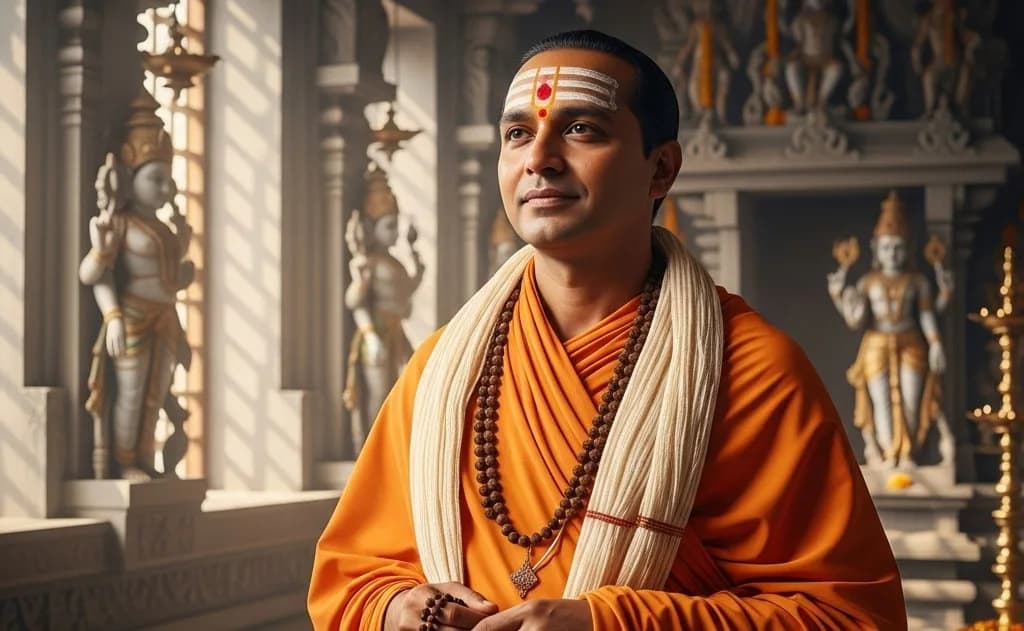
10 Inspiring Sadhguru Quotes for Spiritual Growth
Discover the wisdom of Sadhguru with these 10 profound quotes on spirituality, life, and inner growth.

Discover the wisdom of Sadhguru with these 10 profound quotes on spirituality, life, and inner growth.
Discover the wisdom of Sadhguru with these 10 profound quotes on spirituality, life, and inner growth. Embrace clarity and self-realization through Sadhguru's insights.
- "Your life is your making. No one else is responsible for it." This quote emphasizes personal responsibility, a core aspect of spiritual growth. Sadhguru highlights the importance of self-awareness and taking control of one's destiny.
- "The quality of your life is determined by how peacefully you can handle the moments of stress and challenges." Focus on peace and mindfulness, encouraging readers to approach challenges with calmness and clarity.
- If you resist change, you resist life." Life is always in motion, and Sadhguru teaches the need for embracing change, a critical concept in spiritual evolution and personal development.
- "Spirituality is not about looking up or down – it’s about looking inward." Perfect for promoting inner reflection and spiritual practices like meditation, a topic relevant to your blog’s readers.\
- "You cannot transform yourself without facing the challenges within." Sadhguru encourages individuals to confront their inner obstacles in order to grow spiritually, ideal for readers seeking self-improvement and spiritual awakening.
- "The only way out is inward." A powerful message emphasizing the importance of introspection in the path to self-realization and inner peace.
- "Love is not something you do; love is the way you are." This quote speaks to the spiritual nature of love as a state of being, resonating with themes of emotional and spiritual connection.
- "Without involving yourself in every aspect of life, you will never truly know what it is." Encourages readers to engage fully with life, aligning with Hindu practices that embrace the world and all its facets in the pursuit of spirituality.
- "Devotion is not about belief; it is about inclusiveness." This quote highlights the open and embracing nature of spirituality, which transcends dogma and focuses on unity.
- "Being spiritual means being an architect of your own destiny." Perfect for motivating readers to take charge of their spiritual journeys, crafting their own paths to enlightenment and fulfillment.
How Do Sadhguru's Teachings Connect to Classical Vedantic Philosophy?
Many of Sadhguru's core ideas resonate deeply with the Advaita Vedanta tradition articulated by Adi Shankaracharya in the 8th century CE. The insistence that 'the only way out is inward' mirrors the Vedantic concept of pratyak-chaitanya — the turning of consciousness back upon itself — described in the Mandukya Upanishad. Where external rituals address the gross body, Vedanta locates liberation (moksha) in the recognition of Atman as identical with Brahman.
Sadhguru's framing of love as 'the way you are' rather than something you do closely parallels the Narada Bhakti Sutras, which define supreme devotion (para bhakti) not as an act but as an unbroken state of being (svarupa). This distinction between episodic emotion and ontological love is foundational to both the Bhagavata Purana and the teachings of medieval saint-poets such as Mirabai and Tukaram.
What Is the Role of Karma Yoga in the Quote 'Your Life Is Your Making'?
The Bhagavad Gita, in chapters three and five, presents Karma Yoga — the path of right action — as one of the four principal routes to self-realisation. Lord Krishna tells Arjuna in Gita 3.19: 'Therefore, without attachment, always perform the action that should be done.' Sadhguru's statement that 'your life is your making' is a modern articulation of this same principle: that each individual is the architect of their own karma and, consequently, their own liberation or bondage.
The Sanskrit term kartritva — the sense of doership — is precisely what both Karma Yoga and Sadhguru's teaching ask the practitioner to examine. Taking responsibility does not mean claiming ego-driven credit; it means recognising that every thought, word, and deed leaves an imprint (samskara) on consciousness. Understanding this mechanism transforms the practitioner from a passive recipient of fate into an active, aware participant in their own evolution.
Which Spiritual Practices Support the Inward Journey Sadhguru Describes?
The Yoga Sutras of Patanjali outline an eight-limbed (ashtanga) path whose later stages — pratyahara (withdrawal of the senses), dharana (concentration), dhyana (meditation), and samadhi (absorption) — are entirely inward-facing. This corresponds directly to Sadhguru's recurring emphasis on turning attention inward rather than seeking resolution in the external world. The Isha Foundation, which Sadhguru established near Coimbatore in Tamil Nadu, offers structured programmes such as Inner Engineering that draw on classical kriya and kundalini traditions to make these limbs accessible to contemporary practitioners.
The Taittiriya Upanishad describes the human being as five concentric sheaths (pancha kosha): the physical (annamaya), the vital-energetic (pranamaya), the mental (manomaya), the intellectual (vijnanamaya), and the blissful (anandamaya). Genuine inward inquiry, as both the Upanishads and Sadhguru's teachings suggest, requires moving through each of these layers systematically rather than leaping to a conceptual idea of peace. Practices such as Shambhavi Mahamudra, rooted in the tantric Shaiva tradition of South India, are designed to facilitate exactly this layered exploration.
How Does the Concept of Inclusiveness in Devotion Reflect Sanatana Dharma's Breadth?
Sadhguru's assertion that 'devotion is not about belief; it is about inclusiveness' echoes the Sanskrit phrase sarva-dharma-samaanata — the equal honouring of all paths — found in the philosophical outlook of the Rigveda's famous verse (1.164.46): 'Ekam sat vipra bahudha vadanti' ('Truth is one; the wise call it by many names'). This inclusivity is structurally built into Sanatana Dharma, which has never required a single creed or a single deity as the exclusive gateway to the divine.
The great Shaiva pilgrimage site of Kashi Vishwanath in Varanasi, and the Vaishnava shrine of Sri Ranganathaswamy in Srirangam, Tamil Nadu, both historically welcomed worshippers regardless of sectarian affiliation, illustrating institutional expressions of this very inclusiveness. The Bhagavata Purana (11.2.45) similarly states that a true devotee sees the divine in all beings (sarva-bhuta-hrid-alayam), dissolving the boundary between the worshipper, the worshipped, and the world.
What Does Sadhguru's Teaching on Change Have in Common With the Concept of Anicca and Prakriti?
The insistence that resisting change means resisting life connects directly to the Samkhya philosophical concept of Prakriti — primal nature — which is defined by the continuous interplay of three gunas (tamas, rajas, and sattva). Everything in the manifest universe is in perpetual flux precisely because Prakriti's very essence is dynamic transformation. The Bhagavad Gita (13.19) affirms: 'Know that both Prakriti and Purusha are beginningless.' Resistance to change, in this framework, is an attempt to freeze what is cosmically unfreezing.
While this idea appears in Buddhist discourse as anicca (impermanence), within the Hindu philosophical matrix it carries an additional dimension: change is not merely something to be accepted but something to be harnessed through viveka (discriminative wisdom). Sadhguru's practical teaching on this point encourages practitioners to develop an inner stillness that is not rigidity but rather the stable awareness (sakshi bhava) from which all change can be witnessed without anxiety — a quality cultivated through regular meditative practice.
How Can a Sincere Seeker Begin Applying These Quotes as Daily Sadhana?
In classical usage, sadhana refers to a disciplined daily practice undertaken with sincerity over an extended period. The Hatha Yoga Pradipika and various Agamic texts recommend anchoring sadhana to fixed times — ideally brahma muhurta, the pre-dawn hour approximately 96 minutes before sunrise — because the mind is naturally quieter and more receptive. A practitioner wishing to live the spirit of 'spirituality is about looking inward' might begin each morning with five to ten minutes of silent self-inquiry before engaging with the day.
Journaling each of the ten quotes and reflecting on a specific life situation where it applies is a modern extension of the ancient practice of manana — deep pondering of a teaching heard from a teacher (shravana). The Mundaka Upanishad describes the three-stage process: shravana (hearing), manana (reflection), and nididhyasana (sustained contemplation until the truth becomes lived experience). Treating Sadhguru's quotes not as inspirational decorations but as seeds for this three-stage process transforms them from motivational phrases into genuine instruments of inner transformation.
Frequently Asked Questions
What is 10 Inspiring Sadhguru Quotes for Spiritual Growth?
Discover the wisdom of Sadhguru with these 10 profound quotes on spirituality, life, and inner growth. Embrace clarity and self-realization through Sadhguru's insights.
What are the key points about 10 Inspiring Sadhguru Quotes for Spiritual Growth?
"Your life is your making. No one else is responsible for it." This quote emphasizes personal responsibility, a core aspect of spiritual growth.
Why does 10 Inspiring Sadhguru Quotes for Spiritual Growth matter in Hinduism?
It reflects core values of Sanatana Dharma and offers practical and spiritual guidance that remains relevant across generations.
How can devotees apply 10 Inspiring Sadhguru Quotes for Spiritual Growth in daily life?
By reflecting on its teaching, incorporating the related practices or observances into daily routine, and approaching it with sincere devotion and understanding.
You might also like
Purushottam Maas 2026: Lord Vishnu's Sacred Gift of Spiritual Multiplication & Divine Grace
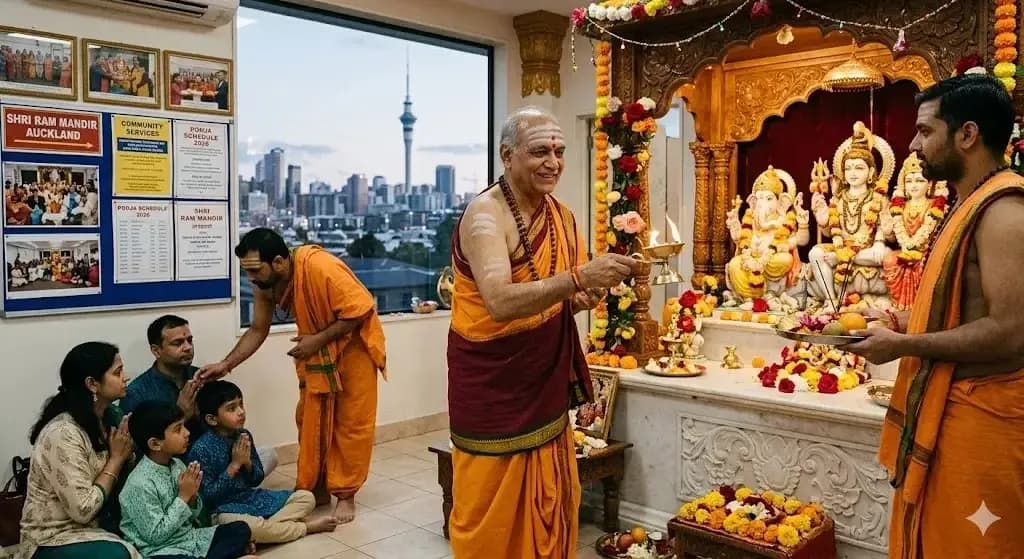
Hindu Priest Jobs New Zealand 2026 — Auckland, Wellington, Christchurch Vacancies & NZ Religious Worker Visa Guide
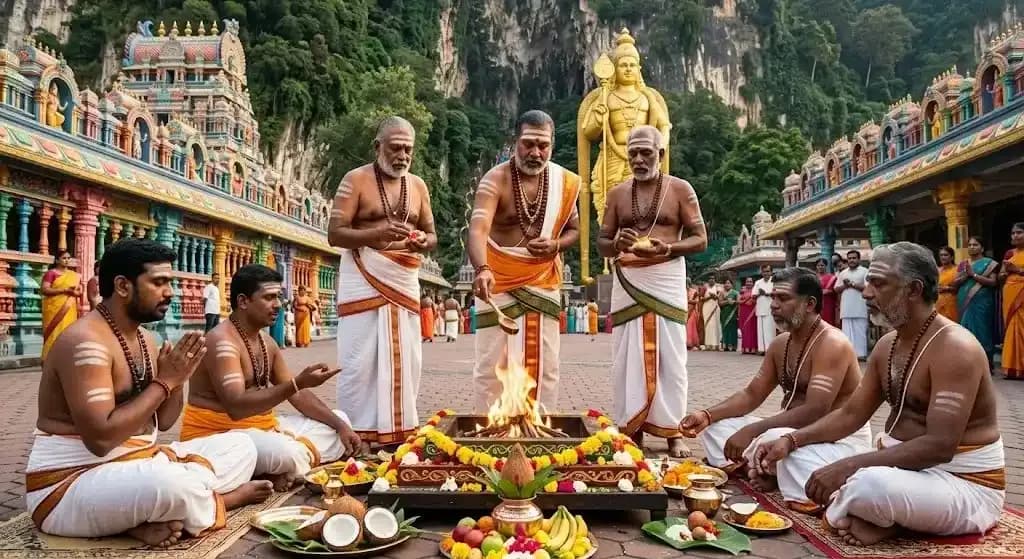
Hindu Priest Jobs Malaysia 2026 — Batu Caves, KL, Penang Vacancies & Tamil Hindu Career Guide