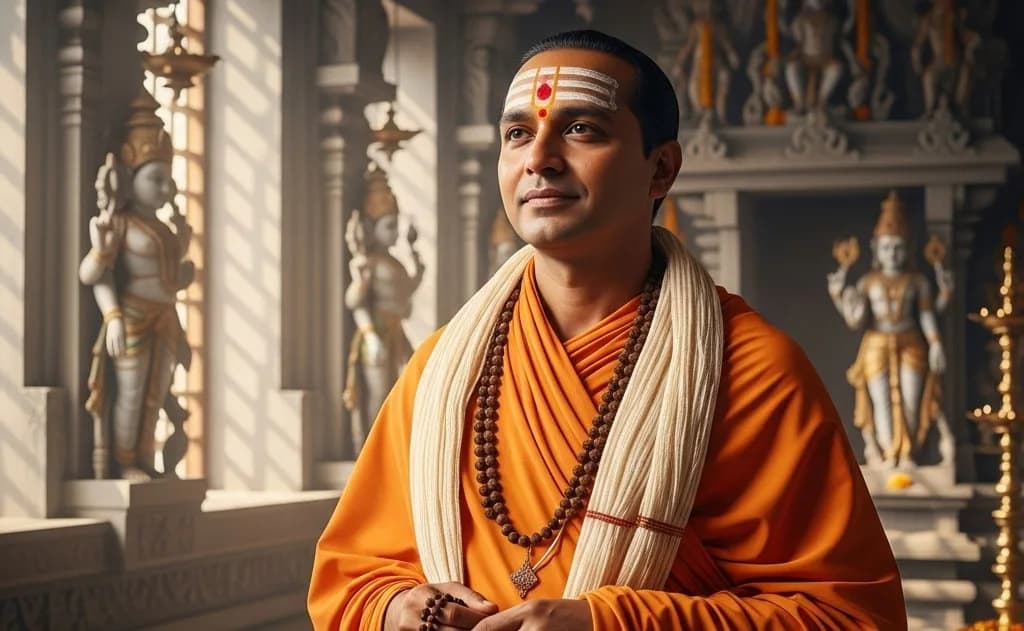
Sadhguru’s Approach to Spirituality: Inner Engineering for Personal Transformation
Sadhguru, a renowned spiritual leader, has captured the attention of millions worldwide with his teachings on self-realization and personal transformation.
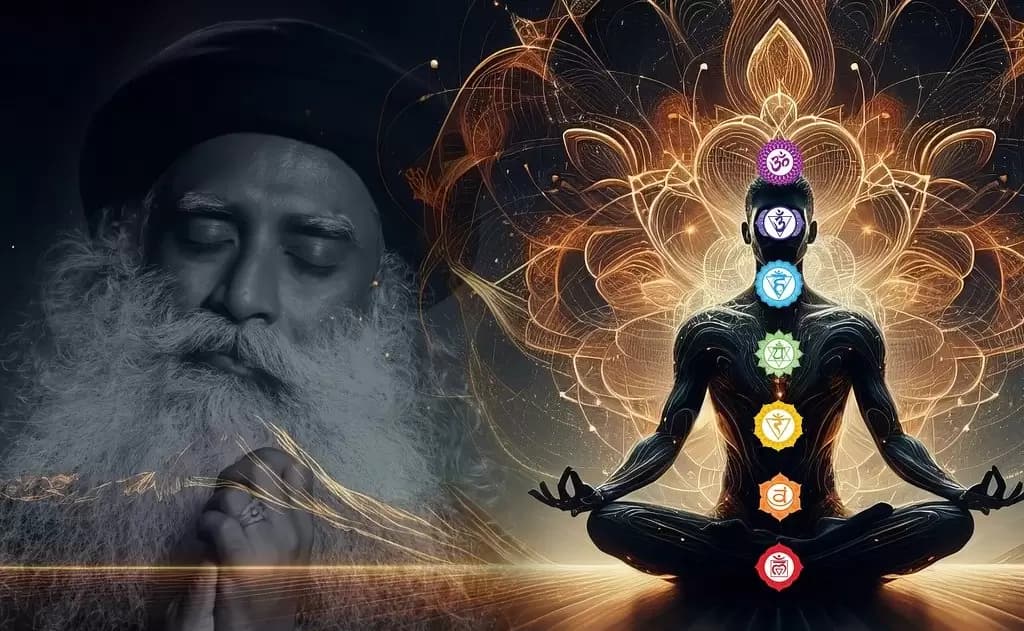
Sadhguru, a renowned spiritual leader, has captured the attention of millions worldwide with his teachings on self-realization and personal transformation.
Sadhguru, a renowned spiritual leader, has captured the attention of millions worldwide with his teachings on self-realization and personal transformation. At the heart of his philosophy is Inner Engineering, a comprehensive self-development program that offers tools for inner well-being through mindfulness, yoga, and meditation. This blog post explores how Sadhguru’s Inner Engineering helps individuals transcend personal challenges, find spiritual clarity, and lead more fulfilling lives.
What is Inner Engineering?
Inner Engineering is a structured program created by Sadhguru that teaches individuals how to align their body, mind, emotions, and energies. It provides powerful tools to take charge of one’s inner state rather than being influenced by external circumstances. Rooted in ancient yogic sciences, Inner Engineering focuses on shifting one’s internal state to bring peace, joy, and clarity, which leads to better handling of life’s challenges.
The Connection Between Inner Well-Being and Life’s Challenges
Sadhguru emphasizes that many of our problems arise from an inability to manage our inner world. Inner Engineering seeks to empower individuals to master their thoughts, emotions, and energies so that they can remain balanced regardless of external situations. According to Sadhguru, when inner well-being is established, life’s challenges no longer overwhelm us, and instead, we gain the strength to navigate them with clarity and composure.
Benefits of Mindfulness, Yoga, and Meditation in Daily Life
The practice of mindfulness, yoga, and meditation, which form the core of Inner Engineering, offers numerous benefits:
Mindfulness: Helps in being fully present, reducing stress, and improving emotional regulation. Yoga: Enhances physical health and energy alignment, creating a foundation for mental well-being. Meditation: Provides mental clarity, emotional stability, and a sense of deep inner peace.
By integrating these practices into daily life, individuals experience greater focus, improved relationships, and a deeper sense of purpose.
Real-Life Examples of Individuals Transformed by Inner Engineering
Countless people have shared stories of personal transformation after undergoing Sadhguru’s Inner Engineering program. From corporate professionals seeking work-life balance to individuals battling stress and anxiety, Inner Engineering has helped people overcome various struggles by offering them a deeper understanding of their inner self. These real-life stories serve as inspiring examples of how a shift in perspective can lead to lasting positive changes.
How Sadhguru’s Teachings Align with Ancient Hindu Practices
Sadhguru’s teachings are deeply rooted in the ancient traditions of Hinduism, particularly the yogic sciences. His approach bridges ancient wisdom with contemporary life, making these practices accessible to modern-day seekers. Like the teachings of the Bhagavad Gita, Sadhguru emphasizes the importance of mastering one’s inner world to live a fulfilled life. Through Inner Engineering, he revives time-tested practices like yoga and meditation to help individuals experience spiritual awakening and transformation.
Conclusion
Sadhguru’s Inner Engineering is more than just a self-development program—it’s a pathway to profound personal transformation and spiritual clarity. By teaching us how to manage our inner landscape through mindfulness, yoga, and meditation, Inner Engineering empowers individuals to lead purposeful, balanced lives. Whether you seek to overcome personal challenges or explore deeper spiritual truths, Inner Engineering offers tools that can help you achieve lasting inner peace and transformation.
What Ancient Yogic Texts Underpin the Inner Engineering Framework?
Inner Engineering draws heavily from the Kriya Yoga tradition, a branch of yogic science outlined in texts such as the Yoga Sutras of Patanjali and elaborated across various Tantric and Agamic scriptures. Patanjali's Ashtanga Yoga — the eightfold path comprising Yama, Niyama, Asana, Pranayama, Pratyahara, Dharana, Dhyana, and Samadhi — provides the structural backbone for understanding how body, breath, mind, and awareness are hierarchically connected. Inner Engineering takes these classical steps and presents them in a format accessible to contemporary practitioners who may have no prior grounding in Sanskrit terminology.
The Shambhavi Mahamudra Kriya, the central practice transmitted in the Inner Engineering Completion program, belongs to a lineage of Kriya practices that trace their roots to the Agamic tradition of South India, particularly the Shaiva Siddhanta school flourishing in Tamil Nadu. The word 'mudra' in Sanskrit denotes both a seal and a gesture — specifically, Shambhavi refers to the practice of gazing toward the ajna chakra (the space between the eyebrows), which numerous Upanishadic and Tantric sources describe as a gateway to heightened states of awareness. Sadhguru situates this practice within the broader framework of Hatha Yoga as described in the Hatha Yoga Pradipika, where internal energy (prana) is systematically redirected to awaken deeper dimensions of experience.
How Does the Concept of Karma Yoga Relate to Sadhguru's Teachings?
One of the foundational concepts Sadhguru returns to repeatedly is the Sanskrit term 'karma,' which literally means 'action' and encompasses the accumulated imprints of past actions stored in the body-mind complex. In the Bhagavad Gita (Chapter 3), Sri Krishna instructs Arjuna that action performed without ego-attachment — Nishkama Karma — does not bind the doer to cycles of cause and effect. Sadhguru extends this classical teaching by framing karma not as fatalistic destiny but as accumulated memory that can be consciously dissolved through specific yogic practices, thereby restoring what he calls one's 'original nature.'
This understanding aligns closely with the Advaita Vedanta perspective articulated by Adi Shankaracharya, in which the jiva (individual self) mistakenly identifies with the body, mind, and accumulated karmic residue rather than recognizing its true nature as pure Consciousness — Brahman. Inner Engineering, in this light, functions as a practical upaya (means) to loosen this misidentification, not through intellectual debate alone but through direct experiential shifts induced by pranayama, kriyas, and meditative practices. The program thus bridges the jnana (knowledge) and kriya (action-based) paths that classical texts present as complementary.
What Role Does the Physical Body Play in Sadhguru's Path to Self-Realization?
Unlike certain ascetic traditions that regard the body as an obstacle to liberation, the yogic school that Sadhguru represents treats the physical body — called the annamaya kosha in the Taittiriya Upanishad's Pancha Kosha model — as the first and most immediate instrument of transformation. The Pancha Kosha framework describes the human being as constituted of five sheaths: the physical body, the pranic (energy) body, the mental body, the intellectual body, and the bliss body. Inner Engineering systematically works through each of these sheaths, beginning with posture and breath and moving toward subtler dimensions of awareness.
Sadhguru's Isha Yoga Center, located at the foot of the Velliangiri Mountains near Coimbatore in Tamil Nadu, was established as a dedicated space where this full-spectrum yogic work can unfold in a consecrated environment. The center houses the Dhyanalinga, a meditative space described as a multi-religious energy form consecrated through an intensive yogic process. The physical pilgrimage to the Velliangiri Mountains — referred to in local tradition as 'Kailash of the South' — is itself encouraged as a practice that unites bodily effort, intention, and devotion, echoing the ancient Hindu understanding that tirtha yatra (pilgrimage) purifies the subtle body alongside the gross.
How Does Inner Engineering Address the Concept of Chitta and Emotional Memory?
In classical Samkhya-Yoga philosophy, the antahkarana (inner instrument) is described as having four functions: manas (sensory mind), buddhi (intellect), ahamkara (ego-sense), and chitta (the storehouse of impressions and memories). Sadhguru frequently emphasizes chitta as the dimension most in need of cleansing, because unresolved emotional memories lodged in chitta perpetually color present-moment perception, making it nearly impossible to respond to life rather than merely react. This teaching has direct parallels in the Yoga Sutras of Patanjali (1.2), where Patanjali defines yoga itself as 'chitta vritti nirodha' — the cessation of the fluctuations of the mind-stuff.
Inner Engineering's guided meditations and kriya practices are structured to create what Sadhguru describes as 'distance' between the practitioner and the content of chitta — not through suppression but through enhanced awareness. This mirrors the Vedantic practice of sakshi bhava (witness consciousness), advocated in the Mandukya Upanishad and in the teachings of the Ramana Maharshi lineage, where disidentification from mental content precedes the recognition of the unchanging Self. By anchoring practitioners in present-moment sensation and breath, the program creates repeated experiential glimpses of that witnessing dimension.
Is Inner Engineering Connected to Any Specific Sampradaya or Guru Lineage?
Sadhguru identifies the Isha Yoga taught through Inner Engineering as rooted in the Adiyogi tradition, tracing its origin to Adiyogi Shiva — regarded in yogic lore as the first teacher (Adi Guru) who transmitted the science of yoga to the Saptarishis (seven sages) on the banks of Kantisarovar near the Himalayas. This mythological-historical framing is referenced in texts such as the Skanda Purana and the Shiva Purana, which describe Shiva not merely as a deity but as the originator of the systematic inner science that later diversified into the 112 methods of meditation catalogued in the Vigyana Bhairava Tantra.
Within this framing, Sadhguru situates himself as a transmitter of an unbroken inner knowledge rather than the founder of a new religion or sectarian movement. He consistently discourages followers from adopting belief-based frameworks, encouraging instead direct personal verification of the practices — an epistemological stance reminiscent of the Nyaya school's emphasis on pratyaksha (direct perception) as the primary pramana (means of valid knowledge). This approach makes Inner Engineering broadly accessible while keeping its roots firmly within the larger Sanatana Dharma ecosystem of self-inquiry and experiential wisdom.
How Does Inner Engineering Align with the Four Classical Paths of Yoga?
Hindu philosophical tradition, particularly as systematized in the Bhagavad Gita and elaborated by Swami Vivekananda, recognizes four principal margas (paths) toward liberation: Jnana Yoga (path of knowledge), Bhakti Yoga (path of devotion), Karma Yoga (path of action), and Raja Yoga (path of meditative discipline). Inner Engineering does not restrict itself to a single marga; rather, it integrates elements of all four in a graded sequence suited to the temperament and readiness of the individual practitioner.
The intellectual unpacking of how the mind and energy systems function draws from Jnana Yoga; the consecrated spaces of Isha — including the Linga Bhairavi temple at the Isha Yoga Center — invite Bhakti; the service-oriented ethos of Isha Foundation's social and ecological projects such as Rally for Rivers and Cauvery Calling embodies Karma Yoga; and the Shambhavi Mahamudra Kriya itself is a refined Raja Yoga practice. This integrative architecture reflects the non-sectarian, pluralistic spirit of classical Sanatana Dharma, which has always held that different human temperaments require different but equally valid approaches to the same ultimate reality.
Frequently Asked Questions
What is Sadhguru’s Approach to Spirituality?
Sadhguru, a renowned spiritual leader, has captured the attention of millions worldwide with his teachings on self-realization and personal transformation. At the heart of his philosophy is Inner Engineering, a comprehensive self-development program that offers tools for inner well-being through mindfulness, yoga, and meditation.
What are the key points about Sadhguru’s Approach to Spirituality?
This blog post explores how Sadhguru’s Inner Engineering helps individuals transcend personal challenges, find spiritual clarity, and lead more fulfilling lives. What is Inner Engineering?
Why does Sadhguru’s Approach to Spirituality matter in Hinduism?
It reflects core values of Sanatana Dharma and offers practical and spiritual guidance that remains relevant across generations.
How can devotees apply Sadhguru’s Approach to Spirituality in daily life?
By reflecting on its teaching, incorporating the related practices or observances into daily routine, and approaching it with sincere devotion and understanding.
You might also like

Purushottam Maas 2026: Lord Vishnu's Sacred Gift of Spiritual Multiplication & Divine Grace
Hindu Priest Jobs New Zealand 2026 — Auckland, Wellington, Christchurch Vacancies & NZ Religious Worker Visa Guide

Hindu Priest Jobs Malaysia 2026 — Batu Caves, KL, Penang Vacancies & Tamil Hindu Career Guide