Atla Taddi 2025: Celebrating Goddess Gauri with Fasting, Henna, and Telugu Traditions"
The Atla Taddi Festival, celebrated by married women in Andhra Pradesh and Telangana, is set for tomorrow, October 9, 2025.
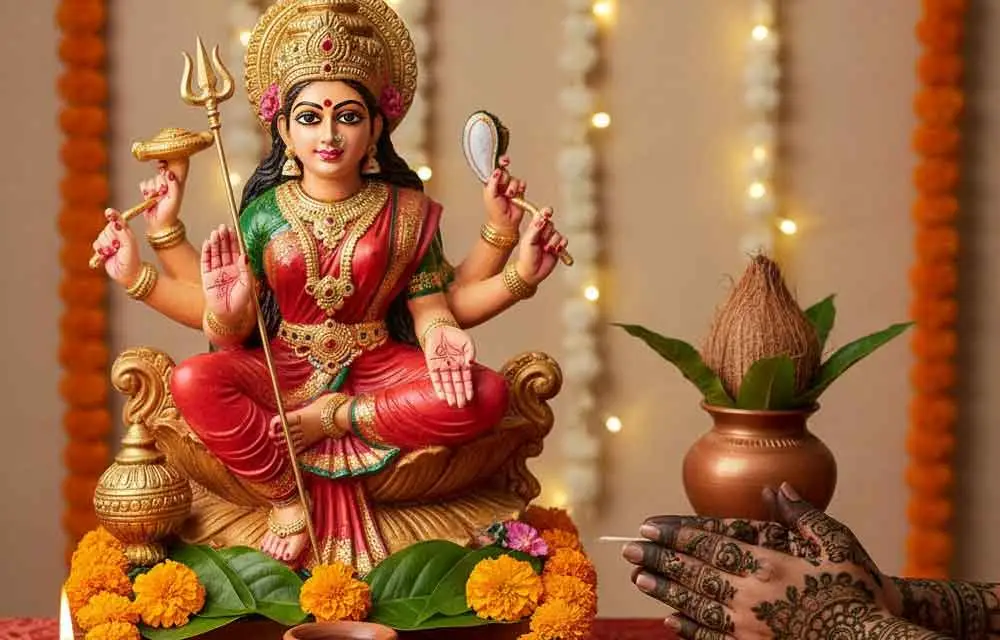
The Atla Taddi Festival, celebrated by married women in Andhra Pradesh and Telangana, is set for tomorrow, October 9, 2025.
The Atla Taddi Festival, celebrated by married women in Andhra Pradesh and Telangana, is set for tomorrow, October 9, 2025. This vibrant Telugu tradition, observed on the third day of the dark fortnight in the month of Ashwin (Ashwayuja Krishna Paksha Tadiya), honors Goddess Gauri for marital harmony, prosperity, and family well-being, sharing spiritual vibes with festivals like Karva Chauth.
Key Highlights of Atla Taddi:
- Rituals and Practices:
- Fasting: Married women fast from sunrise to moonrise, praying for their husbands’ long lives and family happiness. Some include unmarried girls seeking blessings for a good spouse.
- Henna Application: Women adorn their hands with intricate mehndi (henna) designs, symbolizing love and auspiciousness.
- Special Foods: The fast is broken with traditional dishes like rice kheer, pesarattu (green gram dosa), and offerings like betel leaves, turmeric, and vermilion.
- Puja and Offerings: Devotees perform rituals for Goddess Gauri, offering 10 handmade dosas (atlu) and other items, often at home or community gatherings near water bodies.
- Swing Ceremonies: Women enjoy swings decorated with flowers, singing folk songs to celebrate sisterhood and joy.
- Moon Worship: The fast concludes with prayers to the moon, similar to Karva Chauth, symbolizing completion and gratitude.
- Cultural Significance:
- Rooted in Telugu culture, Atla Taddi fosters community bonds, with women gathering to share stories, sing, and perform rituals together.
- It’s believed the festival originated from folklore about women praying for their husbands’ safety during long journeys, invoking Gauri’s blessings for protection.
- The festival’s playful elements, like swings and group activities, highlight the balance of devotion and celebration.
- Modern Observance:
- In 2025, celebrations are expected to be vibrant in rural and urban areas of Andhra Pradesh and Telangana. Women may exchange greetings via social platforms like WhatsApp, with messages like “Happy Atla Taddi! May Goddess Gauri bless your family with love and prosperity.”
- Some communities organize group puja events or temple visits, while others keep it intimate at home.
Connection to Karva Chauth:
Like Karva Chauth, Atla Taddi emphasizes fasting and prayers for marital bliss, but it’s unique in its Telugu-specific rituals, like the offering of 10 dosas and the focus on community swings. Both festivals reflect devotion to family and divine feminine energy, with Gauri symbolizing strength and nurturing.
If you’d like specific details (e.g., recipes for Atla Taddi dishes, puja steps, or regional variations), let me know! You can also check X for real-time posts on festival preparations or greetings in Telugu communities.
Who is Goddess Gauri and why is she central to Atla Taddi?
Gauri is a benevolent form of Devi Parvati, the consort of Lord Shiva, revered specifically as the embodiment of purity (the name Gauri itself means 'the fair one' or 'the radiant one' in Sanskrit). In the Shiva Purana and the Devi Bhagavata Purana, Gauri is praised as the bestower of saubhagya — auspicious marital fortune — and is worshipped by women who seek a loving, long-lived husband and a harmonious household.
In the Telugu Panchangam tradition, the Ashwayuja Krishna Paksha Tritiya (third lunar day of the waning fortnight in Ashwin) is considered especially potent for Gauri puja because it falls in the transitional period after Navaratri, when the goddess's energy is believed to remain spiritually accessible. The offering of ten handmade atlu (rice-flour dosas) is not arbitrary; the number ten symbolises the Dasha Mahavidyas, the ten cosmic forms of Shakti, and each dosa is placed with a prayer for a specific family blessing such as health, prosperity, progeny, and protection from ill fortune.
What is the scriptural and folkloric origin story behind the fast?
One widely recited katha (narrative) associated with Atla Taddi tells of a devoted wife named Syamala whose merchant husband undertook a perilous ocean voyage. On the Ashwayuja Tritiya night, Syamala observed a strict fast, performed Gauri puja near a river bank, and sang folk songs (janapada geethalu) through the night. It is said that Goddess Gauri appeared in her dream and assured her of her husband's safe return, which came to pass the very next dawn.
This narrative pattern echoes Sati Savitri's devotion recounted in the Mahabharata's Vana Parva, where a wife's tapas (austerity) and unwavering dedication override even fate. The Atla Taddi fast belongs to a broader category of vrata literature known as stri-vratas — fasts designed by and for women — which are documented in texts like the Vrataraja and regional Telugu vrata katha compilations. These vratas were historically transmitted orally from mother to daughter, making them living repositories of feminine spiritual wisdom.
How does the ritual use of henna, swings, and moon worship carry deeper symbolic meaning?
Mehndi (henna) application is far more than an aesthetic custom in this festival. The deep red-brown colour that henna leaves on the skin is associated with Shakti and the auspicious redness (sindoor) of a married woman's life. In several Telugu household traditions, the darker the mehndi stain, the stronger the husband's love — a belief that connects the sensory experience of the ritual to the emotional bond it is meant to strengthen.
The swing ceremony, known locally as Oonjal Aata, draws on imagery from the Bhakti tradition where deities like Radha-Krishna and Uma-Maheshwara are depicted in iconography seated on flower-adorned swings (hindola). The swinging motion is understood as a metaphor for the rhythm of life — the oscillation between joy and hardship — while the act of singing together creates a shared sonic space (nada) that is spiritually uplifting. Moon worship at the close of the fast connects the ritual to Chandra Deva, the presiding deity of the mind in Vedic cosmology; gazing at the moon is seen as an act of offering the accumulated prana of the day's fast to a cosmic witness, completing the vow with gratitude.
How does Atla Taddi compare to and differ from Karva Chauth and other regional saubhagya vratas?
Atla Taddi and Karva Chauth share a structural similarity: both are day-long fasts broken by moonrise, both center on prayers for a husband's longevity, and both involve community gatherings of women. However, Karva Chauth — observed primarily in Punjab, Haryana, Rajasthan, and Uttar Pradesh — falls on the Kartik Krishna Chaturthi (fourth lunar day of the waning Kartik month) and involves the earthen pot (karva) as a ritual object, along with a formal sieved-moonlight viewing ceremony.
Atla Taddi, by contrast, is distinctly Telugu in its ritual grammar: the offering of ten atlu (dosas) rather than a karva, the emphasis on folk songs (janapada geethalu) rather than the recitation of a standardised katha, and the proximity to water bodies for puja reflect the agrarian Telugu landscape and its intimate relationship with rivers like the Krishna and Godavari. Other comparable South Indian vratas include Varalakshmi Vratam (performed on the Friday before Shravana Purnima) and Mangala Gauri Vrata (observed on Tuesdays in Shravana month in Karnataka and Andhra), all of which belong to the same family of stri-vratas invoking feminine divine energy for household well-being.
What are the specific puja vidhi steps observed in traditional Telugu households?
The puja typically begins at dawn with a sankalpa — a formal declaration of intent in which the woman states her name, her gotra, the tithi, and the purpose of the vow before an idol or image of Goddess Gauri. This is followed by ritual bathing, wearing fresh clothes (preferably green or yellow, colours sacred to Gauri), and drawing a rangoli of the goddess's feet at the entrance of the puja room.
The central offering is the ten atlu prepared from rice batter, which are placed on a banana leaf alongside betel leaves (tamala patram), areca nut, turmeric (haridra), vermilion (kumkum), and a small oil lamp. Flowers such as jasmine (malle puvvu) and marigold (banthulu) are especially preferred. The puja concludes with an aarti (harati) and the distribution of prasadam — portions of the atlu, kheer, and fruit — among women gathered for the community observance. In many households, the vrata katha is read aloud by an elder woman, preserving oral transmission of the festival's narrative.
After moonrise, women offer arghya (water cupped in joined palms) to the moon while reciting prayers, then break the fast in the company of family. The communal meal following the fast is considered especially sacred, and sharing food with neighbours and the less privileged on this day is regarded as an extension of Gauri's blessing to the wider community.
Frequently Asked Questions
What is Atla Taddi?
The Atla Taddi Festival , celebrated by married women in Andhra Pradesh and Telangana, is set for tomorrow, October 9, 2025 . This vibrant Telugu tradition, observed on the third day of the dark fortnight in the month of Ashwin (Ashwayuja Krishna Paksha Tadiya), honors Goddess Gauri for marital harmony, prosperity, and family well-being, sharing spiritual vi
What are the key points about Atla Taddi?
Key Highlights of Atla Taddi: Rituals and Practices : Fasting : Married women fast from sunrise to moonrise, praying for their husbands’ long lives and family happiness. Some include unmarried girls seeking blessings for a good spouse.
Why does Atla Taddi matter in Hinduism?
It reflects core values of Sanatana Dharma and offers practical and spiritual guidance that remains relevant across generations.
How can devotees apply Atla Taddi in daily life?
By reflecting on its teaching, incorporating the related practices or observances into daily routine, and approaching it with sincere devotion and understanding.
You might also like
Purushottam Maas 2026: Lord Vishnu's Sacred Gift of Spiritual Multiplication & Divine Grace
Shani Jayanti 2026: Date, Significance, Rituals & Powerful Mantras

Hindu Priest Jobs New Zealand 2026 — Auckland, Wellington, Christchurch Vacancies & NZ Religious Worker Visa Guide