Choodakarana (Mundan) — Baby’s First Tonsure Ceremony (NRI Guide)
Choodakarana (Mundan) — the samskara of a child’s first tonsure: significance, timing, step-by-step vidhi, the Tirumala temple tradition and how NRIs perform it abroad.
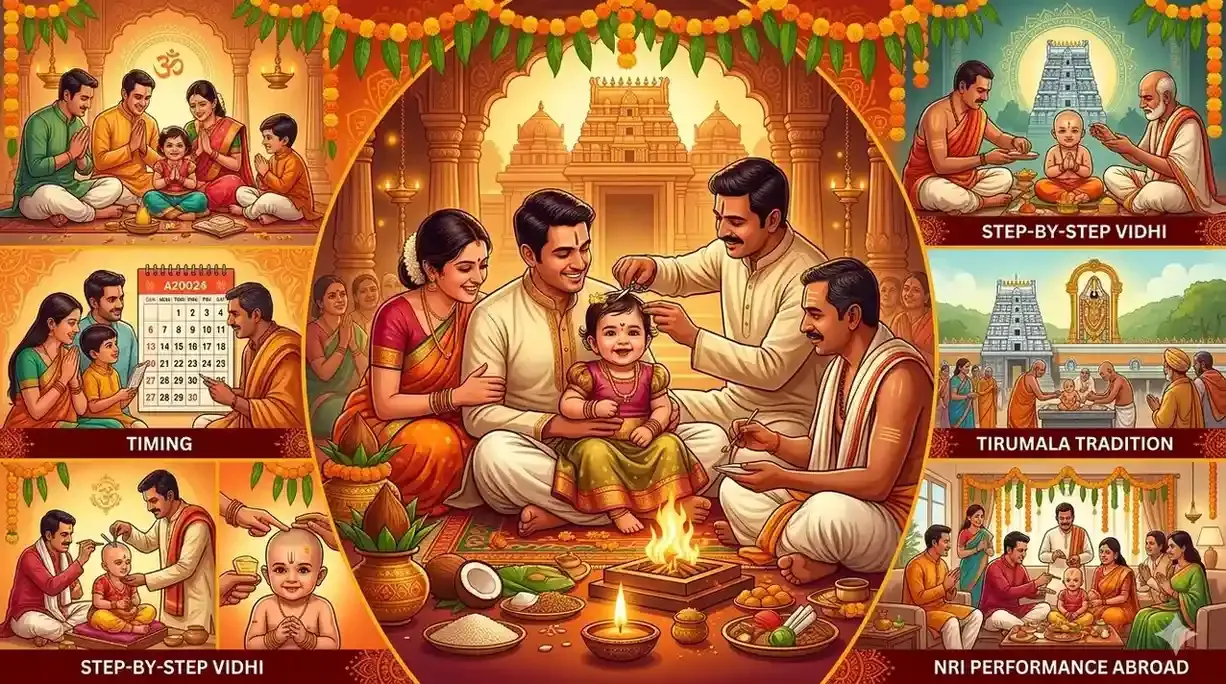
Choodakarana (Mundan, the first tonsure) is the samskara of a child’s first ceremonial haircut. It is a gentle rite of purification and blessing, traditionally performed in the early years of life, often at a temple.
Significance
Offering the child’s first hair is a gesture of humility and gratitude, and is believed to bless the child with health and growth. Many families fulfil this at a temple — at Tirumala the offering of hair (mottai) is an especially cherished tradition.
When Is It Performed?
- Traditionally between the first and third year, on an auspicious day (often an odd year; customs vary).
- Choose a shubha muhurtam via a panchang or your purohit; the child should be well on the day.
Items (Samagri)
- A lamp, turmeric, kumkum, rice (akshata) and flowers
- A small kalash, fruits, sweets and prasadam
- If at a temple, follow the temple’s tonsure arrangements
Step-by-Step (common form)
- Light a lamp and invoke Lord Ganesha — "Om Gam Ganapataye Namaha".
- The purohit/elders perform a brief sankalpa for the child’s well-being.
- A small lock of hair is offered first with blessings; the tonsure is then completed gently.
- Apply a little turmeric/sandalwood to soothe the scalp; offer prayers, prasadam and celebrate.
Note: customs and timing vary by region and family — follow your elders or purohit.
How NRIs Perform It Abroad
- A simple home version with a symbolic first lock and blessings is acceptable; many NRIs complete the full tonsure on a trip to a temple in India (such as Tirumala).
- Arrange a purohit in person or online; involve grandparents over a video call.
Planning a temple trip? See our Tirumala Tirupati Balaji NRI guide. See also the 16 Samskaras guide and Annaprasana.
Frequently asked questions
At what age is Choodakarana (Mundan) performed?
It is traditionally performed between the first and third year, on an auspicious day, often in an odd year, though customs vary. A purohit or panchang helps choose the shubha muhurtam.
What items are needed for the Mundan ceremony?
Prepare a lamp, turmeric, kumkum, akshata rice and flowers, plus a small kalash, fruits, sweets and prasadam. At a temple, follow the temple's own tonsure arrangements.
How is the Choodakarana ritual performed step by step?
Light a lamp and invoke Ganesha with Om Gam Ganapataye Namaha, then do a brief sankalpa for the child. A small lock of hair is offered first, the tonsure is completed gently, and turmeric or sandalwood is applied to the scalp.
Why do families offer the baby's first hair at Tirumala?
Offering the first hair is a gesture of humility and gratitude, believed to bless the child with health and growth. At Tirumala the offering of hair, called mottai, is an especially cherished tradition.
Can NRIs perform Mundan abroad?
Yes. A simple home version with a symbolic first lock and blessings is acceptable, with a purohit arranged in person or online and grandparents joining by video call. Many NRIs complete the full tonsure at a temple in India such as Tirumala.
Share this with family and friends
Send it on WhatsApp, post it, or copy the link.
More from Spirituality
- Complete MBBS Once in Life: The Spiritual Meaning of Mahabharata, Bhagavatam, Bhagavad Gita & Ramayana
- Sri Medha Dakshinamurthy Swami Dhyanam | Meditation Sloka for Intelligence, Eloquence & Self-Realization
- What Is True Poverty? | Dharma Is the Greatest Wealth | Sanatana Dharma
- Trees: Abodes of the Divine | Spiritual and Environmental Significance of Trees
- Dashaphala Rahasyalu Part 3: When Do Planetary Dashas Give Full Results?
You might also like
Correct Yourself First! | The Power of Constructive Criticism for Personal Growth
Daylight Saving & Hindu Puja Timings: An NRI Guide

Chilkur Balaji 'Visa Balaji' Temple: The 11 and 108 Pradakshina Custom Explained for NRIs