Seemantham (Simantonnayana) — The Hindu Baby Shower (NRI Guide)
Seemantham (Simantonnayana) — the third samskara, a baby-shower rite blessing the expectant mother and child: significance, timing, bangle customs, vidhi and how NRIs hold it.
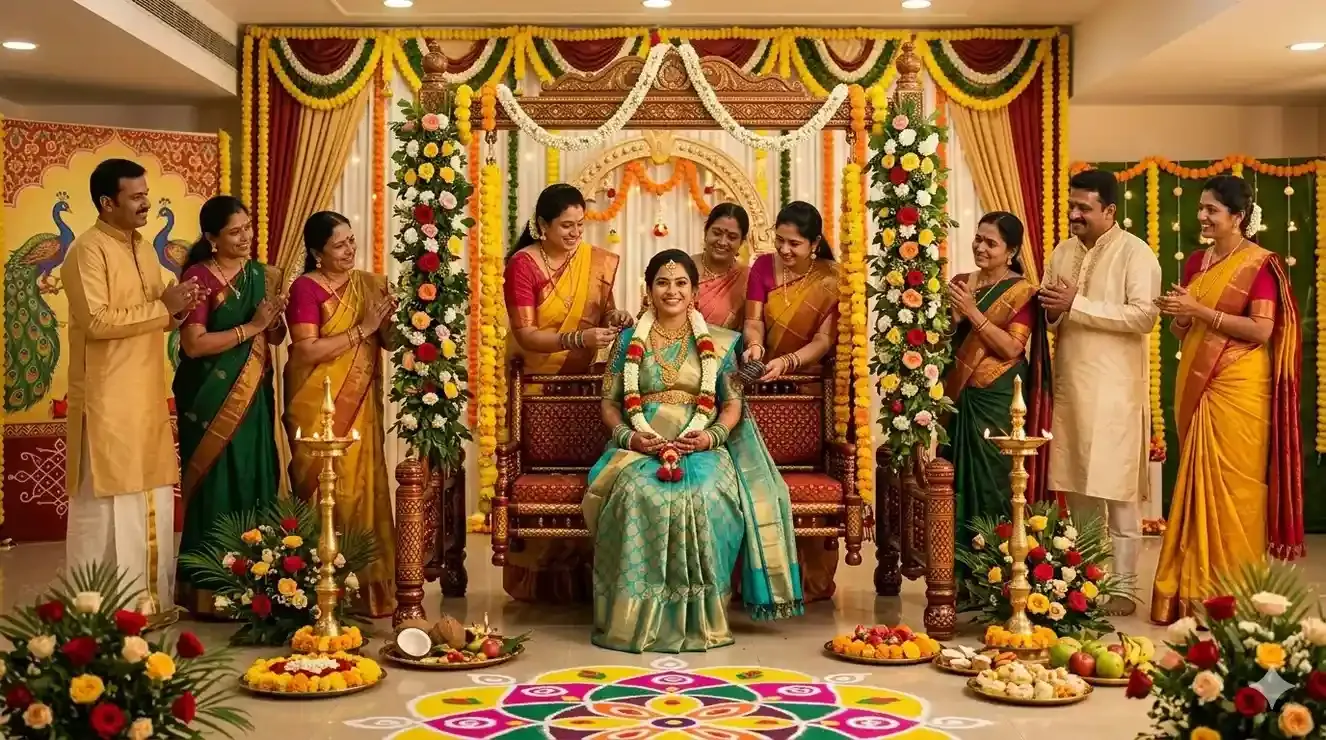
Seemantham (Simantonnayana, the "parting of the hair") is the third of the Shodasha Samskaras — a tender baby-shower rite performed during pregnancy to bless the expectant mother and the child within, and to surround her with the love and care of family.
Significance
The rite invokes well-being and protection for mother and child, and joyfully welcomes the coming baby. In Telugu and South Indian custom, the mother-to-be is adorned with bangles, flowers and a new saree, and elders bless her; the bangles are believed to bring auspicious vibrations and cheer.
When Is It Performed?
- Usually in the 5th, 7th or 8th month of pregnancy, on an auspicious day (timing varies by region and family).
- Choose a shubha muhurtam via a panchang or your purohit.
Items (Samagri)
- New bangles (often green/red), flowers and a new saree for the mother-to-be
- Turmeric, kumkum, a lamp, rice (akshata) and a small kalash
- Fruits, sweets and items for the celebratory meal
Step-by-Step (common form)
- Light a lamp and invoke Lord Ganesha — "Om Gam Ganapataye Namaha".
- The purohit/elders perform a brief sankalpa for the well-being of mother and child.
- The expectant mother is adorned with bangles, flowers and the new saree; married women and elders bless her with akshata and aarti.
- Favourite foods are offered to the mother; the family celebrates with a festive meal and prasadam.
Note: customs vary widely by region and community (Telugu, Tamil, North Indian, etc.) — follow your family’s tradition and elders.
How NRIs Perform It Abroad
- A warm home gathering with bangles, blessings and a festive meal is fully acceptable; a purohit can join in person or online.
- Source bangles, flowers and samagri from Indian stores; involve grandparents virtually.
- Many NRI communities and temples host group baby-shower blessings.
See also the 16 Samskaras guide. The next rites are Namakaranam and Annaprasana.
Frequently asked questions
When is Seemantham performed during pregnancy?
It is usually held in the 5th, 7th or 8th month of pregnancy, on an auspicious day. Timing varies by region and family, so choose a shubha muhurtam with a panchang or your purohit.
What is the meaning of Simantonnayana?
Simantonnayana means the "parting of the hair". It is the third of the Shodasha Samskaras, a baby-shower rite that blesses the expectant mother and the child within.
What items are needed for Seemantham?
You need new bangles (often green or red), flowers and a new saree for the mother-to-be. Also keep turmeric, kumkum, a lamp, akshata rice, a small kalash, fruits, sweets and items for the celebratory meal.
What are the main steps of the Seemantham ceremony?
A lamp is lit and Lord Ganesha is invoked with "Om Gam Ganapataye Namaha", followed by a brief sankalpa for mother and child. The mother is adorned with bangles, flowers and the saree, and elders bless her with akshata and aarti before a festive meal.
Can NRIs perform Seemantham abroad?
Yes. A warm home gathering with bangles, blessings and a festive meal is fully acceptable, and a purohit can join in person or online. Bangles, flowers and samagri can be sourced from Indian stores, and grandparents can take part virtually.
Share this with family and friends
Send it on WhatsApp, post it, or copy the link.
More from Spirituality
- Sri Medha Dakshinamurthy Swami Dhyanam | Meditation Sloka for Intelligence, Eloquence & Self-Realization
- What Is True Poverty? | Dharma Is the Greatest Wealth | Sanatana Dharma
- Correct Yourself First! | The Power of Constructive Criticism for Personal Growth
- Trees: Abodes of the Divine | Spiritual and Environmental Significance of Trees
- Dashaphala Rahasyalu Part 3: When Do Planetary Dashas Give Full Results?
You might also like
Daylight Saving & Hindu Puja Timings: An NRI Guide

Chilkur Balaji 'Visa Balaji' Temple: The 11 and 108 Pradakshina Custom Explained for NRIs

Ekagrata (One-Pointedness): Yoga Concentration and Samyama Glossary