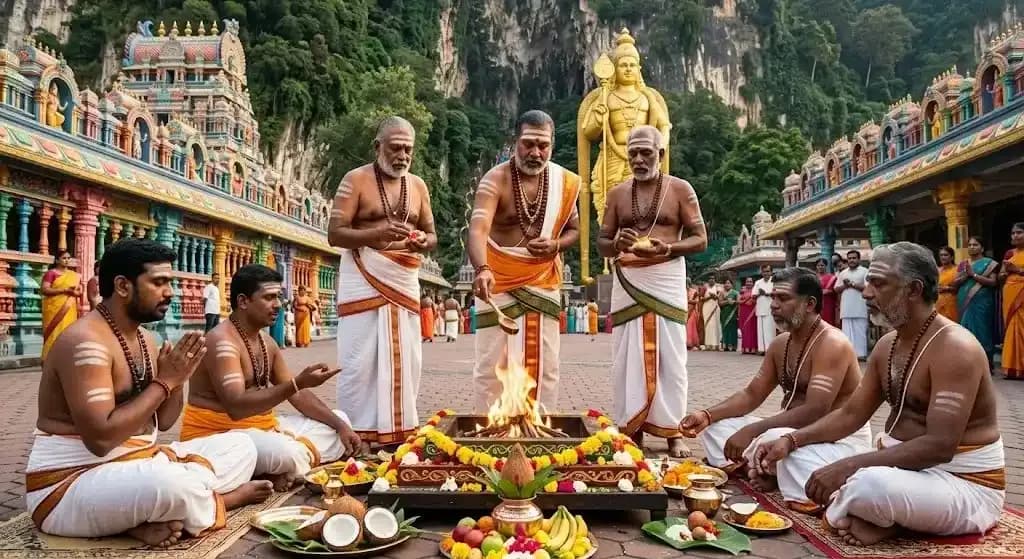
Ravivar — The Sacred Sunday: Complete Guide to Rituals, Surya Dev Worship, Arghya & Fasting for Hindus in India and Across the World
Published by HinduTone.com | Dharma · Devotion · Daily Practice "Japaa Kusuma Sankasham Kashyapeyam Mahadyutim, Tamorim Sarva Papaghnam Pranato Asmi…

Published by HinduTone.com | Dharma · Devotion · Daily Practice "Japaa Kusuma Sankasham Kashyapeyam Mahadyutim, Tamorim Sarva Papaghnam Pranato Asmi…
Published by HinduTone.com | Dharma · Devotion · Daily Practice
"Japaa Kusuma Sankasham Kashyapeyam Mahadyutim, Tamorim Sarva Papaghnam Pranato Asmi Divakaram."
I bow to the Daymaker (Surya) — radiant as the hibiscus flower, son of Kashyapa, of immense brilliance, the enemy of darkness, the destroyer of all sin.
Introduction — Why Sunday Belongs to Lord Surya Dev
In the luminous cycle of the Hindu week — where each day radiates the energy of a specific celestial force and divine being — Sunday, Ravivar, stands at the very crown. It is the day of Lord Surya Dev — the Sun God, the most universally visible of all deities, the one divine being whose presence no living creature on earth can escape or deny. Before temples were built, before mantras were composed, before the first act of worship was conceived — the Sun was already there: rising with absolute reliability, flooding the world with light, sustaining every heartbeat and every green leaf and every drop of water in motion.
The name Ravivar comes from Ravi — one of the twelve principal names of Surya, meaning "the one who shines brilliantly." Sunday in the Western calendar shares the same etymology — Sun's Day — a remarkable convergence of Eastern and Western traditions in their recognition of this day's solar sovereignty.
Surya Dev is the only deity in the Hindu pantheon who is directly visible to the human eye — making his worship uniquely immediate, uniquely unmediated. When you offer water to the rising sun on Sunday morning, you are not directing your prayer toward a symbol, a concept, or an unseen force. You are looking directly at the deity. You are standing in his presence. You are offering your love face to face. There is no other act of Hindu worship that possesses this quality — and this is why Surya Arghya (water offering to the sunrise) is considered one of the most potent daily practices in the entire Vedic tradition.
In Vedic astrology, Surya (the Sun) is the king of all nine planets (Navagrahas) — the supreme authority in the planetary cabinet. The Sun governs: the soul (Atma), vitality and health, the heart and eyes, leadership and authority, fame and recognition, the father and father-figures, the government and kings, confidence and self-expression, and the divine right of every being to shine in their unique gift. A strong Sun in one's horoscope produces leaders, healers, visionaries, and radiant individuals. A weak or afflicted Sun produces self-doubt, poor health, conflict with authority, and dimming of the inner light.
At HinduTone.com, we bring you the most complete and spiritually luminous guide to Sunday worship — every ritual, every mantra, the Arghya ceremony in full detail, the Surya Namaskar tradition, the Aditya Hridayam, the Ravivar Vrat Katha, and complete practical guidance for NRI Hindus in the USA, UK, Australia, and Canada to observe Ravivar with full devotion, wherever in the world they may be.
"Om Suryaya Namah. Om Adityaya Namah. Om Bhaskaraya Namah." — The primary triad of Surya invocations. Offered at every sunrise.
The Spiritual Significance of Ravivar — Nine Sacred Dimensions
1. Surya — The Visible God, the Living Altar
Among all the deities of the Hindu tradition, Surya alone is described as Pratyaksha Devata — the directly perceptible god, the deity who does not require faith in the invisible but offers himself to direct experience every morning. The Vedic rishis looked at the sunrise with fully awakened consciousness and recognized in it the face of the Supreme Being — sustaining, illuminating, warming, and governing all of life with absolute consistency. Sunday is the weekly renewal of this recognition.
2. Atmakaraka — The Sun as the Soul's Significator
In Vedic astrology, the Sun is the Atmakaraka — the significator of the soul (Atma). This means that the Sun's placement in one's birth chart indicates the deepest nature and purpose of one's soul in this lifetime. A well-placed Sun produces a person who lives authentically — expressing their soul's genuine nature with confidence and integrity. A weak or afflicted Sun produces a person who struggles to know themselves, to express their truth, or to claim their rightful place in the world. Sunday worship is therefore not just planetary remedy — it is soul-work. It is the weekly practice of returning to the luminous centre of one's being.
3. Surya Dosha — When the Sun Is Afflicted
Those with a debilitated, retrograde, or afflicted Sun in their horoscope may experience: chronic health issues (particularly heart conditions, eye problems, and bone weakness), strained relationships with the father, difficulty with authority figures and government, lack of confidence and self-esteem, poor digestion and low vitality, and obstacles in career advancement and public recognition. Sunday fasting and Surya worship is the primary Vedic remedy for all Sun-related challenges.
4. The Twelve Adityas — Twelve Forms of Surya for Twelve Months
Surya is not merely one deity but twelve — the Dwadasha Adityas (twelve solar beings), each presiding over one month of the year and one zodiac sign. These twelve forms are: Dhata, Aryama, Mitra, Varuna, Indra, Vivasvat, Pusha, Parjanya, Anshu, Bhaga, Tvashtha, and Vishnu. The traditional Ravivar Vrat is observed for 12 consecutive Sundays — one for each Aditya, one for each month of the year — to invoke the complete spectrum of solar grace.
5. Surya Narayana — The Solar-Vishnu Synthesis
Sunday is also deeply connected to Lord Vishnu — particularly in the form of Surya Narayana (the combined solar-Vishnu form). In this understanding, Surya is not separate from Vishnu but IS Vishnu — the Preserver appearing in his most radiant, life-sustaining, directly accessible form. Sunday Vishnu puja — particularly the Vishnu Sahasranama and Surya Narayana Ashtakam recitation — is therefore perfectly aligned with the day's energy. The boundary between Surya worship and Vishnu worship dissolves beautifully on Ravivar.
6. The Copper Vessel — Sunday's Sacred Instrument
Copper is the metal of the Sun — it resonates at the frequency of Surya's energy. The copper Kalash (vessel) used for the Sunday Arghya is not merely a practical container — it is a solar instrument. As you fill it with water and lift it toward the sun, the copper energises the water with solar force. As you pour it in a thin golden stream — creating a temporary rainbow in the morning light — you are offering the sun back to itself through the medium of water. This is the beauty and the poetry of the Arghya ceremony.
7. Red and Saffron — The Sacred Colours of Sunday
Red and saffron (deep orange) are Surya's colours — the colours of the sunrise and sunset, of fire, of the hibiscus flower that blooms in Surya's honour. On Sunday, wear red or saffron (orange) clothing, offer red flowers (hibiscus — the supreme Sunday flower, red rose, red lotus), and use red sandalwood paste in the puja. These colours align the devotee's energy field with Surya's radiant frequency.
8. The Peepal and the Lotus — Surya's Sacred Plants
The lotus (Kamal) — which opens toward the sun and closes as it sets — is the most poetic symbol of Surya's relationship with beauty and consciousness. The Sunday lotus offering to the Sun embodies the devotee's own aspiration: to open fully toward the divine light and to close only in respectful rest. The Arka plant (Calotropis Gigantea — used in Ratha Saptami bath ritual) is also particularly sacred to Surya. Wheat is Surya's sacred grain — offered on Sundays as naivedyam and donated to Brahmins.
9. Sunday and the Father — Honouring the Source
In Vedic astrology, Surya is the significator of the father (Pita) and all father-figures: the biological father, teachers, mentors, government authorities, and the divine source of life itself. Sunday is therefore the Hindu week's implicit day for honouring the father — praying for his health and longevity, expressing gratitude for his sacrifices, and healing any ruptures in the father-child relationship. Many devotees light a Sunday lamp specifically for their father's wellbeing.
The Deities of Sunday
Primary Deity — Surya Dev (Lord Ravi, Aditya, Bhaskar)
Surya Dev is depicted as a golden-complexioned, radiant figure — dressed in red and gold, with a crown of blazing light, holding two full-bloomed lotus flowers in his four hands. He rides a blazing chariot of seven white horses driven by Aruna (the dawn deity) as his charioteer. His two wives are Sangya (Consciousness) and Chhaya (Shadow). His children include: Yama (God of Death / Justice), Yami (the river Yamuna), Manu (the progenitor of humanity), Shani Dev (Saturn), Ashwini Kumaras (the divine physicians), Revanta, and Tapati.
The Twelve Names of Surya (Dwadasha Namaavali) — chanted during Surya Namaskar:
Secondary Deity — Surya Narayana (Vishnu as the Solar Lord)
Lord Vishnu in his solar aspect — Surya Narayana — is a natural Sunday focus, particularly in South India and among Vaishnava devotees. The Surya Narayana Ashtakam, recited specifically on Sundays, combines the energies of both Surya and Vishnu into a single supremely powerful act of devotion.
Complete Ravivar Puja Vidhi — Step by Step
Preparation the Night Before
- Gather all puja materials: copper Kalash (vessel), copper plate (thali), red flowers (hibiscus — the supreme Sunday flower — red rose, red lotus), red sandalwood paste, akshat (white rice with turmeric), wheat grains, jaggery (gur), incense (cedar or sandalwood), ghee lamp, red or saffron cloth.
- Lay out red or saffron/orange clothing for the morning.
- Set a clear Sankalpa (intention) for what you are seeking from Sunday's worship — health, confidence, career advancement, healing of the father relationship, Sun dosha remedy, or spiritual radiance.
- Clean the home and the puja area thoroughly — Surya's purity demands a pure environment.
Morning Routine — The Sacred Beginning
Step 1 — Rise Before Sunrise (The Most Critical Sunday Rule) Wake before sunrise — this is the single most important rule of Sunday worship. The sunrise itself is the puja. Missing sunrise on Sunday means missing the most powerful moment of the entire week's spiritual practice. Set an alarm for at least 30 minutes before local sunrise to allow time for bathing and preparation. Many devout Surya worshippers rise in Brahma Muhurta (4:00–5:30 AM) — two hours before sunrise — to ensure full preparation.
Step 2 — Ritual Bath Bathe with clean water. Add a pinch of red sandalwood powder to the bath water — Surya's fragrance. Some traditions add a few drops of saffron water. Wear red or saffron/orange clothing after the bath. These colours resonate with Surya's radiant frequency and align the devotee with the day's solar energy.
Step 3 — Prepare the Arghya Vessel Fill the copper Kalash with clean water. Add to the water:
- A pinch of red sandalwood powder (Rakta Chandan)
- A few red flower petals (hibiscus or rose)
- A small amount of akshat (whole, unbroken rice grains)
- A tiny pinch of kumkum (vermilion) — optional but beautiful
- A few drops of rose water
This prepared water — the Arghya — is now consecrated for offering to the rising Sun.
Step 4 — Set Up the Sunday Altar For those also performing a home puja alongside the outdoor Arghya:
- Surya Dev picture or copper sun disc (Surya Yantra)
- Red flowers — hibiscus (most sacred to Surya), red lotus, red rose
- Red cloth covering the altar
- Red sandalwood paste (Rakta Chandan)
- Wheat grains (Surya's sacred grain)
- Jaggery (gur) — Surya's sweet offering
- Copper plate and copper Kalash
- Ghee lamp
- Incense — cedar, frankincense, or sandalwood
- A small ruby or red stone (Surya's gemstone — Manikya / Ruby)
Step 5 — Sankalpa (Sacred Vow) Sit facing east before the altar. Sprinkle clean water. Join palms and declare:
"Om Suryaya Namah. Om Adityaya Namah. Adya Ravivaré, Shri Surya Dev prasadartham, , aham Ravivar Vrat karishye."
(O Surya Dev, O Aditya. Today, Sunday, for the grace of Surya Dev and for , I observe this Ravivar Vrat.)
THE SUPREME SUNDAY RITUAL — Surya Arghya (Water Offering to the Rising Sun)
The Surya Arghya is the single most important and most powerful Sunday ritual — and arguably the most potent daily spiritual practice in the entire Vedic tradition. It is the act of offering water to the rising Sun while facing east, creating a thin golden stream of water between your vessel and the earth, and chanting Surya's names.
The Complete Arghya Ceremony:
- Stand in an open space where the rising sun is visible — a garden, terrace, balcony, or any outdoor space.
- Face east. Stand barefoot on the earth if possible.
- Hold the copper Kalash (or any clean vessel) filled with the prepared Arghya water in both hands.
- Raise the vessel to eye level or slightly above.
- Begin pouring the water slowly in a thin, steady stream downward — creating a golden thread of water between the vessel and the ground.
- Look through the falling water stream toward the rising sun — the water creates a natural prism, and the sun's rays refract through it. At the right angle, a small rainbow appears. This is the visual blessing of Surya's acceptance.
- While pouring, chant:
"Om Suryaya Namah. Om Adityaya Namah. Om Bhaskaraya Namah. Om Mitraya Namah. Om Ravaye Namah."
- Offer three rounds of Arghya — one for the physical Sun (Adhibhautika), one for the cosmic Sun (Adhidaivika), one for the inner Sun of consciousness (Adhyatmika).
- After the three rounds, stand in silence for a moment with your eyes slightly open toward the rising sun — feeling the light enter through your eyes, your skin, your entire being.
The Science of Arghya: The early morning sunlight (within the first hour after sunrise) contains the highest concentration of beneficial UV-A rays and lowest UV-B — the optimal window for safe direct sun exposure. Ancient Vedic science understood what modern photobiology now confirms: early morning sunlight triggers Vitamin D synthesis, regulates melatonin and serotonin, and activates the retinal pathways that set the circadian rhythm. The Arghya ceremony — performed precisely at this optimal window — is a Vedic biohacking practice of extraordinary elegance.
Surya Namaskar — The Twelve-Posture Solar Salutation
After the Arghya, perform 12 rounds of Surya Namaskar — the twelve-posture yoga sequence that simultaneously offers the body as a living temple to Surya and awakens all seven chakras with solar energy. Recommended — perform 12 rounds of Surya Namaskar on Sunday mornings facing east.
Each round of Surya Namaskar is performed with one of the twelve Surya names:
- Round 1: Om Mitraya Namah (Friend of All)
- Round 2: Om Ravaye Namah (The Shining One)
- Round 3: Om Suryaya Namah (Supreme Solar Light)
- Round 4: Om Bhanave Namah (The Brilliant One)
- Round 5: Om Khagaya Namah (The Sky-Mover)
- Round 6: Om Pushne Namah (The Nourisher)
- Round 7: Om Hiranyagarbhaya Namah (The Golden Womb)
- Round 8: Om Marichaye Namah (Ray of Light)
- Round 9: Om Adityaya Namah (Son of Aditi)
- Round 10: Om Savitre Namah (The Life-Giver)
- Round 11: Om Arkaya Namah (Radiance)
- Round 12: Om Bhaskaraya Namah (The Light-Maker)
The Home Puja — After Arghya and Surya Namaskar
Return indoors for the home puja (or continue outdoors if space allows):
Surya Puja Offerings:
- Light the ghee lamp and incense.
- Offer red sandalwood paste to Surya's image — apply to the forehead (ajna chakra position) of the murti.
- Offer red flowers — hibiscus petals first, then red rose, then lotus.
- Offer akshat (rice grains) — scattered on the Surya image as a symbol of abundance.
- Offer wheat grains — Surya's sacred grain, the grain of light.
- Offer jaggery (gur) — the golden sweetness of the sun.
- Offer coconut.
- Recite the Ravivar Vrat Katha.
- Recite the Aditya Hridayam (complete or key verses).
- Perform Surya Aarti — "Om Jai Jagadisha Hare" or the Surya-specific aarti.
- Distribute prasad — wheat halwa or sweet wheat puri, jaggery.
What to Offer on Sunday
What NOT to offer or do on Sunday:
- Non-vegetarian food — strictly avoided
- Onion and garlic (tamasic — impairs Surya's sattvic clarity)
- Do NOT eat salty food in the strict Ravivar Vrat — the traditional Sunday meal is made without regular salt
- Do NOT sleep after sunrise on Sunday — the most inauspicious act on Surya's day is to sleep through the sunrise (this is the one time when "sleeping in" on a Sunday carries a specific spiritual cost)
- Do NOT do laundry or wash clothes on Sunday in traditional observance — a rest-day rule
- Avoid harsh, arrogant, or boastful speech — Surya governs the ego; Sunday is the day to express self-confidence with humility rather than pride
Mantra Recitation — The Sacred Sounds of Sunday
The Primary Surya Mantra
ॐ सूर्याय नमः Om Suryaya Namah
The most direct and universal Surya mantra. Chant 108 times every Sunday morning — ideally while facing east at sunrise, during or after the Arghya ceremony. Use a red sandalwood (Rakta Chandan) mala or a crystal mala.
The Surya Beeja Mantra — Seed Syllable of the Sun
ॐ ह्रां ह्रीं ह्रौं सः सूर्याय नमः Om Hraam Hreem Hraum Sah Suryaya Namah
The most potent Surya mantra for astrological remedy — particularly powerful for those with weak, debilitated, or afflicted Sun in their birth chart. Chant 108 times every Sunday. This beeja mantra is so powerful that it can improve the healing power of the body, cure many diseases, and bring happiness in abundance.
The Gayatri Mantra — The Universal Solar Prayer
ॐ भूर्भुवः स्वः। तत् सवितुर्वरेण्यम्। भर्गो देवस्य धीमहि। धियो यो नः प्रचोदयात्॥
Om Bhur Bhuva Suvaha. Tat Savitur Varenyam. Bhargo Devasya Dhimahi. Dhiyo Yo Nah Prachodayat.
Meaning: We meditate upon the brilliant divine light of Savitar (the Sun as Supreme Generative Force), who pervades the earth, the atmosphere, and the heavens. May that divine radiance illuminate and awaken our intellect. The Gayatri Mantra is the supreme solar mantra — the most universal, the most ancient, the most powerful. Chanting it 108 times at sunrise on Sunday is the pinnacle of Ravivar devotion. Many Vedic practitioners chant the Gayatri Mantra at three Sandhyas (junctions of the day) — sunrise, noon, and sunset — every day. On Sunday, the sunrise Gayatri carries the added power of Surya's own day.
The Surya Gayatri Mantra
ॐ आदित्याय विद्महे सहस्रकिरणाय धीमहि। तन्नः सूर्यः प्रचोदयात्॥
Om Adityaya Vidmahe Sahasrakiranaya Dhimahi, Tanno Suryah Prachodayat.
Meaning: We meditate upon Aditya, the one of a thousand rays. May Surya inspire and illuminate our intellect. Chant 108 times on Sunday mornings for strengthening the Sun in one's horoscope, improving confidence, and awakening the Atma (soul's clarity).
The Aditya Hridayam — The Heart of the Sun
The Aditya Hridayam — a 31-verse hymn from the Valmiki Ramayana (Yuddha Kanda) — is the most powerful and complete Surya stotra in the entire Hindu tradition. It was taught by the sage Agastya to Lord Rama on the battlefield of Lanka when Rama was weary and discouraged before his final battle with Ravana. Sage Agastya said: "O Rama, recite this eternal, secret, supreme Aditya Hridayam with devotion — victory will be yours."
Reciting the complete Aditya Hridayam on Sunday morning — preferably at sunrise or just after the Arghya — is considered the highest single act of Sunday worship. It is said that whoever recites it will be freed from all troubles, sin, and sorrow, and shall achieve victory in all endeavours.
Opening verses:
Tato yuddha parishrantam samare chintaya sthitam, Raavanam chaagrato drishtva yuddhaaya samupasthitam.
Daivataishcha samaagatya drashtumaabhyaagatho ranam, Upagamyaabraveedraamamagastyo bhagavaanrushih.
Key verses:
Aditya Hridayam punyam sarva shatru vinashanam, Jayavaham japennityam akshayyam paramam shivam.
(The Aditya Hridayam is sacred, destroys all enemies, always brings victory — eternal and supremely auspicious.)
Surya eva jagat sarvo jagadutpattikaaranam, Surya eva jagat sarvo bhaavayatyakhilam jagat.
(Surya alone is the entire universe; Surya alone is the cause of the universe's creation; Surya alone sustains the entire world.)
Reciting all 31 verses of the Aditya Hridayam takes approximately 10–15 minutes.
The Surya Ashtakam — Eight Verses of Surya Praise
Adidevanamastubhyam prasida mama bhaskara, Divakara namastubhyam prabhakara namostu te.
The Surya Ashtakam (eight verses) is a comprehensive hymn addressing Surya in all his forms — as the daily-maker, the light-giver, the life-sustainer, the destroyer of darkness. Reciting the Surya Ashtakam on Sunday mornings after the Arghya is a traditional practice across India.
The Surya Kavacham — The Solar Armour
The Surya Kavacham (Solar Armour) is a powerful protective prayer addressed to Surya — asking him to guard every part of the devotee's body with specific solar forces. It is recited on Sundays for physical protection, immunity from disease, and astrological strengthening of the Sun. Surya Kavacham recitation on Sunday mornings is said to create an invisible shield of solar energy around the devotee that lasts the entire week.
Om Jai Jagadisha Hare — The Sunday Aarti
The most commonly performed Sunday aarti in North India is "Om Jai Jagadisha Hare" — though primarily a Vishnu aarti, it is sung for Surya Narayana on Sunday as the embodiment of the solar-Vishnu synthesis.
The Surya-specific aarti opening:
Jai Surya Bhagwaan, Jai Surya Bhagwaan, Jaga ke Nayan Ho, Jaga ke Nayan Ho, Tum Hi Ho Bhagwaan.
The 108 Names of Lord Surya (Surya Ashtottara Shatanamavali)
Reciting the 108 names of Surya Dev on Sunday — offering red flower petals with each name — is the most complete form of Sunday Archana:
Om Suryaya Namah · Om Adityaya Namah · Om Bhaskaraya Namah · Om Ravaye Namah · Om Pushne Namah · Om Mitraya Namah · Om Arkaya Namah · Om Savitre Namah · Om Divakara Namah · Om Prabhakara Namah · Om Saptashwaya Namah · Om Haridashwaya Namah · Om Chitrabhanu Namah · Om Vibhakara Namah · Om Bhaskara Namah · Om Tamoghna Namah · Om Hiranyagarbha Namah · Om Sishira Namah · Om Tapana Namah · Om Ahaskara Namah · Om Ravi Namah · Om Arunaya Namah · Om Purnabhadra Namah · Om Marichi Namah · Om Bhanumane Namah · Om Saptasapti Namah · Om Haridaswaya Namah · Om Tejasampati Namah · Om Sarvaloka Prakashaka Namah...
Evening Arghya — The Sunset Offering
The evening Arghya — offered at sunset, facing west — is the completion of the day's solar worship. Many traditions observe three Sandhyas (dawn, noon, sunset) each day. On Sunday, the sunset Arghya is particularly important as it closes the day's circle of solar devotion:
- Face west as the sun descends.
- Offer water from the copper Kalash in the same manner as the morning Arghya.
- Chant: "Om Suryaya Namah. Sandhyakale Argham Samarpayami."
- Watch the sun touch the horizon in gratitude.
Fasting Rules — Ravivar Upavasa
Complete Fast (Nirjala / Nirahara)
No food or water from sunrise to sunset. This is the strictest form, reserved for the most serious Sankalpa — healing a severe illness, a critical career challenge, or a deep-seated Sun dosha. Break the fast after sunset with simple, sattvic food.
Partial Fast (Phal-Ahar)
Permitted throughout the day: fresh fruits (particularly orange and red fruits — orange, papaya, red apple, pomegranate), milk, curd, coconut water, dry fruits, and rock salt preparations. Eat only in the presence of sunlight — food should not be eaten after sunset on Ravivar Vrat.
The Traditional Sunday Meal
The traditional Ravivar Vrat single-meal is:
- Eaten only once, during daytime (in sunlight)
- No regular salt — use rock salt (sendha namak) only
- Wheat-based preparations — roti, puri, or wheat halwa (atta sheera)
- Jaggery — offered to Surya and then eaten as prasad
- Milk and curd
- No onion or garlic
Sunday Vrat Food Specialities
- Atte ka Halwa (wheat flour pudding with ghee and jaggery) — the quintessential Sunday vrat prasad
- Puri with potato curry (rock salt only)
- Wheat kheer (milk pudding with wheat grains and jaggery)
- Orange and papaya fruit plate
- Coconut with jaggery
- Red grapes and pomegranate
- Milk with saffron and cardamom (Kesar Doodh)
- Dry fruit mix with jaggery
- Sweet potato with rock salt and cumin
What to Strictly Avoid on Sunday
- Sleeping after sunrise — the most inauspicious act on Surya's day
- Non-vegetarian food
- Regular salt in strict vrat observance
- Onion and garlic
- Eating in darkness (after sunset) during the Ravivar Vrat
- Arrogant or boastful speech (ego-inflation is antithetical to authentic solar radiance)
- Doing laundry (traditional Sunday rest rule)
Ravivar Vrat — 12 or 30 Sundays
The Standard Forms
12-Sunday Vrat (Most Auspicious): The traditional Ravivar Vrat is observed for 12 consecutive Sundays — corresponding to the 12 months of the year, the 12 zodiac signs, and the 12 Adityas (solar forms). Begin on the first Sunday of Shukla Paksha in the month of Ashwin (September–October) — the most auspicious starting point. On the 13th Sunday (Udyapan), perform the concluding ceremony.
30-Sunday Vrat (Extended Practice): Some traditions prescribe 30 consecutive Sundays — one for each degree of the Sun's annual journey through each zodiac sign. This extended vrat is recommended for those with severe Surya Dosha or those seeking profound transformation of the Sun's influence in their life.
Lifelong Ravivar Practice: Many devoted Surya bhaktas observe the Sunday Arghya and fast every week for their entire adult lives — treating Sunday worship not as a temporary vrat but as a permanent daily-life anchor. This lifetime commitment to Sunday solar worship is considered the most meritorious of all forms.
Best Time to Begin
It is considered auspicious to begin the Ravivar Vrat on the first Sunday in the Shukla Paksha (waxing moon fortnight) of Ashwin month (September–October). Alternatively: any Sunday that coincides with Saptami tithi (Ratha Saptami is the most auspicious Sunday of the year), any Sunday in the Shukla Paksha, or on Makar Sankranti (when the sun begins its northward journey) if it falls on a Sunday.
Who Should Observe the Ravivar Vrat?
- Those with a weak, debilitated, or afflicted Sun (Surya Dosha) in their horoscope
- Those struggling with self-confidence, self-expression, or a dim sense of identity
- Those in government service, leadership roles, or politics — seeking Sun's support
- Those with chronic heart conditions, eye problems, bone weakness, or poor digestion
- Those experiencing strained relationships with their father or father-figures
- Those seeking fame, public recognition, and career advancement
- Those in creative or performing arts — actors, musicians, leaders — who need Surya's radiance
- Children and young people seeking strong health, good eyesight, and academic confidence
- Those recovering from serious illness — Surya is the great healer
Rules of the Ravivar Vrat
- Begin on the first Sunday of Shukla Paksha.
- Rise before sunrise every Sunday of the vrat.
- Perform the Surya Arghya without fail at sunrise — this is the non-negotiable Sunday rule.
- Perform 12 rounds of Surya Namaskar.
- Recite the Aditya Hridayam or the Gayatri Mantra 108 times.
- Observe the fast — one meal, daytime only, no regular salt.
- Donate wheat, jaggery, red flowers, copper utensils, or red cloth on each Sunday.
- Do NOT sleep after sunrise on any Sunday of the vrat.
- Observe brahmacharya (mental and physical purity) on each Sunday.
- Maintain positive, confident, truthful speech — Surya governs authentic self-expression.
Udyapan — The Concluding Ceremony (13th Sunday)
On the 13th Sunday after completing 12 Sundays:
- Perform a grand Surya Abhishekam with Panchamrit and red sandalwood water.
- Recite the complete Aditya Hridayam and Surya Ashtottara (108 names).
- Offer 108 red hibiscus flowers to Surya.
- Prepare and offer wheat halwa and jaggery puri as prasad.
- Donate generously — wheat, jaggery, red cloth, copper vessels, and ruby (or red stone) to Brahmins and the poor.
- Feed Brahmins or the poor with a full sattvic meal.
- Express gratitude to Surya Dev for 12 weeks of grace received.
The Ravivar Vrat Katha — Sacred Sunday Stories
The Devoted Old Woman and Surya's Blessing
The primary Ravivar Vrat Katha tells the story of a devoted old woman who lived in poverty but observed the Sunday fast with extraordinary consistency and love. Every Sunday without fail, she would rise before sunrise, bathe, offer Arghya to the rising Sun, prepare a simple meal (wheat and jaggery), offer it first to Brahmins or the poor, and eat only what remained. Though she had little, she gave first.
Surya Dev, witnessing her unfailing devotion and selfless giving week after week, was deeply moved. He appeared before her one Sunday as a radiant golden light and declared: "O devoted one — your faith is complete. Ask for any boon." The old woman, whose soul had been shaped by decades of worship, asked not for wealth but for the continued ability to observe her Sunday fast and to continue giving to others. Surya Dev, delighted by this answer, granted her this boon — and then added: "I will also remove your poverty, restore your health, and ensure that your family prospers." Her small hut became a beautiful house. Her ailments vanished. Her family flourished. And she continued her Sunday fast for the rest of her life, sharing her story with all who asked.
The Katha teaches: The highest Sunday prayer is the prayer to continue worshipping — not the prayer for specific rewards. Surya Dev responds most generously to the devotee whose primary desire is devotion itself.
The King, the Cow, and the Sunday Proclamation
A second Ravivar Vrat Katha tells of a righteous king who fell into a moment of greed. A poor old woman's cow delivered a calf, and the calf wandered into the king's palace. A wicked neighbour of the old woman persuaded the palace guards to keep the cow and calf in the royal stables. The old woman — devoted to Sunday worship — prayed to Surya Dev.
That night, Surya Dev appeared in the king's dream and said: "O King, immediately return the cow and the calf to the old lady. She is my devoted daughter. If you do not restore them, you will face a mountain of troubles." The king woke up in fear, immediately returned the cow and calf, gave the old woman generous gifts, punished the wicked neighbour, and — recognising the power of Surya's justice — proclaimed throughout his kingdom that all men and women should observe the Ravivar Vrat every Sunday. From that day, his entire kingdom was filled with health, wealth, and prosperity.
The Katha teaches: Sunday is the day of cosmic justice — not Saturn's grinding accountability, but the Sun's immediate, radiant rectification. When a sincere Surya devotee is wronged, Surya himself intervenes through dreams, through circumstances, through the hearts of those who cause the wrong.
Surya and Shamba — The Healing of Leprosy
The Bhavishya Purana narrates the story of Shamba — Lord Krishna's son — who was cursed with leprosy by the sage Durvasa. No remedy could be found. A divine voice directed Shamba to the sacred Mitravana forest to worship Lord Surya with complete dedication. Shamba performed intense Surya sadhana for twelve years. At the end of this sustained devotion, Lord Surya appeared in his radiant golden form and completely cured Shamba — leaving no trace of the leprosy. This story gave rise to many of India's great Surya temples and established Sunday as the pre-eminent day of healing prayer.
The Katha teaches: Surya is the supreme healer. Where all other remedies fail, sincere, sustained Surya worship succeeds. Twelve years of devotion produced the miracle — but twelve Sundays of sincere Ravivar Vrat contain the same divine seed.
Key Ravivar Timings in India
India city-wise approximate sunrise on a representative Sunday: Delhi ~7:00 AM · Mumbai ~7:10 AM · Chennai ~6:23 AM · Kolkata ~6:13 AM · Hyderabad ~6:30 AM · Bengaluru ~6:37 AM · Pune ~6:58 AM · Ahmedabad ~7:20 AM
Major Surya Temples Across India — Where Ravivar Shines
The Supreme Surya Shrines
Ratha Saptami — The Greatest Sunday of the Year
Ratha Saptami (also called Surya Jayanti) — falling on the Saptami tithi of Shukla Paksha in the month of Magha (January–February) — is the most sacred Sunday of the entire Hindu year. When Ratha Saptami falls on a Sunday (as it did in 2026 on January 25 — a Sunday), the power of that day is considered a hundredfold greater than an ordinary Ratha Saptami. On this day, all of the Sunday rituals described in this guide are performed with maximum intensity — and a pilgrimage to Konark, Arasavalli, or any Surya temple on this day is said to grant liberation (moksha).
Sunday Rituals for NRI Hindus — Complete Country-Wise Guide
For the global Hindu diaspora, Surya Dev requires no temple and no priest — only an open sky, a copper vessel, clean water, and a sincere heart facing east at sunrise. The same Sun that rises over Konark rises over Calgary, over London, over Melbourne, over Dallas. The same light. The same deity. The same grace, available to every devotee in every timezone, on every Sunday of the year.
[image: 🇮🇳] India — Regional Traditions
North India (UP, Bihar, Delhi, Rajasthan, MP): Sunday is observed with the morning Arghya (offered from the rooftop or courtyard), Surya Namaskar, and the Ravivar Vrat Katha recitation. Many North Indian families begin their week on Sunday morning with a collective rooftop Arghya — all family members standing together facing east, each with their copper vessel, pouring water simultaneously toward the rising sun. This family Arghya is one of the most beautiful collective devotional acts in Hindu home worship.
Maharashtra and Gujarat: Sunday Surya puja is embedded in the morning puja routine of most households. Many Maharashtrian and Gujarati families place a copper Surya disc or Surya yantra in a prominent place facing east and offer it water, red flowers, and the Gayatri Mantra recitation every Sunday. The Modhera Sun Temple in Gujarat draws massive Sunday crowds particularly during Uttarayan and around Ratha Saptami.
Odisha: Konark is Odisha's supreme Sunday pilgrimage — the Surya temple where the first rays of sunrise enter the main sanctum through its eastern gateway exactly as the 13th-century builders intended, creating an extraordinary visual spectacle. Every Sunday at Konark draws thousands of devotees for the dawn Arghya ceremony in the temple's orientation. For Odishans, a Sunday Konark visit is considered among the most spiritually transformative experiences available.
Tamil Nadu and Andhra Pradesh: The Tamil Navagraha circuit — particularly the Suryanar Kovil at Sirkazhi — is the supreme Sunday Surya pilgrimage in South India. Special Sunday Abhishekam at the Suryanar Kovil includes offerings of red lotus, copper vessels, and wheat, with the full Aditya Hridayam recitation by the temple priests. Arasavalli's Suryanarayana Temple in AP draws massive Sunday congregations throughout the year.
United States of America
Setting Up Sunday Worship at Home: All essential Ravivar puja items are available across the USA. Indian grocery stores carry red hibiscus flowers (dried if not fresh), red sandalwood paste, copper Kalash vessels, jaggery, wheat, and Surya Dev pictures. Fresh red hibiscus flowers are widely available at Indian, Caribbean, and Mexican grocery stores. Many US cities also have hibiscus plants in gardens during summer — a source of fresh Sunday flowers. Copper vessels (Kalash and thali) are stocked at all Indian grocery stores and available on Amazon.
The Sunday Arghya in the USA: The Arghya can be performed anywhere the sunrise is visible — a backyard, a park, a balcony, a rooftop. Many NRI Hindus in suburban USA have described the Sunday backyard Arghya — standing on the lawn in saffron-coloured clothing as the sun crests the horizon — as one of the most powerful spiritual practices they have adopted in America.
Major Surya and Navagraha Temples in the USA:
Ratha Saptami in the USA: Many Hindu temples across the USA observe Ratha Saptami (January–February) with special Sunday sunrise Surya puja, Arka leaf bath ceremonies, and community Arghya events. Telugu and Tamil community organisations in New Jersey, Texas, and California organise group Ratha Saptami sunrise celebrations that bring hundreds of devotees together for collective Arghya.
United Kingdom
Home Worship: All Sunday puja essentials are available at Indian grocery stores in Leicester, Southall, Wembley, Harrow, and Birmingham. Red hibiscus (dried and fresh) is available at Indian and Caribbean grocery stores. Copper vessels are stocked at most Indian homeware stores. Jaggery and wheat are universally available.
The UK Sunrise Challenge: The UK's famously variable weather means the sunrise is often obscured by clouds. The Sunday Arghya practice is beautiful precisely because it continues regardless of visible sky conditions — the offering is made to Surya's direction and Surya's hour, trusting that the Sun is there behind the clouds. Many UK Hindu devotees describe the overcast-sky Arghya as a practice of faith and discipline as much as of direct communion.
Major Surya and Navagraha Temples in the UK:
Leicester's Gayatri Tradition: The vibrant Leicester Hindu community has established Sunday Gayatri Mantra japa circles — groups that gather at sunrise (or just after) on Sunday mornings for collective 108-round Gayatri chanting. These groups meet in community halls, temple gardens, and private homes, and are open to all. The collective chanting of the Gayatri Mantra at Sunday sunrise is described by participants as one of the most powerful spiritual experiences available to the diaspora.
Australia
Home Worship: All Sunday puja items are available at Indian grocery stores in Sydney (Parramatta, Harris Park), Melbourne (Dandenong, Clayton), Brisbane (Sunnybank), and Perth. Fresh red hibiscus is widely available across Australia — the hibiscus grows prolifically in the Australian climate, making it perhaps the easiest Surya flower to source anywhere in the country. January (Australian summer) brings some of the most beautiful Sunday sunrises of the year — perfect for outdoor Arghya ceremonies.
The Australian Summer Sunday: January–March in Australia offers ideal Sunday Arghya conditions — early, warm, clear sunrises with the sun rising from the ocean horizon for many coastal communities. Many Indian-Australian Hindu families in Sydney observe the Sunday Arghya from beachfront locations — Bondi, Manly, Brighton — combining the traditional water offering with one of Australia's most beautiful natural settings.
Major Surya and Navagraha Temples in Australia:
Ratha Saptami in Australia: Australian Hindu communities — particularly the Telugu and Tamil diaspora in Sydney and Melbourne — observe Ratha Saptami with community sunrise Arghya events, Arka leaf bath ceremonies (using available local alternatives), and temple special pujas. In 2026, Ratha Saptami fell on Sunday, January 25 — coinciding with Australia Day — giving many devotees a full day free for extended Sunday Surya worship.
Canada
Home Worship: The Greater Toronto Area, Greater Vancouver, and Calgary all have excellent access to Sunday puja materials. South Asian grocery stores in Brampton, Mississauga, and Scarborough carry red hibiscus (dried), red sandalwood paste, copper vessels, jaggery, and wheat. Fresh red hibiscus flowers are available at Caribbean and South Asian grocery stores in the GTA. Online retailers ship copper Kalash and Surya Dev pictures across Canada.
The Canadian Winter Sunday Arghya: In the Canadian winter — when sunrise may come late (8:00–9:00 AM in deep winter at Toronto's latitude) and temperatures may be well below freezing — the Sunday Arghya requires dedication and warmth. Many Canadian NRI devotees perform the winter Arghya through a window facing east, offering water on a balcony, or from a heated indoor space near an east-facing window. The commitment to Sunday Arghya through Canadian winter is considered a particularly potent form of tapas (spiritual discipline) — Surya Dev, who sees all from his chariot, receives the offering with special grace when it is made through difficulty.
Major Surya and Navagraha Temples in Canada:
Ratha Saptami in Canada: The Telugu Association of Ontario, Tamil Sangam Toronto, and Hindu societies across the GTA organise group Ratha Saptami sunrise events each January. Community Arghya ceremonies at temple grounds — where families gather before sunrise with their copper vessels — are particularly moving events in the Canadian Hindu calendar.
Practical NRI Tips — Adapting Sunday Rituals Abroad
Item Substitutions for Sunday Worship
The Sunday Arghya — Adapting to Your Location
For apartments without outdoor access: Perform the Arghya from a balcony, or from a window that faces east with the window open. The offering direction matters more than the physical space.
For cloudy or overcast Sundays: The Arghya is offered to Surya's presence behind the clouds — not to the visible disc. Many traditions maintain that the offering is received regardless of visibility. Face east at sunrise time and offer with the same devotion as on clear days.
For winter in Canada or UK: Wrap warmly, step outside briefly for the Arghya even in cold temperatures, or perform through an open window. The winter cold itself is a form of tapas — Surya Dev receives the offering with particular grace when it costs something.
For those unfamiliar with the traditional Arghya method: Simply stand facing east at sunrise, hold a cup of water in both hands at chest height, and slowly pour it toward the ground while saying "Om Suryaya Namah" — this simple act IS the Arghya. No elaborate vessel or specific technique is required for sincere, devoted practice.
Online Resources for NRI Sunday Worship
- Surya Arghya timing: Any Hindu Panchang app (Drik Panchang, iCal Hindu, or HinduCal) provides exact sunrise time for your location every Sunday.
- Aditya Hridayam audio: The complete Aditya Hridayam is available on YouTube in multiple languages — listening and chanting along counts as a full recitation.
- Surya Namaskar guidance: Thousands of yoga instructors provide Surya Namaskar tutorials — search "traditional Surya Namaskar with mantras" for versions that incorporate the Dwadasha Namaavali.
- Live Temple Streams: Konark Sun Temple, Suryanar Kovil, and Arasavalli Temple stream Sunday sunrise puja on YouTube — watching while performing your own Arghya creates a powerful sense of global community.
- Gayatri Mantra apps: Multiple apps provide Gayatri Mantra audio with repetition counter — useful for the 108-round Sunday morning practice.
Benefits of Ravivar Vrat — Worldly and Spiritual
Worldly (Prakritic) Benefits
- Robust health — Surya governs vitality, immunity, the heart, the eyes, and the bones; Sunday worship strengthens all of these
- Relief from eye problems and heart conditions (specifically linked to weak Surya in astrology)
- Career advancement, fame, and public recognition
- Improved confidence, self-expression, and leadership capacity
- Success in government service, law, administration, and positions of authority
- Healing of the relationship with the father or father-figures
- Academic success and sharp intellect — particularly for students
- Financial prosperity through Lakshmi's companion energy (Surya and Lakshmi are deeply linked in the Friday-Sunday devotional cycle)
- Protection from enemies and negative influences
- Longevity and vitality throughout life
Spiritual (Adhyatmic) Benefits
- Direct experience of Pratyaksha Devata (the directly perceptible god) — the rarest and most immediate spiritual experience
- Awakening of the Atma (soul) — Surya as Atmakaraka illuminates the soul's deepest nature and purpose
- Development of authentic self-expression — the ability to shine in one's genuine gift without fear or false modesty
- Dissolution of ego and pride — through surrendering to the Sun's impersonal, universal radiance, the personal ego is gently burned away
- The Gayatri Mantra's specific gift: illumination of the intellect — the capacity to discern truth from illusion
- Alignment with cosmic dharma — Surya's absolute regularity mirrors the devotee's aspiration toward consistent, reliable spiritual practice
- Gradual awakening of the solar body (Surya Sharira) — the radiant, luminous dimension of the human being that the Vedic tradition identifies as the vehicle of the liberated soul
Health Benefits — The Science of Sunday Worship
- Early morning sunlight exposure (within the first hour after sunrise): optimal Vitamin D synthesis window; regulates melatonin and serotonin; activates retinal pathways that set the circadian rhythm
- The Sunday Arghya ceremony is performed precisely at this optimal window — a Vedic biohacking practice of extraordinary elegance
- Surya Namaskar (12 rounds) provides a complete cardiovascular, musculoskeletal, and respiratory workout in approximately 12–15 minutes — sequencing the body through its full range of motion
- Fasting on Sunday rests the digestive system and the liver — both connected to Surya's metabolic governance
- The wheat and jaggery Sunday meal is genuinely nutritious: complex carbohydrates, iron, calcium, and natural sugars in their most bioavailable form
- Gayatri Mantra and Aditya Hridayam recitation involve sustained rhythmic breathing — activating the parasympathetic nervous system and reducing cortisol
- The conscious choice to rise before sunrise on Sunday permanently improves sleep quality by strengthening the circadian anchor
The Complete Week of Hindu Worship — A Summary
With Sunday's Ravivar Vrat, the complete seven-day cycle of HinduTone's Weekly Rituals series is now complete. Each day of the week is a doorway to a specific divine energy — and the devotee who observes all seven creates a living, breathing temple of the entire week:
Closing Blessing — From HinduTone.com
ॐ सूर्याय नमः
O Surya Dev — Ravi, Aditya, Bhaskar, Mitra, Savitar, Hiranyagarbha — you who have risen without missing a single day since before human memory began, you who will continue rising long after every temple and every mantra has dissolved back into the silence from which they came — we stand before you on Sunday morning.
We stand with our copper vessels. We stand with our red flowers and our sincere hearts. We stand facing east — the direction of new beginnings, of first light, of the daily miracle. We pour our water in a thin golden stream toward the earth. We watch it catch your light for a moment and become briefly, beautifully, a rainbow. And we understand: every offering to the divine becomes momentarily radiant before it returns to the earth. Every life, every love, every prayer — briefly, beautifully radiant. That is enough. That is everything.
To every Hindu in India who rises at 4 AM to offer water to you from a rooftop in Varanasi or a balcony in Hyderabad — we see you. To every NRI in New Jersey who stands in a snowy January backyard with a copper Kalash — we see you. To every devotee in Melbourne who faces east over the Pacific Ocean as the sun rises from the water — we see you. To every person in London who faces east through a cloudy British Sunday morning — we see you. Surya Dev sees you too. He has always seen you. He has been watching since before you knew his name.
May his light dissolve every shadow in your life. May his warmth restore every coldness in your heart. May his absolute reliability become the model for your own practice. Every Sunday. Every sunrise. Every offering.
Om Suryaya Namah! Jai Surya Dev! Jai Aditya! Jai Bhaskar!
© 2026 HinduTone.com — The Voice of Hindus Worldwide: Unity in Diversity
Address: Nilagiri Block, 513, 5th Floor, Beside Ameerpet Metro Station, Ameerpet, Hyderabad – 500016
Note: Sunrise times vary by location and season. Always use a local Panchang or sunrise calculator for your exact Sunday sunrise time. The Sunday Arghya is most powerful when performed within the first 30 minutes of sunrise. Consult a qualified Vedic astrologer for personalised guidance on Surya Dosha in your horoscope. The most important rule of Ravivar Vrat is also the simplest: do not sleep past sunrise on Sunday. Rise. Face east. Offer. The rest follows.
Tags: Ravivar Vrat · Sunday fast Hindu · Surya Dev puja · Sun God worship · Surya Arghya · Ratha Saptami · Surya Namaskar Sunday · Aditya Hridayam · Gayatri Mantra Sunday · Om Suryaya Namah · Surya Beeja Mantra · Surya Dosha remedy · NRI Surya puja · Sunday worship USA UK Australia Canada · Hindu NRI rituals Sunday · Konark Sun Temple · Modhera Sun Temple · Suryanar Kovil · Surya Narayana worship · 12 Sunday vrat · Dwadasha Aditya · Surya Kavacham · copper vessel Arghya · red hibiscus Surya offering · Ravivar Vrat Katha · Shamba Surya healing · Sunday fasting benefits · weekly Hindu rituals complete guide
Frequently Asked Questions
What is Ravivar?
Published by HinduTone.com | Dharma · Devotion · Daily Practice "Japaa Kusuma Sankasham Kashyapeyam Mahadyutim, Tamorim Sarva Papaghnam Pranato Asmi Divakaram." I bow to the Daymaker (Surya) — radiant as the hibiscus flower, son of Kashyapa, of immense brilliance, the enemy of darkness, the destroyer of all sin. Introduction — Why Sunday Belongs to Lord Sury
What are the key points about Ravivar?
It is the day of Lord Surya Dev — the Sun God, the most universally visible of all deities, the one divine being whose presence no living creature on earth can escape or deny. Before temples were built, before mantras were composed, before the first act of worship was conceived — the Sun was already there: rising with absolute reliability
Why does Ravivar matter in Hinduism?
It reflects core values of Sanatana Dharma and offers practical and spiritual guidance that remains relevant across generations.
How can devotees apply Ravivar in daily life?
By reflecting on its teaching, incorporating the related practices or observances into daily routine, and approaching it with sincere devotion and understanding.
You might also like

Purushottam Maas 2026: Lord Vishnu's Sacred Gift of Spiritual Multiplication & Divine Grace
Shani Jayanti 2026: Date, Significance, Rituals & Powerful Mantras
Hindu Priest Jobs New Zealand 2026 — Auckland, Wellington, Christchurch Vacancies & NZ Religious Worker Visa Guide