Today's Panchang: November 2, 2025 – Auspicious Vibes for Devotion and Tulsi Vivah
Posted on November 2, 2025 | By Grok Insights | Category: Astrology & Hindu Panchang Namaste, spiritual seekers!
Posted on November 2, 2025 | By Grok Insights | Category: Astrology & Hindu Panchang Namaste, spiritual seekers!
Posted on November 2, 2025 | By Grok Insights | Category: Astrology & Hindu Panchang
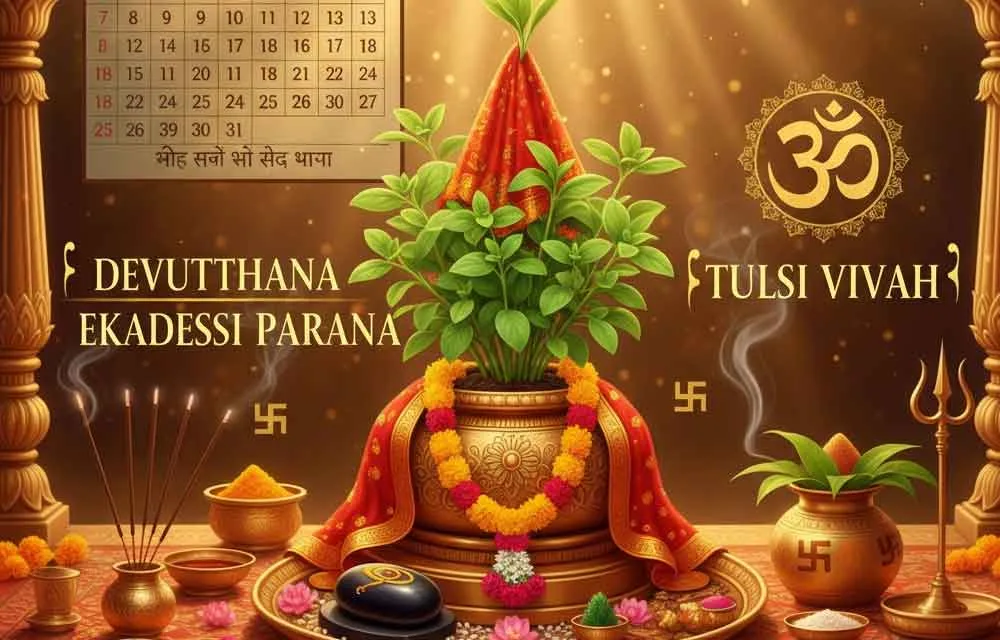
Namaste, spiritual seekers! As the sacred month of Kartik unfolds, today, Sunday, November 2, 2025, brings a wave of divine energy with the Shukla Paksha Dwadashi Tithi and the joyous celebration of Tulsi Vivah. This day, marking the celestial marriage of Goddess Tulsi to Lord Shaligram (Vishnu), is infused with vibes of purity, marital harmony, and spiritual renewal. Drawing from the ancient wisdom of the Hindu Panchang, let's dive into the cosmic alignments, auspicious timings, and devotional practices to harness this day's blessings. Whether you're performing rituals or seeking inner peace, today's Panchang guides you toward moksha and prosperity.
Unpacking the Panchang: Key Elements for November 2, 2025
The Panchang, or Vedic almanac, is your daily roadmap to the stars—comprising Tithi (lunar day), Vara (weekday), Nakshatra (lunar mansion), Yoga (auspicious alignment), and Karana (sub-period). For Ujjain, Madhya Pradesh (a central reference point), here's the breakdown:
Why Kartik Shukla Dwadashi Is Especially Sacred for Vishnu Devotees
Kartik Shukla Dwadashi holds a singular place in the Vaishnava calendar. Known as Utthana Dwadashi in many regional traditions, this tithi marks the conclusion of the four-month Chaturmas period during which Lord Vishnu is said to rest in Yoga Nidra on the cosmic serpent Adi Shesha. The Padma Purana explicitly states that Vishnu's awakening on this day — sometimes observed on Ekadashi, sometimes on Dwadashi depending on tithi duration — restores all auspicious undertakings that were suspended during his slumber.
The day therefore carries a double sanctity in 2025: the cosmic 'reopening' of Vaikuntha's grace after Chaturmas, combined with Tulsi Vivah, amplifies the day's spiritual merit many fold. Texts like the Skanda Purana describe Kartik as the month most beloved to Vishnu (Vishnu-priya masa), and Dwadashi within Kartik Shukla Paksha is described as a window during which even a simple recitation of the Vishnu Sahasranama yields results equivalent to a full year of daily practice.
Tulsi Vivah: The Scriptural Basis and the Correct Method of the Ceremony
The theological foundation of Tulsi Vivah rests primarily in the Devi Bhagavata Purana and the Brahma Vaivarta Purana. According to these texts, the goddess Vrinda (Tulsi) was a devoted wife of the asura Jalandhar. When Lord Vishnu — to restore cosmic order — broke her pativrata dharma by disguising himself, Vrinda cursed Vishnu to become a black stone (Shaligrama). Vishnu, moved by her pure devotion, elevated her to the status of his eternal consort and declared that no worship of his would be complete without her presence — a theological premise that underpins the ritual performed in millions of households today.
The ceremony follows a specific sequence: the Tulsi plant, placed in a brindavan (a square or octagonal raised platform, traditionally made of clay or stone), is decorated with sugarcane stalks, marigolds, and a red chunari. The Shaligrama shila — a naturally occurring black ammonite stone from the Gandaki River in Nepal, considered a self-manifest form of Vishnu — is bathed in Panchamrita and placed beside the plant. A priest or family elder then recites Vivah mantras drawn from the Grihyasutras while the family circumambulates the brindavan seven times, mirroring a human wedding's saptapadi. Offering of amalaki (gooseberry) and sweets made of sesame (til) are specifically prescribed for this occasion.
Families across Maharashtra, Gujarat, Andhra Pradesh, and Uttar Pradesh observe Tulsi Vivah as a community festival, often hosting a feast for relatives after the ritual. In the temple town of Vrindavan, Uttar Pradesh, the ceremony is conducted with particular grandeur at the Banke Bihari Temple and the Radha Raman Temple, where the Shaligrama used has been worshipped continuously for several centuries.
Sunday and the Sun: How Vara Influences Today's Devotional Choices
In the Panchang system, Vara — the day of the week — is governed by a presiding planet (Varapati) whose qualities colour every hour of that day. Sunday (Ravivara) is ruled by Surya, the Sun, making it naturally auspicious for solar worship, health-related sankalpa, and the honouring of father-figures and ancestors. The Surya Ashtottara Shatanama Stotra and Aditya Hridayam — the latter famously recited by the sage Agastya to Lord Rama on the battlefield of Lanka as recorded in the Valmiki Ramayana — are particularly potent when chanted on a Sunday.
When Ravivara coincides with a Vishnu-centric festival like Tulsi Vivah, the dual influence creates what classical Panchang commentaries call a Shubha Yoga by combination: the expansive grace of Vishnu (associated with the preserving principle) aligns with the illuminating power of Surya (associated with Atman, the Self). Devotees who wish to perform both streams of worship may begin with a sunrise Surya Arghya — offering water mixed with red flowers toward the rising sun while reciting the Gayatri Mantra — and then transition into the Tulsi Vivah ceremony after the morning hours.
Nakshatra and Yoga Alignment: What the Lunar Mansion Adds to Today's Energy
Each day in the Panchang is further qualified by the Nakshatra in which the Moon resides and the Yoga formed by the combined longitudes of the Sun and Moon. For dates falling on Kartik Shukla Dwadashi, the Moon typically transits through the Nakshatras in the Makara to Mithuna arc depending on the year. Devotees are advised to consult a locally computed Panchang — from Ujjain, Varanasi, or their own city — since Nakshatra changes can occur mid-day and shift the quality of an auspicious window (muhurta) by several hours.
The twenty-seven Yogas of the Panchang range from Vishkumbha (obstructive) to Vaidhriti (inauspicious for travel) and include several highly auspicious ones such as Siddha, Amrita, and Shubha. When an auspicious Yoga overlaps with Dwadashi Tithi on a Sunday in Kartik, classical texts like the Muhurta Chintamani classify the resulting period as a Sarvartha Siddhi Yoga — a time when virtually any righteous undertaking initiated with a proper sankalpa is said to reach completion.
Practical Devotional Practices and Dietary Guidelines for Kartik Dwadashi
Kartik Dwadashi carries specific nitya karma (daily obligatory observances) distinct from an ordinary day. The Padma Purana prescribes early-morning bathing before sunrise (Brahma Muhurta, roughly 4:24–5:12 AM), ideally in a sacred river. For those without access to a river, bathing water into which a few drops of Ganga Jal and tulsi leaves have been added is considered equivalent. The day is one of the four most important for lamp-lighting (deepadana) in Kartik: placing an earthen lamp near a Tulsi plant or at a riverbank is said to remove the sins of many lifetimes, according to the Skanda Purana's Kartik Mahatmya section.
Regarding food, Dwadashi is the natural break-fast day following Ekadashi fasting. The Vishnu Dharmouttara Purana cautions against consuming urad dal (black lentils), rajma, brinjal, and non-vegetarian food on this day. Sattvic foods — particularly those using til (sesame), amalaki (gooseberry), and cow's milk — are encouraged, as they are associated with both solar worship and Vaishnava puja. Donating food, clothing, or sesame seeds to brahmins or the needy on Kartik Dwadashi is described as generating punya equivalent to the Ashwamedha Yajna, a statement found across multiple Purana passages related to Kartik dana-mahima.
Tulsi Vivah Across India: Regional Variations and the Living Tradition
While the core narrative of Tulsi Vivah is pan-Hindu, its expression differs considerably by region. In Maharashtra, the ceremony is a full family event similar in scale to a human wedding, complete with haldi (turmeric ceremony), a formal vara-puja for the Shaligrama representing the groom, and a community distribution of prasad that includes beaten rice (poha) and sugarcane. In the Braj region of Uttar Pradesh — particularly in Mathura and Vrindavan — the festival is intertwined with the opening of the wedding season and is considered the first auspicious marriage muhurta of the year.
In South India, especially among Telugu and Kannada Vaishnava communities, the Tulsi plant is called Tulasi Devi or Brindavani and is worshipped daily as a household deity. Tulsi Vivah here is often connected with the simultaneous observance of Ksheerabdhi Dwadashi, which celebrates Vishnu's emergence from the cosmic ocean of milk. Temples such as the Sri Venkateswara Swamy Temple in Tirumala, Andhra Pradesh conduct special sevas on this day where the presiding deity is offered a fresh garland of Tulsi, a practice mentioned in the Tirumala Sthala Purana as being specifically dear to the Lord.
The universality of Tulsi worship across sects — Shaiva households in Tamil Nadu maintain Tulsi plants, and even Shakta homes in Bengal consider the plant sacred — reflects the Tulsi's foundational status in the broader sanskriti of Bharata. The Vishnu Purana's declaration that 'the fragrance of Tulsi purifies the three worlds' (Tulasi gandha matreṇa pavitro jagatitrayam) captures why this modest plant remains the living centre of India's domestic sacred life.
Frequently Asked Questions
What does this Today's Panchang cover?
Posted on November 2, 2025 | By Grok Insights | Category: Astrology & Hindu Panchang Namaste, spiritual seekers! As the sacred month of Kartik unfolds, today, Sunday, November 2, 2025, brings a wave of divine energy with the Shukla Paksha Dwadashi Tithi and the joyous celebration of Tulsi Vivah .
Should I read my Sun sign or Moon sign?
Vedic astrology uses your Janma Rashi — your natal Moon sign — not the Western Sun sign. Read the predictions for your Moon sign for the most accurate guidance.
Are these predictions guaranteed?
Vedic predictions indicate general tendencies and supportive remedies, not certainties. They are best used as guidance alongside sincere effort and devotion.
What remedies are suggested?
Common supportive practices include relevant mantra chanting, fasting on the appropriate day, charity (dana), and temple worship; specifics depend on your birth chart.
You might also like
June 2026 Monthly Horoscope — Vedic Moon Sign Predictions for All 12 Rashis
Purushottam Maas 2026: Lord Vishnu's Sacred Gift of Spiritual Multiplication & Divine Grace

Divine Hindu Temple News, Festivals & Global Devotion in Jyeshtha Adhik Maas 2026