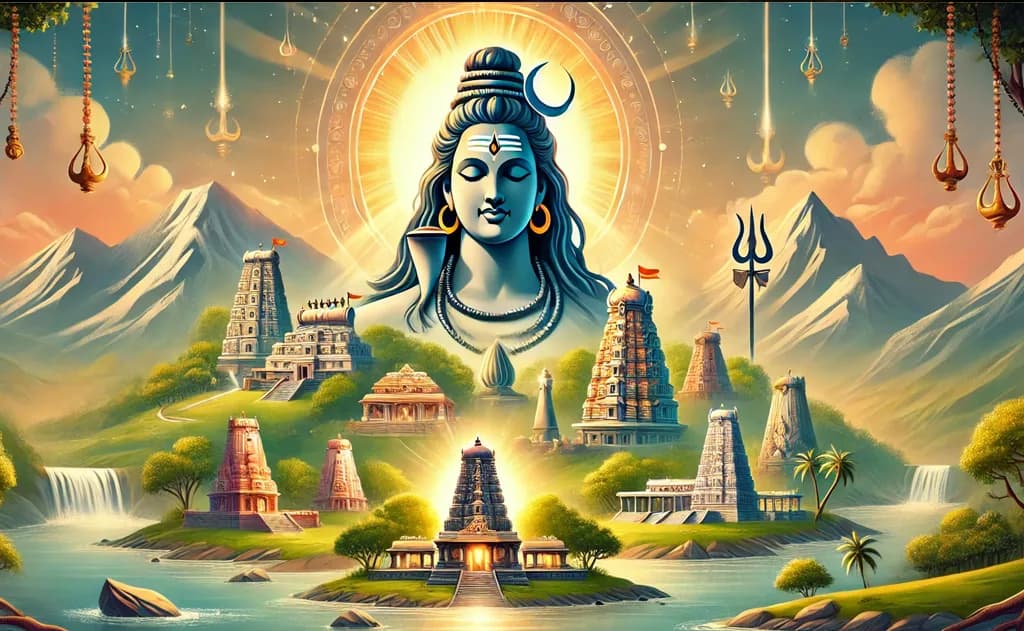
The Love Story of Shiva and Parvati: Eternal Companionship
The love story of Lord Shiva and Goddess Parvati transcends time, offering profound lessons on devotion, perseverance, and the sacred bond of marriage.
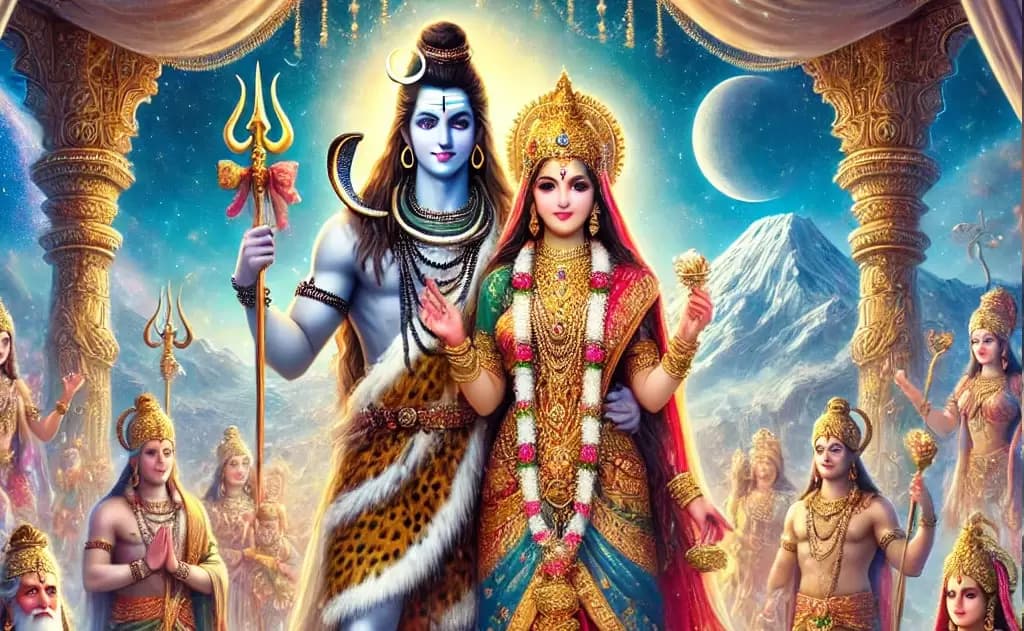
The love story of Lord Shiva and Goddess Parvati transcends time, offering profound lessons on devotion, perseverance, and the sacred bond of marriage.
The love story of Lord Shiva and Goddess Parvati transcends time, offering profound lessons on devotion, perseverance, and the sacred bond of marriage. This divine tale exemplifies the transformative power of love and its ability to bridge even the starkest contrasts.
A Meeting of Opposites
Shiva and Parvati represent two contrasting energies. Shiva, the ascetic yogi who renounces worldly attachments, embodies the formless and eternal consciousness. Parvati, the goddess of fertility, love, and beauty, represents Shakti—the creative energy that drives the universe. Their union signifies the harmonious balance of these energies, essential for cosmic existence.
Parvati’s Determination: A Testament to Love
Parvati’s love for Shiva was unwavering despite his initial rejection. Stories from the Shiva Purana describe how Parvati, guided by sage Narada, undertook severe penance to attain the blessings of Lord Shiva. She meditated for years, enduring harsh conditions, symbolizing the strength and determination needed to overcome obstacles in love.
Her penance was so intense that it moved the gods and eventually Shiva himself, who realized her purity and devotion. This act of dedication showcases that love, when combined with perseverance and faith, can conquer all.
The Divine Marriage
Their celestial wedding is a grand celebration in Hindu mythology, described as a union that brought together the heavens and the earth. The marriage, attended by gods, sages, and celestial beings, symbolizes the coming together of Shiva’s asceticism and Parvati’s worldly grace.
In temples, this sacred event is often reenacted during festivals like Kalyanotsavam, reminding devotees of the sanctity of marriage as a spiritual partnership.
The Eternal Bond of Shiva and Parvati
After their marriage, Parvati became an integral part of Shiva’s life and cosmic duties. She played a crucial role in tempering Shiva’s destructive energy and guiding him toward compassion. In return, Shiva empowered Parvati, recognizing her as his equal and worshipping her as Shakti.
Their bond is celebrated through numerous stories:
The Birth of Kartikeya and Ganesha: Parvati and Shiva’s roles as nurturing parents highlight the balance between familial love and divine responsibilities. Parvati as Kali: When the world needed protection, Parvati transformed into the fierce Kali, with Shiva lying at her feet to calm her rage—demonstrating their deep understanding and partnership. Shiva’s Dance of Destruction: During Shiva’s Tandava, Parvati counters his energy with her Lasya, creating harmony through their complementary energies.
Lessons for Modern Relationships
The Power of Patience: Parvati’s determination to win Shiva’s love teaches us the value of patience and perseverance in relationships. Equality and Mutual Respect: Shiva and Parvati’s partnership was built on respect. Shiva regarded Parvati as an equal, valuing her opinions and contributions—a lesson for modern couples. Balancing Dualities: Their story reminds us of the importance of balancing contrasting traits, such as logic and emotion or independence and togetherness, to create a harmonious relationship.
Celebrating the Divine Love
Their love story is celebrated through festivals like Mahashivratri, which commemorates their union. Devotees observe fasting, perform rituals, and meditate on the qualities of Shiva and Parvati, seeking blessings for their own relationships.
The Ardhanarishvara form—depicting Shiva and Parvati as one being—beautifully encapsulates their eternal bond, symbolizing that true companionship transcends individuality and unites souls.
What do the Puranas say about Parvati's past life as Sati?
The love story of Shiva and Parvati cannot be fully understood without tracing it back to its origin in the life of Sati, Parvati's previous incarnation. According to the Shiva Purana and the Devi Bhagavata Purana, Sati was the daughter of Daksha Prajapati, one of the progenitors of creation, who deeply disapproved of Shiva's ascetic and unconventional nature. Despite her father's opposition, Sati chose Shiva as her husband, performing tapas — rigorous austerities — to win his acceptance.
When Daksha organized a grand yajna and deliberately excluded Shiva and Sati from the invitation, Sati attended regardless, only to witness her husband publicly humiliated. Unable to bear the insult to her lord, she immolated herself in the sacrificial fire. This act of supreme sacrifice devastated Shiva, who wandered the cosmos in grief carrying Sati's body. The Shakti Peethas — 51 sacred shrines spread across the Indian subcontinent, from Kamakhya in Assam to Kanyakumari in Tamil Nadu — are said to have arisen wherever parts of Sati's body fell as Vishnu used his Sudarshana Chakra to sever the corpse and end Shiva's mourning.
Sati's rebirth as Parvati, daughter of Himavat (the Himalayan mountain king) and Mena, was thus not a chance event but the continuation of an unfinished cosmic bond. The Puranas present this as proof that true love transcends death itself, returning in a new form until it reaches its complete, destined fulfillment.
How did Kamadeva's role shape the union of Shiva and Parvati?
One of the most dramatic episodes in this love story involves Kamadeva, the god of desire, whose intervention — and sacrifice — ultimately served the cause of divine union. The gods, alarmed by the demon Tarakasura whose defeat could only come at the hands of Shiva's son, beseeched Kamadeva to break Shiva's deep meditation so that he would notice Parvati. Kamadeva agreed, knowing the enormous risk involved.
As described in the Shiva Purana's Rudra Samhita, Kamadeva drew his sugarcane bow strung with a line of bees and shot the Pushpa Bana — the flower-tipped arrow of desire — at Shiva while the latter sat immersed in samadhi. The moment the arrow found its mark, Shiva's third eye blazed open with wrath, reducing Kamadeva to ash instantly. This event is commemorated in South Indian temples during the Panguni Uttaram festival.
Yet even this tragedy served a higher purpose. Parvati redoubled her penance, and Kamadeva's wife Rati's grief was eventually assuaged when Shiva, moved by Parvati's devotion, restored Kamadeva — though in a formless state (Ananga, 'the bodiless one'). The episode teaches that divine love is not born of sensory desire alone but must be purified through sacrifice and sustained by unwavering spiritual discipline.
What is the significance of Ardhanarishvara — the half-Shiva, half-Parvati form?
The Ardhanarishvara form — literally 'the Lord who is half woman' — is one of Hinduism's most philosophically profound iconographic expressions. The right half of the figure is Shiva: matted hair, a crescent moon, the trident, and ash-smeared skin. The left half is Parvati: adorned with jewels, silken garments, and holding a lotus. Together they form a single body, signifying that Purusha (pure consciousness) and Prakriti (creative energy) are ultimately inseparable.
The Linga Purana and the Skanda Purana both describe the origin of this form. When Brahma sought to understand the nature of creation, Shiva and Parvati appeared before him as one inseparable being, demonstrating that masculine and feminine principles are not opposites but complementary halves of a single reality. The great Shaiva poet-saint Manikkavachakar celebrated this form in his Tamil hymns of the Tiruvachakam, composed at the Thillai Nataraja temple in Chidambaram.
In a practical spiritual sense, the Ardhanarishvara iconography reminds devotees that a householder's life (grihastha ashrama) is itself a path to liberation — neither partner is complete without the other. The famous Ardhanarishvara temple at Thiruchengode in Tamil Nadu's Namakkal district remains one of the foremost pilgrimage sites dedicated to this combined form.
How does Parvati appear as teacher and questioner in the Agamic and Tantric traditions?
Far from being only a devoted wife, Parvati assumes the role of the supreme student — and sometimes the teacher — in a vast body of Agamic scripture. The Vijnanabhairava Tantra, a foundational text of Kashmir Shaivism, opens with Parvati posing penetrating metaphysical questions to Shiva about the ultimate nature of reality. Shiva's answers constitute 112 dharanas, or meditation techniques, making Parvati's inquiry the very occasion for one of Hinduism's most sophisticated contemplative manuals.
In the Soundarya Lahari — attributed by tradition to Adi Shankaracharya — Parvati's grace and her inseparability from Shiva are celebrated in 100 verses of devotional poetry. The first 41 verses (the Ananda Lahari portion) describe the Shakta tantric cosmology where Shiva is inert without Shakti, and it is Parvati's dynamic power that sustains every level of creation. This text remains a living liturgical presence in temples like the Meenakshi Amman Temple in Madurai, where Parvati (as Meenakshi) is venerated as the primary presiding deity.
The Devi Gita, embedded within the Devi Bhagavata Purana, presents Parvati directly as Adi Shakti — the primordial power — teaching the assembled gods the nature of Brahman. This dual role, as both the beloved who pursues Shiva and the cosmic teacher who illuminates reality, reflects the depth of her character and ensures that their love story carries philosophical weight far beyond a simple romantic narrative.
Which major festivals and temple rituals celebrate the marriage of Shiva and Parvati today?
The celestial wedding of Shiva and Parvati is not merely a mythological memory but a living ritual event enacted annually across India. Maha Shivaratri, observed on the fourteenth night of the dark fortnight in the month of Phalguna (February-March), is widely understood in the Shiva Purana as the night of Shiva and Parvati's marriage. Devotees fast through the night, perform four praharas of worship, and chant the Shiva Panchakshara mantra — 'Om Namah Shivaya' — welcoming the sacred union into their own consciousness.
At the Thiruvaiyaru Thyagaraja temple in Thanjavur district and at the renowned Kashi Vishwanath temple in Varanasi, elaborate Kalyanotsavam (sacred marriage festival) ceremonies are conducted where the utsava murtis — processional images — of Shiva and Parvati are adorned as bride and groom and ritually united before thousands of devotees. These ceremonies follow the Agamic paddhati (procedural guidelines) that prescribe exact mantra sequences, flower offerings, and muhurtas (auspicious timings).
In the Himalayan regions, particularly in Uttarakhand, the Gaura festival celebrates Parvati's successful penance and her union with Shiva. Unmarried women observe the Haritalika Teej vrata — described in the Skanda Purana — praying for a devoted husband, emulating Parvati's own determination. These rituals ensure that the theological depth of the Shiva-Parvati narrative remains anchored in the daily devotional life of millions of Hindus across generations.
Frequently Asked Questions
What is The Love Story of Shiva and Parvati?
The love story of Lord Shiva and Goddess Parvati transcends time, offering profound lessons on devotion, perseverance, and the sacred bond of marriage. This divine tale exemplifies the transformative power of love and its ability to bridge even the starkest contrasts.
What are the key points about The Love Story of Shiva and Parvati?
A Meeting of Opposites Shiva and Parvati represent two contrasting energies. Shiva, the ascetic yogi who renounces worldly attachments, embodies the formless and eternal consciousness.
Why does The Love Story of Shiva and Parvati matter in Hinduism?
It deepens a devotee's connection with Lord Shiva and with the values of Sanatana Dharma — clarity, devotion and dharmic living.
How can devotees apply The Love Story of Shiva and Parvati in daily life?
By reflecting on its teaching, incorporating the related practices or observances into daily routine, and approaching it with sincere devotion and understanding.
You might also like
Om Namah Shivaya: 108 Times Chanting Benefits & Method — Complete Panchakshara Mantra Guide
Shiva Vrats of June 2026: Kalashtami (June 8) & Masik Shivaratri (June 13)
Lord Shiva: The Three Faces NRI Devotees Should Know in 2026