Full-Time Vaishnava Priest – Hindu Temple of Oklahoma
Location: Hindu Temple of Oklahoma, Oklahoma City, OK Job Type: Full-Time Salary/Compensation: Competitive, commensurate with experience Application Deadline:…
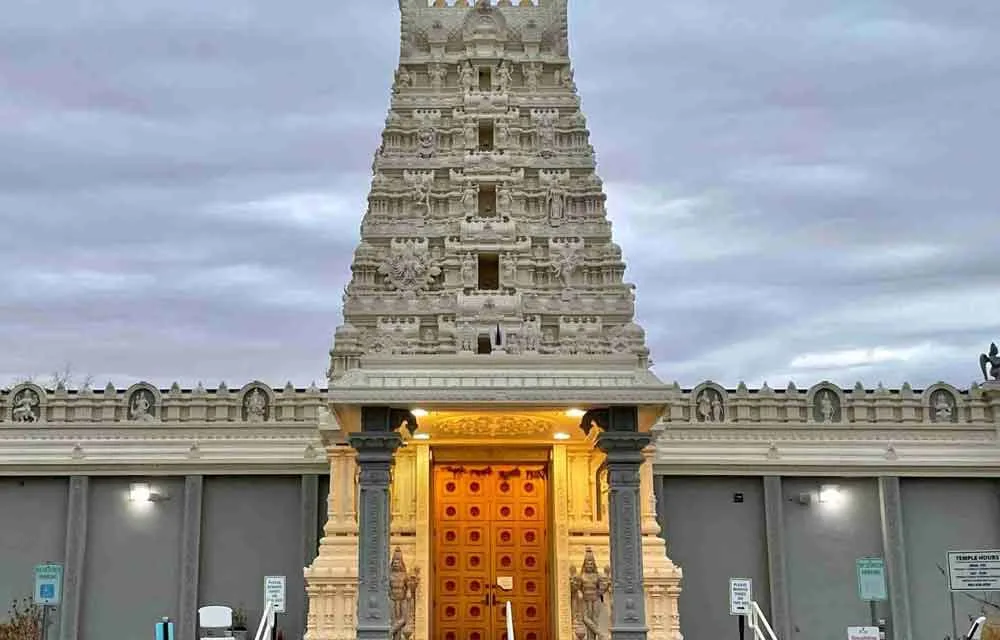
Location: Hindu Temple of Oklahoma, Oklahoma City, OK Job Type: Full-Time Salary/Compensation: Competitive, commensurate with experience Application Deadline:…
Location: Hindu Temple of Oklahoma, Oklahoma City, OK Job Type: Full-Time Salary/Compensation: Competitive, commensurate with experience Application Deadline: Open until filled
🌟 Job Overview
The Hindu Temple of Oklahoma (HTO), established in 1992, seeks a qualified Full-Time Vaishnava Priest proficient in Vaishnava Agamas to lead our dedicated community.
This essential role involves daily Vedic rituals, special ceremonies, and spiritual guidance at our temple and off-site locations. As a pillar of our spiritual hub dedicated to Lord Venkateshwara and other deities, you will foster devotion, tradition, and community harmony in Oklahoma City.
Serve the Hindu diaspora with authentic Vaishnava practices!
🔱 Key Responsibilities
- Daily Rituals: Perform pujas & ceremonies per Vaishnava Agamas (Vaikhanasa/Pancharatra) at temple & devotee homes
- Sacraments: Conduct Panchadasa Karmas (16 sacraments) & Vaidika rituals with precision
- Festivals & Events: Lead homams, weddings, major festivals, and off-site services
- Spiritual Guidance: Counsel devotees, promote Hindu customs & traditions
- Temple Maintenance: Preserve sanctity of deities (Venkateshwara, Lakshmi, Shiva, Ganesha, Hanuman, Krishna & more)
- Flexible Schedule: Work weekends, evenings, & festival periods following Hindu lifestyle standards
📜 Key Requirements
🙏 Why Join Hindu Temple of Oklahoma?
- Established Legacy: Serve Oklahoma's premier Hindu temple since 1992
- Vibrant Community: Impact religious, spiritual, & cultural life in America's heartland
- Diverse Worship: Multi-deity tradition (Venkateshwara, Shiva, Krishna, Nava Grahas & more)
- Long-Term Opportunity: Supportive environment with potential for lasting commitment
- Cultural Impact: Lead festivals, education, & community programs
📋 Application Process
Submit Complete Package:
- Detailed Resume/CV (Agama training, certification, experience)
- Certification Copies (English translations if needed)
- Professional References from temples/mentors
- Cover Letter (optional)
📧 Email Application: info@hindutempleokc.org Subject: Full-Time Vaishnava Priest Application –
Next Steps:
- Rolling review by temple management
- Shortlisted: Interviews + ritual demonstration
- Only complete applications considered
🛕 About Hindu Temple of Oklahoma
Under the India Cultural Foundation (ICF), HTO has been Oklahoma's spiritual beacon since 1992, serving with devotion to Lord Venkateshwara and an array of deities. Located in Oklahoma City, we host:
- Daily worship & authentic rituals
- Vibrant festivals & cultural programs
- Community events nurturing Hindu heritage
📍 Contact Information Hindu Temple of Oklahoma 4521 N Western Ave, Oklahoma City, OK 73118 📧 info@hindutempleokc.org 📞 (405) 947-0305 🌐 www.hindutempleokc.org
What Are the Vaishnava Agamas and Why Do They Matter for This Role?
The Vaishnava Agamas form the scriptural backbone of temple worship in the Vaishnava tradition. They are broadly divided into two streams: the Vaikhanasa Agama, attributed to the sage Vikhanas and considered among the oldest surviving temple-ritual texts, and the Pancharatra Agama, a vast collection of over two hundred texts that detail everything from temple architecture (Vastu) to the precise sequence of daily worship (Nityarchana). The priest sought by the Hindu Temple of Oklahoma must be conversant in both streams, as different deities housed in the temple may follow slightly different liturgical protocols.
In practice, the Pancharatra system prescribes six daily worship sessions — Thiruvanandal, Thiruvanandal (dawn), Kalasanthi, Uchikalam, Sayarakshai, Thiruvanandal (dusk), and Ardhajama — collectively called Shad-kala Puja. The Vaikhanasa system similarly mandates rigorous daily sequences rooted in Vedic Samhita mantras. Mastery of these sequences, including the correct recitation of Vedic hymns such as the Purusha Sukta and Vishnu Sukta from the Rig Veda, is non-negotiable for authentic temple service.
Lord Venkateshwara: The Central Deity and His Significance in Diaspora Temples
Lord Venkateshwara, enshrined on Tirumala Hill in Tirupati (Andhra Pradesh), is one of the most widely venerated forms of Lord Vishnu in the world. He is celebrated in the Brahma Purana, the Skanda Purana (Venkataachala Mahatmya section), and in the Divya Prabandham — the Tamil Vaishnava canon composed by the twelve Alvars. His iconography as a standing four-armed form (Sthanaka Vishnu), adorned with the Shankha, Chakra, and the Vanamala garland, follows strict Pancharatra Agama guidelines for Vishnu's Abhisheka and Alankara.
In North American diaspora temples, Venkateshwara shrines serve as anchors of cultural and spiritual identity for Telugu, Tamil, and Kannada communities in particular. The Hindu Temple of Oklahoma's dedication to Lord Venkateshwara places it within a well-established network of temples — including the Sri Venkateswara Temple of Pittsburgh (established 1976) — that model high standards of Agamic fidelity. A priest serving here participates in that living tradition, helping families in Oklahoma City maintain Vedic sacraments far from their ancestral homes.
Panchadasa Karmas: The Sixteen Samskaras a Priest Must Know
The Panchadasa Karmas, also called Shodasha Samskaras, are the sixteen life-cycle sacraments described in the Grihyasutras and elaborated in texts such as the Manusmriti and Paraskarasmriti. They span the entire arc of human life: from Garbhadhana (conception rite) and Pumsavana (rite for a male child) through Namakarana (naming ceremony on the eleventh or twelfth day), Annaprashana (first feeding of solid food), Upanayana (sacred thread ceremony), Vivaha (marriage), and finally Antyeshti (last rites). Each samskara has both a Vedic mantra component and a practical ritual component that the priest must execute with precision.
For a temple serving a diaspora community, the priest's ability to adapt these rites to American logistics — smaller homes, condensed schedules, participants unfamiliar with Sanskrit — is as important as his classical training. The Vaishnava tradition adds additional layers: Panchasamskara (also called Samashrayana), the five-fold initiation including Tapa (branding with Vishnu's conch and discus symbols), Pundra (Urdhvapundra tilaka), Nama (receiving a dasya name), Mantra (receiving the Ashtakshara Om Namo Narayanaya), and Yaga (devotion to the Lord), which distinguishes a practicing Vaishnava from the general Hindu community.
Major Festival Cycle at a Vaishnava Temple: What the Priest Leads Throughout the Year
A full-time Vaishnava priest at the Hindu Temple of Oklahoma will preside over a demanding annual festival calendar rooted in the Pancharatra Utsava system. Key festivals include Vaikuntha Ekadashi (the most sacred Ekadashi, typically in December–January), Brahmotsavam (a nine- or ten-day grand festival with chariot procession mirroring Tirupati's Srivari Brahmotsavam), Sri Rama Navami, Janmashtami, and Diwali. Each festival involves extended homams (fire sacrifices), special Abhisheka with Panchamrita (honey, milk, curd, ghee, and sugar), and elaborate Alankara (deity decoration) sequences that can last several hours.
Beyond Vaishnava-specific observances, the multi-deity tradition at HTO — which includes shrines to Shiva, Ganesha, Hanuman, and the Navagrahas — means the priest may also need familiarity with Shaiva and Shakta liturgical elements, or coordinate effectively with visiting priests. Navagraha puja in particular requires knowledge of planetary gemstone associations, specific grains (Navadhanya), and directional worship laid out in the Brihat Parashara Hora Shastra tradition, making interdisciplinary Agamic knowledge a practical necessity for festival management.
Living the Priestly Vocation: Lifestyle Standards Expected in Vaishnava Service
The Pancharatra Agama and classical Dharmashastra texts are explicit that temple priesthood is not merely an occupational role but a dedicated way of life (Vritti). The Vaishnava priest is expected to observe Brahmacharya or grihasthadharma (householder dharma) with strict personal purity, follow a strictly vegetarian (Sattvic) diet, perform personal Sandhyavandana three times daily, and wear the Urdhvapundra tilaka as a continuous mark of devotion. These standards are not ceremonial formalities; they are regarded as prerequisites for the integrity of the rituals performed on behalf of the entire community.
In a diaspora setting, these standards are also a form of cultural transmission. Devotees — especially second-generation Hindu Americans — observe the priest as a living embodiment of the tradition they are trying to understand. The Hindu Temple of Oklahoma's requirement that the priest follow a Hindu lifestyle standard therefore serves a dual purpose: maintaining ritual efficacy according to Agamic law, and providing a visible, authentic model of Vaishnava Dharma in the American heartland.
How to Prepare a Strong Application: Practical Guidance for Candidates
Candidates should document their Agama training with specificity. Institutions such as the Tirumala Tirupati Devasthanams (TTD) Agama Pathashala, the Sri Vaishnava Sampradaya training programs in Tamil Nadu, or recognized Gurukula training under a lineage-holding Acharya all carry weight. Certificates should indicate the stream of training (Vaikhanasa or Pancharatra), duration of study, and the specific texts and ritual sequences covered. English translations or notarized summaries of vernacular certificates will aid the review committee.
Professional references should ideally come from temple executive committees or senior priests at established temples, not solely from family members or informal mentors. A cover letter that speaks concretely to experience with North American temple logistics — insurance for off-site rituals, multi-faith community relations, working with non-Telugu or non-Tamil speaking devotees — will differentiate candidates meaningfully. The Hindu Temple of Oklahoma serves a diverse Hindu diaspora, and demonstrating cross-regional fluency in both ritual knowledge and community communication reflects the inclusive spirit of the position.
Frequently Asked Questions
Where is Full located?
Location: Hindu Temple of Oklahoma, Oklahoma City, OK Job Type: Full-Time Salary/Compensation: Competitive, commensurate with experience Application Deadline: Open until filled 🌟 Job Overview The Hindu Temple of Oklahoma (HTO) , established in 1992, seeks a qualified Full-Time Vaishnava Priest proficient in Vaishnava Agamas to lead our dedicated community.
Who is the presiding deity of Full?
The temple's presiding deity and its significance are described in the guide above.
What are the timings and how do I reach Full?
Temples typically open early morning and evening; confirm current darshan timings before visiting. The nearest airport, railway station and road routes are covered in the guide above.
What is the best time to visit Full?
Major festival days and the cooler months are popular, though weekday mornings offer a calmer darshan. Plan around the temple's key festivals for the most vibrant experience.
You might also like
Full-Time Hindu Priest Job Opening at South Florida Hindu Temple
Hindu Priest Jobs at Bharatiya Temple Troy Michigan 2026 — Full-Time Pujari Positions USA
Shree Siddhivinayak Temple (Mumbai) to Go Fully Digital: A New Era for Donations and Darshan?