Shivacharya Job at Shri Shiva Vishnu Temple Melbourne
Job Title: Shivacharya – Full time Temple Overview: Shri Shiva Vishnu Temple, Melbourne, is the largest Hindu temple in Australia and is owned and operated by…
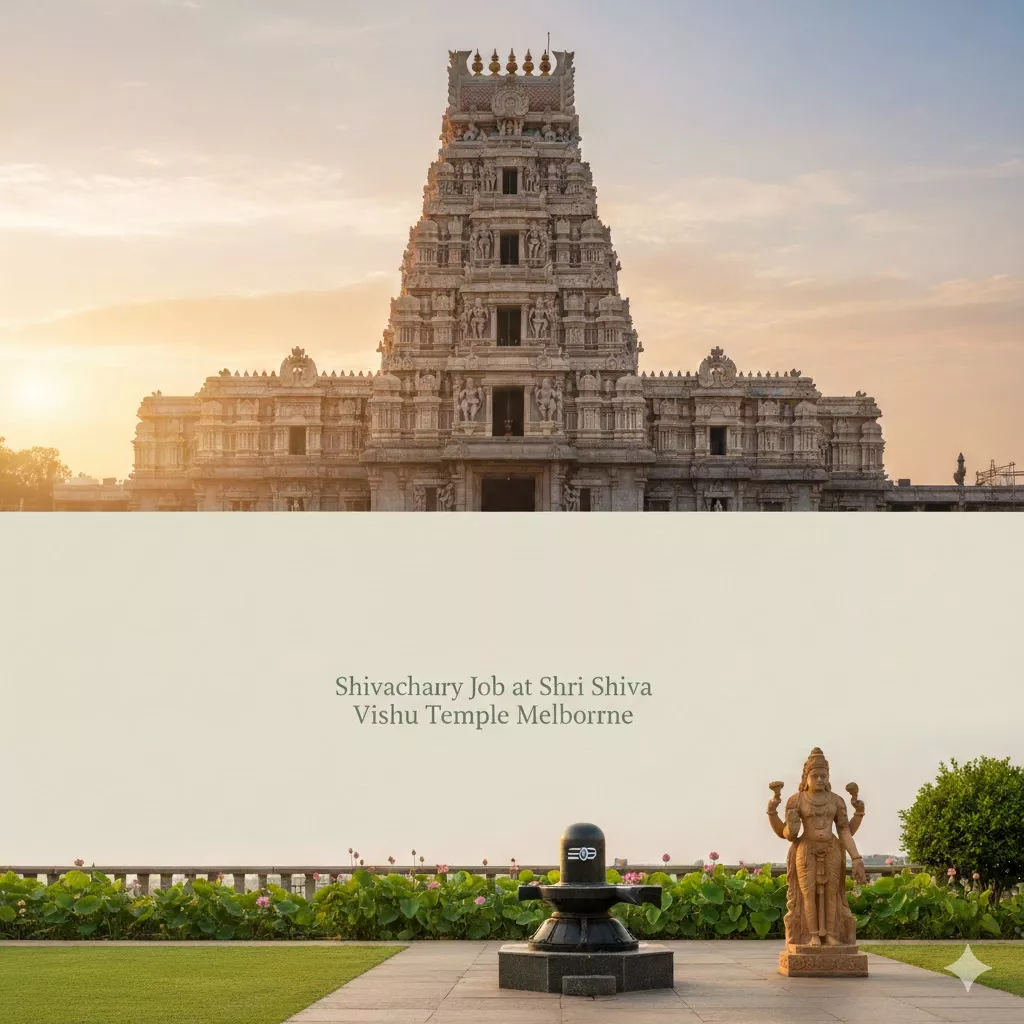
Job Title: Shivacharya – Full time Temple Overview: Shri Shiva Vishnu Temple, Melbourne, is the largest Hindu temple in Australia and is owned and operated by…
Job Title: Shivacharya – Full time
Temple Overview: Shri Shiva Vishnu Temple, Melbourne, is the largest Hindu temple in Australia and is owned and operated by Hindu Society of Victoria (HSV). It features 18 shrines with 45 deities, following Shivagama traditions in the Shaivite sector and Vaikhanasa sastras in the Vaishnavite sector.
Duties and Responsibilities:
- Conducting Poojas, Uthsavams, Homams and other functions strictly according to the religious practices of the temple, its time limits and schedules.
- Prioritising and foreseeing the requirements for forthcoming events and making necessary arrangements in conjunction with the other Priests and the Employer.
- Attending to the “yagasalai” and “kumba” arrangements for the various poojas.
- Sanctifying the deities and sanctum sanctorum (Moolasthanam) and all other property belonging to the temple and used in the pooja and ceremonies.
- Doing special Alangaram for special poojas and Utsavams.
- Preparing “naiveithiam” and “prasadam” for the temple requirements (Traditionally madapalli responsibilities).
- Attending to the spiritual requirements of the worshippers.
- Accounting all monies, other items and property received for and on behalf of the temple.
- Performing any other duties as and when directed by the Management and Temple Manager or his assistant.
- Promoting Hinduism and Hindu culture at the temple.
Requirements/Qualifications:
- Be a Brahmin.
- Follow the traditional dress code for Shivacharya.
- Have completed general education up to Year 12.
- Have completed five years of Vedic education in a Gurukula or under a recognised/qualified Guru.
- Have undergone training under a Shivacharya or in a reputed temple.
- Have worked in a reputed temple for at least 5 years as Shivacharya.
- Have performed Brahmothsavams and Kumbhabishekams.
- Able to speak and write English.
Salary/Benefits: Competitive package (specific details not listed on the site; inquire during application).
How to Apply/Contact:
- Send your application & resume to: secretary@hsvtemple.org.au
- Phone: +61 3 9782 0878
- No specific deadline mentioned (ongoing recruitment).
- Address: 52 Boundary Rd, Carrum Downs VIC 3201, Australia.
Additional Notes: This role is explicitly for full-time temple service in Shaivite traditions. No mention of visa sponsorship or relocation assistance on the page—contact them directly to inquire, especially if applying from outside Australia. The posting appears current (temple site updated recently, cross-referenced with February 2026 sources like Hindutone coverage). No other priest jobs are currently listed on their opportunities page.
For the absolute latest status, visit https://www.hsvshivavishnutemple.org.au/job-opportunities directly or email secretary@hsvtemple.org.au. If you're eligible (e.g., Brahmin background, extensive Shivacharya experience), this is a prestigious opportunity at Australia's largest Hindu temple. Good luck—feel free to share your qualifications if you'd like tips on applying!
For More Devotional Journey, Follow
- Temples
/temples/ - Tirumala Updates
/tirumala/ - Sabarimala Yatra
/category/sabarimala-yatra/ - Pooja, Slokas & Mantras
/pooja-slokas-and-mantras/ - Hindu Gods
/hindu-gods/
What is the Shivagama tradition that governs worship at Shri Shiva Vishnu Temple?
The Shaivite sector of Shri Shiva Vishnu Temple Melbourne follows the Shivagama, a body of 28 primary Agamas (also called Shaiva Siddhanta Agamas) that govern the construction, consecration, and daily ritual life of Shiva temples. Key texts within this canon — such as the Kamikagama, Karanagama, and Suprabhedagama — prescribe in precise detail the configuration of the sanctum (garbhagriha), the placement of the Shivalinga, and the sequence of upacharas (ritual offerings) from pre-dawn abhisheka through to the final ratri deeparadhana.
A Shivacharya, the hereditary priestly lineage trained in these Agamas, is the sole authorized officiant for the rites performed in the Shaivite sanctum. Unlike a general purohit who may conduct domestic rites from smriti texts, the Shivacharya's qualification is specifically Agamic: initiation (diksha), Gurukula training, and a demonstrated ability to perform the pancha-kala puja — the five daily worship cycles of Ushat-kala, Kalasha, Uchha, Sayarakshai, and Ardharatri — without deviation from the prescribed ritual grammar.
How does the Vaikhanasa Sastra tradition shape the Vaishnavite sector of the temple?
The Vaishnavite shrines at Shri Shiva Vishnu Temple follow the Vaikhanasa Sastra, one of the two principal Agamic streams of Vaishnava temple worship, the other being Pancharatra. Vaikhanasa traces its authority to the sage Vikhanas, who is said in the Vaikhanasa Grihyasutra to have received the tradition directly from Lord Vishnu (referred to as Svayambhuva). The primary texts in active liturgical use include the Marichi Samhita, Atri Samhita, Bhrigu Samhita, and Kashyapa Samhita, collectively known as the Chaturshakhas.
Vaikhanasa practice places particular emphasis on the concept of Nityarchana — the unbroken daily worship of the Lord as a cosmic obligation rather than merely a devotional act. The tradition also maintains strict protocols for Adhivaasa (pre-consecration rites), Snapana (ritual bathing of the processional deity), and Utsava (festival) processions, all of which are reflected in the temple's requirement that priests have prior experience conducting Brahmothsavams and Kumbhabishekams.
What is the significance of Kumbhabishekam and why is experience in it a key qualification?
Kumbhabishekam (Sanskrit: Kumbhabhisheka), also known as Samprokhsana, is the grand reconsecration ceremony that ritually recharges the divine presence within a temple's shrines and their presiding deities. Agamic texts prescribe that it must be performed at the time of a temple's first consecration and thereafter at regular intervals — typically every twelve years — or whenever the temple undergoes major structural renovation. The ceremony takes its name from the consecrated kalasha (sacred pot) from which sanctified water is poured over the temple's shikhara (tower) and the principal deities.
The rite demands a Shivacharya with extensive practical command of complex multi-day procedures: the setting up of the yagasala (ritual fire enclosure), the preparation of multiple homakundas (fire altars), the chanting of specific Agamic mantras for each stage of the Maha Samprokhsana, and the coordination of a team of priests across simultaneous rituals. A priest who has performed Kumbhabishekam independently demonstrates mastery of temple liturgy at its highest level, which is precisely why the Shri Shiva Vishnu Temple lists it as a mandatory requirement alongside Brahmothsavam experience.
What does a Gurukula education involve, and why does the temple require five years of it?
A Gurukula is a traditional residential school in which the student (shishya) lives under the direct supervision of a qualified Guru and receives oral transmission of Vedic and Agamic texts alongside their practical ritual application. For aspiring Shivacharyas, the curriculum typically encompasses the recitation and memorisation of relevant Vedic shakhas (branches), Agamic sutras, and mantra-patha; training in svara (tonal accent) for correct Vedic chanting; instruction in the construction and sanctification of ritual implements; and supervised performance of daily puja sequences under the Guru's correction.
The five-year minimum specified by Shri Shiva Vishnu Temple reflects the reality that Agamic priestly competence cannot be acquired through textbook study alone. The oral transmission of mantras — including the Shiva Panchakshara (Na-Ma-Shi-Va-Ya) as deployed within Agamic ritual context — requires years of repetition, correction of pronunciation, and internalization of the accompanying mudras and ritual actions. Gurukulas such as those affiliated with the Shaiva Siddhanta institutions in Tamil Nadu and Andhra Pradesh remain the primary suppliers of qualified Shivacharyas for diaspora temples worldwide.
What is the broader role of the Hindu Society of Victoria in maintaining authentic temple traditions?
The Hindu Society of Victoria (HSV), established decades before the temple's current structure was completed, serves as the governing body responsible for ensuring that both the Shivagama and Vaikhanasa traditions are upheld without compromise in a diaspora setting. This includes recruiting priests directly from India through formal visa sponsorship processes, maintaining communication with senior Agamic scholars and Acharyas in India for guidance on matters of ritual correctness, and funding the periodic Kumbhabishekam reconsecrations that keep the temple ritually active.
Operating the largest Hindu temple in Australia also means that HSV functions as a de facto custodian of living Agamic tradition for the entire Australian Hindu community. The temple's 18 shrines encompass deities across Shaiva, Vaishnava, and related traditions — including shrines to Murugan, Ganesha, Ayyappa, and the Navagrahas — meaning that the priestly staff must collectively hold expertise across multiple Agamic and Puranic liturgical frameworks. The Shivacharya position advertised is therefore not a routine religious job but a role with direct responsibility for the continuity of a precisely codified sacred science in the Southern Hemisphere.
What should applicants understand about the ritual dress code and conduct expected of a Shivacharya?
The requirement to follow the traditional dress code for a Shivacharya is rooted in the Agamic understanding that the priest's body is itself a ritual instrument. Within the Shaiva Agamas, the officiant performing puja in the inner sanctum is expected to wear the prescribed pancha-kachcha veshti (a specific mode of draping the dhoti), apply Vibhuti (sacred ash) in the Shaiva manner across the forehead and body, and wear Rudraksha mala. These are not ceremonial accessories but markers of the priest's consecrated status (diksha-deha), distinguishing him as one who has undergone Agamic initiation and is authorized to handle the sacred space of the moolasthanam.
Beyond clothing, the Shivacharya is expected to observe strict personal purity (shaucha) protocols before entering the sanctum, including ritual bathing, Sandhyavandana, and adherence to dietary guidelines consistent with Shaiva Agamic practice. In a diaspora temple environment like Melbourne, where the Shivacharya also interacts directly with worshippers from diverse regional and generational backgrounds, the ability to communicate respectfully in English — as the job listing specifically requires — adds a pastoral dimension to what is fundamentally a liturgical role.
Frequently Asked Questions
Where is Shivacharya Job at Shri Shiva Vishnu Temple located?
Job Title: Shivacharya – Full time Temple Overview: Shri Shiva Vishnu Temple, Melbourne, is the largest Hindu temple in Australia and is owned and operated by Hindu Society of Victoria (HSV). It features 18 shrines with 45 deities, following Shivagama traditions in the Shaivite sector and Vaikhanasa sastras in the Vaishnavite sector.
Who is the presiding deity of Shivacharya Job at Shri Shiva Vishnu Temple?
The presiding deity is Lord Shiva.
What are the timings and how do I reach Shivacharya Job at Shri Shiva Vishnu Temple?
Temples typically open early morning and evening; confirm current darshan timings before visiting. The nearest airport, railway station and road routes are covered in the guide above.
What is the best time to visit Shivacharya Job at Shri Shiva Vishnu Temple?
Major festival days and the cooler months are popular, though weekday mornings offer a calmer darshan. Plan around the temple's key festivals for the most vibrant experience.
You might also like
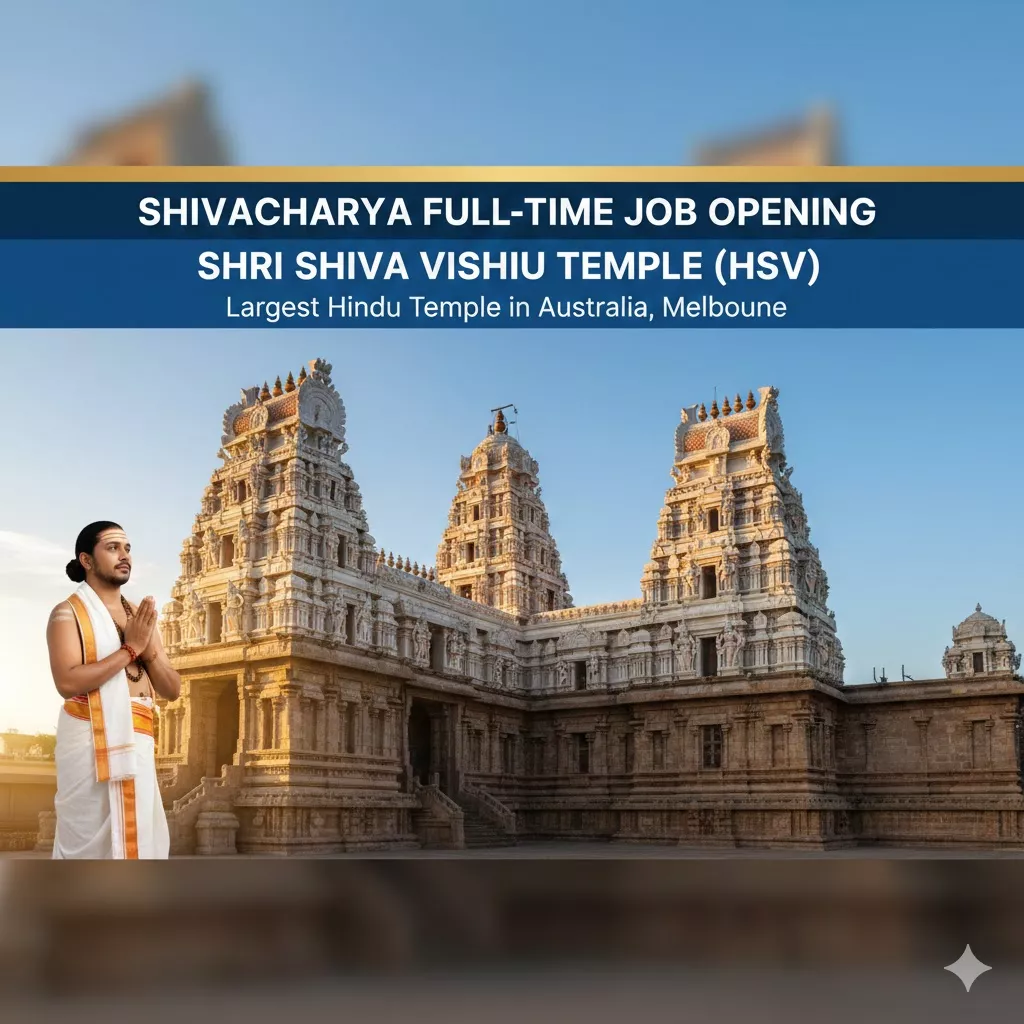
Shivacharya Full-Time Job Opening at Shri Shiva Vishnu Temple (HSV) – Largest Hindu Temple in Australia, Melbourn
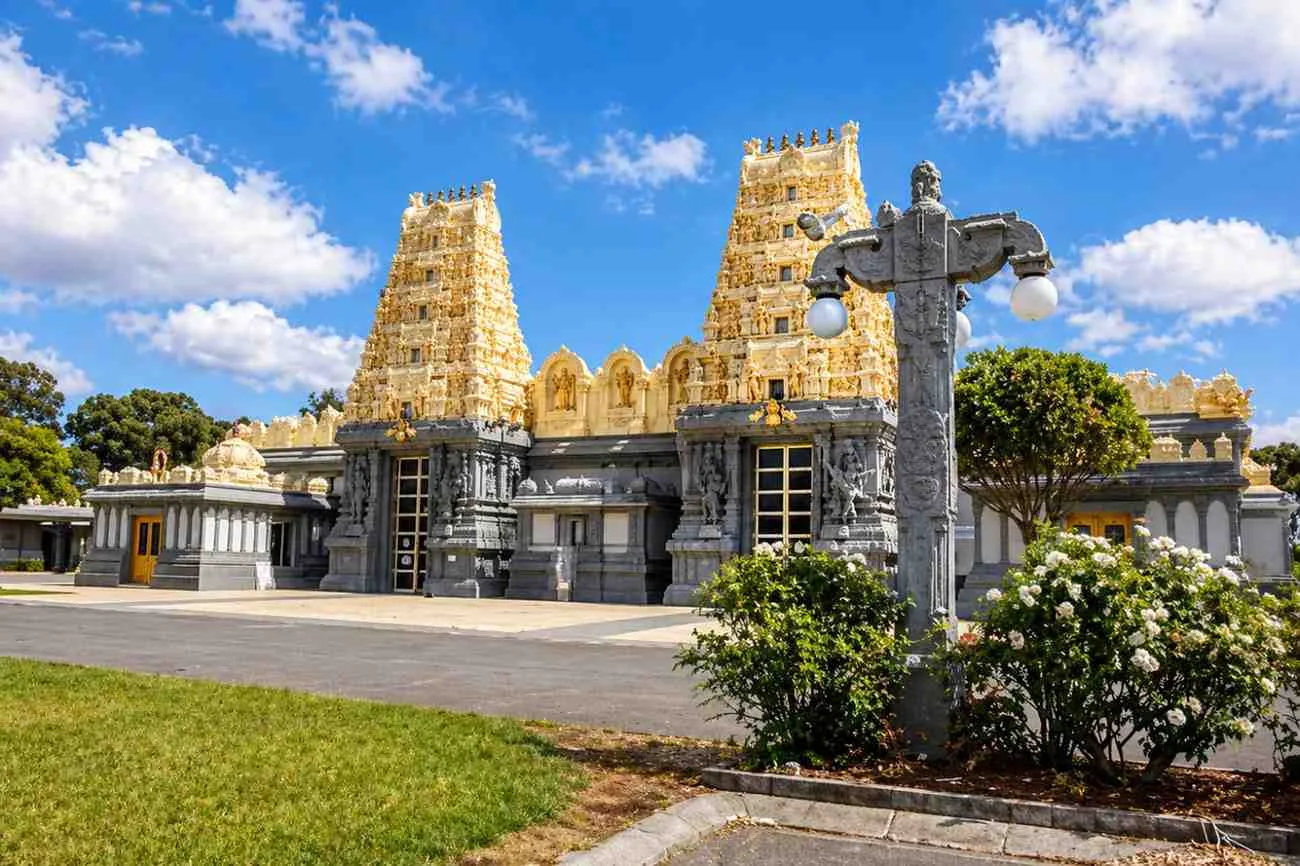
Shivacharya / Bhattacharyar — Shri Shiva Vishnu Temple, Melbourne Australia | 2026

Vishnu's Ten Avatars and the One Question Every NRI Child Eventually Asks