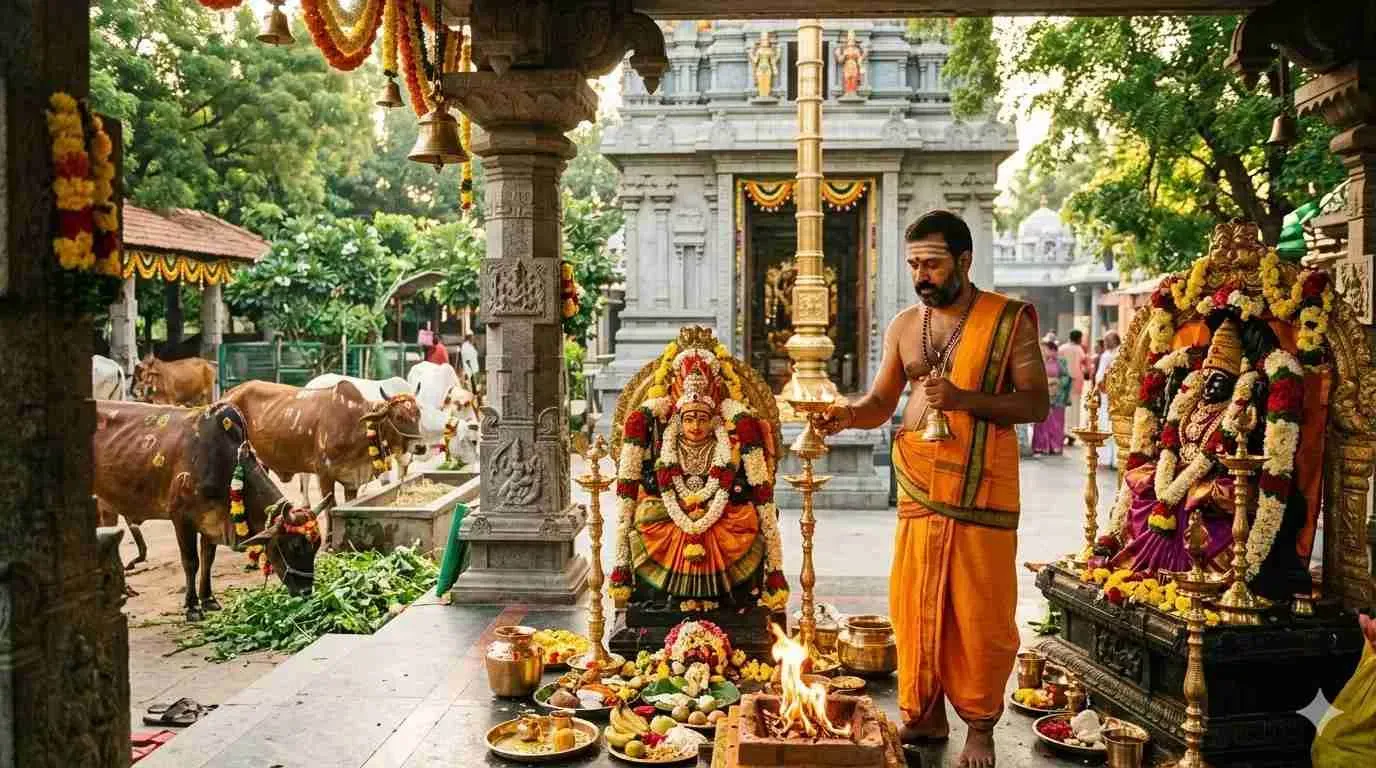
Poojari Job at Sri Venkateswara Temple Nacharam Hyderabad
Poojari (Temple Priest) Job Vacancy at Sri Venkateswara Swamy Temple, Nacharam, Hyderabad – Local Telangana Opening (₹15k–₹20k/month) A promising Poojari…

Poojari (Temple Priest) Job Vacancy at Sri Venkateswara Swamy Temple, Nacharam, Hyderabad – Local Telangana Opening (₹15k–₹20k/month) A promising Poojari…
Poojari (Temple Priest) Job Vacancy at Sri Venkateswara Swamy Temple, Nacharam, Hyderabad – Local Telangana Opening (₹15k–₹20k/month)
A promising Poojari (Temple Priest) role is open at Sri Venkateswara Swamy Temple in Nacharam, Hyderabad, Telangana. This temple, dedicated to Lord Venkateswara (Balaji), serves the local community with regular worship, special pujas, and festivals, attracting devotees from nearby areas like Uppal, Malkajgiri, and Secunderabad.
Nacharam's convenient location in eastern Hyderabad makes this an ideal opportunity for priests seeking stable temple seva without relocating far from home.
Key Responsibilities for the Poojari Role
- Perform daily poojas, abhishekams, aartis, homams, and other traditional rituals as per Vaishnava/South Indian customs.
- Conduct devotee-sponsored pujas, life-cycle ceremonies, and festival services (e.g., Brahmotsavams, Vaikuntha Ekadashi).
- Maintain temple sanctity, prepare naivedyam/prasadam, and assist devotees with guidance and blessings.
- Ensure smooth daily temple operations, including early morning and evening services.
This position typically involves full-time or structured daily shifts aligned with temple timings.
Who We're Looking For: Requirements and Qualifications
- Experience as a practicing poojari/pujari/archaka with expertise in Venkateswara or Vaishnava rituals.
- Preferably from Brahmin/traditional priestly background, with knowledge of Telugu and Sanskrit slokas.
- Devoted, punctual, and skilled in interacting warmly with devotees.
- Local Hyderabad/Telangana candidates preferred for easy commute.
Compensation and Benefits
- Salary range: ₹15,000 – ₹20,000 per month (based on experience; as per current listing).
- Potential for additional devotee offerings/dakshina and stable devotional work in a respected local temple.
Why Join Sri Venkateswara Swamy Temple, Nacharam?
This temple provides a focused environment for authentic Venkateswara worship, community service, and spiritual fulfillment in urban Hyderabad. Priests here contribute to daily rituals and festivals while enjoying proximity to family and city amenities—great for Telangana-based pujaris seeking meaningful, local roles.
If you're a qualified poojari in Hyderabad looking for a current temple priest vacancy, this is worth applying to immediately.
How to Apply for the Poojari Position
- Apply directly via WorkIndia (search: "Poojari Nacharam Hyderabad" or job reference on workindia.in/jobs/poojari-nacharam-hyderabad-9101560).
- Contact HR/employer for first-call interview (details available on the WorkIndia listing).
- Prepare your experience details, references, and ritual expertise summary.
- Temple location: Nacharam, Hyderabad, Telangana (near Uppal/Secunderabad).
Share this with local pujaris, Brahmin networks, or family in Hyderabad!
For More Devotional Journey, Follow
- Temples
/temples/ - Tirumala Updates
/tirumala/ - Sabarimala Yatra
/category/sabarimala-yatra/ - Pooja, Slokas & Mantras
/pooja-slokas-and-mantras/ - Hindu Gods
/hindu-gods/
Posted on Hindutone.com – Your go-to source for Hindu temple priest/pujari/archaka vacancies in Hyderabad, Telangana, Andhra Pradesh, and across India.
The Theological Significance of Lord Venkateswara and the Archaka Tradition
Lord Venkateswara, also known as Srinivasa, Balaji, and Govinda, is venerated as a form of Maha Vishnu who descended to reside on the Seshachala hills at Tirumala in the Kali Yuga to grant moksha to devoted souls. The Bhavishyottara Purana and Varaha Purana both contain references to the divine sanctity of the Venkata hill and the special grace that Venkateswara bestows on His devotees in this age. Temples dedicated to Him across Telangana, including this one in Nacharam, function as extensions of that sacred presence, making the role of the archaka (temple priest) spiritually weighty and not merely administrative.
The archaka in a Vaishnava temple is understood, within the Pancharatra Agama tradition, as a servant of the deity rather than a performer of a professional service. This tradition, which governs worship at major Vaishnava shrines including the Tirumala Tirupati Devasthanam, specifies that the priest must maintain ritual purity (shaucha), wear the prescribed Vaishnava marks (Urdhva Pundra tilak), and chant Vedic hymns such as the Purusha Sukta and Vishnu Sahasranama during key moments of worship. Candidates applying for this Nacharam position would do well to ground themselves in this framework.
What Daily Seva at a Venkateswara Temple Actually Involves — A Closer Look at the Nitya Krama
A fully observed Vaishnava nitya krama (daily worship schedule) typically begins before sunrise with Thiruvanandal or Suprabhata Seva, where the deity is awakened with hymns — most famously the Venkatesha Suprabhatam composed in Sanskrit, which is sung or recited at this first service of the day. This is followed by Abhishekam (ritual bathing of the utsava murti or the idol with water, milk, panchamrita), Alankaram (decoration with flowers and garments), and Naivedyam (offering of cooked food). Each of these steps carries a corresponding Vedic or Agamic mantra sequence that the poojari must know with accuracy.
The evening services typically include Dhupa, Dipa, and Naivedya offerings followed by the Ekanta Seva, where the deity is symbolically put to rest. On special occasions such as Vaikuntha Ekadashi — one of the most auspicious days in the Vaishnava calendar — the workload intensifies significantly, with extended hours and larger congregations of devotees. A poojari at the Nacharam Sri Venkateswara Swamy Temple must therefore possess not only ritual knowledge but also the physical stamina and devotional steadiness to sustain these practices daily without compromise.
Nacharam and Its Place in Hyderabad's Religious Geography
Nacharam is situated in the eastern corridor of Hyderabad, falling under the Medchal-Malkajgiri district, and has seen rapid residential and commercial growth in recent decades. The area houses a growing population of working-class and middle-class families, many of whom maintain strong ties to traditional Vaishnava and Shaiva worship. Temples in such localities serve a dual role — as centres of daily devotion for neighbourhood residents and as anchors of cultural identity for Telugu-speaking communities living far from their native villages.
The proximity of Nacharam to areas like Uppal, L.B. Nagar, and Ghatkesar means the temple draws devotees from a wide catchment area, particularly on auspicious days like Saturdays, Ekadashis, and during the Karthika Masam (the Telugu lunar month of Kartika, considered especially sacred for Vishnu worship). A priest posted here will find himself at the intersection of urban convenience and genuine community need, making the position both practically stable and spiritually rewarding.
Qualifications Beyond the Basics — What Strengthens a Poojari's Application
While the job listing specifies familiarity with Vaishnava rituals and knowledge of Telugu and Sanskrit slokas, candidates who have received formal training at institutions such as the Tirumala Tirupati Devasthanam's Veda Patashalas or have completed studies at a recognised Agama Shastra school will carry a distinct advantage. Proficiency in chanting the Divya Prabandham — the 4,000-verse Tamil devotional canon of the Alvars, which is integral to Pancharatra worship — is also a valued skill in many Venkateswara temples, even outside Tamil Nadu.
Practical skills such as the ability to prepare fresh naivedyam items, construct flower garlands (mala) correctly for the deity's form, and perform homams (fire sacrifices) like the Sudarshana Homam or Pavamana Homam independently can further distinguish a candidate. Demonstrated experience in conducting life-cycle sacraments (samskaras) such as Namakaranam (naming ceremony), Upanayanam (sacred thread ceremony), and Vivaha (marriage) is also beneficial, as devotee families in urban localities frequently request these services from their neighbourhood temple priests.
Understanding the Compensation Structure and the Role of Dakshina in Temple Priesthood
The stated salary of ₹15,000 to ₹20,000 per month forms the fixed component of a poojari's income at a community temple of this scale. However, in practice, the total earnings of a temple priest are often supplemented by dakshina — voluntary offerings made by devotees at the conclusion of a personally sponsored puja, homam, or ceremony. During festival seasons, particularly Brahmotsavams spanning multiple days, and on high-footfall days like Saturdays sacred to Venkateswara, dakshina receipts can meaningfully augment the monthly income.
It is worth noting that community temples in urban Hyderabad generally operate with a degree of financial transparency increasingly expected by devotee trusts and managing committees. A poojari in such a setting is often expected to maintain clear records of sponsored pujas and to conduct all transactions with honesty and accountability. This understanding of the professional and ethical dimensions of temple employment helps priests build lasting trust with the temple management and the congregation they serve.
How to Approach the Application and What to Expect in the Selection Process
Candidates interested in this position should prepare a brief statement of their ritual training background, naming the guru or institution under whom they studied, and listing the specific agamas or puja paddhatis (procedural manuals) they have been trained in. If possible, a short reference from a senior priest or a temple trust they have previously served adds credibility to the application. Carrying copies of any relevant certificates from Veda Patashala studies or temple training programmes is also advisable.
The selection process at community temples typically involves a practical demonstration of ritual competence — the candidate may be asked to perform an Abhishekam or recite key stotras such as the Vishnu Sahasranama or Venkatesha Ashtottara Shatanamavali before the managing committee. Punctuality, calm conduct, and respectful interaction with devotees during this demonstration matter as much as scriptural knowledge. Shortlisted candidates are encouraged to visit the Sri Venkateswara Swamy Temple at Nacharam in person to understand the temple's schedule and the expectations of its managing trust before submitting a formal application.
Frequently Asked Questions
Where is Poojari Job at Sri Venkateswara Temple Nacharam located?
Poojari (Temple Priest) Job Vacancy at Sri Venkateswara Swamy Temple, Nacharam, Hyderabad – Local Telangana Opening (₹15k–₹20k/month) A promising Poojari (Temple Priest) role is open at Sri Venkateswara Swamy Temple in Nacharam, Hyderabad, Telangana. This temple, dedicated to Lord Venkateswara (Balaji), serves the local community with regular worship, specia
Who is the presiding deity of Poojari Job at Sri Venkateswara Temple Nacharam?
The presiding deity is Lord Vishnu.
What are the timings and how do I reach Poojari Job at Sri Venkateswara Temple Nacharam?
Temples typically open early morning and evening; confirm current darshan timings before visiting. The nearest airport, railway station and road routes are covered in the guide above.
What is the best time to visit Poojari Job at Sri Venkateswara Temple Nacharam?
Major festival days and the cooler months are popular, though weekday mornings offer a calmer darshan. Plan around the temple's key festivals for the most vibrant experience.
You might also like
Assistant Poojari (22 Positions)
Female Poojari (Devi Archana Specialist)
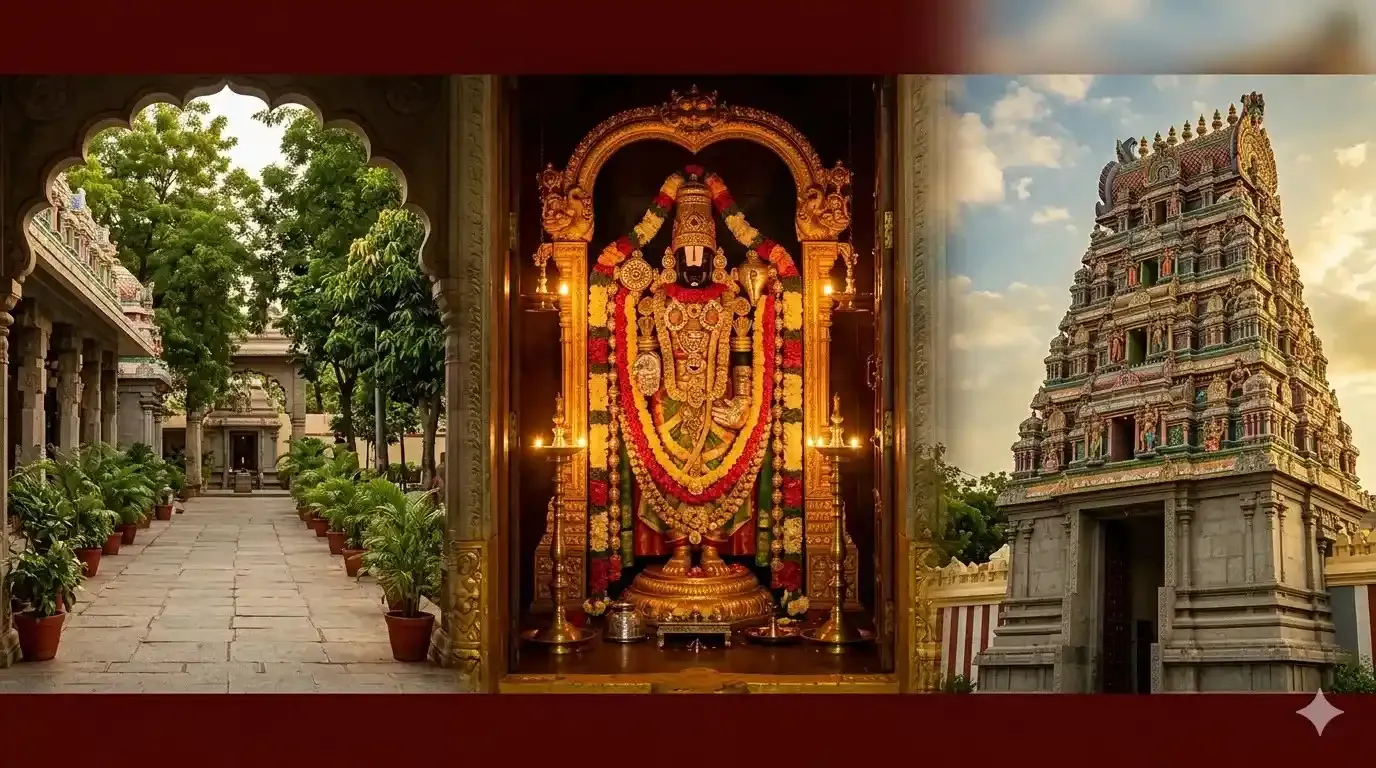
Poojari Job 2026 — Sri Venkateswara Swamy Temple, Nacharam, Hyderabad (₹15,000–₹20,000/month)