

Female Poojari (Devi Archana Specialist)
Job Alert: Female Poojari (Devi Archana Specialist) Temple: Sri Sharadambal Shrine, Chennai Mutt (Adi Shankara Trust) Location: Mylapore, Chennai, Tamil Nadu…
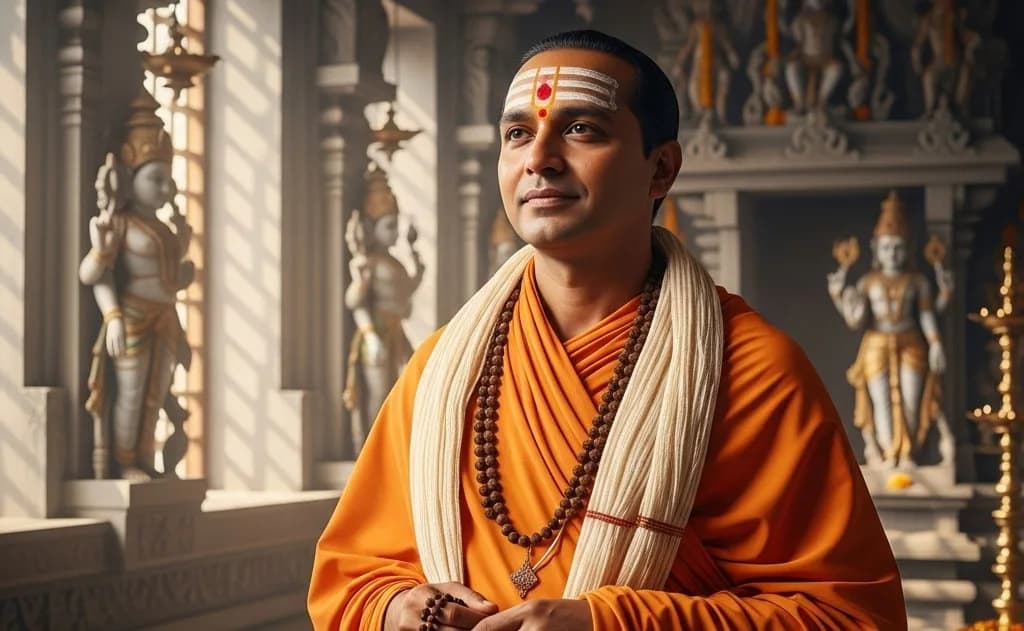
Job Alert: Female Poojari (Devi Archana Specialist) Temple: Sri Sharadambal Shrine, Chennai Mutt (Adi Shankara Trust) Location: Mylapore, Chennai, Tamil Nadu…
Job Alert: Female Poojari (Devi Archana Specialist)
Temple: Sri Sharadambal Shrine, Chennai Mutt (Adi Shankara Trust)
Location: Mylapore, Chennai, Tamil Nadu
Application Method: Email resume to `recruit@adishankartrust.org`
Application Deadline: 10 August 2025
—
Role & Ritual Responsibilities
1. Daily Devi Worship:
– Perform morning/evening pujas for Sri Sharadambal (Saraswati) and Kamakshi Devi
– Conduct special Lalita Sahasranama archana on Fridays
2. Women’s Ritual Leadership:
– Lead Varalakshmi Vratam, Savitri Pooja, and puberty rites (Ritu Kala Samskara)
– Guide Devi Bhagavatam study circles
3. Festival Execution:
– Manage Navaratri celebrations (Day 1-9 rituals, Kumari Pooja)
– Coordinate Vasanta Panchami and Aadi Perukku ceremonies
4. Spiritual Counseling:
– Advise women devotees on menstrual cycle rituals and fertility vows
—
Essential Requirements
| Category | Specifics |
|———-|———-|
| Spiritual Qualification | – Formal initiation in Shakta Tantra/Śrīvidyā tradition<br>- Menstruation ritual purity training (Ritu Kala Vidya) |
| Technical Skills | – Proficiency in 108/1000-name Devi archana<br>- Knowledge of Yantra Puja and Mantra Nyasa<br>- Ability to prepare raksha threads and kavacha |
| Language | – Fluent Tamil + Sanskrit (Devi Suktam, Durga Saptashati)<br>- English/Hindi for counseling |
| Experience | – 2+ years performing independent Devi puja<br>- Portfolio of conducted women’s rituals |
| Personal | – Strict adherence to sattvic lifestyle<br>- Unmarried/widowed (per temple agama rules)<br>- Age: 25-45 years |
—
Salary & Benefits
– Monthly Salary: ₹25,000 – ₹35,000
– Accommodation: Free shared quarters in mutt complex
– Benefits:
– Daily prasad meals
– Silk saree allowance (₹6,000/year)
– Pilgrimage leave to Shakti Peethas
– Free advanced training in Śrīvidyā traditions
– Unique Perk:
– Lifetime access to Adi Shankara Trust’s manuscript library
—
Why This Role Matters
> “Revive the ancient tradition of women archakas in Shankaracharya mutts! This rare position offers:
> – Scriptural Immersion: Perform rituals from rare Shakta texts
> – Community Impact: Empower women through Vedic rites
> – Lineage Connection: Train under Jeeyar Swamiji’s guidance”
—
Application Process
1. Prepare:
– 5-min video performing:
“`markdown
a) Simple Devi arati
b) Chanting of 5 names from Lalita Sahasranama
“`
– Recommendation letter from Guru/previous temple
2. Email: Send to `recruit@adishankartrust.org` with subject:
> “Female Archaka Application – ”
3. Attach:
– Resume (include lineage details)
– Proof of Shakta training
– Caste certificate (for SC/ST/OBC reservations)
4. Selection:
– Stage 1: Mantra recitation test (video call)
– Stage 2: Practical puja demonstration in Chennai
– Final approval by Dharmic Council
—
Temple Fast Facts
– Deity: Sri Sharadambal (Jnana Saraswati form)
– Tradition: Smarta-Shakta (Adi Shankara lineage)
– Unique Rituals:
– Navavarana Puja during Chitra Pournami
– Yoni Puja for fertility seekers (confidential)
– Congregation: 70% women devotees
The Scriptural and Historical Basis for Women Archakas in Shakta Traditions
The appointment of women as ritual specialists for Devi worship is not a modern innovation but is rooted in authoritative Agamic and Tantric literature. The Kularnava Tantra explicitly states that a yogini or shakti-initiated woman is fully qualified to perform puja, offer homa, and initiate disciples in Shakta lineages. Similarly, the Devi Bhagavata Purana (Skandha VII) describes feminine ritual authority as intrinsic to the worship of Adi Shakti, since the Goddess herself is approached most directly through her own form.
Historically, the Kamakhya temple in Nilachal Hill, Guwahati (Assam) and the Chengannur Mahadeva temple in Kerala have long maintained women ritual specialists for specific rites tied to the Goddess's sacred feminine cycle. The Sharada Peetham tradition, invoked by Adi Shankaracharya himself when he composed the Soundarya Lahari, recognizes feminine sadhana as a complete and independent path. The Mylapore posting at Sri Sharadambal Shrine thus situates itself within a living, documented continuum rather than a speculative experiment.
What Is Srividya Diksha and Why Does This Role Require It
Srividya is an advanced Shakta Tantra lineage centred on the worship of Lalita Tripurasundari through the Sri Yantra (also called Sri Chakra). The tradition is transmitted through formal initiation (diksha) given by an authorised guru, typically in one of three lineages: the Samayachara (purely internal), Misrachara (combined internal and external), or Kaula-influenced paths. Candidates who receive Panchadashi or Shodashi mantra initiation are considered qualified to perform Yantra Puja and Mantra Nyasa as required in this role.
In practice, Srividya diksha involves a thorough grounding in Nyasa — the ritual placement of mantra-syllables on the body of the deity-image and on one's own body — as well as Avarana Puja, the systematic worship of the forty-four triangles, eight lotus petals, and outer circuits of the Sri Yantra. Each of these geometric zones corresponds to a specific Shakti deity. Proficiency in this system takes years of daily practice under direct guru supervision, which is why the role specifies a minimum of two years of independent Devi puja experience.
The Significance of Lalita Sahasranama Archana on Fridays
The Lalita Sahasranama — the thousand names of Lalita Tripurasundari — is preserved in the Brahmanda Purana within the section called Lalitopakhyana. It was revealed by the eight Vak Devis (divine speech goddesses) to the sage Agastya, and is considered among the most potent hymns in the Shakta canon. Each of the thousand names is simultaneously a mantra, a description of the Goddess's form, and a cosmic principle; reciting them with correct intonation (svara) and ritual offerings (pushparchana) is believed to activate the full spectrum of Lalita's grace.
Friday (Shukravara) is dedicated to Shukra (Venus), whose planetary energy is considered resonant with Shakti, beauty, and abundance — qualities directly associated with Lalita and Kamakshi. In Tamil Nadu's Devi temples, Friday archana with kumkuma (vermilion), turmeric flowers, and bilva or tulasi is a deeply observed weekly ritual. The female poojari's role here is especially significant: the Devi's feminine energy is understood in these traditions to be most fully invoked when a woman who has herself received Shakta diksha performs the archana with meditative absorption (bhavana).
Ritu Kala Samskara — Understanding the Puberty Rite This Role Involves
Ritu Kala Samskara (also called Ritu Shuddhi or in Tamil, Manjal Neerattu Vizha) is the traditional Hindu rite marking a girl's first menstruation. In Shakta and South Indian Agamic understanding, this biological event is regarded as a divine threshold — the moment Shakti's creative power awakens in a young woman — and is therefore sanctified with ritual purity observances, a ceremonial bath, new clothing, and community celebration rather than treated as a matter of shame or seclusion alone.
The female poojari's guidance role here is pastoral as much as liturgical. She advises the family on the correct observances from the Dharmashastra and local Agamic customs, supervises mantra recitations appropriate to the occasion, and ensures the young woman is given proper instruction on the spiritual significance of her body's cycles as understood within the Shakta framework. This is precisely the dimension of temple service that a male archaka structurally cannot fill with the same intimacy and authority, making the female specialist irreplaceable for these rites.
Navaratri Duties in Detail — What Nine Days of Kumari Puja Require
Navaratri (the nine-night festival of the Goddess) is the most demanding ritual period in a Devi temple's calendar. The presiding poojari must follow a strict timetable: Days 1–3 are dedicated to Durga in her fierce aspect (invoked through Durga Saptashati parayana); Days 4–6 to Lakshmi (Mahalakshmi Ashtakam, Kanakadhara Stotram recitation); and Days 7–9 to Saraswati (Saraswati Vandana and the ritual placement of books and instruments — Ayudha Puja on the eighth day, Vijayadasami on the tenth).
Kumari Puja — the ritual worship of young prepubescent girls as living embodiments of the Goddess — is a highlighted responsibility mentioned in this role. Rooted in the Devi Bhagavata Purana and Tantric texts like the Rudrayamala, Kumari Puja involves carefully selecting girls (typically aged 1–10, each corresponding to a specific Devi form from Kumari to Malini), bathing them, dressing them in silk, applying sacred marks, and offering them food and gifts before performing pada puja (worship of their feet). Conducting this ceremony with genuine bhava (devotional absorption) and technical precision requires both ritual training and a mature understanding of Shakta theology.
How to Strengthen Your Application for This Position
Candidates should document their diksha lineage clearly — naming their initiating guru and the specific sampradaya (Samayachara, Kaula, or mixed) — since this establishes qualification for Yantra Puja and Mantra Nyasa more convincingly than years of experience alone. A brief portfolio listing conducted rituals (Varalakshmi Vratam, Navaratri sequences, Ritu Kala Samskaras) with dates and locations is explicitly requested and should be formatted as a separate attachment alongside the resume.
Proficiency in Sanskrit pronunciation of Devi Suktam (Rigveda 10.125) and Durga Saptashati should ideally be demonstrated through a short audio or video clip attached to the email, since these texts require precise Vedic accent (udatta, anudatta, svarita) for liturgical validity. Tamil fluency is equally essential given the devotee community at Mylapore; the ability to explain ritual significance in colloquial Tamil builds the trust necessary for the counseling and Devi Bhagavatam study-circle components of the role. Applications should be emailed to recruit@adishankartrust.org before 10 August 2025.
Frequently Asked Questions
What is Female Poojari (Devi Archana Specialist)?
Job Alert: Female Poojari ( Devi Archana Specialist) Temple: Sri Sharadambal Shrine, Chennai Mutt (Adi Shankara Trust) Location: Mylapore, Chennai, Tamil Nadu Application Method: Email resume to `recruit@adishankartrust.org` Application Deadline: 10 August 2025 — Role & Ritual Responsibilities 1. Daily Devi Worship: – Perform morning/evening pujas for Sri Sh
What are the key points about Female Poojari (Devi Archana Specialist)?
Women’s Ritual Leadership: – Lead Varalakshmi Vratam, Savitri Pooja, and puberty rites (Ritu Kala Samskara) – Guide Devi Bhagavatam study circles 3. Festival Execution: – Manage Navaratri celebrations (Day 1-9 rituals, Kumari Pooja) – Coordinate Vasanta Panchami and Aadi Perukku ceremonies 4.
Why does Female Poojari (Devi Archana Specialist) matter in Hinduism?
It deepens a devotee's connection with Goddess Durga and with the values of Sanatana Dharma — clarity, devotion and dharmic living.
How can devotees apply Female Poojari (Devi Archana Specialist) in daily life?
By reflecting on its teaching, incorporating the related practices or observances into daily routine, and approaching it with sincere devotion and understanding.
You might also like

Janmashtami 2026 in India: Date, Rituals & Top Temples to Visit
Vaishno Devi: Divine Mysteries & Soul-Stirring Miracles of Maa's Holy Cave
The Resolve of a Monk – A Divine Incident Showcasing Kanchi Paramacharya’s Compassion
