Pandava Thoothar Perumal Temple: A Sacred Haven for Rohini Nakshatra Borns
In the sacred city of Kanchipuram, Tamil Nadu, known as the land of a thousand temples, stands the ancient and divine Pandava Thoothar Perumal Temple, also…
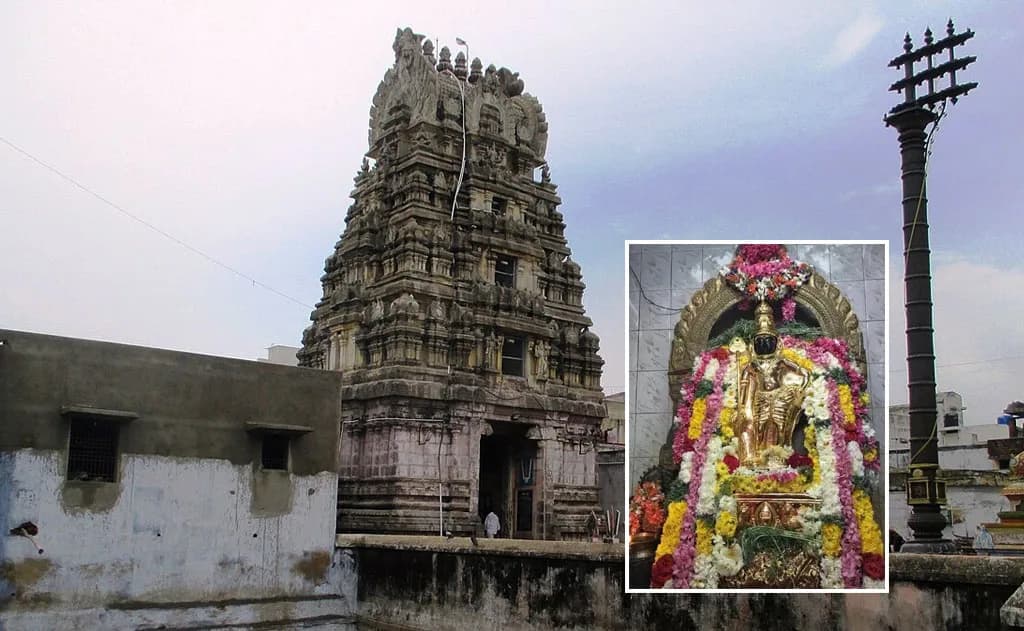
In the sacred city of Kanchipuram, Tamil Nadu, known as the land of a thousand temples, stands the ancient and divine Pandava Thoothar Perumal Temple, also…
In the sacred city of Kanchipuram, Tamil Nadu, known as the land of a thousand temples, stands the ancient and divine Pandava Thoothar Perumal Temple, also known as Thirupadagam. This revered shrine, one of the 108 Divya Desams dedicated to Lord Vishnu, holds a special place in the hearts of devotees, particularly those born under the Rohini Nakshatra. Here, Lord Krishna, the eighth avatar of Lord Vishnu, is worshipped as Pandava Thoothar Perumal, the divine messenger of the Pandavas, radiating strength, wisdom, and compassion alongside his consorts, Rukmini and Satyabhama. For those born under the Rohini Nakshatra, this temple is a spiritual beacon, believed to transform destinies and bring divine clarity to life’s challenges.
The Divine Story of Pandava Thoothar Perumal
The temple’s significance is deeply rooted in the epic Mahabharata, where Lord Krishna, the Poorna Avatar (complete incarnation) of Lord Vishnu, played the pivotal role of a peace emissary for the Pandavas. Before the great Kurukshetra war, the Pandavas, having endured thirteen years of exile, sought to reclaim their rightful kingdom. Lord Krishna, embodying compassion and diplomacy, journeyed to the court of Hastinapura as their messenger to negotiate peace with the Kauravas.
However, the Kaurava king, Duryodhana, consumed by pride and malice, devised a sinister plan to humiliate and destroy Krishna. He ordered a deep pit to be dug in the royal court, covered it with a carpet, and placed a gem-studded throne atop it, concealing wrestlers below to attack Krishna when he fell into the trap. But Krishna, the omniscient Lord, saw through this treachery. As he sat on the throne, he pressed it with his divine toe, causing the trap to collapse and exposing Duryodhana’s deceit.
In that moment, Krishna revealed his awe-inspiring Vishwaroopam, his cosmic form, to the entire court. The grandeur of this divine vision overwhelmed all present, including the blind king Dhritarashtra, father of the Kauravas. Moved by the divine grace of Krishna, Dhritarashtra was miraculously granted vision to behold the Lord’s cosmic form. Overwhelmed, he requested Krishna to restore his blindness, declaring that after witnessing such divine splendor, he wished to see nothing else in the world. This sacred moment is commemorated at the Pandava Thoothar Perumal Temple, where Krishna’s Vishwaroopam is believed to have been manifested, making it a site of immense spiritual potency.
Years later, Janamejaya, the great-grandson of Arjuna, performed penance at this very site to have darshan of Lord Krishna in his Vishwaroopam. The Lord, pleased with his devotion, appeared before him, further sanctifying this sacred space. The temple’s name, Thirupadagam, meaning “the place of the great form,” reflects this divine manifestation of Krishna’s Vishwaroopam.
The Temple’s Divine Architecture and Deity
Constructed in the Dravidian style of architecture, the Pandava Thoothar Perumal Temple is believed to have been built by the Pallavas in the late 8th century CE, with later contributions from the Cholas and Vijayanagara kings. The temple’s main entrance faces east, featuring a majestic four-tiered rajagopuram and a single precinct enclosed by walls. The Maha Mandapa is attributed to the Cholas, while the adjacent hall was built during the Vijayanagara period.
At the heart of the temple lies the sanctum sanctorum, where a breathtaking 25-foot-tall murti of Lord Krishna as Pandava Thoothar Perumal resides. This colossal image, unique in its grandeur, depicts the Lord seated in the Arda Padmasana posture, with his right leg bent to the base, touching the ground in the Viswapada Yoga pose. Unlike other Vishnu temples where the deity is often depicted with four or more arms, Krishna here has only two arms, symbolizing his human form as the Pandavas’ messenger. His right palm displays the Abhaya Mudra (gesture of protection), and his left arm shows the Varada Mudra (gesture of granting boons), radiating divine grace. The consorts, Rukmini and Satyabhama, are worshipped alongside, embodying divine love and devotion.
The temple’s Matsya Theertham, a sacred water body, and the Bhadra Vimana (barrel-shaped roof) add to its spiritual significance. The Mukha Mandapa houses bronze images of festival deities and Azhwar saints, including Arulala Perumal Emperumanar, a disciple of Saint Ramanuja, whose presence is a rare feature in Vishnu temples.
Spiritual Significance for Rohini Nakshatra Borns
The Pandava Thoothar Perumal Temple holds profound significance for those born under the Rohini Nakshatra, the star associated with Lord Krishna himself. According to legend, Rohini Devi, daughter of Daksha, worshipped Lord Krishna at this temple to attain Chandra Deva (the Moon God) as her husband. Her devotion was fulfilled, making this temple a powerful spiritual center for Rohini Nakshatra natives.
Devotees born under Rohini Nakshatra are believed to receive the following blessings by visiting and praying at this temple:
- Clarity and Emotional Strength: The divine presence of Krishna helps devotees overcome emotional turmoil and find clarity in decision-making.
- Resolution of Karmic Patterns: Worshipping here is said to dissolve karmic obstacles, particularly those related to relationships and personal growth.
- Divine Guidance: For those feeling lost or directionless, the Lord’s grace offers a spiritual compass, guiding them toward their life’s purpose.
- Prosperity and Well-Being: The temple’s energy is believed to attract abundance and promote physical and mental health.
- Strengthening Relationships: As Rohini Devi’s prayers were answered here, devotees seeking harmony in relationships find solace and blessings.
It is especially auspicious to visit the temple on Wednesdays, Saturdays, Rohini Nakshatra days, Ashtami (the eighth day from the new or full moon), and the 8th day of each month. The Ashtami Rohini and Krishna Jayanthi festivals are particularly powerful times for Rohini Nakshatra natives to connect with the divine energy of Lord Krishna. Performing Adi Pradakshinam (circumambulation by foot) or Anga Pradakshinam (rolling around the temple) is believed to energize the body’s 72,000 veins, promoting physical health and spiritual upliftment.
Festivals and Rituals
The temple comes alive during Sri Krishna Jayanthi (Krishna Janmashtami), celebrated in the Tamil month of Aavani (August–September), marking the birth of Lord Krishna. Other significant festivals include Deepavali, Vaikunta Ekadasi, Panguni Uthiram, and the Sattrumurai for Arulala Perumal Emperumanar during the Tamil month of Karthigai (November–December) on Bharani Star day. The temple follows the Vaishnava tradition with six daily rituals: Ushathkalam, Kalasanthi, Uchikalam, Sayarakshai, Irandamkalam, and Ardha Jamam, each involving alangaram (decoration), neivethanam (food offering), and deepa aradanai (waving of lamps).
A Transformative Pilgrimage
For Rohini Nakshatra borns and devotees of Lord Krishna, the Pandava Thoothar Perumal Temple is not just a place of worship but a spiritual turning point. The divine energy of Krishna as Pandava Thoothar, who stood as a beacon of peace and righteousness, continues to inspire and uplift. Visiting this temple, located near the Ekambareswarar Temple in Periya Kanchipuram, is believed to transform one’s destiny, bringing peace, prosperity, and divine guidance.
Location: Thirupadagam, Kanchipuram, Tamil Nadu – 631 502
Timings: 7:00 AM–11:00 AM and 5:00 PM–8:00 PM
Access: Kanchipuram is well-connected by road (75 km from Chennai), rail (Kanchipuram railway station), and air (Chennai International Airport, 80 km away). The temple is 1 km from the Kanchipuram bus stand and easily accessible by auto-rickshaw.
Let the divine grace of Lord Pandava Thoothar Perumal guide your path. For Rohini Nakshatra borns, this sacred temple is a call to connect with the eternal wisdom and compassion of Lord Krishna, transforming your life with his divine blessings.
Om Namo Narayanaya!
Frequently Asked Questions
Where is Pandava Thoothar Perumal Temple located?
In the sacred city of Kanchipuram, Tamil Nadu, known as the land of a thousand temples, stands the ancient and divine Pandava Thoothar Perumal Temple , also known as Thirupadagam . This revered shrine, one of the 108 Divya Desams dedicated to Lord Vishnu , holds a special place in the hearts of devotees, particularly those born under the Rohini Nakshatra .
Who is the presiding deity of Pandava Thoothar Perumal Temple?
The presiding deity is Lord Vishnu.
What are the timings and how do I reach Pandava Thoothar Perumal Temple?
Temples typically open early morning and evening; confirm current darshan timings before visiting. The nearest airport, railway station and road routes are covered in the guide above.
What is the best time to visit Pandava Thoothar Perumal Temple?
Major festival days and the cooler months are popular, though weekday mornings offer a calmer darshan. Plan around the temple's key festivals for the most vibrant experience.
You might also like
Janmashtami 2026 in India: Date, Rituals & Top Temples to Visit
22 June 2026 Drigganita Panchangam | Monday Panchangam
Daily Horoscope for 22 June 2026 (Monday) – Aries to Pisces Rashifal Predictions