Puri Jagannath Temple: Mysteries, Miracles & Complete Travel Guide (2026)
श्री जगन्नाथ मन्दिर, पुरी — रहस्य, चमत्कार और सम्पूर्ण यात्रा गाइड One of the four sacred Dhams of Hinduism — Puri Jagannath Temple is not merely a place of…
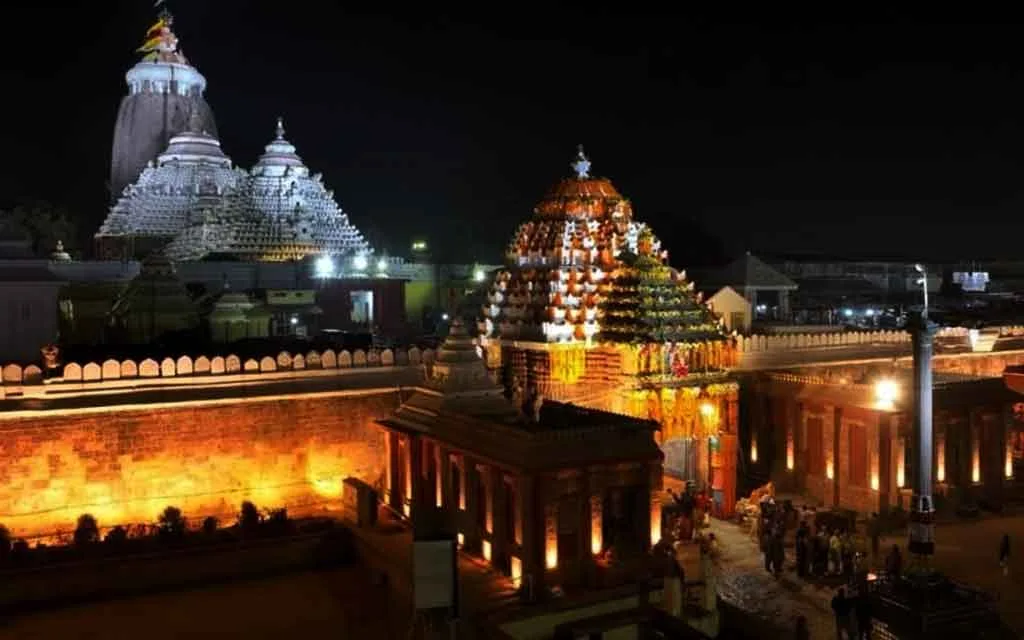
श्री जगन्नाथ मन्दिर, पुरी — रहस्य, चमत्कार और सम्पूर्ण यात्रा गाइड One of the four sacred Dhams of Hinduism — Puri Jagannath Temple is not merely a place of…
श्री जगन्नाथ मन्दिर, पुरी — रहस्य, चमत्कार और सम्पूर्ण यात्रा गाइड
One of the four sacred Dhams of Hinduism — Puri Jagannath Temple is not merely a place of worship. It is a living miracle, a cosmic mystery, and a spiritual experience unlike any other on earth.
Source: www.hindutone.com
Introduction | परिचय
Rising majestically above the coastline of Odisha on the shores of the Bay of Bengal, the Shree Jagannath Temple (श्री जगन्नाथ मन्दिर) of Puri is one of the most sacred pilgrimage sites in all of Hinduism. It is one of the Char Dham — the four holy abodes that every devout Hindu aspires to visit in their lifetime — alongside Badrinath, Dwarka, and Rameswaram.
The presiding deity is Lord Jagannath (जगन्नाथ) — a form of Lord Vishnu/Krishna — meaning "Lord of the Universe" (Jagat = Universe, Nath = Lord). He is worshipped alongside his elder brother Lord Balabhadra (Balarama) and sister Devi Subhadra. The temple has stood for over a thousand years, yet it continues to defy scientific explanation through its inexplicable mysteries and divine miracles.
Puri Jagannath Temple is not just a monument — it is a living, breathing spiritual organism that has humbled scientists, historians, and pilgrims alike since time immemorial.
[image: 📜] History & Origin | इतिहास और उत्पत्ति
Ancient Origins
The origins of the Jagannath cult predate recorded history. The idol of Lord Jagannath is believed to have tribal and pre-Vedic origins — Lord Jagannath was originally worshipped by the Savara tribe of Odisha as Nilamadhava (नीलमाधव), hidden deep in a forest near a sacred blue stone. According to legend, King Indradyumna of Malwa, guided by divine revelation, set out to find this deity.
The Divine Command
According to the Skanda Purana and Brahma Purana, King Indradyumna received divine instructions from Lord Brahma to construct a grand temple on the seashore at Puri. Lord Vishnu himself appeared as a craftsman named Vishwakarma (or Ananta Maharana) and agreed to carve the idols — on the sole condition that he would not be disturbed until the work was complete. The king grew impatient and opened the workshop doors before the idols were finished. Vishwakarma vanished, leaving the idols in their current unique, limbless form. Lord Brahma then consecrated these divine forms himself, declaring that this was the will of God — the unfinished form IS the perfect form.
Temple Construction
The current temple structure was built by King Chodaganga Deva of the Eastern Ganga dynasty around 1135–1150 CE, though the site itself is far more ancient. Later rulers contributed to its expansion and fortification. The temple complex covers an area of 10.7 acres (about 4.3 hectares) within massive stone walls and houses over 30 smaller shrines within the compound.
The Char Dham Status
Adi Shankaracharya (8th century CE) established Puri as one of the four sacred Dhams representing the four directions of Bharat — East (Puri), West (Dwarka), North (Badrinath), and South (Rameswaram). This elevated the Jagannath Temple to the highest tier of Hindu pilgrimage.
[image: 🏛️] Temple Architecture | मन्दिर की वास्तुकला
The Jagannath Temple is a supreme example of Kalinga Architecture (Odisha style), considered among the finest in the Indian subcontinent. The temple complex consists of four distinct structures:
1. Vimana (विमान) — The Main Sanctum Tower
The tallest and most dominant structure, the Vimana (also called Deul) rises to a height of 65 metres (214 feet) above ground. It follows the Rekha Deul style — a curvilinear shikhara tapering dramatically to a flat top. The tower is crowned by the sacred Sudarshana Chakra (wheel of Vishnu) and the Patitapavana flag (the temple flag). On top sits a golden Kalasha (water pot) symbol.
2. Jagamohan (जगमोहन) — The Assembly Hall
Immediately in front of the Vimana, the Jagamohan (also called Mukhasala) is the assembly hall where devotees congregate. Its pyramidal roof is constructed in Pidha Deul style. It functions as the transition space between the outer world and the sacred inner sanctum.
3. Nata Mandir (नाट मन्दिर) — The Dance Hall
The Nata Mandir (Festival Hall) is where classical Odissi dance performances were traditionally offered to the deity. This hall represents the cultural and artistic dimension of temple worship — the divine being appeased through dance, music, and drama.
4. Bhoga Mandap (भोग मण्डप) — The Offering Hall
The outermost hall where the sacred Mahaprasad (food offering) is prepared and distributed. The Bhoga Mandap has its own distinctive pyramidal roof and serves as the economic and communal heart of the temple.
The Outer Wall — Meghanada Prachira
The entire complex is enclosed by two massive compound walls:
- Outer wall (Meghanada Prachira): 6.1 metres high, 192 metres x 214 metres
- Inner wall (Kurma Bedha): enclosing the inner sanctum
The Four Gates
The temple has four symbolic gates, one in each cardinal direction:
The Aruna Stambha (Aruna Pillar) — a magnificent 11-metre monolithic pillar originally from the Konark Sun Temple — stands before the Singha Dwara and is one of the first things a pilgrim sees upon approaching the temple.
[image: 🔮] The 12 Unexplained Mysteries | 12 अनसुलझे रहस्य
The Jagannath Temple is home to phenomena that have baffled scientists, engineers, and scholars for centuries. These are not folklore — they are documented, observed, and verified by thousands of visitors including scientists and government officials.
Mystery 1 — The Flag Always Blows Against the Wind
[image: 🚩] झंडा हमेशा हवा के विपरीत दिशा में लहराता है
The Patitapavana flag atop the 65-metre Vimana tower ALWAYS blows in the opposite direction of the wind. On any given day, regardless of which direction the sea breeze blows, the temple flag consistently flows against it. No engineering or aerodynamic explanation has been found. This single mystery has been studied and verified by meteorologists and remains unexplained.
Mystery 2 — No Shadow of the Main Tower at Any Time of Day
[image: 🌞] मुख्य शिखर की परछाईं कभी नहीं पड़ती
The main Vimana (temple tower) casts no shadow at any time of the day, in any season. Whether at noon in summer or morning in winter, no shadow of the main tower falls on the ground around it. Engineers and architects have studied the geometry of the tower and the orientation of the sun, but cannot explain this phenomenon through conventional optics or geometry.
Mystery 3 — The Sound of the Ocean Disappears Inside
[image: 🌊] समुद्र की आवाज़ मन्दिर में सुनाई नहीं देती
Puri is a coastal city, and the roaring Bay of Bengal is visible from the temple's upper reaches. Yet the moment you step through the Singha Dwara (Lion Gate), the sound of the ocean completely vanishes. Conversely, the moment you step back outside, the sound returns. This acoustic mystery — the complete silence of the ocean inside the temple — is experienced daily by thousands of pilgrims and has no acoustic or architectural explanation.
Mystery 4 — The Sudarshana Chakra Can Be Seen from Every Direction
[image: 🔵] सुदर्शन चक्र हर दिशा से सामने दिखता है
The Sudarshana Chakra at the apex of the Vimana is an eight-ton metal disc approximately 11 feet in diameter. The extraordinary mystery is that from whichever direction or angle you look at the temple, the Chakra always appears to be facing you directly. Whether you stand north, south, east, or west — near or far — the Chakra faces you. This optical phenomenon has no satisfactory geometric or architectural explanation.
Mystery 5 — The Holy Prasad Is Never Insufficient, Never Wasted
[image: 🍛] महाप्रसाद न कभी कम होता है, न कभी बचता है
The Mahaprasad (sacred food) prepared daily inside the temple kitchen is cooked in exactly the right quantity — every single day. On days when 2,000 pilgrims visit, there is food for 2,000. On days when 100,000 people arrive for festivals, there is food for all. At the end of every day, not a single grain is wasted — and no pilgrim ever goes unfed. The kitchen has no advance notice of visitor numbers. This has been observed and documented for centuries without exception.
Mystery 6 — The Cooking Method: Seven Pots, Bottom Pot Cooks First
[image: 🏺] सात बर्तन, सबसे ऊपर वाला पहले पकता है
The temple kitchen cooks the Mahaprasad in a unique fashion: seven clay pots are stacked one on top of the other over a single wood fire. By all known laws of thermodynamics and heat transfer, the bottom pot should cook first and the topmost last. Yet in the Jagannath Temple kitchen, the topmost pot cooks first, and cooking proceeds downward through the stack. This phenomenon has baffled physicists and food scientists who have examined it.
Mystery 7 — Birds and Aircraft Do Not Fly Over the Temple
[image: 🦅] मन्दिर के ऊपर न पक्षी उड़ते हैं, न विमान
The airspace above the Jagannath Temple is mysteriously avoided by all birds. Despite being located in a coastal area teeming with birds — eagles, crows, pigeons, and seabirds — no bird is ever seen flying directly over the temple. Likewise, the Government of India has officially declared the airspace above the temple a no-fly zone, noting that aircraft guidance systems behave erratically above the temple's airspace.
Mystery 8 — The Nilachakra: Made of One Single Piece of Metal
[image: ⚙️] नीलचक्र: एक ही धातु का टुकड़ा
The Nilachakra (Sudarshana Chakra) at the top of the temple is made of Ashtadhatu (an alloy of eight metals). Metallurgists who have examined it confirm it appears to be cast from a single, seamless piece — with no joints, weld marks, or assembly points detectable anywhere on its surface. Given its size (11 feet diameter, approximately 8 tons), this represents an engineering feat that modern metallurgy cannot easily replicate, let alone explain for its era of manufacture.
Mystery 9 — The Rope Atop the Temple: One Priest Climbs Every Single Day
[image: 🧗] हर दिन एक पुजारी शिखर पर चढ़कर झंडा बदलता है
Every single day — without exception, for over 1,800 years — a designated priest climbs the 65-metre-high (equivalent to a 45-story building) outer surface of the Vimana to change the temple flag. The climb is made without any safety equipment, on the near-vertical ancient stone surface. According to temple records, this ritual has never been skipped for a single day in over 18 centuries — not during wars, famines, epidemics, floods, or storms.
If this ritual is ever skipped even once, the temple must remain closed for 18 years according to tradition.
Mystery 10 — The Brahma Padartha: The Sacred Object Inside the Idol
[image: 💠] ब्रह्म पदार्थ — मूर्ति के अंदर का रहस्यमय पदार्थ
Inside the wooden idol of Lord Jagannath is a mysterious sacred object called the Brahma Padartha (ब्रह्म पदार्थ) — the "Essence of Brahman." Every 12 to 19 years during the Nabakalebara (नवकलेबर) ceremony, the old wooden idols are replaced with new ones. During this ceremony, the Brahma Padartha is transferred from the old idol to the new one by a specially designated blind-folded priest.
No one has ever seen or documented what this object is. The priest who transfers it has his eyes blindfolded and his hands wrapped in cloth. The few who have claimed to have glimpsed it accidentally have reported it to be something that pulsated — like a living thing. No scientific examination has ever been permitted.
Mystery 11 — The Idols Are Made of Neem Wood, Yet Remain Insect-Free
[image: 🌿] नीम की लकड़ी की मूर्ति, दीमक और कीड़े कभी नहीं लगते
The idols of Lord Jagannath, Balabhadra, and Subhadra are made from Daru Brahma — a specific sacred neem tree chosen through divine signs (the tree must be near an anthill, a cremation ground, and meet specific natural criteria). Despite being wooden idols kept in a humid, coastal environment, no insect, termite, or fungus has ever damaged them over their entire lifespan. Entomologists and wood scientists have noted this as genuinely anomalous.
Mystery 12 — Sea Breeze Flows Inward During the Day, Outward at Night
[image: 🌬️] दिन में हवा समुद्र से मन्दिर की ओर, रात में मन्दिर से समुद्र की ओर
In all coastal cities worldwide, daytime sea breezes blow from sea toward land (due to differential heating), and at night the land breeze blows from land toward sea. In Puri, near the Jagannath Temple, this pattern is precisely reversed — the breeze blows from land to sea during the day, and from sea to land at night. Meteorologists have documented this anomaly specifically around the temple area, and it remains unexplained by standard atmospheric science.
[image: ✨] Divine Miracles | दैवीय चमत्कार
Beyond the scientific mysteries, the Jagannath Temple has a rich tradition of documented miraculous events that devotees have witnessed across the centuries.
The Miracle of Salabega
The 17th-century poet-saint Salabega was born to a Muslim father (a Mughal officer) and a Hindu mother. Despite his mixed heritage, Salabega became a devoted bhakta of Lord Jagannath. When he fell gravely ill far from Puri and feared he would miss the annual Rath Yatra (chariot festival), he prayed with all his heart. According to historical accounts confirmed by temple records, the massive chariot of Lord Jagannath halted and refused to move — despite hundreds of people pulling it — until Salabega arrived and had the Lord's darshan. The chariot then moved of its own accord. This story is documented in historical records of the Puri temple and is celebrated in Odia literature.
The Miracle of Dasia Bauri
Dasia Bauri, an untouchable (Dalit) devotee, was so devoted to Lord Jagannath that the Lord himself disguised as a human and personally brought him to have darshan inside the temple — which was at that time forbidden to those of lower castes. This miracle led to the famous tradition that Lord Jagannath is Patitapavana — the purifier of the fallen, who accepts all devotees regardless of caste, religion, or social status.
The Miracle of the Offered Betel Leaf
There is a well-documented account from the reign of the Gajapati kings of Odisha where the deity's chamber was sealed, yet when opened the next morning, the betel leaf (paan) offered to the closed idol the previous night was found chewed and consumed. This incident was witnessed and attested by multiple royal courtiers and priests.
The Miracle of Jagannath's Acceptance of All
One of the most consistently reported miracles is that Lord Jagannath's Mahaprasad sanctifies all — it is cooked by priests of specific communities, yet once it becomes Mahaprasad, it loses all caste distinction. Even today, the Mahaprasad from Jagannath Temple is accepted by Hindus of all castes, sects, and regions as equally sacred — an unprecedented social miracle in a caste-stratified society.
[image: 🎡] The Rath Yatra | रथ यात्रा — The Grand Chariot Festival
The Rath Yatra (रथ यात्रा) — the annual chariot festival of Lord Jagannath — is one of the largest religious gatherings on earth, drawing millions of devotees from across India and the world. It is held annually on Ashadha Shukla Dwitiya (June/July) and has been celebrated continuously for over 2,000 years.
The Three Chariots
The Festival Sequence
The Rath Yatra is not a single day but a series of sacred events spanning several weeks:
Snana Purnima (स्नान पूर्णिमा): Fifteen days before Rath Yatra, the deities are brought out for a ceremonial bath with 108 pots of sacred water. After this bath, the deities are believed to fall ill ("Anavasara") and are kept in seclusion for 15 days — visible only to their designated physician-priests.
Netrotsava (नेत्रोत्सव): The deities are repainted and their eyes are redrawn — this is the moment of restoration after the ritual illness.
Rath Yatra Day: Millions of devotees pull the three massive wooden chariots from the Jagannath Temple to the Gundicha Temple (Lord Jagannath's aunt's home), approximately 3 kilometres away along the Bada Danda (Grand Road). The pulling of the chariot rope is considered one of the greatest acts of devotion.
Bahuda Yatra (बहुड़ा यात्रा): After 9 days at the Gundicha Temple, the deities make the return journey.
Suna Besha (सुना बेशा): Before the final return, the deities are adorned in pure gold ornaments — a spectacular sight attracting enormous crowds.
Why Rath Yatra Is So Special
The Rath Yatra is the one time when Lord Jagannath comes outside the temple — the only time non-Hindus and people of all faiths can have a direct darshan of the deity. The festival embodies the democratic spirit of Jagannath worship — all are equal before the Lord.
[image: 🍛] Mahaprasad | महाप्रसाद — The Sacred Food
The Mahaprasad of Puri Jagannath Temple is not merely food — it is considered the direct grace of the Lord and is one of the most sacred prasads in all of Hinduism. It holds a social and spiritual status unlike any temple food anywhere else.
The Kitchen (Rosoghar)
The temple kitchen is considered the world's largest kitchen, capable of feeding 100,000 people daily during festivals. It employs approximately 600 cooks (Suaras) belonging to hereditary cooking families.
What Is Prepared
The Mahaprasad consists of 56 food items (the famous Chappan Bhog — छप्पन भोग) including rice, dal, vegetables, kheer, laddu, and various seasonal preparations. All items are strictly vegetarian and prepared using traditional clay pots over wood fires.
Sacred Rules
- No onion or garlic is used in any preparation
- All cooking is done in earthen (clay) pots
- Women are traditionally not permitted inside the main kitchen
- The food is first offered to Lord Jagannath, then to Goddess Vimala (only after which it becomes Mahaprasad)
- It is sold openly in the Ananda Bazaar (Bliss Market) just outside the temple
Social Significance
In a deeply stratified Hindu society, the Mahaprasad of Puri is a social miracle — a king and an untouchable can sit side by side and eat from the same leaf. Even the hereditary kings of Puri (the Gajapatis) would eat the Mahaprasad seated on the ground alongside the poorest pilgrims. This tradition of radical equality before the Lord's food has no parallel in Hindu temple culture.
[image: 🌺] Major Festivals | प्रमुख त्योहार
[image: 📿] The Sevayats | सेवायत — Hereditary Temple Servants
One of the most remarkable aspects of the Jagannath Temple is its system of 36 hereditary categories (Chatisha Niyoga) of temple servants, numbering approximately 6,000 registered Sevayats today. Every type of service — cooking, sweeping, flower decoration, singing, fanning, lamp-lighting — is performed by specific hereditary families who have held these roles for generations, sometimes for over 800 years.
Some key Sevayat categories include:
- Puspalaka — flower decorators
- Suara — cooks of the Mahaprasad
- Khuntia — the chief protectors of the deities
- Palia Mekapa — those who perform the ritual sweeping with a golden broom (even the Gajapati king must perform this during Rath Yatra)
- Daitapati — the tribal priests directly descended from the original Savara worshippers, who alone have the right to touch the deities during Nabakalebara
[image: ✈️] Complete Travel Guide 2026 | सम्पूर्ण यात्रा गाइड
[image: 📍] Location
Shree Jagannath Temple Grand Road (Bada Danda), Puri Odisha — 752001, India
Puri is located on the eastern coast of India, approximately 60 km south of Bhubaneswar, the state capital of Odisha.
[image: 🛫] How to Reach Puri | कैसे पहुँचें
By Air [image: ✈️]
The nearest airport is Biju Patnaik International Airport, Bhubaneswar (BBI) — approximately 60 km from Puri (about 1.5 hours by road).
Direct flights to Bhubaneswar operate from:
- Delhi (1 hour 45 minutes)
- Mumbai (2 hours 10 minutes)
- Kolkata (1 hour)
- Hyderabad (1 hour 45 minutes)
- Bengaluru (1 hour 50 minutes)
- Chennai (1 hour 30 minutes)
From Bhubaneswar airport, take a pre-paid taxi or AC cab to Puri. Fare: approximately ₹800–₹1,200 (2026 rates).
By Train [image: 🚂]
Puri has its own railway station (Puri Junction — PUI) with excellent connectivity:
The Puri railway station is approximately 2 km from the Jagannath Temple, easily reachable by auto-rickshaw or cycle rickshaw.
By Road [image: 🚌]
- From Bhubaneswar: 60 km via NH-316; regular OSRTC buses and private cabs available
- From Konark: 35 km (excellent day-trip combination)
- From Cuttack: 110 km via Bhubaneswar
- From Kolkata: 500 km; overnight buses available
[image: 🏨] Where to Stay | कहाँ ठहरें
Puri offers accommodation for every budget, ranging from basic dharamshalas to comfortable heritage hotels.
Budget (₹500–₹1,500/night)
- Panthanivas (OTDC) — Government tourism property; reliable, clean
- Hotel Gandhara — Near the beach; basic but well-maintained
- Nilachal Ashram — Simple rooms for pilgrims near the temple
- Various Dharamshalas run by regional communities (Marwari, Bengali, Telugu, Tamil)
Mid-Range (₹1,500–₹5,000/night)
- Hotel Mayfair Heritage — Heritage property; excellent service
- Toshali Sands — Beach resort; 8 km from temple
- Hotel Holiday Resort — Central location; good amenities
- Hans Coco Palms — Near Marine Drive; comfortable
Premium (₹5,000+/night)
- Mayfair Waves — Best luxury property in Puri; beach-facing; pool
- Sterling Puri — Resort-style; excellent for families
- Fortune Resort Holiday Village — ITC property; high quality
Recommended Area to Stay: The CT Road (Chakratirtha Road) area balances proximity to the temple with beach access.
[image: 🗺️] Best Time to Visit | सबसे अच्छा समय
[figure: ⭐]
[figure: ⭐]
[figure: ⭐]
[figure: ⭐]
[figure: ⭐]
[figure: ⭐]
[figure: ⭐]
[figure: ⭐]
[figure: ⭐]
[figure: ⭐]
[figure: ⭐]
[figure: ⭐]
[figure: ⭐]
[figure: ⭐]
Peak Festival Times:
- Rath Yatra (June/July): Extraordinary spiritual experience but extreme crowds — book accommodation 6 months in advance
- December–January: Most comfortable weather; Makar Mela in January
- Kartik Purnima (November): Spectacular full-moon festival
[image: 🕐] Temple Timing & Darshan | मन्दिर के दर्शन समय (2026)
Note: Timings can vary during festivals. Always verify locally before visiting.
[image: 📋] Entry Rules & Important Information | प्रवेश नियम
Who Can Enter
- Only Hindus are permitted inside the main Jagannath Temple.
- Identity proof of Hindu faith is not formally checked, but the tradition is strictly maintained.
- Non-Hindus can view the temple from the Raghunandan Library rooftop across the street, which offers a clear view of the main tower.
Dress Code
- Men: Dhoti or clean trousers; shirts must be tucked in; no sleeveless garments; no shorts
- Women: Saree, salwar kameez, or modest traditional attire; dupatta/stole recommended
- Both: Remove footwear well before the temple entrance (paid cloakrooms available)
What to Carry
- Valid photo ID (Aadhaar, Passport, Voter ID)
- Water bottle (the walk can be long)
- No mobiles, cameras, leather goods, or electronic items permitted inside
- No large bags; coin lockers available outside
Queue & Crowd Management
- Arrive early (before 7:00 AM) for shorter queues and a better darshan experience
- During festivals, queue management is handled by the Puri Police and SJTA (Shree Jagannath Temple Administration)
- VIP/Sevayat-assisted darshan can be arranged through registered tour operators
[image: 🗺️] Places to Visit Near Puri | पास के दर्शनीय स्थल
1. Konark Sun Temple (कोणार्क सूर्य मन्दिर) — 35 km
A UNESCO World Heritage Site and one of India's greatest architectural masterpieces. The 13th-century temple is shaped like a giant chariot of the Sun God. Must-visit; allow 2–3 hours.
2. Chilika Lake (चिलिका झील) — 45 km
Asia's largest coastal lagoon and a Ramsar Wetland of International Importance. Home to rare Irrawaddy dolphins and over 160 species of migratory birds in winter. Boat safaris available.
3. Pipli (पिपली) — 40 km
The appliqué craft village of Odisha, famous for its brilliantly colourful textile work (Pipli patchwork) — umbrellas, lampshades, and decorative items handcrafted by artisans. Excellent shopping stop on the way back to Bhubaneswar.
4. Raghurajpur (रघुराजपुर) — 15 km
A living heritage crafts village where every family is an artist. Known for Pattachitra (traditional cloth scroll painting), palm-leaf engravings, and stone and wooden carvings. Recognized as a Heritage Crafts Village by the Government of India.
5. Sakshigopal Temple (साक्षीगोपाल) — 20 km
Ancient temple of Lord Vishnu as Gopala (the cowherd). Famous for the legend where Lord Vishnu himself bore witness (Sakshi) to a devotee's promise. A significant pilgrimage stop.
6. Alarnath Temple (अलर्नाथ मन्दिर) — 25 km (Brahmagiri)
A very important Vishnu temple visited during the 15-day Anavasara (seclusion) period when Jagannath is in ritual seclusion. Devotees come here for Vishnu darshan during that period.
7. Puri Beach (पुरी समुद्र तट)
The beach of Puri is not merely a tourist attraction — it is a sacred bathing ghat (Swargadwar). The sunrise here, with the temple silhouette in the background, is one of the most spiritually evocative scenes in India.
[image: 🍽️] What to Eat in Puri | पुरी में क्या खाएँ
Best areas to eat: Grand Road near the temple (for traditional Odia food and sweets), CT Road (for restaurants catering to tourists).
[image: 🛍️] What to Buy in Puri | पुरी में क्या खरीदें
[image: 💰] Budget Estimate for Puri Visit | बजट अनुमान (2026)
[image: 🧭] Suggested Itineraries | सुझाई गई यात्रा योजना
1-Day Puri Pilgrimage
- 5:00 AM: Mangal Aarti at Jagannath Temple
- 8:00 AM: Main darshan
- 10:00 AM: Mahaprasad at Ananda Bazaar
- 11:30 AM: Swargadwar beach & sacred bath
- 1:00 PM: Lunch at local Odia restaurant
- 3:00 PM: Gundicha Temple visit
- 5:00 PM: Sakshigopal Temple
- 7:30 PM: Sandhya Aarti
- Evening: Shopping on Grand Road
2-Day Spiritual & Cultural Tour
- Day 1: Full temple darshan, Mahaprasad, beach, Gundicha Temple, shopping
- Day 2: Konark Sun Temple (morning), Raghurajpur craft village (afternoon), Chilika Lake sunset, evening aarti
3-Day Complete Puri Experience
- Day 1: Jagannath Temple, Mahaprasad, beach rituals
- Day 2: Konark + Raghurajpur + Pipli
- Day 3: Chilika Lake dolphin boat safari, Alarnath Temple, farewell aarti
[image: ⚠️] Important Tips for Pilgrims | महत्वपूर्ण सुझाव
Before You Go:
- Book train tickets well in advance; Puri trains are heavily booked during holidays and festivals
- During Rath Yatra (June/July), book accommodation 4–6 months ahead
- Carry photocopies of all ID documents; original may be required at temple
At the Temple:
- Visit on weekdays and during early morning hours for shorter queues and a more peaceful darshan
- Do NOT attempt to enter the inner sanctum (Garbha Griha) without a proper Sevayat guide
- Be respectful of all rituals and follow the instructions of temple security
- The inner sanctum can be crowded; practice patience and composure
Health & Safety:
- Carry ORS/electrolytes during summer visits; the heat and crowds can be dehydrating
- Wear comfortable footwear that is easy to remove; the stone floors inside can be very hot in summer
- Keep a close eye on belongings; pickpocketing in very crowded areas has been reported
- Drink only bottled or purified water; avoid raw street food during monsoon
Photography:
- Photography is strictly prohibited inside the temple complex
- Respectful photography of the outer temple walls is generally permitted
Emergency Contacts:
- Puri Police: 0675-222-2040
- Jagannath Temple Administration (SJTA): 0675-222-3088
- Puri District Hospital: 0675-222-3780
- Odisha Tourism Helpline: 1800-345-6789 (toll-free)
[image: 🙏] Spiritual Significance | आध्यात्मिक महत्व
Visiting the Jagannath Temple is considered one of the greatest acts of spiritual merit in Hinduism. The Skanda Purana declares:
"Narayana himself dwells at Purushottama Kshetra (Puri). The mere sight of the Lord there grants liberation. One who dies at Puri attains moksha, for the Lord himself is the Parama Purusha — the Supreme Being — present in His visible, physical form."
The uniqueness of Lord Jagannath's theology is his radical inclusivity — he is the deity who belongs to everyone: the Brahmin and the Dalit, the Hindu and (historically) the Buddhist, the king and the beggar. His very form — without hands and feet — symbolizes that the Divine needs no action, no doing; he simply IS, and in being, transforms all who come before him.
For pilgrims, a visit to Puri is not merely a religious trip. It is a pilgrimage inward — a confrontation with mystery, an encounter with grace, and an experience of the inexplicable presence that 1,800 years of unbroken worship have woven into the very stones of this extraordinary place.
[image: 📚] Sacred Scriptures Mentioning Puri | पुरी का उल्लेख करने वाले ग्रंथ
The sanctity of Puri Jagannath is referenced in multiple ancient scriptures:
- Skanda Purana — Utkal Khanda section specifically describes Puri's sacred geography
- Brahma Purana — Details the origin of Jagannath and King Indradyumna's role
- Narad Purana — Names Puri as one of the most sacred Kshetras
- Padma Purana — Describes the Char Dham system including Puri
- Devi Bhagavata Purana — References Puri's goddess Vimala as one of the 51 Shakti Peethas
- Sarala Mahabharata (15th century Odia) — Poet Sarala Das wrote the Mahabharata in Odia at Jagannath's inspiration
✦ Closing Blessing | समापन आशीर्वाद
नीलाचल निवासाय नित्याय परमात्मने। बलभद्र सुभद्राभ्यां जगन्नाथाय ते नमः॥
Meaning: Salutations to Lord Jagannath, who eternally resides on Nilachala Hill, the Supreme Soul, along with Balabhadra and Subhadra.
May the Lord of the Universe bless all devotees who undertake the sacred journey to Puri with peace, health, divine grace, and the fulfilment of all righteous desires.
✦ जय जगन्नाथ ✦ ।। श्री जगन्नाथ महाप्रभु की जय ।। ✦
For more devotional content — Aarti, Chalisa, Temple Guides, Bhajan, and Katha — visit www.hindutone.com
How to Reach — Travel Guide — Puri Jagannath Temple
✈️ By Flight
Biju Patnaik International Airport, Bhubaneswar (BBI, ~60 km) — daily flights from Delhi, Mumbai, Bengaluru, Chennai, Hyderabad, Kolkata, Singapore and Bangkok. Pre-paid taxis to Puri take ~1.5 hours on NH-316.
🚂 By Train
Puri Railway Station (PURI) is the temple's own terminus, 2 km from the Singha Dwara. Major trains: Purushottam Express (Delhi), Howrah-Puri, Mumbai Konark Express, Chennai-Puri SF.
🚌 By Bus
Puri ISBT (3 km from temple) handles long-distance buses. OSRTC runs frequent Bhubaneswar–Puri services every 15 minutes (1.5 hrs). Volvo AC services from Kolkata and Visakhapatnam.
🚗 By Road / Car
On NH-316 (Bhubaneswar–Puri Marine Drive). From Bhubaneswar (60 km, 1.5 hrs), Konark (35 km via Marine Drive), Visakhapatnam (445 km), Kolkata (510 km).
Best Places to Visit Near Puri Jagannath Temple
Combine your darshan at Puri Jagannath Temple with these well-known nearby attractions for a complete pilgrimage and travel experience:
Konark Sun Temple (35 km) — UNESCO 13th-century chariot temple via the famous Marine Drive.
Chilika Lake (50 km, Satapada side) — Asia's largest brackish water lagoon; Irrawaddy dolphins.
Puri Beach (Swargadwara) — sacred beach immediately east of the temple.
Raghurajpur Heritage Crafts Village (15 km) — Pattachitra paintings, Gotipua dance origins.
Sakshi Gopal Temple (20 km) — sacred Krishna temple en route to Bhubaneswar.
Gundicha Temple (3 km) — Lord Jagannath's Mausi-Maa's house, destination of the Rath Yatra.
All distances are approximate; please verify on Google Maps and check current road, weather and local conditions before travelling. For latest darshan timings and special pilgrim arrangements, refer to the temple's official authority website.
Frequently Asked Questions
Where is Puri Jagannath Temple located?
श्री जगन्नाथ मन्दिर, पुरी — रहस्य, चमत्कार और सम्पूर्ण यात्रा गाइड One of the four sacred Dhams of Hinduism — Puri Jagannath Temple is not merely a place of worship. It is a living miracle, a cosmic mystery, and a spiritual experience unlike any other on earth.
Who is the presiding deity of Puri Jagannath Temple?
The temple's presiding deity and its significance are described in the guide above.
What are the timings and how do I reach Puri Jagannath Temple?
Temples typically open early morning and evening; confirm current darshan timings before visiting. The nearest airport, railway station and road routes are covered in the guide above.
What is the best time to visit Puri Jagannath Temple?
Major festival days and the cooler months are popular, though weekday mornings offer a calmer darshan. Plan around the temple's key festivals for the most vibrant experience.
You might also like
Shani Deva Temples Worldwide & Must-Performed Rituals — Complete Devotee's Guide

Sacred Hindu Festivals & Temple News: Divine Week — May 2026

Divine Hindu Temple News, Festivals & Global Devotion in Jyeshtha Adhik Maas 2026