Vidyarambha Muhurat 2026 — Best Day to Begin Education
Introduction: The Auspicious Beginning of Learning — Vidyarambha Sanskar Vidyarambha (विद्यारंभ), also known as Aksharabhyasa, Akshara Sweekaram,…
Introduction: The Auspicious Beginning of Learning — Vidyarambha Sanskar
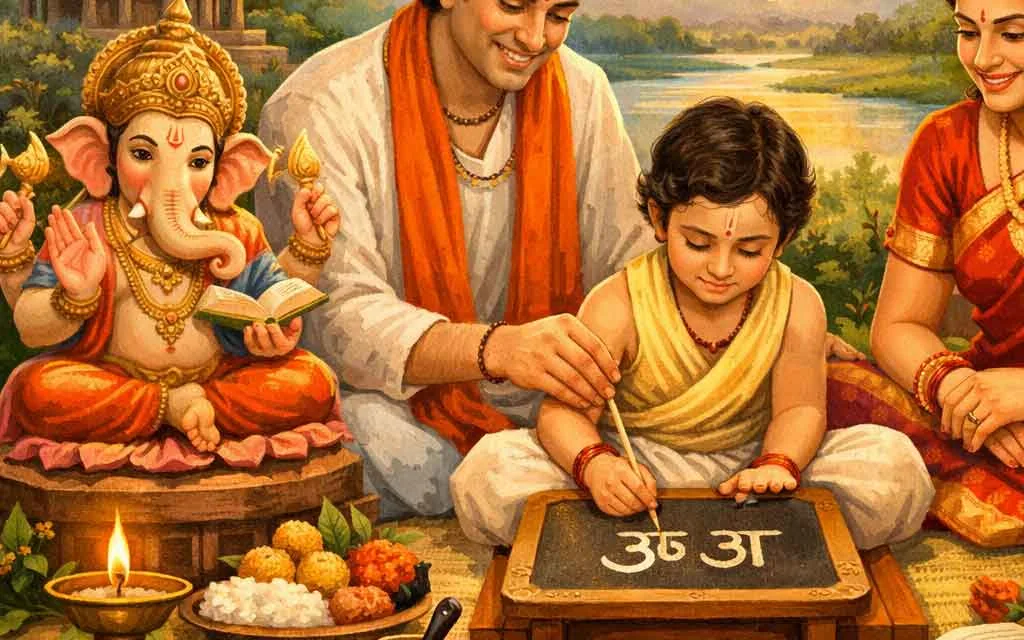
Vidyarambha (विद्यारंभ), also known as Aksharabhyasa, Akshara Sweekaram, Ezhuthiniruthu, or Vidya Arambham, is a sacred Hindu Samskara (rite of passage) that marks a child’s formal initiation into the world of education and letters. It is the moment a child is introduced to the alphabet, usually by writing the first letters (often “Om” or “Hari Sri Ganapataye Namah”) on a plate of rice with the help of parents or a guru, under divine blessings.
The ceremony invokes Goddess Saraswati (deity of knowledge and wisdom) and Lord Ganesha (remover of obstacles) so that the child’s educational journey is smooth, successful, and filled with wisdom. It is ideally performed when the child is between 2 to 5 years old, once the child shows readiness to learn.
In 2026, multiple auspicious Vidyarambha Muhurats are available throughout the year. Key highlights include:
- Vasant Panchami (around February 12, 2026) — one of the most powerful days dedicated to Saraswati Puja.
- Several dates in January, March, April, May, June, July, and especially Vijayadashami (October 21, 2026) in South Indian traditions (Vidyarambham day after Navratri/Dussehra).
- General monthly muhurats are listed by panchang sources such as Drik Panchang and AstroSage, with specific windows avoiding inauspicious periods like Rahu Kaal.
This comprehensive guide for www.hindutone.com provides the significance, mythology, detailed ritual procedure, list of auspicious muhurats for 2026 (with general India timings — always verify locally), step-by-step Vidhi, mantras, samagri, and special adaptations for Hindu families in the USA, UK, Canada, and Australia. It helps parents choose the perfect day to bless their child’s lifelong learning journey.
Mythological and Spiritual Significance
The Vidyarambha Sanskar finds its roots in Vedic traditions where knowledge (Vidya) is considered the greatest wealth. Goddess Saraswati is worshipped so that the child gains not just academic success but also moral values, creativity, and discernment.
Lord Ganesha is invoked first because he removes obstacles from the path of learning. In many stories, sages and rishis performed similar initiations for their disciples. In South India (Kerala, Karnataka, Tamil Nadu, Andhra), the ceremony on Vijayadashami (the day after Navratri) is especially popular as it symbolises victory (Vijaya) in the pursuit of knowledge.
Philosophically, the ritual symbolises the transition from ignorance to knowledge — the child moves from play to disciplined learning under divine grace. Performing it on an auspicious muhurat ensures positive planetary influences and long-term academic prosperity.
Best Auspicious Days and Muhurats for Vidyarambha 2026
Muhurats are calculated based on Tithi, Nakshatra, Yoga, Karana, and planetary positions. Here are key recommended periods (general reference for India; exact timings vary by city — use Drik Panchang or local panchang apps with your location):
- February 2026 (Vasant Panchami period): Around February 12 (highly auspicious for Saraswati Puja and starting education).
- March 2026: Dates such as March 11, 13, 16, 27 with morning and afternoon windows (e.g., 7:02 AM to 9:48 AM and later slots).
- April 2026: Multiple slots including early April and mid-month (e.g., April 2 has specific evening/morning windows in some panchangs).
- May–June 2026: Several dates with good Nakshatras (e.g., June 19 and 22 with morning muhurats from 5:35 AM onwards).
- October 2026: Vijayadashami Vidyarambham on October 21, 2026 (Wednesday) — especially significant in South Indian traditions.
Other notable months include January (e.g., January 4, 7, 8, 14, 16) and July with slots like morning 8:59 AM–1:20 PM.
Important Note: Always check exact muhurats for your city using reliable tools like Drik Panchang. Avoid Rahu Kaal, Yamaganda, and Gulikai periods. Morning hours are generally preferred.
For Diaspora Families (USA, UK, Canada, Australia): Use panchang apps with your local city selected. Morning muhurats in India often fall in the evening or convenient weekend slots abroad. Many families perform the ritual on weekends or coordinate with Indian grandparents via video call.
Complete Samagri (Items Required) for Vidyarambha Ceremony
- Idol or picture of Goddess Saraswati and Lord Ganesha.
- A plate or tray filled with rice (for writing letters).
- Gold or silver pen/ring (or a new pencil/stylus).
- Kumkum, sandalwood paste, turmeric, flowers (especially white or yellow).
- Incense sticks, ghee lamp, camphor.
- Fruits, sweets (modak, peda), coconut.
- New notebook, slate, or books.
- Black sesame or akshata (rice grains).
- Traditional clothes for the child (often yellow or white).
Step-by-Step Vidyarambha Vidhi (Ritual Procedure)
- Preparation: Clean the house and puja area. Dress the child in new clothes. Perform the ritual in the morning during the chosen muhurat.
- Ganesha Puja: Invoke Lord Ganesha first with “Om Gan Ganapataye Namah” and offer modak. Pray for obstacle-free learning.
- Saraswati Puja: Light the lamp and incense. Chant Saraswati mantras or the Saraswati Vandana. Offer flowers and sweets to Goddess Saraswati.
- Aksharabhyasa (Main Ritual):
- Place the child on the parent’s lap or in front of the deities.
- Hold the child’s hand and help them write “Om” or “Hari Sri Ganapataye Namah” or the first few letters of the alphabet on the rice plate using the ring/pen.
- Chant: “Om Aim Saraswatyai Namah” while guiding the hand.
- Blessings and Aarti: Perform aarti. Elders and parents bless the child. Distribute prasad.
- Feeding and Celebration: Feed the child sweets and celebrate with family. Many families visit a temple afterward.
Key Mantras for Vidyarambha
- Saraswati Beej Mantra: Om Aim Hreem Shreem Saraswatyai Namah
- Saraswati Vandana: Ya Kundendu Tushara Hara Dhavala... (full prayer)
- Ganesha Mantra: Om Gan Ganapataye Namah
- Simple chant while writing: “Om Saraswati Namah, Vidyaam Dehi Namah”
Adaptations for Hindus in the USA, UK, Canada, and Australia
- Timing: Convert Indian muhurats to local time using apps. Weekend mornings or evenings work well for working parents.
- Sourcing: Indian grocery stores provide rice, sweets, and puja items. Many use digital images or printed pictures if idols are unavailable.
- Community Support: Temples in New Jersey (USA), Leicester (UK), Toronto (Canada), or Sydney (Australia) often organise group Vidyarambha events, especially around Vasant Panchami or Vijayadashami.
- Modern Touches: Some families write the first letters on a tablet or notebook alongside the traditional rice plate. Include English alphabet if the child attends local school.
- Virtual Participation: Grandparents in India can join via video call to guide or bless the child.
- Eco-Friendly: Use reusable plates and natural flowers; focus on the spiritual essence rather than elaborate setups.
Benefits and Tips for Parents
Performing Vidyarambha on an auspicious muhurat is believed to bless the child with sharp intellect, concentration, love for learning, and success in academics. It also strengthens family bonds and cultural roots.
Tips:
- Choose a date when the child is physically and mentally ready (usually after age 2.5–3).
- Keep the ceremony simple, joyful, and positive — avoid stress.
- Combine with a small havan or donation of books/stationery for added merit.
- Consult a local priest or astrologer for personalised muhurat based on the child’s horoscope.
Conclusion: Blessing Your Child’s Educational Journey
Vidyarambha Muhurat 2026 offers beautiful opportunities to initiate your child into the world of knowledge under divine grace. Whether on Vasant Panchami, Vijayadashami (October 21, 2026), or other listed dates, the ritual plants the seeds of wisdom and success that will blossom throughout life.
May Goddess Saraswati and Lord Ganesha bless your child with brilliant intellect, curiosity, and lifelong learning.
Om Aim Saraswatyai Namah! Om Gan Ganapataye Namah!
Shubh Vidyarambha 2026! May your child’s educational path be filled with joy, achievement, and divine blessings.
Frequently Asked Questions
What is Vidyarambha?
Vidyarambha, also called Aksharabhyasa or Ezhuthiniruthu, is a Hindu Samskara marking a child's formal initiation into letters. The child writes "Om" or "Hari Sri Ganapataye Namah" on a plate of rice with a parent's or guru's help, invoking Saraswati and Ganesha.
At what age should a child begin Vidyarambha?
It is ideally performed between 2 and 5 years of age, once the child shows readiness to learn. Parents are advised to choose a date when the child is physically and mentally ready, usually after age 2.5 to 3, and to keep the ceremony simple and joyful.
When is Vidyarambha on Vijayadashami in 2026?
Vidyarambham on Vijayadashami falls on Wednesday, October 21, 2026, the day after Navratri or Dussehra. It is especially popular in South Indian traditions as it symbolises victory in the pursuit of knowledge.
What items are needed for the Vidyarambha ceremony?
Items include idols or pictures of Saraswati and Ganesha, a plate of rice for writing, a gold or silver pen or ring, kumkum, sandalwood paste, flowers, a ghee lamp, fruits, sweets, coconut and a new notebook or slate. The child usually wears yellow or white clothes.
Which mantras are chanted during Vidyarambha?
Ganesha is invoked first with "Om Gan Ganapataye Namah". While guiding the child's hand, "Om Aim Saraswatyai Namah" is chanted, and the Saraswati Beej Mantra is Om Aim Hreem Shreem Saraswatyai Namah.
How can Hindu families in the USA, UK, Canada or Australia choose a muhurat?
Select your local city in a panchang app such as Drik Panchang, as Indian muhurats vary by city and must be converted to local time. Many families use weekend mornings or evenings, and grandparents in India can join by video call.
Share this with family and friends
Send it on WhatsApp, post it, or copy the link.
More from Traditions
- Must-Performed Rituals Every NRI Woman Should Do for Her Family's Wellbeing
- Friday Rituals in Hinduism — Shukravar Lakshmi Puja, Devi Worship & Complete NRI Guide for 2026
- Thursday Rituals in Hinduism — Guruvara Vishnu Puja, Guru Worship & Complete NRI Guide for 2026
- Monday Rituals in Hinduism — Somavar Shiva Puja, Vrat & Complete NRI Guide for 2026
- Invoke Ancestors with This Ancient Mantra During Pinda Pradanam
You might also like
Hindu Dietary Restrictions: A Complete Guide to Food Rules, Practices & TraditionsDietaryHindu Dietary Restrictions: A Complete Guide to Food Rules, Practices & Traditions
Garuda Purana on Ekoddishta Shraddha: Special Rites for Recent Departed
Mahalaya Amavasya Special: Feed Brahmins, Offer Pinda – Crores of Punya