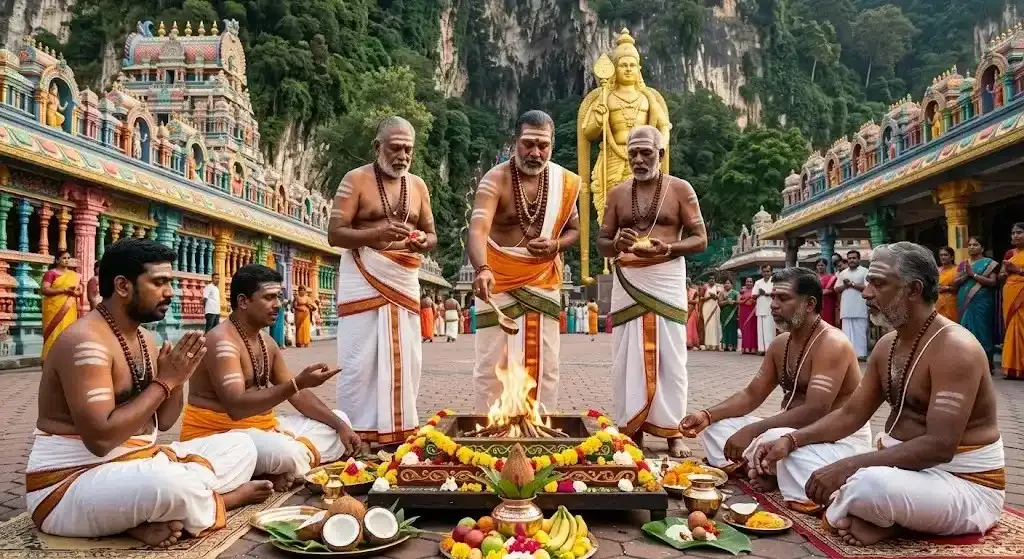
The Four Purusharthas: A Sanatani Blueprint for a Fulfilling Life in America
In the bustling corridors of Silicon Valley tech companies, the vibrant temples of suburban New Jersey, and the university campuses of California,…
In the bustling corridors of Silicon Valley tech companies, the vibrant temples of suburban New Jersey, and the university campuses of California,…
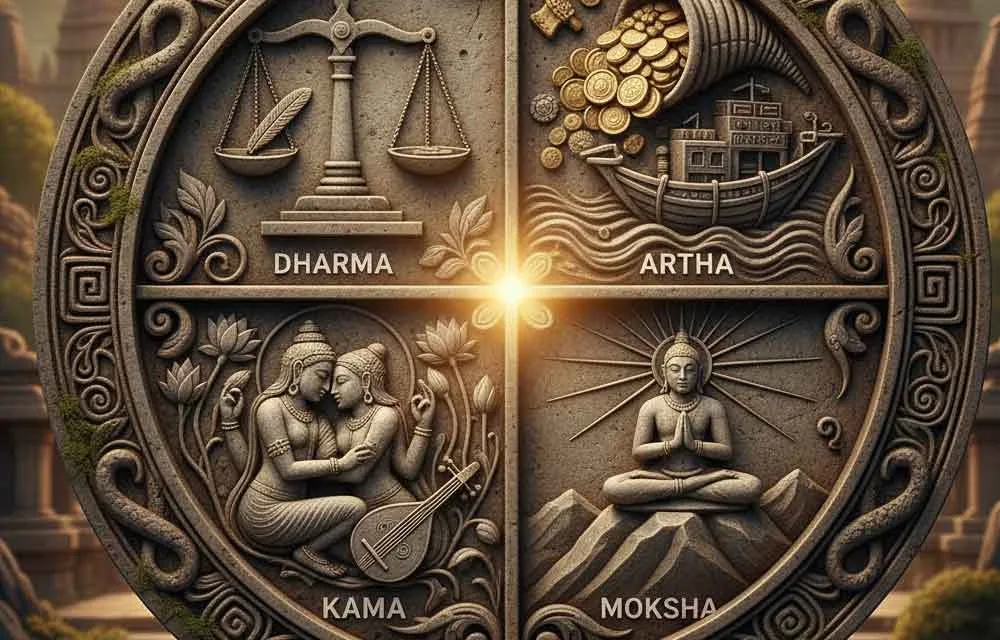
In the bustling corridors of Silicon Valley tech companies, the vibrant temples of suburban New Jersey, and the university campuses of California, Hindu-Americans are rediscovering an ancient wisdom that feels startlingly relevant to modern life. The four Purusharthas—Dharma, Artha, Kama, and Moksha—offer a comprehensive framework for living that seamlessly integrates success, pleasure, ethics, and spiritual growth.
Unlike philosophies that ask you to choose between worldly achievement and spiritual fulfillment, Sanatana Dharma presents a revolutionary idea: you can pursue them all. In fact, you should.
Understanding the Four Goals of Life in Hinduism
The Purusharthas represent the four fundamental aims of human existence, each equally valid and necessary for a complete life. Think of them as four pillars supporting the temple of your existence—remove one, and the structure weakens.
Dharma: Righteous Living in the Land of Opportunity
Dharma is often translated as "duty" or "righteousness," but it encompasses far more. It's the ethical compass that guides your actions, the moral framework that defines your character, and the cosmic order you align yourself with.
For Hindu-Americans, Dharma presents unique challenges and opportunities. How do you honor your parents' expectations while forging your own path? How do you maintain cultural identity while embracing American values? How do you practice vegetarianism in a steakhouse culture?
Dharma in Practice:
- In the Workplace: A software engineer who refuses to code features that compromise user privacy is practicing Dharma. A doctor who treats uninsured patients demonstrates Dharma. A lawyer who takes pro bono cases lives Dharma.
- In Family Life: Balancing your obligation to aging parents with your commitment to your children requires Dharmic discernment. It's not about rigid rules but thoughtful navigation of competing responsibilities.
- In Community: Volunteering at your local temple, mentoring younger Hindu-Americans, or organizing cultural events all constitute Dharmic action.
The beauty of Dharma is its flexibility. Your Dharma as a student differs from your Dharma as a parent. Your Dharma in your twenties evolves as you enter your forties. This concept of Svadharma—your unique duty based on your circumstances—allows ancient wisdom to breathe in modern contexts.
Artha: Prosperity Without Apology
Artha means wealth, but in the broadest sense—financial security, material resources, and professional achievement. Sanatana Dharma doesn't view money as the root of evil; it recognizes it as a necessary tool for living a dignified life and fulfilling your other Purusharthas.
In America, where the pursuit of wealth often comes with guilt or is romanticized to extremes, the Hindu approach offers balance. Wealth is neither worshipped nor demonized—it's simply a means to an end.
Artha in the American Context:
- Career Ambition: That promotion you're working toward? It's not selfish—it's Artha. The startup you're building? It's creating value while securing your family's future.
- Financial Planning: Investing in your 401(k), buying a home, saving for your children's education—these are all expressions of Artha. Hindu philosophy encourages prosperity that provides security and enables generosity.
- Strategic Wealth Building: The ancient texts speak of Artha acquired through Dharmic means. This means ethical business practices, fair treatment of employees, and honest dealings—principles that often lead to sustainable success.
But here's the key insight: Artha must be pursued within the boundaries of Dharma. The wealth that comes from exploiting others, cutting corners, or compromising integrity ultimately undermines your wellbeing. The tech entrepreneur who builds an empire on user exploitation may achieve Artha temporarily, but violates Dharma in the process.
Kama: Pleasure as a Sacred Pursuit
Kama encompasses desire, pleasure, aesthetic enjoyment, and love—including romantic and sexual fulfillment. For many raised in conservative Hindu households in America, this might be the most surprising Purushartha. Pleasure? As a legitimate life goal? Endorsed by ancient wisdom?
Absolutely.
Sanatana Dharma recognizes that humans are not ascetics by default. We have bodies, senses, and emotions designed to experience joy. Denying this is not spirituality—it's suppression.
Kama in Contemporary Life:
- Relationships: Building a loving marriage, experiencing romantic intimacy, and creating emotional connections are all valid pursuits. The Kama Sutra itself is evidence of how seriously Hindu philosophy takes pleasure—not just sexual, but in all sensory experiences.
- Aesthetic Enjoyment: Appreciating art, music, food, and beauty enriches life. That concert you're attending, the painting you're drawn to, the exquisite meal you're savoring—all Kama.
- Self-Care: Yoga classes, spa days, travel experiences, even that perfect cup of chai—these aren't indulgences to feel guilty about. They're necessary nourishment for your whole being.
The critical balance: Kama should not violate Dharma or become all-consuming. The pleasure that harms others, that becomes addiction, or that prevents you from fulfilling your responsibilities crosses into destructive territory. But pleasure pursued consciously, within ethical boundaries, and balanced with other life goals? That's not just permitted—it's encouraged.
For Hindu-Americans navigating dating, relationships, and marriage in a culture with different norms than their parents', understanding Kama provides grounding. It validates the desire for companionship and pleasure while providing a framework for making choices aligned with your values.
Moksha: The Ultimate Liberation
Moksha represents spiritual liberation—the freeing of the soul from the cycle of birth and death, the realization of one's true nature, the experience of unity with the Divine.
This might seem impossibly lofty when you're juggling credit card bills, work deadlines, and your toddler's tantrums. And that's exactly the point—Moksha isn't meant to be pursued in isolation from life. It's the thread that weaves through everything else.
Moksha in Modern Life:
- Daily Practice: Morning meditation, even for ten minutes. Chanting mantras during your commute. Reading the Bhagavad Gita before bed. These practices gradually shift your consciousness.
- Perspective Shifts: Recognizing the temporary nature of problems. Seeing the Divine in others. Understanding that you are not just your job title, bank balance, or social media profile—these are all movements toward Moksha.
- Service: Seva (selfless service) is a powerful path to Moksha. Volunteering at a food bank, teaching Sanskrit to children, caring for the environment—these actions transcend ego and connect you to something larger.
The genius of the Purusharthas system is that it doesn't ask you to abandon worldly life for spiritual seeking. Instead, it suggests that worldly life, lived consciously, becomes a spiritual practice. Your career (Artha) can be an offering when done with integrity (Dharma). Your relationships (Kama) can teach you love that eventually expands toward the Divine (Moksha).
The Art of Balance: Integrating All Four Purusharthas
The real challenge—and opportunity—lies in balancing all four goals simultaneously. This is where Hindu-Americans have a unique advantage. Navigating two cultures requires the very skill the Purusharthas demand: holding multiple truths simultaneously.
The Life-Stage Approach
Traditional Hindu philosophy divides life into four stages (Ashramas), with different Purusharthas emphasized in each:
- Brahmacharya (Student Life): Focus on learning and developing Dharmic foundations
- Grihastha (Householder): Active pursuit of Artha and Kama alongside Dharma
- Vanaprastha (Retirement): Gradual withdrawal from material pursuits, increased spiritual focus
- Sannyasa (Renunciation): Complete dedication to Moksha
This framework offers guidance without rigidity. In your twenties and thirties, it's natural to focus on building a career (Artha) and establishing relationships (Kama). This isn't spiritual failure—it's appropriate to your life stage. As you mature, the balance naturally shifts toward Moksha, though you never abandon the others entirely.
Real-Life Integration
Morning Routine (All Four):
- Wake early and meditate (Moksha)
- Exercise and eat well (Kama—caring for your body)
- Review your goals and plan your day (Artha)
- Set intentions to act ethically (Dharma)
At Work:
- Pursue excellence and advancement (Artha)
- Maintain ethical standards (Dharma)
- Build positive relationships (Kama)
- See your work as service (Moksha)
In Relationships:
- Enjoy intimacy and companionship (Kama)
- Honor commitments and responsibilities (Dharma)
- Build household stability (Artha)
- Practice unconditional love (Moksha)
Community Involvement:
- Volunteer and serve (Moksha/Dharma)
- Network and build connections (Artha)
- Enjoy cultural events (Kama)
- Preserve and share traditions (Dharma)
Navigating Conflicts Between Purusharthas
Sometimes the four goals appear to conflict. The job that pays well (Artha) might require compromising your values (Dharma). The spiritual retreat you're called to (Moksha) might strain your marriage (Kama). These tensions aren't failures—they're opportunities for discernment.
Hierarchical Wisdom: The texts suggest a subtle hierarchy: Dharma forms the foundation. Artha and Kama should be pursued within Dharmic boundaries. Moksha is the ultimate goal, but one that often comes through rather than despite the other three.
When in doubt:
- If Artha violates Dharma, prioritize Dharma
- If Kama harms others, it violates Dharma
- If pursuing Moksha means abandoning responsibilities, you're missing the point
The Bhagavad Gita's Guidance: Arjuna's dilemma on the battlefield represents the quintessential Purushartha conflict. Krishna's teaching? Fulfill your Dharma (your duty as a warrior) while remaining detached from outcomes (maintaining spiritual awareness). Action in the world combined with spiritual consciousness—this is the integration.
The Hindu-American Advantage
Living between two worlds gives Hindu-Americans a unique capacity for holding complexity. You already balance:
- Eastern collectivism and Western individualism
- Ancient tradition and modern innovation
- Spiritual depth and material ambition
- Family obligation and personal aspiration
This ability to integrate apparent opposites is exactly what the Purusharthas require. Your bicultural experience isn't a burden to overcome—it's training for the balanced life Sanatana Dharma envisions.
Reframing "Success"
American culture often defines success narrowly: career achievement, wealth accumulation, personal happiness. The Purusharthas offer a more comprehensive vision:
Success is:
- Living ethically (Dharma) while achieving financially (Artha)
- Experiencing pleasure (Kama) without harming others
- Growing spiritually (Moksha) without abandoning the world
- Contributing to society while caring for yourself
- Honoring your heritage while embracing your present
This isn't having it all—it's recognizing that "all" includes more than materialism alone.
Practical Steps to Begin
1. Assess Your Current Balance Take honest inventory. Which Purusharthas are you neglecting? Which are you overemphasizing? Most Americans lean heavily on Artha and Kama, with Dharma reduced to "don't be terrible" and Moksha forgotten entirely.
2. Set Intentions in Each Area
- Dharma: What are my core values? How do I want to show up in the world?
- Artha: What does financial security mean for me? What work brings both income and meaning?
- Kama: What brings me joy? How do I want to experience beauty and pleasure?
- Moksha: What spiritual practices call to me? How can I cultivate awareness?
3. Create Daily Touchpoints You don't need to overhaul your life. Small, consistent actions compound:
- Five minutes of meditation (Moksha)
- One ethical choice at work (Dharma)
- Progress on a financial goal (Artha)
- A moment of beauty or connection (Kama)
4. Find Community Connect with other Hindu-Americans navigating similar questions. Whether through temple communities, online groups, or local meetups, shared exploration deepens understanding.
5. Study the Texts The Bhagavad Gita, Upanishads, and other scriptures offer profound guidance on living the Purusharthas. Even a few verses daily, reflected upon, can shift perspective.
6. Be Patient Balancing four life goals is a lifelong practice, not a weekend project. You'll overemphasize one area, then another. You'll make mistakes. This is the process.
The Timeless Relevance of Ancient Wisdom
The Purusharthas were articulated thousands of years ago, yet they address precisely what modern people struggle with: How do we succeed professionally without losing our souls? How do we enjoy life without becoming hedonistic? How do we grow spiritually without abandoning responsibility? How do we live ethically in a complex world?
Hindu philosophy doesn't ask you to choose between the world and the spirit. It doesn't demand you sacrifice career for family, pleasure for duty, or success for spirituality. It asks something harder and more rewarding: integrate all of it. Live fully, consciously, purposefully.
For Hindu-Americans, this isn't abstract philosophy—it's practical wisdom for navigating a multifaceted life. It's permission to pursue that promotion while maintaining your meditation practice. It's a framework for dating that honors both desire and values. It's validation that wealth creation can be spiritual when pursued ethically.
Your Unique Dharma
Ultimately, how you balance the four Purusharthas is uniquely yours. Your Dharma differs from your sibling's, your neighbor's, your parents'. Your path to Moksha may look nothing like the swami's. Your relationship to Artha will reflect your circumstances and aspirations. Your expression of Kama will honor your individual nature.
This is the beautiful flexibility of Sanatana Dharma—eternal truth expressed through infinite individual lives. The Purusharthas aren't rigid prescriptions but guiding principles, not restrictions but expansive possibilities.
A Living Practice
As you close this article and return to your day—to your work, your relationships, your dreams and responsibilities—remember: you don't have to figure it all out today. The Purusharthas are a compass, not a destination. They point toward wholeness, integration, and a life fully lived.
Start where you are. Honor what calls to you. Act ethically. Build something meaningful. Experience beauty. Connect spiritually. And know that in doing so, you're walking a path millions have walked before you—ancient wisdom made new in your unique expression of it.
The four goals of life in Hinduism aren't just philosophical concepts—they're an invitation to live completely, to embrace all that it means to be human while remembering you're also divine. In the intersection of Dharma, Artha, Kama, and Moksha, you find not just a balanced life, but a sacred one.
May your journey honor all four, in the proportions that serve your evolution and the world's wellbeing.
Hari Om Tat Sat.
For more insights on living Sanatana Dharma in contemporary America, continue exploring at HinduTone.com, where ancient wisdom meets modern life.
Frequently Asked Questions
What is The Four Purusharthas?
In the bustling corridors of Silicon Valley tech companies, the vibrant temples of suburban New Jersey, and the university campuses of California, Hindu-Americans are rediscovering an ancient wisdom that feels startlingly relevant to modern life. The four Purusharthas—Dharma, Artha, Kama, and Moksha—offer a comprehensive framework for living that seamlessly
What are the key points about The Four Purusharthas?
Unlike philosophies that ask you to choose between worldly achievement and spiritual fulfillment, Sanatana Dharma presents a revolutionary idea: you can pursue them all. Understanding the Four Goals of Life in Hinduism The Purusharthas represent the four fundamental aims of human existence, each equally valid and necessary for a complete
Why does The Four Purusharthas matter in Hinduism?
It reflects core values of Sanatana Dharma and offers practical and spiritual guidance that remains relevant across generations.
How can devotees apply The Four Purusharthas in daily life?
By reflecting on its teaching, incorporating the related practices or observances into daily routine, and approaching it with sincere devotion and understanding.
You might also like
Purushottam Maas 2026: Lord Vishnu's Sacred Gift of Spiritual Multiplication & Divine Grace
Shani Jayanti 2026: Date, Significance, Rituals & Powerful Mantras
Hindu Priest Jobs New Zealand 2026 — Auckland, Wellington, Christchurch Vacancies & NZ Religious Worker Visa Guide