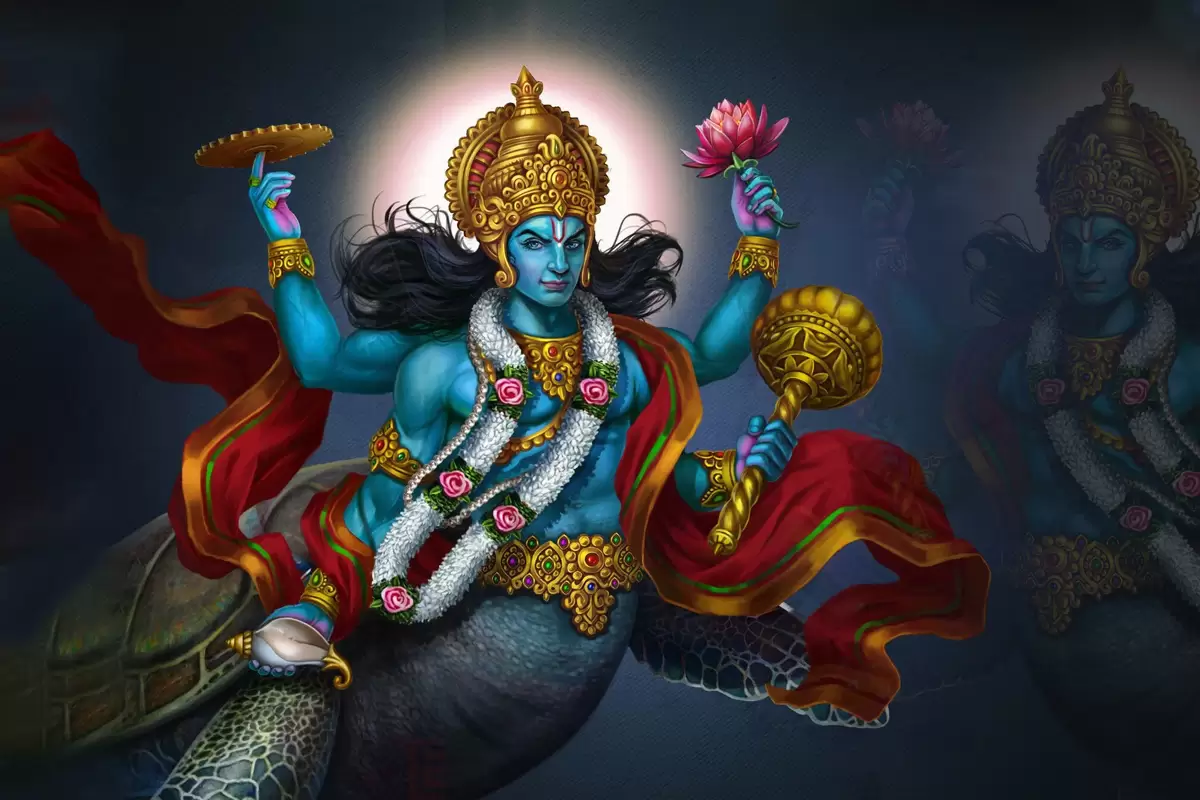
Narasimha Avatar — The Man-Lion Incarnation of Vishnu: Prahlada's Devotion, Hiranyakashipu's Defeat & Complete Story
Narasimha Avatar — Vishnu's man-lion incarnation. Prahlada's unwavering devotion, Hiranyakashipu's boon-defying death, Ahobilam pilgrimage, complete guide for 2026.
Narasimha Avatar — Vishnu's man-lion incarnation. Prahlada's unwavering devotion, Hiranyakashipu's boon-defying death, Ahobilam pilgrimage, complete guide for 2026.
Quick Answer: Narasimha — Nara (man) + Simha (lion) — is the fourth of Vishnu's ten avatars. The avatar manifested to kill the demon king Hiranyakashipu (brother of Hiranyaksha, killed in the previous Varaha avatar) and to save his son Prahlada, the great devotee of Vishnu. Hiranyakashipu had received a near-invincibility boon from Brahma — protected from death by man, animal, deity, day, night, indoor, outdoor, or by any weapon. Vishnu manifested as Narasimha (neither man nor animal nor deva), at twilight (neither day nor night), on the threshold (neither indoor nor outdoor), using his claws (no weapon). The boon was thus circumvented through divine paradox; Hiranyakashipu was killed; Prahlada became king. The narrative is among Hindu tradition's most powerful stories of bhakti (devotion) versus arrogance. Major pilgrimage sites include Ahobilam (Andhra Pradesh) — the nine-temple Navana Narasimha kshetras, and Simhachalam (Visakhapatnam).
1. The Hiranyakashipu Story
After Hiranyaksha was killed by Varaha, his brother Hiranyakashipu vowed revenge. He performed immense tapas (austerities) for thousands of years, accumulating tapas-shakti so great that the cosmos itself shook. Brahma granted him a boon — but Hiranyakashipu had asked for protection against:
- Death by any deva, asura, or man
- Death by any animal
- Death by any weapon, hand-thrown or otherwise
- Death indoors or outdoors
- Death during day or night
- Death on earth or in sky
- Death by anything created by Brahma
This near-invincibility transformed Hiranyakashipu into the most powerful being in creation. He conquered the three worlds (heaven, earth, underworld). He demanded that all beings worship him as the supreme god — replacing Vishnu, Shiva, and Brahma. Anyone refusing was killed.
But there was one being who refused to worship Hiranyakashipu: his own son, Prahlada.
2. Prahlada — The Perfect Devotee
Prahlada (born to Hiranyakashipu and Kayadhu) had received the supreme Vishnu mantra from the sage Narada while still in his mother's womb. From his earliest awareness, Prahlada was a Vishnu-bhakta of the most uncompromising kind.
Hiranyakashipu was outraged. Why does my son worship the very god I have defeated? He tried persuasion. He tried instruction. He tried tutors. Nothing worked. Prahlada's response remained simple: "Vishnu alone is the supreme. He pervades everything. He is everywhere."
Hiranyakashipu then tried killing his own son. The Bhagavata Purana records the attempts:
- Poisoned (Prahlada survived)
- Thrown from a cliff (Vishnu protected him)
- Crushed by elephants (Vishnu protected him)
- Bitten by serpents (Vishnu protected him)
- Thrown into fire on Holika's lap (Holika burned; Prahlada survived — origin of the Holi festival)
- Multiple other attempts (all failed)
Each attempt confirmed Vishnu's protection of his devotee. Prahlada's bhakti remained unwavering.
Finally, Hiranyakashipu lost composure. He confronted Prahlada in his palace's main hall.
"Where is your Vishnu?" he demanded.
"He is everywhere," Prahlada replied.
"Is he in this pillar?" asked Hiranyakashipu, pointing to a massive stone column.
"Yes," said Prahlada calmly. "He is in this pillar."
Hiranyakashipu struck the pillar with his mace.
3. Vishnu Manifests Through the Pillar
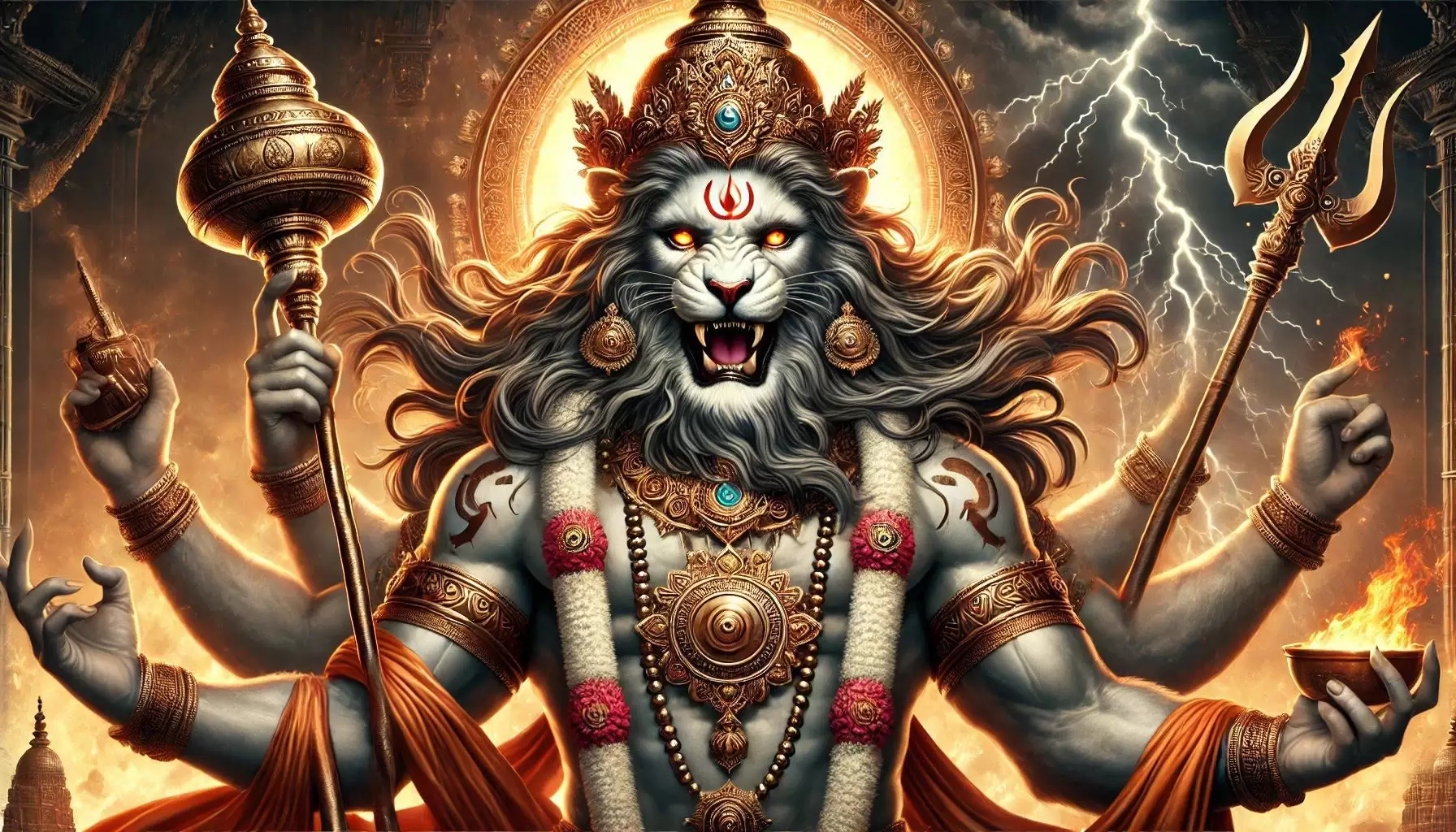
The pillar exploded. From it emerged a being neither man nor lion — Narasimha — with the body of a man and the head of a lion, with claws like daggers, with eyes burning, with a roar that shook the universe.
Hiranyakashipu drew his weapons; Narasimha closed the distance.
The combat took place at the threshold of the palace — the doorway, neither inside nor outside. At twilight — neither day nor night. Narasimha lifted Hiranyakashipu onto his lap — neither on earth nor in sky. He tore him open with his claws — not a weapon, not hand-thrown.
Every clause of Hiranyakashipu's near-invincibility boon was circumvented through cosmic precision. The demon king died at Narasimha's lap.
4. The Aftermath
Narasimha's wrath did not subside immediately. He continued in a state of fury so intense that no deva, no Brahma, no being could approach him. Prahlada, the young devotee, finally walked into Narasimha's presence and began chanting Vishnu mantras and slokas in praise. Narasimha's wrath softened. He blessed Prahlada and made him the new king of the kingdom — a righteous Vishnu-bhakta replacing the arrogant tyrant.
Prahlada's reign is described in the Bhagavata Purana as one of the great dharmic golden ages.
5. Major Narasimha Temples
Tier 1 — Cultural landmarks
- Ahobilam, Andhra Pradesh — the Navana Narasimha kshetras (nine Narasimha temples spread across the Nallamala forest), believed to be the actual site of Hiranyakashipu's killing. The pilgrimage covers all nine forms across rugged terrain.
- Sri Lakshmi Narasimha Swamy Temple, Simhachalam (Visakhapatnam) — combined Varaha-Narasimha shrine; major pilgrimage destination
- Sri Yoga Narasimha Temple, Melukote, Karnataka — Sri Vaishnava pilgrimage site associated with Ramanuja
Tier 2 — Major community temples
- Sri Narasimha Temple, Antarvedi, Andhra Pradesh — coastal site
- Sri Bhargava Narasimha Temple, Mangalagiri, Andhra Pradesh — the only deity to which devotees offer panakam (jaggery water)
- Sri Narasimha Temple, Penchalakona, Andhra Pradesh — forest site
- Sri Yoga Narasimha, Kadiri, Andhra Pradesh — natural cave site
- Sri Narasimha Temple, Hampi, Karnataka — Vijayanagara empire era
Outside India
- Multiple Sri Vaishnava temples worldwide honour Narasimha
- BAPS sampradaya features Narasimha in iconographic programmes
The Ahobilam pilgrimage is among the most physically demanding South Indian Hindu pilgrimages, with the nine Narasimha sites spread across forested mountain terrain over several days.
6. Forms of Narasimha
Narasimha is worshipped in multiple iconographic forms:
Ugra Narasimha (the fierce form)
Killing Hiranyakashipu in full wrath. The most commonly depicted form in temple sculpture.
Yoga Narasimha (the meditative form)
After the killing, sitting in yogic posture. Worshipped by those seeking peace after intense karmic battles.
Lakshmi Narasimha
With Goddess Lakshmi seated on his lap. Represents the post-wrath state — Narasimha pacified by his consort. This form is widely worshipped for family harmony.
Pralaya Narasimha
Dancing in the cosmic dance of dissolution. Rare form, in some temples.
Bhargava Narasimha
Connected with sage Bhargava; some temples feature this specific lineage.
7. Modern Lessons — Narasimha in 2026
Lesson 1: Bhakti is protection
Prahlada was protected through poisoning, cliff-throws, elephant-attacks, fire-throws — not because he was physically strong, but because his devotion was absolute. The teaching: deep bhakti generates protection that cleverness cannot manufacture.
Lesson 2: The divine breaks through paradox
Hiranyakashipu's boon was designed to be airtight. Vishnu's response was to manifest through paradox — through the precise gaps in the boon's wording. The teaching: divine intervention does not violate the rules; it operates through the spaces the rules left unexamined. For NRI Hindus facing systemic obstacles (immigration backlogs, corporate ceiling effects, cultural barriers), the divine response often comes through unexpected channels rather than direct confrontation.
Lesson 3: Pillars contain the divine
Prahlada said Vishnu was in the pillar; Vishnu was. The teaching: the divine is present in unexpected forms. A workplace, a difficult relative, a chronic illness, a foreign country — each pillar contains divinity if we recognise it.
Lesson 4: Wrath has its place
Narasimha is among the most beloved Hindu deities precisely because of his wrath. The teaching: ethical anger — anger at injustice, anger at the violation of dharma, anger at tyranny — has a sacred function. The modern softening of all anger into "managing emotions" misses what Narasimha represents.
Lesson 5: The wrath is followed by peace
Narasimha's fury after killing Hiranyakashipu was so intense that no being could approach. It was a child's devotional prayer that softened him. The teaching: even righteous wrath needs eventual return to peace; the path back is often through innocence and prayer.
Lesson 6: Family ties don't override dharma
Prahlada's father was the demon king. The Hindu tradition does not require Prahlada to honour family above truth. The teaching for modern NRI Hindus facing family pressures toward what they recognise as wrong: dharma over filial obedience is acceptable, even celebrated.
8. Mantras and Practice
Narasimha bija mantra:
Om Narasimhaaya Namah
Sri Narasimha Maha Mantra:
Ugram Veeram Maha Vishnum Jvalantam Sarvato Mukham
Nrisimham Bhishanam Bhadram Mrityu Mrityum Namamyaham
(I bow to Narasimha — fierce, valiant, the great Vishnu, blazing-faced, formidable yet auspicious, the death of death itself.)
Dasavatara Stotra verse for Narasimha (Jayadeva):
Tava kara kamala vare nakham adbhuta shringam
Dalita Hiranyakashipu tanu bhringam
Kesava dhrita Narahari rupa Jaya Jagadisha Hare
(O Keshava, who in the form of Narasimha tore apart the body of Hiranyakashipu like a bee — victorious is the Lord of the universe.)
Practice for devotees:
- Recite the Narasimha Maha Mantra during difficult periods, especially when facing injustice
- Visit Ahobilam if pilgrimage to Andhra Pradesh is possible
- Observe Narasimha Jayanti (Vaisakha Shukla Chaturdashi — typically May)
- For family harmony, worship Lakshmi Narasimha form
- Holika Dahan (Holi-eve) commemorates Prahlada's survival — observed annually
9. FAQs
Q: When is Narasimha Jayanti 2026?
A: Vaisakha Shukla Chaturdashi — Thursday, May 21, 2026.
Q: Why are there so many Narasimha temples in Andhra Pradesh?
A: Tradition holds that Hiranyakashipu's killing happened in the Andhra-Karnataka region. Ahobilam (Andhra Pradesh) is the specific site claimed; the nine Narasimha kshetras are spread across the Nallamala forest.
Q: Is Narasimha the same as Lakshmi Narasimha?
A: Lakshmi Narasimha is a specific form — Narasimha with Goddess Lakshmi on his lap. The general "Narasimha" can refer to any of the forms, including Ugra (fierce), Yoga (meditative), or Lakshmi Narasimha.
Q: What is the relationship between Narasimha and Holi?
A: The fire-pyre attempt on Prahlada — when his demon-aunt Holika tried to burn him alive — is the origin of the Holika Dahan observance the night before Holi. Prahlada's survival amid Holika's destruction is the festival's symbolic centre.
Q: How do NRIs facing injustice use Narasimha mantras?
A: Recite the Sri Narasimha Maha Mantra during periods of facing institutional injustice (workplace discrimination, immigration unfairness, family pressure to compromise dharma). The mantra invokes the fierce protective aspect of Vishnu.
Q: Can children worship Narasimha given the fierce imagery?
A: Many traditions worship the Lakshmi Narasimha form (peaceful) for children. The fierce Ugra Narasimha is generally for adult devotees in specific contexts. Prahlada himself — a child — was the original Narasimha devotee, suggesting children's connection to the avatar is appropriate.
Final Words
Narasimha Avatar is among Hindu tradition's most beloved and most paradoxical avatars. The fierce form, the threshold killing, the boon-defying precision, the wrath that becomes peace, the child devotee who soothes the cosmic lion — every element of the Narasimha story carries layers of meaning that have nourished Hindu civilisation for thousands of years.
For NRI Hindus facing the institutional injustices of modern life — bureaucratic systems that seem designed to defeat you, workplace hierarchies that don't reward your effort, family pressures that conflict with your conscience — Narasimha is the avatar to know. The teaching is direct: Vishnu manifests when invincibility-claims are stretched too far, when devotion is genuinely violated, when truth is denied at the cost of the innocent. Your bhakti is your shield. The pillar always contains the divine.
Om Narasimhaaya Namah. Jaya Jagadisha Hare!
Jai Narasimha Bhagavan! Jai Prahlada! Jai Vishnu Avatar 4 of 10!
HinduTone Editorial Team · Tags: Narasimha Avatar, Prahlada Bhakti, Hiranyakashipu, Ahobilam Navana Narasimha, Simhachalam, Lakshmi Narasimha, Ugra Narasimha, Holika Dahan, Dasavataram
Frequently Asked Questions
What is Narasimha Avatar?
Narasimha — Nara (man) + Simha (lion) — is the fourth of Vishnu's ten avatars . The avatar manifested to kill the demon king Hiranyakashipu (brother of Hiranyaksha, killed in the previous Varaha avatar) and to save his son Prahlada , the great devotee of Vishnu.
What are the key points about Narasimha Avatar?
Hiranyakashipu had received a near-invincibility boon from Brahma — protected from death by man, animal, deity, day, night, indoor, outdoor, or by any weapon. Vishnu manifested as Narasimha (neither man nor animal nor deva), at twilight (neither day nor night), on the threshold (neither indoor nor outdoor), using his claws (no weapon).
Why does Narasimha Avatar matter in Hinduism?
It deepens a devotee's connection with Lord Vishnu and with the values of Sanatana Dharma — clarity, devotion and dharmic living.
How can devotees apply Narasimha Avatar in daily life?
By reflecting on its teaching, incorporating the related practices or observances into daily routine, and approaching it with sincere devotion and understanding.
You might also like
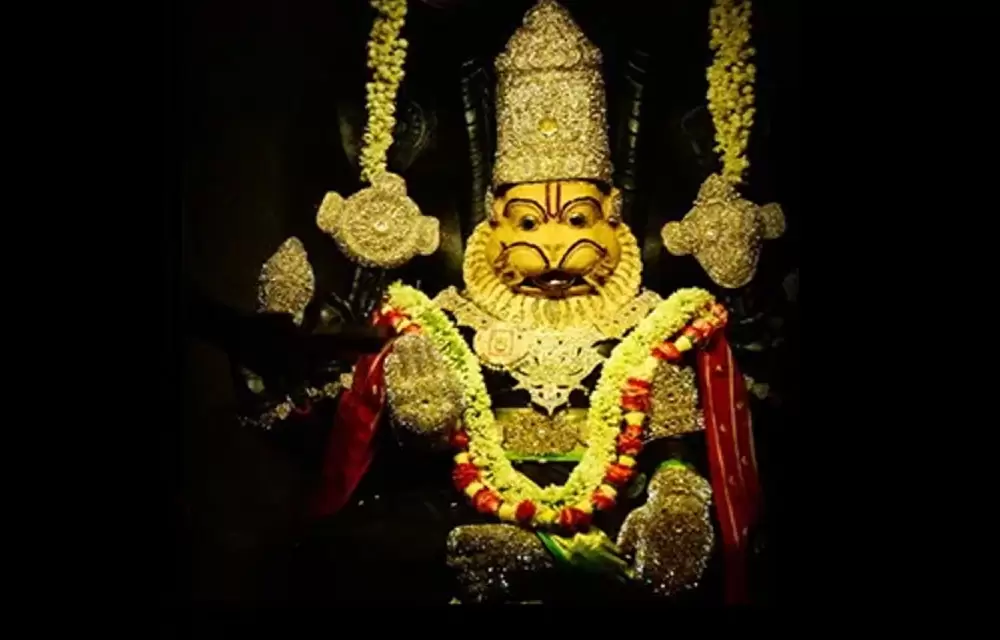
Narasimha Swamy Janma Nakshatram 2026: Swati Nakshatra Special on Narasimha Jayanti (April 30)
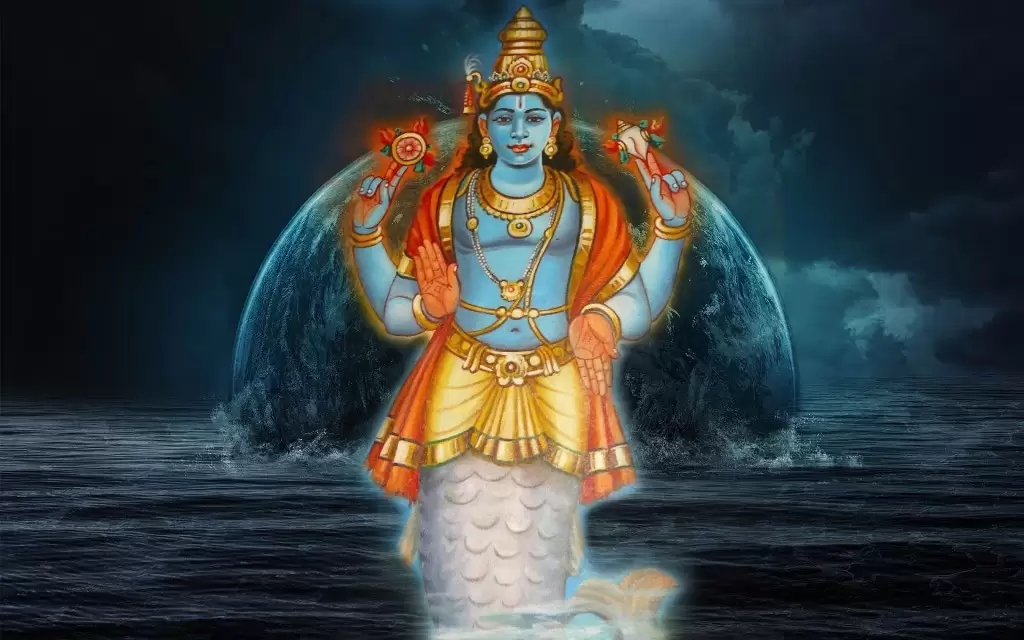
Matsya Avatar — The First Incarnation of Vishnu: Story, Significance, Sacred Geography & Lessons for 2026
Top 10 Narasimha Swamy Temples in India: Sacred Kshetras of Lord Lakshmi Narasimha for Protection, Courage & Divine Grace