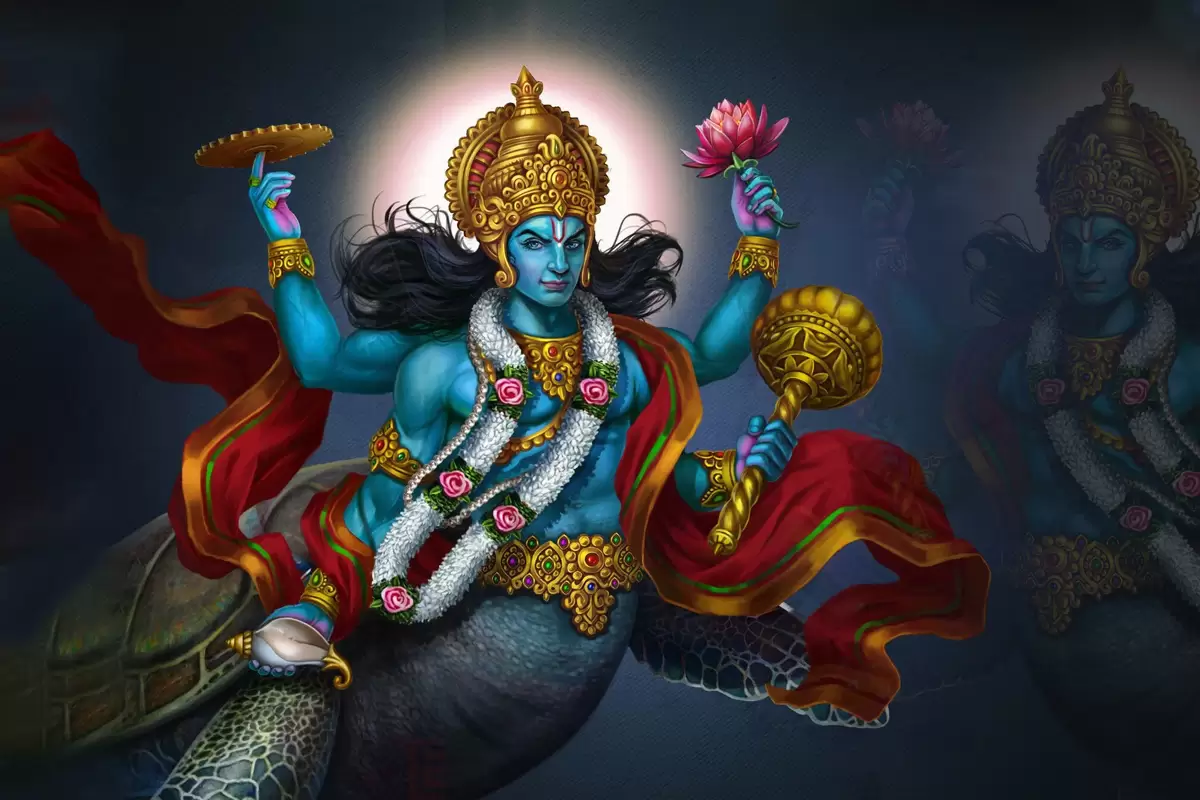
Vamana Avatar — The Dwarf Brahmin Incarnation of Vishnu: Mahabali, Three Steps & the Onam Connection
Vamana Avatar — Vishnu's dwarf-brahmin incarnation requesting three paces of land from King Mahabali. The Trivikrama three-step cosmic measurement, Onam connection.
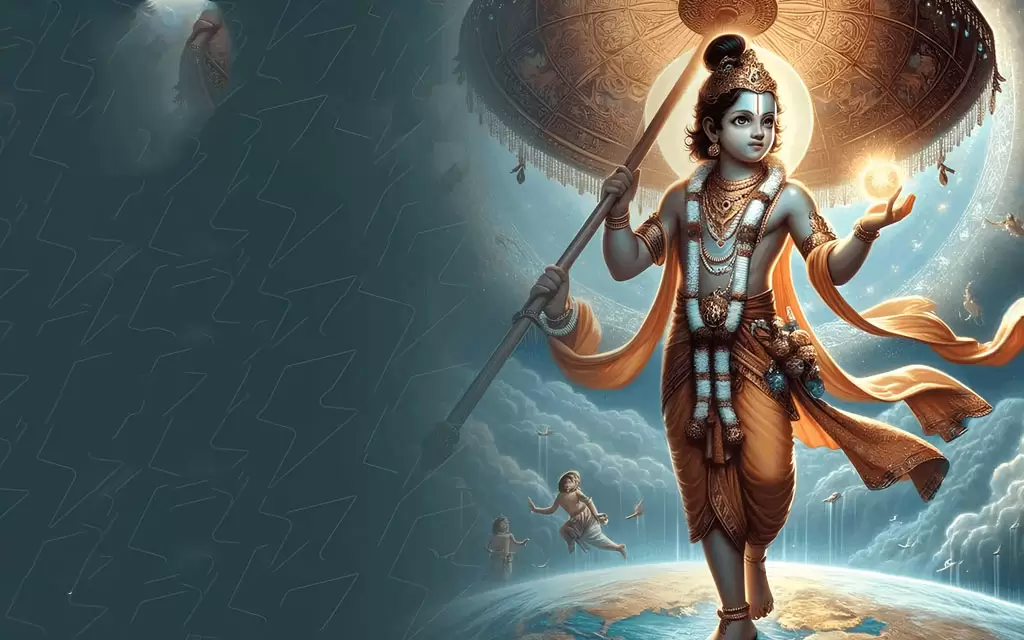
Vamana Avatar — Vishnu's dwarf-brahmin incarnation requesting three paces of land from King Mahabali. The Trivikrama three-step cosmic measurement, Onam connection.
Quick Answer: Vamana — meaning "dwarf" or "small" in Sanskrit — is the fifth of Vishnu's ten avatars and the first fully human form in the Dasavataram sequence (preceding avatars were animal or part-animal). The avatar manifested to humble the demon king Mahabali (Bali) — a virtuous and just king who, despite being an asura, had through dharmic rule become so powerful that even Indra was displaced. Vamana, in the form of a young Brahmin boy, approached Mahabali during the king's grand yajna and requested three paces of land as a gift. Mahabali, famed for his generosity, agreed. Vamana then expanded into the cosmic Trivikrama form — taking the entire earth with his first step, the entire heavens with his second, and placing his third step on Mahabali's head, pushing him into the netherworld (Patala). The story is the foundational narrative of Onam — Kerala's most important festival — and a profound teaching on humility, generosity, and the cosmic balance.
1. The Mahabali Story
Mahabali (also called Bali) was the grandson of Prahlada (the great Vishnu devotee from the previous Narasimha avatar) — a paradox that shapes the entire story. Prahlada was a perfect bhakta; Mahabali was Prahlada's grandson, raised in a household of Vishnu devotion, yet identified as an asura (demon) by lineage and political ambition.
Mahabali's distinctive quality was that he combined asura ambition with extraordinarily dharmic rule. As king, he was:
- Generous to a legendary degree (never refused a request for charity)
- Just (impartial in administration)
- Devoted to Vishnu (despite his demon lineage)
- Beloved by his subjects (his kingdom was said to be a golden age of prosperity)
But Mahabali had also conquered the three worlds — displacing Indra from heaven, defeating the devas, and consolidating power across cosmic realms. The devas approached Vishnu: this asura, however virtuous, holds cosmic positions meant for the gods.
Vishnu's solution was a paradox: to humble Mahabali without violating his dharma. The avatar would not fight him in battle. Instead, Vamana would test the king's commitment to his own virtue.
2. Vamana Arrives at the Yajna
Mahabali was performing the Ashvamedha Yajna (horse sacrifice) — a ritual that consolidates royal power. The yajna was being conducted on a grand scale with all asura allies in attendance.
Into this assembly walked a small Brahmin boy — short of stature, modestly dressed, holding only an umbrella, a wooden water-pot (*kamandalu*), and an axe. The boy was Vamana.
Mahabali, who had vowed to grant any wish to any Brahmin during the yajna, asked Vamana what he wanted.
Vamana's request was minimal: "Three paces of land, measured by my own feet."
Mahabali laughed: "You ask too little! I can give you mountains, kingdoms, oceans of wealth. Why three paces?"
Vamana replied: "Three paces is all I need."
Mahabali's guru, Shukracharya, recognized Vishnu in disguise and warned the king. "Do not grant this. This is no ordinary Brahmin. This is Vishnu come to take everything."
But Mahabali was bound by his own dharma — a king who promises charity to a Brahmin cannot withdraw the promise. "If this is Vishnu Himself who comes to me as a Brahmin seeking gift," Mahabali said, "that is my supreme good fortune. I shall give. Whatever happens, dharma must be honoured."
Mahabali poured the ceremonial water signifying the grant. The gift was sealed.
3. The Three-Step Grant and Trivikrama Form
The moment the water was poured, Vamana began to grow. From dwarf to giant to cosmic colossus — Vamana became Trivikrama (literally "He of three strides"), a form so vast that he encompassed the universe.
First step: The entire earth and all earthly realms.
Second step: The entire heavens — all celestial realms, displacing every cosmic being from their normal positions.
Where would the third step go? The cosmos had been fully measured in two steps. Mahabali, understanding the cosmic transaction at this moment, bowed his head.
"My king's third step," Mahabali said, "may rest on my head. That is the only kingdom remaining to me."
Vamana's foot descended on Mahabali's head, pushing the king down — not into death, but into Patala (the netherworld), where Mahabali would rule as a deity-king of that realm. Mahabali was not destroyed; he was demoted to a different cosmic position.
Before descending, Mahabali made one request of Vishnu: "Allow me to visit my people once each year." Vishnu granted it.
That annual visit is the festival of Onam.
4. Onam — The Mahabali Festival
Onam is Kerala's most important festival, celebrating Mahabali's annual return from Patala to visit his beloved kingdom. In Kerala mythology, Mahabali's reign was a golden age — perfect justice, no poverty, no caste discrimination, perfect joy. Onam celebrations include:
- Pookalam — elaborate flower arrangements at home entrances welcoming Mahabali
- Sadhya — the grand traditional vegetarian feast served on banana leaves (26+ dishes)
- Onathallu — traditional sports and games
- Vallam Kali — the famous Kerala snake-boat races (especially the Nehru Trophy at Alappuzha)
- Pulikkali — tiger dance performances
- Thiruvathirakali — women's traditional dance
- Kaikottikkali — folk dance honouring Mahabali
Onam 2026 dates: Falls in late August / early September. 2026 Onam: August 26 (Atham), September 3 (Thiruvonam — main day).
Onam is among the few major Hindu festivals where the demon-king is the celebrated figure rather than the deity. Kerala Hindus' affection for Mahabali represents a profound theological subtlety: dharmic action transcends the deva/asura binary, and a virtuous ruler — even of asura lineage — earns eternal celebration.
5. Symbolic Meaning of Vamana-Trivikrama
The Vamana-Trivikrama transformation carries profound symbolic resonances:
- The dwarf grows to encompass the cosmos: The smallest can contain the greatest. Divine presence cannot be measured by external scale.
- First fully human form: The progression from fish (Matsya) to tortoise (Kurma) to boar (Varaha) to man-lion (Narasimha) culminates here in fully human form — yet a dwarf, the smallest version of human. The teaching: divinity in human form does not require physical greatness.
- Three cosmic measurements: The Trivikrama strides are seen as parallel to the three worlds — Bhuh (earth), Bhuvah (atmosphere), Svah (heaven) — the same triple-world structure invoked in the Gayatri Mantra.
- The Brahmin form: Vamana appears as a Brahmin (priestly class) rather than a warrior. The teaching: divine intervention sometimes comes through request and gift-exchange rather than combat.
- Mahabali's role: A virtuous demon king who responds to divine paradox with continued virtue. Not defeated but elevated to Patala kingship.
6. Major Vamana Temples
Tier 1 — Cultural landmarks
- Trivikrama Perumal Temple, Thirukkovilur, Tamil Nadu — Vamana / Trivikrama deity; one of the 108 Divya Desams
- Ulagalantha Perumal Temple, Tirukoyilur — major Trivikrama temple
- Vamana Murthy Temple, Thrikkakara, Kerala — the spiritually important Onam site; tradition holds this is the place where Mahabali ruled
Tier 2 — Major community temples
- Sri Vamana Temple, Khadar, Tamil Nadu
- Trivikrama Temple at Mahabalipuram, Tamil Nadu — Pallava-era stone sculpture
- Sri Vamana Sannidhi, multiple Divya Desams
- Vamana statues at Khajuraho — among the 11th-century Chandela carvings
Outside India
- BAPS, ISKCON, and traditional Vaishnava temples worldwide feature Vamana in Dasavataram programmes
- Kerala diaspora temples celebrate Onam with full traditional observances
7. Modern Lessons — Vamana in 2026
Lesson 1: Generosity is tested by what you cannot give back
Mahabali agreed to give three paces of land before knowing the gift would cost him his kingdom. The teaching: true generosity is generosity without conditions. The NRI Hindu's contribution to community, family, charity should not be calculated on expected returns.
Lesson 2: The promise outweighs the cost
Mahabali could have withdrawn his grant when Shukracharya warned him. He chose not to. The teaching: a promise made in good faith should be honoured even when the cost becomes clear. Personal integrity matters more than personal advantage.
Lesson 3: Demotion is not destruction
Mahabali lost the three worlds but became king of Patala — and gained eternal devotional standing through Onam. The teaching: setbacks often reframe rather than destroy. Job loss leading to better path. Failed business leading to better venture. The Hindu framework recognises that descent can be repositioning.
Lesson 4: The small can contain the cosmic
The dwarf form of Vamana was visibly minor. The actual cosmic measurement happened only after the gift was sealed. The teaching: do not underestimate the apparently small — small kindnesses, small contributions, small daily practices contain cosmic significance.
Lesson 5: Dharma transcends boundaries
Mahabali, an asura by lineage, is celebrated as a hero in Kerala. The teaching: dharmic action is what matters, not category. NRI Hindus navigating identity questions in multicultural contexts can hold this insight: your dharma is determined by your action, not your inherited label.
Lesson 6: Onam — return to the kingdom annually
Mahabali was granted annual return to his people. The teaching: even after departure (death, emigration, role change), the relationship to community can persist through annual ritual recognition. Onam celebrates this. For NRI Hindus far from India, annual return visits — physical or spiritual — maintain the relationship.
8. Mantras and Practice
Vamana bija mantra:
Om Vamanaaya Namah
Trivikrama mantra:
Om Trivikramaaya Namah
Dasavatara Stotra verse for Vamana (Jayadeva):
Chalasi vibho kalayasi vimalam balaroopam
Pada nakha nira janita jana pavanam
Kesava dhrita Vamana rupa Jaya Jagadisha Hare
(O Keshava, who in the form of Vamana cleansed all beings through the water that emerged from your toenail — victorious is the Lord of the universe.)
The water from Vamana's toenail: When Trivikrama's second step measured the heavens, his toenail pierced the cosmic egg's outer shell, and water flowed from the breach. This water became the celestial Ganga — which Shiva later received in his hair and brought to earth. So Vamana's avatar is also the origin of the Ganga's celestial flow.
Practice for devotees:
- Recite Vamana mantras during Onam season
- Observe Vamana Jayanti (Bhadrapada Shukla Dwadashi — typically September)
- Prepare traditional Onam sadhya at home for Kerala-heritage families
- Practice generosity without expectation of return — the essential Mahabali-virtue
9. FAQs
Q: When is Vamana Jayanti 2026?
A: Bhadrapada Shukla Dwadashi — Saturday, September 26, 2026 (also coincides with Pitru Paksha entry).
Q: When is Onam 2026?
A: The 10-day Onam celebration runs August 26 – September 3, 2026. Thiruvonam (the main festival day) falls on September 3, 2026.
Q: Is Mahabali a deva or asura?
A: Born an asura (demon lineage as descendant of Hiranyakashipu), but his dharmic rule and Vishnu devotion (inherited from Prahlada) made him beloved beyond category. He is celebrated by Kerala Hindus as a culture hero.
Q: Why three steps specifically?
A: Three cosmic strides parallel the three worlds — earth, atmosphere, heaven. The same three-world structure in the Gayatri Mantra and in the Veda's cosmological framework.
Q: Is Vamana the only avatar in fully human form?
A: Vamana is the first fully human avatar in the Dasavataram sequence. The avatars that follow (Parashurama, Rama, Krishna, Buddha, Kalki) are also human form. Matsya, Kurma, Varaha, Narasimha were animal or part-animal.
Q: Can non-Kerala Hindus celebrate Onam?
A: Yes — Onam is increasingly celebrated by non-Kerala Indians globally, especially in regions where Kerala diaspora is strong (USA, UK, Middle East, Singapore). The Onam Sadhya (vegetarian feast) is increasingly available in Indian restaurants worldwide during August-September.
Q: What's the relationship between Vamana and modern wealth-redistribution thinking?
A: Some interpreters draw parallels — Vamana's act of taking from Mahabali (concentrated wealth/power) and redistributing cosmic positions reflects ancient sensibilities about appropriate cosmic balance. Modern social-justice framings sometimes invoke this avatar.
Final Words
Vamana Avatar represents a fundamental teaching of Sanatana Dharma: divine intervention sometimes operates through the apparent smallness rather than through dramatic force. Vamana did not arrive in cosmic warrior form. He arrived as a Brahmin boy with an umbrella and a water-pot, requesting three paces of land. The transformation from dwarf to cosmic Trivikrama was the answer to Mahabali's generosity — a generosity tested precisely because Mahabali was a demon king performing dharmic acts.
For NRI Hindus in 2026, the Vamana teaching has multiple applications. Trust the small request that comes to you — it may contain cosmic dimensions. Honour your promises even when their cost becomes visible. Recognise that demotion can be repositioning. And especially: practice the kind of generosity Mahabali practiced — generosity that does not negotiate, that does not calculate, that honours dharma above advantage.
Om Vamanaaya Namah. Om Trivikramaaya Namah. Jaya Jagadisha Hare!
Jai Vamana Bhagavan! Jai Mahabali! Onam Ashamsakal!
HinduTone Editorial Team · Tags: Vamana Avatar, Trivikrama, Mahabali, Bali Maharaja, Onam Festival, Kerala Festival, Pulikkali, Sadhya, Three Steps Vishnu, Dasavataram
Frequently Asked Questions
What is Vamana Avatar?
Vamana — meaning "dwarf" or "small" in Sanskrit — is the fifth of Vishnu's ten avatars and the first fully human form in the Dasavataram sequence (preceding avatars were animal or part-animal). The avatar manifested to humble the demon king Mahabali (Bali) — a virtuous and just king who, despite being an asura, had through dharmic rule become so powerful tha
What are the key points about Vamana Avatar?
Vamana, in the form of a young Brahmin boy, approached Mahabali during the king's grand yajna and requested three paces of land as a gift. Mahabali, famed for his generosity, agreed.
Why does Vamana Avatar matter in Hinduism?
It deepens a devotee's connection with Lord Vishnu and with the values of Sanatana Dharma — clarity, devotion and dharmic living.
How can devotees apply Vamana Avatar in daily life?
By reflecting on its teaching, incorporating the related practices or observances into daily routine, and approaching it with sincere devotion and understanding.
You might also like
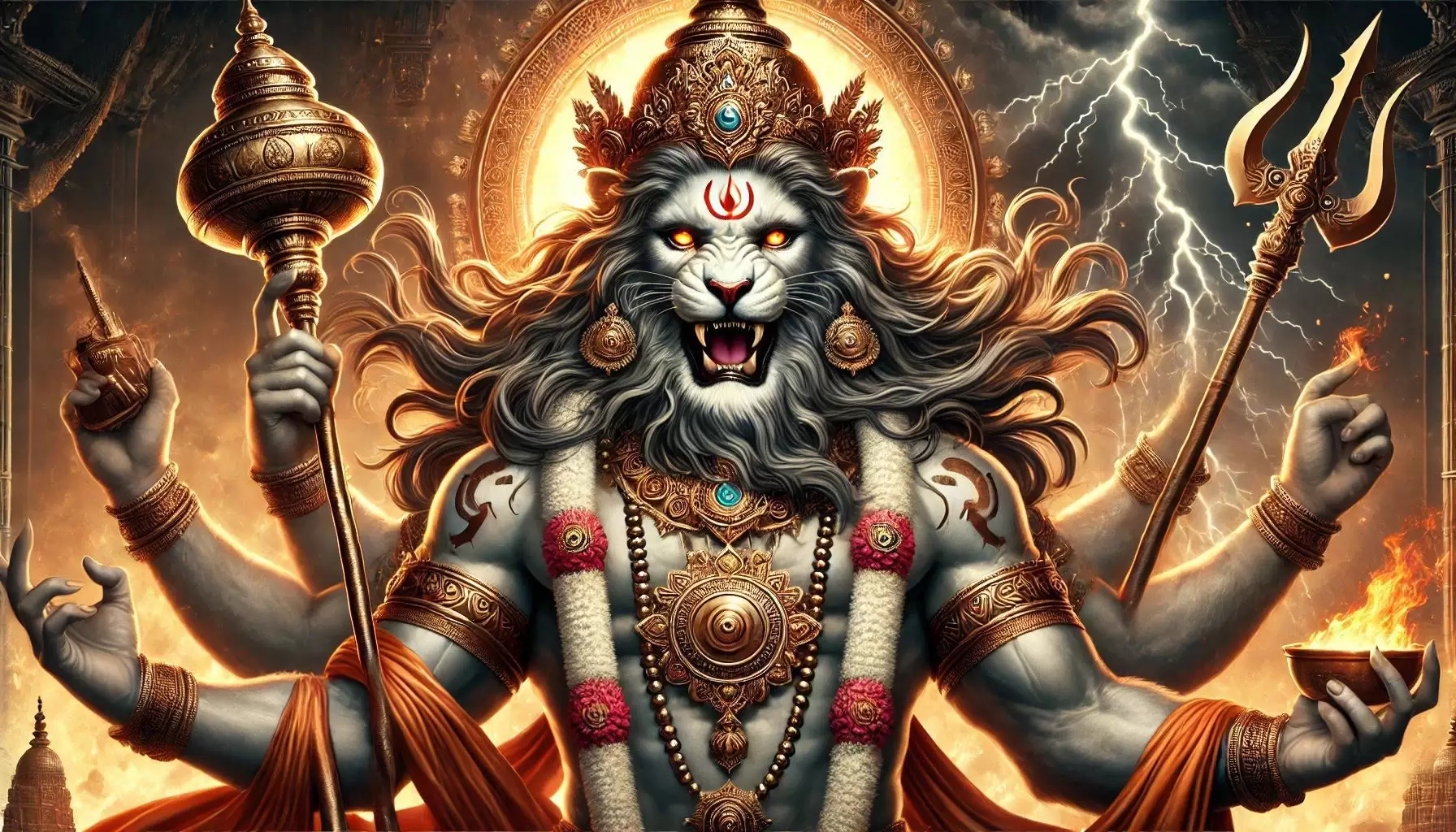
Narasimha Avatar — The Man-Lion Incarnation of Vishnu: Prahlada's Devotion, Hiranyakashipu's Defeat & Complete Story
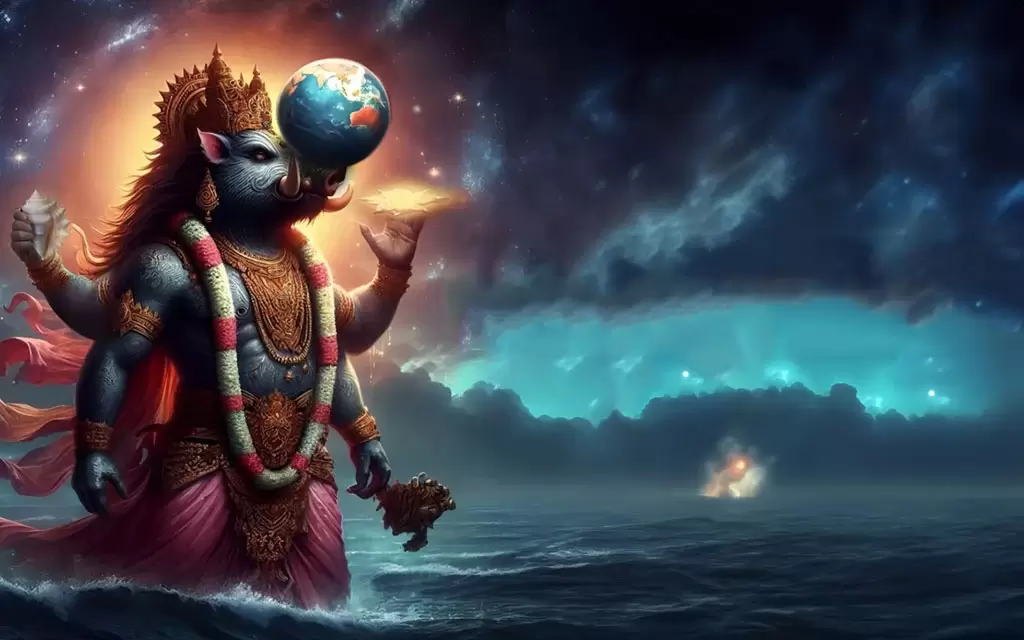
Varaha Avatar — The Boar Incarnation of Vishnu: Rescue of Earth from Hiranyaksha, Cosmic Geography & Significance
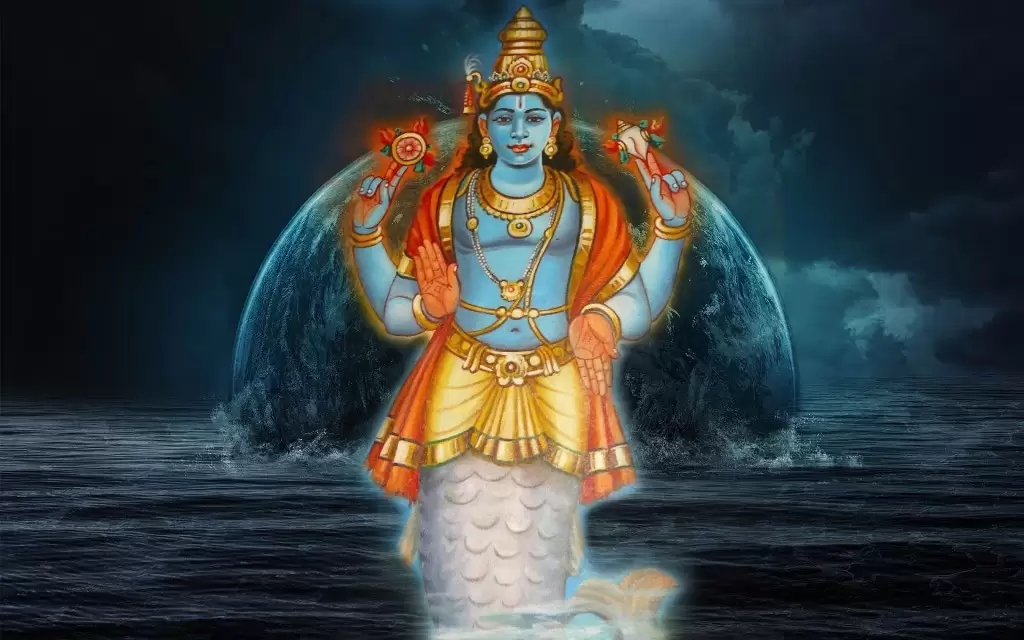
Matsya Avatar — The First Incarnation of Vishnu: Story, Significance, Sacred Geography & Lessons for 2026