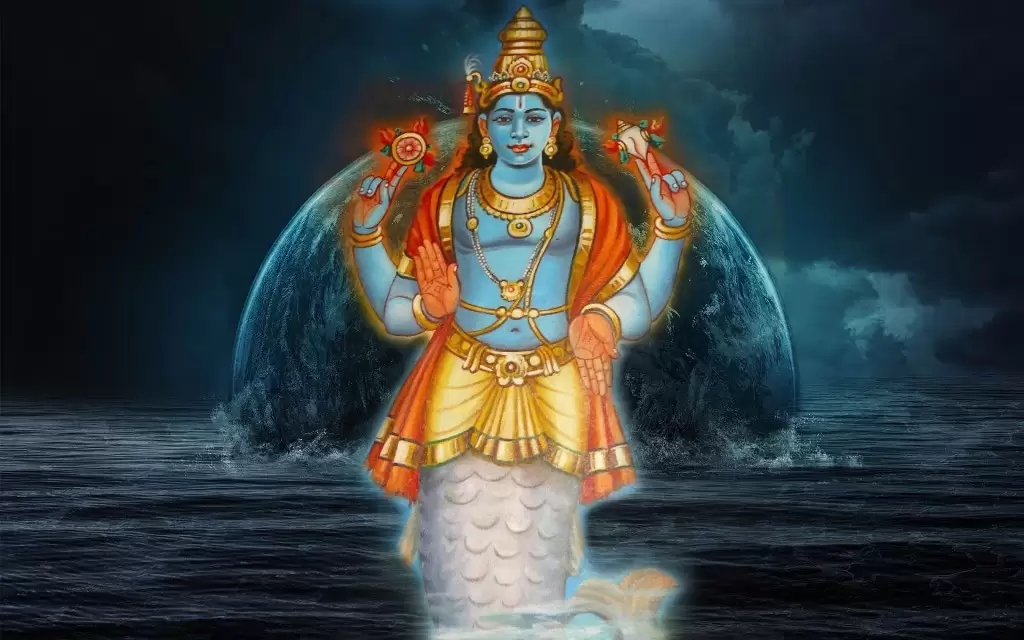
Kurma Avatar — The Tortoise Incarnation of Vishnu: Samudra Manthan, Mount Mandara & the Churning of the Ocean Complete Guide
Kurma Avatar — Vishnu's tortoise incarnation supporting Mount Mandara during Samudra Manthan. The cosmic churning, 14 ratnas, Amrita, Lakshmi's birth — complete guide.
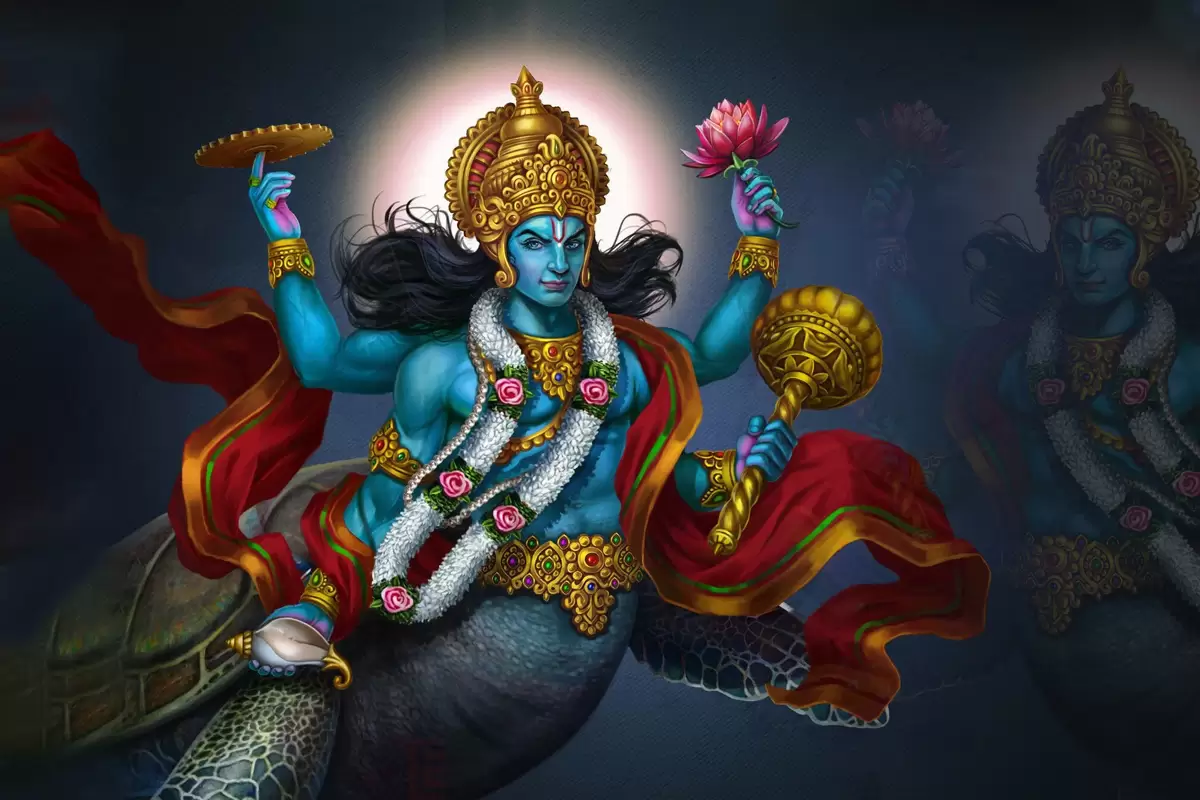
Kurma Avatar — Vishnu's tortoise incarnation supporting Mount Mandara during Samudra Manthan. The cosmic churning, 14 ratnas, Amrita, Lakshmi's birth — complete guide.
Quick Answer: Kurma — meaning "tortoise" in Sanskrit — is the second of Vishnu's ten avatars. The avatar manifested to support Mount Mandara on his shell during the Samudra Manthan (cosmic churning of the ocean of milk) — one of the most consequential events in Hindu cosmology. The devas (gods) and asuras (demons) churned the ocean for 1,000 years using Vasuki the serpent as rope and Mount Mandara as the churning rod, with Vishnu in tortoise form stabilising the mountain from below. The churning produced 14 cosmic treasures (ratnas) including Amrita (the nectar of immortality), Goddess Lakshmi (who married Vishnu), Kamadhenu, Halahala poison (swallowed by Shiva to save creation), and many others. The Samudra Manthan narrative is detailed in the Kurma Purana and is among Hindu cosmology's most foundational stories.
1. The Samudra Manthan Story
The devas had lost their power due to a curse from sage Durvasa (in some versions, due to other circumstances). Indra and the celestial beings became weak; the asuras grew strong. The devas approached Vishnu for help.
Vishnu's solution was unprecedented in cosmic history: the devas and asuras would cooperate to churn the cosmic ocean to obtain Amrita (the nectar of immortality) and other cosmic treasures.
The mechanics:
- Churning rod: Mount Mandara
- Churning rope: Vasuki, king of serpents (Shiva's serpent)
- Devas pulled from one side; asuras from the other
- Vishnu in Kurma form supported the mountain from below when it began to sink into the cosmic waters
The churning continued for 1,000 years. As the mountain rotated, the ocean transformed into milk, then butter, then yielded its hidden treasures one by one. The devas and asuras agreed in advance to share what emerged — though the agreement would later collapse over the question of Amrita.
2. The 14 Treasures (Ratnas) That Emerged
Different texts list slightly different ratnas; the standard list of 14:
- Halahala (Kalakuta poison) — emerged first; would have destroyed creation; swallowed by Shiva
- Kamadhenu — the divine cow of plenty
- Uchchaihshravas — the celestial seven-headed horse
- Airavata — the celestial white elephant (became Indra's mount)
- Kaustubha — the divine gem (worn by Vishnu)
- Kalpavriksha — the wish-fulfilling tree
- Apsaras — celestial dancers and beauties
- Goddess Lakshmi — emerged from the ocean; chose Vishnu as her husband
- Varuni / Sura — the goddess of wine (taken by the asuras)
- Chandra — the moon (taken by Shiva for his hair)
- Parijata — the divine wish-granting flower tree
- Panchajanya — Vishnu's conch
- Sharanga bow — Vishnu's bow
- Dhanvantari with Amrita — the divine physician carrying the pot of immortality
When Dhanvantari emerged with the Amrita pot, conflict erupted between devas and asuras. Vishnu, in his Mohini Avatar (often considered a sub-form within the Dasavataram framework), tricked the asuras and ensured the devas received the nectar.
3. Kurma's Specific Role
Kurma's role was foundational. Without his support beneath the mountain, the churning could not have proceeded. Specifically:
- Mount Mandara began to sink into the cosmic ocean as the churning intensified
- Vishnu manifested as a giant tortoise and dove beneath the mountain
- The mountain rotated on Kurma's shell for the duration of the 1,000-year churning
- Kurma's stability enabled the cosmic transaction
This is significant: Kurma is the avatar of silent foundational support. He does not speak in the narrative. He does not act with dramatic flourish. He simply holds — for a thousand years. The entire cosmic exchange happens because Kurma is willing to be the unmoving foundation.
4. The Halahala Poison Episode
The first thing to emerge from the cosmic churning was not nectar but poison — the Halahala (also called Kalakuta), a substance so toxic it would have destroyed all creation. The devas and asuras both fled in panic.
Shiva stepped forward. To save creation, he drank the Halahala. Parvati, his consort, pressed her hand on his throat to prevent the poison from descending into his body. The poison remained in his throat, turning it blue — earning Shiva the name Neelakantha ("the blue-throated one").
This episode is one of the most beloved cosmic narratives in Hindu tradition — Shiva's selfless sacrifice for creation, Parvati's intervention, the transformation of poison into divine ornament. It also explains the centrality of Shiva worship: he is the one who literally swallowed cosmic destruction.
5. Symbolic Meaning of the Tortoise Form
The tortoise form carries layered symbolic significance:
- Stability and foundation: The cosmic churning required something immovable beneath. Kurma represents the divine willingness to be the silent foundation.
- Withdrawal of senses: The tortoise withdraws into its shell — a metaphor in the Bhagavad Gita (2.58) for the yogi who withdraws senses from objects. The Kurma form represents pratyahara (sense withdrawal).
- Endurance and patience: A thousand-year churning is performed without the tortoise complaining. The teaching: profound work requires extraordinary patience.
- Evolutionary symbolism: In the Dasavataram-as-evolution interpretation, the tortoise is amphibian — the next evolutionary step after the fish, capable of being on land and in water.
- The shell as protection: The cosmic shell that protects sacred work; the inner sanctum.
6. Major Kurma Avatar Temples
Kurma-specific temples are rarer than other avatar temples, but several major sites:
- Sri Kurmam Temple, Andhra Pradesh — the most famous Kurma temple, ~150 km from Visakhapatnam. The deity is in tortoise form. Ancient temple (pre-11th century).
- Sri Kurmanatha Swamy Temple, Krishna District, AP
- tirumala/" class="auto-interlink" data-interlink="1">Tirumala Tirupati — Dasavataram sequence
- Sri Ranganatha Srirangam — Kurma in Dasavataram sculptural programmes
- Local Vishnu temples worldwide — Kurma in the Dasavataram sequences
Of these, Sri Kurmam Temple in Andhra Pradesh is the most significant Kurma-specific pilgrimage site, drawing devotees from across South India.
7. Modern Lessons — Kurma and Samudra Manthan in 2026
Lesson 1: Cooperation across opposites
The devas and asuras — eternal enemies — had to cooperate to churn the ocean. The Hindu teaching: some achievements require the temporary alliance of opposing forces. For modern NRI Hindus navigating workplace politics, family disagreements, or geopolitical tensions, this lesson is direct: the highest goods sometimes emerge from forced cooperation with those whose values you don't share.
Lesson 2: The poison comes first
The very first thing the cosmic churning produced was deadly poison — not nectar. The lesson: every great undertaking initially yields difficulties before benefits. The career pivot, the marriage, the spiritual practice — the early phase often produces what feels like the wrong outcome. Endure. The Amrita comes later in the sequence.
Lesson 3: Be willing to be Kurma
The most powerful position in the Samudra Manthan was not the devas pulling Vasuki's head, nor the asuras pulling the tail. It was the tortoise beneath — silent, unmoving, foundational. The greatest contributions to family, organisation, and society often come from those willing to be the unseen support.
Lesson 4: Lakshmi chose Vishnu — not the asuras
When Goddess Lakshmi (cosmic abundance) emerged, she chose Vishnu as her consort. Among all the cosmic beings churning the ocean, she chose the one holding the mountain. The teaching: abundance is drawn to the deeply grounded, not to the most active.
Lesson 5: Sacrifice transforms poison
Shiva did not flee the Halahala — he absorbed it. The teaching: there are moments when leadership requires absorbing what would destroy others. Parents, founders, community elders, oncology nurses — many roles in modern life require this Shiva-like capacity.
Lesson 6: Mohini's intervention — feminine wisdom in distribution
The Amrita was distributed not by force but by Mohini's clever, beauty-mediated intervention. The teaching: outcomes are not always determined by who has the most power; sometimes by who has the right intelligence at the right moment.
8. Mantras and Practice
Kurma bija mantra:
Om Kurmaaya Namah
Dasavatara Stotra verse for Kurma (Jayadeva):
Kshitir ati vipula tare tava tishthati prishthe
Dharani dharana kina chakra garishthe
Kesava dhrita Kacchapa rupa Jaya Jagadisha Hare
(O Keshava, who in the form of Kurma bore the entire earth upon your back — victorious is the Lord of the universe.)
Practice for devotees:
- Recite the Dasavatara Stotra
- Visit Sri Kurmam Temple if travel in South India
- Observe Kurma Jayanti (Vaisakha Purnima — typically May)
- Practice patience meditation — sitting silent and still as Kurma did
9. FAQs
Q: When is Kurma Jayanti 2026?
A: Vaisakha Purnima — typically May. In 2026: Friday, May 22 (Vaisakha Purnima).
Q: Where is Sri Kurmam Temple?
A: In Srikakulam district, Andhra Pradesh, ~150 km north of Visakhapatnam. One of the few Kurma-specific temples in India.
Q: Is Mohini a separate avatar?
A: Mohini is sometimes counted as a sub-form within the Kurma or Mahabharata-era Vishnu manifestations. Some Dasavataram lists include her; the standard 10-avatar list does not.
Q: What's the relationship between Kurma and Mount Meru?
A: Mount Mandara (used in the churning) is sometimes conflated with Mount Meru (the cosmic axis), but they are distinct. Mount Mandara is the specific mountain used for Samudra Manthan; Mount Meru is the cosmic centre.
Q: How long did Samudra Manthan actually last?
A: Hindu texts give varying durations — 1,000 years is the most common figure. The duration is cosmic-symbolic rather than literal.
Q: Was Vishnu present in multiple forms during Samudra Manthan?
A: Yes — Kurma supported the mountain; Mohini distributed the Amrita. Some traditions also identify Vishnu as guiding the entire operation in his cosmic form.
Final Words
Kurma Avatar represents one of Hindu cosmology's most subtle teachings: the highest action is sometimes the willingness to be the unmoving foundation for others' transformation. For a thousand years, the tortoise held the mountain that allowed all cosmic treasure to emerge. The fish from the previous avatar moved actively; the tortoise here is still. Both are Vishnu. Both are dharma in action.
For NRI Hindus reading this — building careers in foreign countries, raising children between cultures, supporting elderly parents from across oceans — the Kurma teaching offers something invaluable: the recognition that your daily, unseen, unrelenting holding-together of your family and community is itself a divine action. The world's important transformations happen because someone, somewhere, is willing to be the foundation.
Om Kurmaaya Namah. Jaya Jagadisha Hare!
Jai Kurma Bhagavan! Jai Vishnu Avatar 2 of 10!
HinduTone Editorial Team · Tags: Kurma Avatar, Samudra Manthan, Mount Mandara, Vasuki Serpent, 14 Ratnas, Lakshmi Birth, Halahala Poison, Sri Kurmam Temple, Kurma Purana
Frequently Asked Questions
What is Kurma Avatar?
Kurma — meaning "tortoise" in Sanskrit — is the second of Vishnu's ten avatars . The avatar manifested to support Mount Mandara on his shell during the Samudra Manthan (cosmic churning of the ocean of milk) — one of the most consequential events in Hindu cosmology.
What are the key points about Kurma Avatar?
The devas (gods) and asuras (demons) churned the ocean for 1,000 years using Vasuki the serpent as rope and Mount Mandara as the churning rod , with Vishnu in tortoise form stabilising the mountain from below. The churning produced 14 cosmic treasures (ratnas) including Amrita (the nectar of immortality) , Goddess Lakshmi (who married Vis
Why does Kurma Avatar matter in Hinduism?
It deepens a devotee's connection with Lord Vishnu and with the values of Sanatana Dharma — clarity, devotion and dharmic living.
How can devotees apply Kurma Avatar in daily life?
By reflecting on its teaching, incorporating the related practices or observances into daily routine, and approaching it with sincere devotion and understanding.
You might also like
Narasimha Avatar — The Man-Lion Incarnation of Vishnu: Prahlada's Devotion, Hiranyakashipu's Defeat & Complete Story
Vamana Avatar — The Dwarf Brahmin Incarnation of Vishnu: Mahabali, Three Steps & the Onam Connection
Varaha Avatar — The Boar Incarnation of Vishnu: Rescue of Earth from Hiranyaksha, Cosmic Geography & Significance