Chinna Srimannarayana Ramanuja Jeeyar
Short biography of Chinna Srimannarayana Ramanuja Jeeyar Sri Tridandi Chinna Srimannarayana Ramanuja Jeeyar Swamiji, a spiritual teacher, and a great…
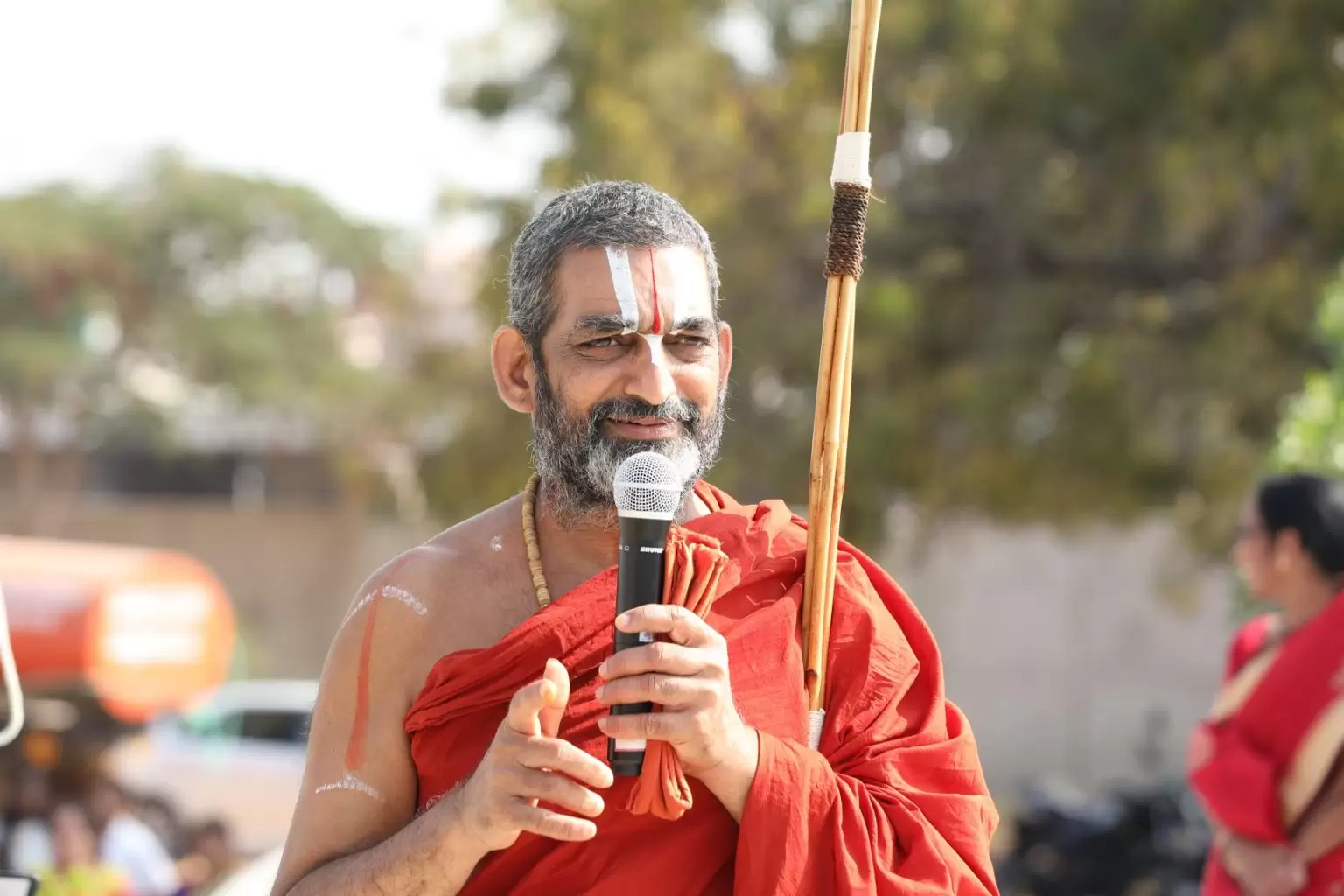
Short biography of Chinna Srimannarayana Ramanuja Jeeyar Sri Tridandi Chinna Srimannarayana Ramanuja Jeeyar Swamiji, a spiritual teacher, and a great…
Short biography of Chinna Srimannarayana Ramanuja Jeeyar
Sri Tridandi Chinna Srimannarayana Ramanuja Jeeyar Swamiji, a spiritual teacher, and a great personality belongs to one of the greatest monks of the disciples of Sri Ramanujacharya who are called Jeeyars.
Jeeyar is a cheerful person who is unmindful of His bodily comforts but always concerned about the welfare of others, Chinna Jeeyar Swamiji fills the hope and joy wherever He goes in the hearts of people. Chinna Jeeyar Swamiji is India’s enlightened divine spiritual and humanitarian leader, who strives hard to promote world peace through the teachings of Vedic lessons, spiritual practices, non-violence, the joy of sharing, and mutual respect for all living beings living together.
Sri Tridandi Chinna Srimannarayana Ramanuja Jeeyar Swamiji was born on 3rd November in the year 1956 in a village, Arthamuru in East Godavari district of Andhra Pradesh to Alarmeylu Mangathayaru and Sri Thiruvengalacharya on the day of Diwali.
Sri Swamiji believes that an Acharya is a person who practices first and then preaches. He is a great saint with deep spiritual sensitivity and intellectual thoughts. He is the essence of boundless love for all people. All the activities done by him show his deep concern for society.
Any devotee can observe knowledge in all aspects of his living and address people. Right from Swamiji’s clean appearance, his pure way of speech, the affection with which Swamiji addresses people to answer their queries, the clarity and potential in his speech can enlighten the people greatly.
Swamiji wants to educate people, young and old, by giving awareness of our heritage and traditions. Most of the devotees get relief by just looking at his glowing, ever-smiling face. His concerned look cleanses people’s minds and raises their consciousness from the dark to the divine.
He always dreamt to empower the communities across the world to have equal opportunities for education, health care, and peaceful life. Because of this, he has done many activities like the establishment of many Vedic schools, free medical camps, peace and harmony sessions, free food, animal welfare, free education for the poor, overseas journey to spread spirituality among people, and a lot more.
In this article, we have discussed an inspiring personality who carved the art of service, a spiritual teacher, Vedic scholar, and philosopher Chinna Srimannarayana Ramanuja Jeeyar Swamiji. Do check out our other articles.
Roots in the Ramanuja Sampradaya and the Jeeyar Tradition
Chinna Jeeyar Swamiji belongs to the Sri Vaishnava tradition founded by Jagadacharya Sri Ramanujacharya (1017–1137 CE), whose Vishishtadvaita philosophy establishes that the individual soul (jiva) and the material world (achit) are inseparable from yet subordinate to the Supreme Being, Sriman Narayana. Within this tradition, the title 'Jeeyar' designates a tridandi sannyasi — one who has taken the triple-staff renunciation vow — and who serves as a custodian of the Pancharatra Agama and the Divya Prabandham of the Alvars.
The Jeeyar lineage traces its formal institutional origin to the Ahobila Mutt and the Parakala Mutt, both centuries-old seats of Sri Vaishnava monastic authority in Andhra Pradesh and Karnataka. Chinna Jeeyar Swamiji's own peetham, the Sri Tridandi Chinna Jeeyar Ashram headquartered in Shamshabad near Hyderabad, continues this legacy by anchoring its daily worship, scholarly discourse, and humanitarian work firmly within Ramanujacharya's framework of sarva-jiva-hita — the welfare of all living beings.
How Swamiji's Scriptural Scholarship Shapes His Teachings
Swamiji draws extensively from the Prassthantrayi — the Upanishads, the Brahma Sutras, and the Bhagavad Gita — as well as from the Srimad Bhagavatam and the Divya Prabandham, the four-thousand-verse Tamil devotional canon composed by the twelve Alvars. His discourses frequently cite the Bhagavad Gita's teaching (Chapter 3, verse 20) that great souls act for the well-being of the world (lokasangraha), framing seva not as charity but as a spiritual imperative.
A distinctive feature of his pedagogy is the integration of the Rahasya Traya — the Thirumantram (Om Namo Narayanaya), the Dvayam, and the Charama Shloka from the Bhagavad Gita — into accessible public discourse without diluting their sacred depth. This approach, modelled on Ramanujacharya's own inclusive mission of initiating people across all social strata into Prapatti (total surrender to Narayana), is evident in the mass initiation programmes Swamiji regularly conducts across India and abroad.
JETF and the Institutional Framework of His Humanitarian Work
The Jeeyar Educational Trust Foundation (JETF), established under Swamiji's guidance, operates schools, colleges, and vocational training centres primarily in Telangana and Andhra Pradesh. The trust's educational philosophy is grounded in the concept of Saraswata Brahma — the idea, drawn from Vedic tradition, that access to knowledge is a divine right — and seeks to bridge the gap between rural underprivileged children and quality modern education without severing their connection to dharmic values.
Beyond formal schooling, JETF runs free medical camps, eye-care programmes, and drinking-water initiatives in tribal and semi-urban areas, reflecting Swamiji's conviction that daridra-narayana seva (service to the poor as worship of Narayana) is as sacred as temple worship. These initiatives have been particularly active in the agency areas of the Alluri Sitarama Raju district of Andhra Pradesh and in flood-affected regions of the Godavari delta, echoing his birthplace's geography and his lifelong bond with the communities of East Godavari.
The VAIKUNTA Hill Project in Muchintal
One of Swamiji's most ambitious spiritual-architectural undertakings is the VAIKUNTA Hill project at Muchintal, Hyderabad, conceived as a large-scale Divya Desa-inspired complex dedicated to Sri Ramachandra and other forms of Sriman Narayana. The project intends to recreate the sacred geography of major Divya Desas — the 108 temples glorified by the Alvars — within a single accessible site, allowing pilgrims who cannot travel to distant shrines to receive equivalent darshan and participate in authentic Pancharatra Agama worship.
The complex is designed to function simultaneously as a pilgrimage centre, a residential Vedic pathashala, a museum of Vaishnava heritage, and an open-air amphitheatre for Harikatha and Divya Prabandham recitation. This multi-layered vision reflects a recurring theme in Swamiji's mission: that spiritual infrastructure and humanitarian service must grow together, so that those who visit for darshan also encounter schools, hospitals, and vocational workshops within the same sacred campus.
Swamiji's Role in Promoting Ahimsa and Environmental Dharma
Ahimsa Paramo Dharma — non-violence as the highest duty — is not merely a quoted maxim for Chinna Jeeyar Swamiji but the basis of active campaigns against animal sacrifice in certain festival practices and in favour of plant-based diets rooted in Vaishnava sampradaya norms. He frequently references the Srimad Bhagavatam (7.15.7-8), where Narada Muni instructs that a person who causes unnecessary suffering to animals cannot progress on the path of Bhakti, to ground his advocacy in scriptural authority rather than sentiment alone.
His environmental outreach extends to tree-planting drives conducted under the name Go-Samrakshana (cow protection) and Bhumi Puja (earth-reverence) programmes, framing ecological responsibility as an extension of Vaishnava theology, in which the earth herself is understood as Bhumi Devi, consort of Sriman Narayana. These campaigns have been carried out in partnership with local communities in Telangana, drawing young volunteers who may first join for environmental reasons and subsequently engage with the deeper spiritual philosophy Swamiji articulates.
Global Outreach and the Vision of Vasudhaiva Kutumbakam
Chinna Jeeyar Swamiji has conducted programmes and delivered discourses in the United States, the United Kingdom, Australia, Singapore, and several Gulf countries, reaching a substantial diaspora of Telugu- and Tamil-speaking Vaishnavas as well as seekers from other backgrounds. His international engagements consistently emphasise the Maha Upanishad's declaration Vasudhaiva Kutumbakam — the entire world is one family — as a foundational tenet of Vedic civilisation rather than a merely poetic sentiment.
In these global settings, Swamiji adapts his communication without compromising doctrinal precision: he explains the Prapatti path of Sri Vaishnavism in English, contextualises Alvar poetry for second-generation diaspora youth, and addresses interfaith gatherings while maintaining the integrity of the Vishishtadvaita worldview. This balance between accessibility and authenticity has positioned him as one of the more visible Sri Vaishnava voices in the contemporary global Hindu discourse, continuing the universalist mission that Ramanujacharya himself embodied when he travelled from Srirangam across the Indian subcontinent to spread the gospel of Narayana-bhakti.
Frequently Asked Questions
When and where was Chinna Jeeyar Swamiji born?
He was born on 3rd November 1956, the day of Diwali, in Arthamuru village in East Godavari district of Andhra Pradesh. His parents were Alarmeylu Mangathayaru and Sri Thiruvengalacharya.
Which tradition does Chinna Jeeyar Swamiji belong to?
He belongs to the Sri Vaishnava tradition of Sri Ramanujacharya and the Jeeyar lineage of tridandi sannyasis. His Vishishtadvaita teaching centers on Sriman Narayana.
What does the Jeeyar Educational Trust Foundation (JETF) do?
The Jeeyar Educational Trust Foundation runs schools, colleges and vocational centres, mainly in Telangana and Andhra Pradesh. It also runs free medical camps, eye-care programmes and drinking-water initiatives.
What is the VAIKUNTA Hill project at Muchintal?
It is a large complex near Hyderabad inspired by the 108 Divya Desas glorified by the Alvars. It is designed as a pilgrimage centre, Vedic pathashala, Vaishnava heritage museum and amphitheatre.
Has Chinna Jeeyar Swamiji given programmes abroad?
Yes. He has held programmes and discourses in the United States, the United Kingdom, Australia, Singapore and several Gulf countries, explaining Sri Vaishnavism in English for diaspora youth.
What does Chinna Jeeyar Swamiji teach about non-violence?
He teaches Ahimsa Paramo Dharma and campaigns against animal sacrifice in certain festival practices. He also promotes plant-based diets and tree-planting drives.
You might also like
The Resolve of a Monk – A Divine Incident Showcasing Kanchi Paramacharya’s Compassion
Nirjala Ekadashi June 25 2026 – The King of Ekadashis: Complete Guide with Bhima’s Story, Rituals, Mantras & Benefits
Anant Ambani Donates 25 Electric Buses to Tirumala TTD | ₹27.5 Crore Mahā Kānuka