Swaroopanand Saraswati
Life History of Swaroopanand Saraswati Swaroopanand Saraswati is a well known religious monk, a spiritual personality and also a great freedom fighter.
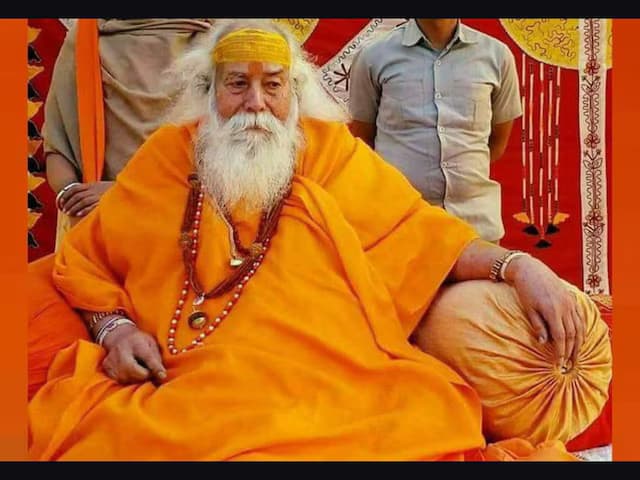
Life History of Swaroopanand Saraswati Swaroopanand Saraswati is a well known religious monk, a spiritual personality and also a great freedom fighter.
Life History of Swaroopanand Saraswati
Swaroopanand Saraswati is a well known religious monk, a spiritual personality and also a great freedom fighter. Let us look at the life of this religious priest and spiritual legend more closely.
Swami Swaroopanand Saraswati also known as Pothiram Upadhyay was born in the year 1924 on September 2nd at Dighori village of Seoni district in Madhya Pradesh. He was a pupil of Brahmananda Saraswati and Shankaracharya Krishnabodha Ashrama, both of Jyotir Math in Badrinath.
During his younger days, Saraswati had participated in Quit India Movement and got jailed for two years. In the year 1973, he became the
Shankaracharya of Jyotir Math in Badrinath. But his position has disagreed and he filed a court case in Allahabad District court, for his rights of Shankaracharya of Jyotir Math. He later became Shankaracharya of Dwarka peeth. Swaroopanand has given public opinions and conclusions on political subjects and social issues like Jammu and Kashmir, River Ganga pollution and Article 370, Uniform civil code, beef trading and exporting, women worshipping Shani and many more issues. In the year 2016, he blamed the RSS stating that they take the name of the Hindus, but they have no commitment towards Hindutvam.
He was associated with Quit India Movement and the great freedom struggle in the mid-1940s, later he got turned into a yogi in the 1950s and associated with spiritual and religious thoughts.
On Swami Krishnabodha Ashrama's death in 1973, he replaced his guru. He became the Shankaracharya of Dwarka peeth in the year 1982. His right of Shankaracharya of Jyotir Math in Badrinath drew controversies and a petition at Allahabad District court. In recent times, Swaroopanand has given some of his public opinions related to politics and social issues, which helped him to remain in limelight. He had opposed women worshipping Shani at Shani Shingnapur temple in Ahmednagar. In
2016 he questioned the right of ISKCON to be a part of the Sanatana Dharma.
These are some of the interesting facts and life history of Swaroopanand Saraswati discussed in this article.
The Dashanami Tradition and Swaroopanand's Place Within It
Swami Swaroopanand Saraswati belonged to the Dashanami Sampradaya, the monastic order reorganised by Adi Shankaracharya in the 8th century CE to preserve Advaita Vedanta across the Indian subcontinent. The 'Saraswati' suffix in his name identifies him as a member of one of the ten sub-orders of this tradition, whose monks renounce household life and dedicate themselves entirely to the study of the Upanishads, the Brahmasutras, and the Bhagavad Gita — the three foundational texts known collectively as the Prasthanatrayi.
The Jyotir Math in Badrinath, with which Swaroopanand was most closely associated, is one of the four Amnaya Mathas established by Adi Shankaracharya — the other three being Sringeri Math in Karnataka, Sharada Pitha in Dwarka, and Govardhan Math in Puri. The presiding head of each Math carries the title Shankaracharya, regarded as a living representative of the Advaita lineage. The paramountcy of this seat gives theological weight to every public pronouncement a Shankaracharya makes on matters of dharma.
Guru Lineage: Brahmananda Saraswati and the Revival of Jyotir Math
Swaroopanand Saraswati received initiation and spiritual training under Swami Brahmananda Saraswati, who himself revived the long-vacant seat of Jyotir Math's Shankaracharya in 1941 after it had remained unoccupied for over 150 years. Brahmananda Saraswati was renowned for his rigorous adherence to the Shankaracharya tradition and attracted disciples from across northern India. His passing in 1953 left a significant vacuum in the Advaita institutional world.
Swaroopanand also received guidance from Swami Krishnabodha Ashrama, who held the Jyotir Math seat after Brahmananda Saraswati. This dual tutelage placed Swaroopanand firmly within an unbroken chain of Advaita teachers tracing back to Adi Shankaracharya himself — a lineage known as the Guru-Shishya Parampara. Upon Krishnabodha Ashrama's death in 1973, Swaroopanand's assumption of the seat was both a continuation of this sacred lineage and the beginning of a prolonged institutional dispute over legitimate succession.
The Quit India Movement and the Meeting of Sanyasa with Patriotism
Swaroopanand Saraswati's participation in the Quit India Movement of 1942, at the remarkably young age of eighteen, illustrates a strand of Hindu thought that sees national liberation and spiritual liberation as complementary rather than opposed. Drawing on the example of figures such as Lokmanya Bal Gangadhar Tilak — who famously used the Bhagavad Gita to argue that righteous action (nishkama karma) in the world is itself a spiritual practice — several monks of that era believed that opposing colonial rule was a religious duty.
His imprisonment for two years as a consequence of this activism did not diminish his spiritual calling; instead, accounts suggest that confinement deepened his commitment to both nationalist ideals and Vedantic study. After independence and his formal initiation into sanyasa in the early 1950s, he consciously merged these two identities — that of a freedom fighter and a renunciant — presenting dharma-raksha (protection of dharma) as a natural extension of the patriotism he had already demonstrated.
The Dwarka Peeth and the Significance of the Shankaracharya Institution
Swaroopanand Saraswati's formal installation as Shankaracharya of Dwarka Peeth (Sharada Pitha) in 1982 placed him at the head of one of Hinduism's most venerated institutional seats, located in Dwarka, Gujarat — the ancient city associated with Sri Krishna and described in the Mahabharata and the Bhagavata Purana as the kingdom established by the Yadava clan. The Dwarka Peeth oversees the spiritual life of western India and carries particular responsibility for upholding the Sama Veda tradition in that region.
The Shankaracharya of any Math is expected to travel extensively within his jurisdiction, conducting discourse (pravachana), settling disputes on matters of dharma, presiding over major yajnas, and guiding pilgrims undertaking the Char Dham Yatra. Holding simultaneously contested claims over both Jyotir Math and Dwarka Peeth made Swaroopanand's institutional profile unique in modern times, and it also amplified the reach of his public statements on social and religious issues to a pan-Indian audience.
Positions on Temple Entry, Social Practice, and Scriptural Authority
Swaroopanand Saraswati's opposition to women's entry into the inner sanctum of the Shani Shingnapur temple in Ahmednagar, Maharashtra, was grounded in his reading of the Agama Shastras — a body of ritual literature that prescribes precise rules for temple construction, worship, and the eligibility of participants. He argued that temple customs are not mere social conventions but codified rites with scriptural sanction, and that altering them requires authorisation from the relevant Agamic tradition rather than from civil courts or social movements.
His questioning of ISKCON's claim to represent Sanatana Dharma arose from a similarly scripture-centred position: he maintained that the Vaishnava theological framework championed by ISKCON, rooted in the Gaudiya tradition of Sri Chaitanya Mahaprabhu, diverges in important respects from the Advaita Vedanta that, in his view, constitutes the philosophical backbone of the Shankaracharya lineage. This reflects a long-standing but respectful theological tension within Hinduism between Advaita (non-dual) and Dvaita or Vishishtadvaita (qualified non-dual) schools of thought, a debate whose roots reach back to the commentaries of Adi Shankaracharya and Sri Ramanujacharya.
Legacy and Continuing Relevance of Swaroopanand Saraswati's Teachings
Throughout his life Swaroopanand Saraswati consistently emphasised the centrality of the Ganga as both a sacred river described in the Rigveda and Skanda Purana and as an ecological resource whose purity is inseparable from the spiritual health of the nation. His repeated calls for strict measures against industrial pollution of the Ganga aligned his monastic authority with contemporary environmental concerns, demonstrating that traditional dharmic frameworks can engage meaningfully with modern challenges.
Swaroopanand passed away on 11 September 2022 at Narsinghpur, Madhya Pradesh, at the age of 99. His passing marked the end of a life that spanned colonial India, independence, and the complex religious politics of the Indian republic. Scholars and practitioners alike continue to study his pronouncements for the way they applied classical Advaita Vedanta and Agamic authority to contested questions of social life, making him one of the more intellectually engaged Shankaracharyas of the 20th and early 21st centuries.
Frequently Asked Questions
What is Swaroopanand Saraswati?
Life History of Swaroopanand Saraswati Swaroopanand Saraswati is a well known religious monk, a spiritual personality and also a great freedom fighter. Let us look at the life of this religious priest and spiritual legend more closely.
What are the key points about Swaroopanand Saraswati?
Swami Swaroopanand Saraswati also known as Pothiram Upadhyay was born in the year 1924 on September 2nd at Dighori village of Seoni district in Madhya Pradesh. He was a pupil of Brahmananda Saraswati and Shankaracharya Krishnabodha Ashrama, both of Jyotir Math in Badrinath .
Why does Swaroopanand Saraswati matter in Hinduism?
It deepens a devotee's connection with Goddess Saraswati and with the values of Sanatana Dharma — clarity, devotion and dharmic living.
How can devotees apply Swaroopanand Saraswati in daily life?
By reflecting on its teaching, incorporating the related practices or observances into daily routine, and approaching it with sincere devotion and understanding.
You might also like

Sacred Hindu Festivals & Temple News: Divine Week — May 2026
Shani Jayanti 2026: Date, Significance, Rituals & Powerful Mantras
Shani Deva Temples Worldwide & Must-Performed Rituals — Complete Devotee's Guide