Jain Akshaya Tritiya — Varshi Tapa and Lord Rishabhanatha's Story
Introduction: Eternal Merit and the First Proper Alms in Jain Tradition Akshaya Tritiya (Akha Teej or Akti), falling on the third lunar day (Tritiya) of the…
Introduction: Eternal Merit and the First Proper Alms in Jain Tradition Akshaya Tritiya (Akha Teej or Akti), falling on the third lunar day (Tritiya) of the…
Introduction: Eternal Merit and the First Proper Alms in Jain Tradition
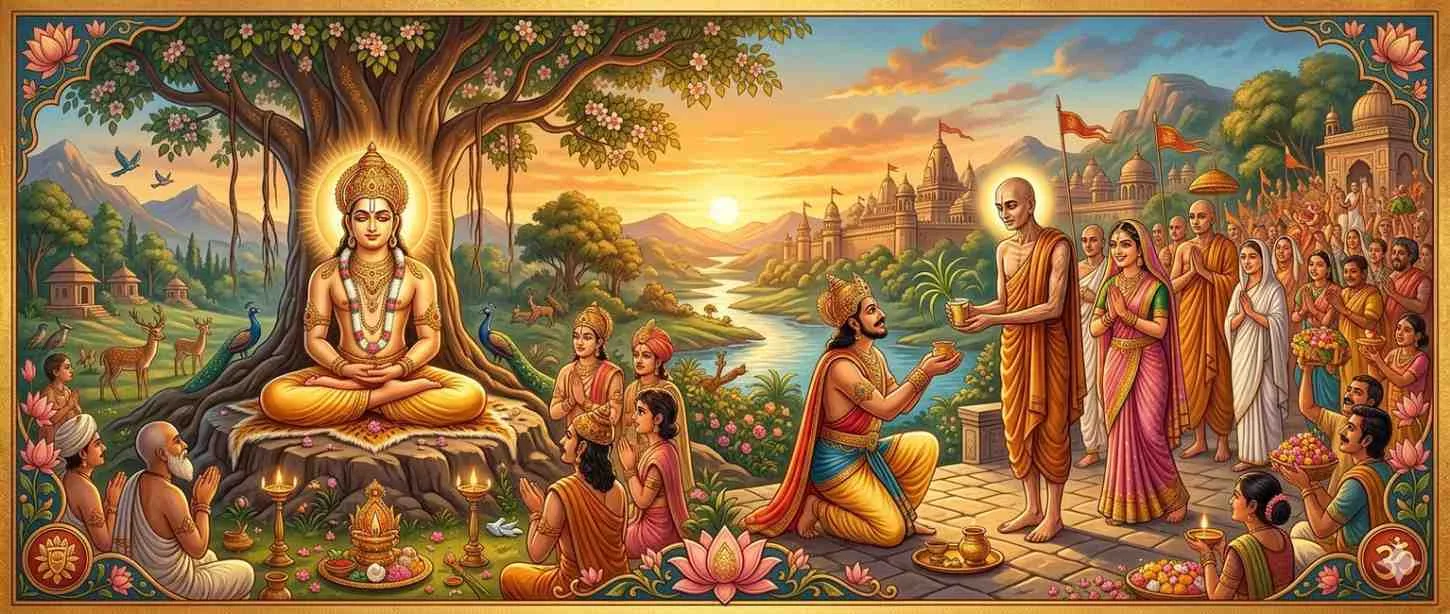
Akshaya Tritiya (Akha Teej or Akti), falling on the third lunar day (Tritiya) of the bright fortnight (Shukla Paksha) of Vaishakha, is a profoundly auspicious day shared across Hindu and Jain traditions. For Jains, it commemorates one of the most significant events in the life of Lord Rishabhanatha (also called Rishabhdev or Adinath — the First Tirthankara of the current descending cycle, Avasarpini). On this day, the first Tirthankara ended his extraordinary 400-day fast by accepting sugarcane juice offered in his cupped hands by his grandson Shreyansa Kumar (or Shreyansha).
This historic moment established the very first Aahar Charya — the precise methodology and rules for offering food (ahar) to Jain monks and ascetics in a faultless manner. The day is therefore called Varshi Tapa (or Varshitapa) Parana for those who undertake the rigorous year-long penance.
In 2026, Akshaya Tritiya falls on Sunday, April 19, 2026. The tithi begins in the evening of April 18 and continues through April 19, making it ideal for Parana (breaking the fast) and related rituals, typically in the morning to midday hours. Exact local timings should be confirmed through Jain panchangs or community calendars, as minor variations exist by location.
This comprehensive guide for hindutone presents the complete story of Lord Rishabhanatha, the deep significance of the event, details of Varshi Tapa, observance rituals, philosophical lessons, and practical guidance — including adaptations for the Jain and interfaith diaspora in the USA, UK, Canada, and Australia.
The Complete Story of Lord Rishabhanatha and the Origin of Akshaya Tritiya
Lord Rishabhanatha, the first of the 24 Tirthankaras in the present cosmic cycle, is revered as the founder of Jain dharma in its organised form. Born as the eldest son of King Nabhi and Queen Marudevi in the ancient city of Ayodhya (or Vinita), he lived as a Chakravartin (universal emperor) for thousands of years. He had 100 sons, the eldest being Bharata (after whom Bharatavarsha — India — is named), and a daughter named Brahmi.
After ruling justly and establishing the foundations of society, agriculture, arts, crafts, and governance, Rishabhanatha renounced worldly life at an advanced age. He divided his vast kingdom among his sons and became a monk, embarking on the path of severe austerity to attain Kevala Jnana (omniscience).
For the first six months after renunciation, he meditated intensely without accepting conventional food or water. Upon attaining enlightenment, he set out on alms rounds (gochari). However, the people of that era did not yet know the strict rules of Aahar Charya — the Jain monastic code for accepting food. Offerings had to be free from faults: not specially prepared for the monk, free from violence (ahimsa), offered willingly, and given in a pure manner.
Every time Lord Rishabhanatha approached for alms, the food presented did not meet these criteria, so he could not accept it. He therefore continued a prolonged fast lasting 400 days (as per Shvetambara tradition; Digambara accounts affirm the extraordinary length and intensity of the penance). During this time, he remained absorbed in deep meditation, enduring extreme physical hardship with complete equanimity.
The pivotal moment arrived on Akshaya Tritiya. His grandson, Shreyansa Kumar (son of Bharata and a wise ruler), experienced Purva Bhava Smaran or Jati Smarana Jnana — recollection of past lives. In a previous birth, Shreyansa had committed an act that created a karmic connection: he had once tied a net over a cow’s face, causing the animal to starve. This insight revealed why his grandfather had been unable to accept food and clarified the exact nature of the offering needed.
Shreyansa prepared fresh sugarcane juice (ikshu rasa) and offered it respectfully to Lord Rishabhanatha. He poured the juice into the Tirthankara’s cupped hands (kar-patra labdhi — the power to use hands as a vessel without spilling). Lord Rishabhanatha accepted the offering, breaking his 400-day fast. Not a single drop fell to the ground, and demi-gods and celestial beings celebrated the event.
This act not only nourished the body of the enlightened Tirthankara but also established the eternal protocol for lay followers (Shravakas) to offer food to monks: with pure intention, without violence, and in accordance with monastic rules. Sugarcane juice became a sacred symbol of purity and the first acceptable alms in Jain history.
From that day, Akshaya Tritiya is revered as a day of eternal (Akshaya) merit. Any act of austerity, charity, or spiritual practice performed on this day yields imperishable results.
Significance of Varshi Tapa (Varshitapa)
Varshi Tapa (or Varshitapa) is a demanding year-long penance observed mainly by Shvetambara Jains. Participants fast on alternate days for roughly 13–14 months (approximately 400+ days of intensity). The pattern typically includes:
- Upvas: Complete fast (only boiled water) on one day.
- Biyasana or light sattvik food on the alternate day.
- Occasional longer fasts (Balas — two consecutive upvas) when tithis require it.
The tapasya tests physical endurance, mental discipline, detachment from desires, and adherence to ahimsa. Those who complete it break the fast (Parana) on Akshaya Tritiya by drinking fresh sugarcane juice, exactly as Lord Rishabhanatha did.
The observance symbolises:
- Victory of the soul over the body.
- The importance of right knowledge (Samyak Jnana), right faith (Samyak Darshana), and right conduct (Samyak Charitra) — the Three Jewels of Jainism.
- Gratitude to the first Tirthankara for showing the path to liberation (moksha).
- The interdependence between ascetics and householders.
Massive charity drives accompany the day — offering food to monks (following Aahar Charya), donating to temples, hospitals, education, and animal shelters.
Detailed Observance and Rituals on Akshaya Tritiya
- Varshi Tapa Parana: Devotees completing the fast drink fresh sugarcane juice in a ceremonial manner, often at temples or home altars dedicated to Lord Rishabhanatha.
- Temple Visits: Special pujas, processions, and recitations at pilgrimage sites such as Hastinapur, Palitana, Ranakpur, Kesariyaji, Kulpakji, and others associated with Adinath.
- Charity (Daan): Offering pure food to monks, clothes, medicines, and resources to the needy — emphasising ahimsa and compassion.
- Home Puja: Set up an altar with the idol or image of Lord Rishabhanatha. Offer sugarcane juice, fruits, and flowers. Chant the Navkar Mantra or specific stotras praising the 24 Tirthankaras.
- Fasting and Reflection: Many observe shorter fasts or austerities. Read Jain scriptures (e.g., Kalpa Sutra or stories from Harivamsa Purana and Padma Purana), practise meditation, and seek forgiveness.
Philosophical Lessons from Lord Rishabhanatha’s Story
- Detachment and Austerity: Extreme penance purifies the soul and leads to omniscience.
- Right Conduct in Daily Acts: Even offering food has profound karmic consequences; purity of intention matters.
- Karmic Connections: Past-life actions influence present events; wisdom (Jati Smarana) resolves them.
- Compassion and Service: Lay followers sustain monks, while monks inspire ethical living for all.
The event underscores that true prosperity is spiritual merit accumulated through tapasya and daan, not material accumulation.
Akshaya Tritiya 2026: Guidance for Diaspora Communities
Jain associations and temples in the USA (New Jersey, California), UK (London, Leicester), Canada (Toronto, Vancouver), and Australia (Sydney, Melbourne) organise special events with Varshi Tapa Parana, discourses on Rishabhanatha’s life, and large-scale charity.
Adaptations include:
- Virtual participation for families spread across continents.
- Sourcing fresh sugarcane juice from Indian grocery stores or using symbolic pure juices.
- Blending with Hindu celebrations of the same day while focusing on Jain ahimsa and austerities.
- Youth programs using plays, animations, or discussions to transmit the story and values.
Challenges such as time zones, ingredient availability, and busy schedules are addressed through weekend events, pre-prepared sattvik meals, and online Jain discourses.
Shared Spiritual Heritage
While Jains emphasise Rishabhanatha’s fast and the establishment of Aahar Charya, Hindus celebrate the same day for Parashurama Jayanti, the descent of Ganga, and other legends of eternal merit. This overlap fosters interfaith respect and harmony.
Conclusion: Creating Eternal Merit on Akshaya Tritiya
Akshaya Tritiya reminds us that sincere austerity, pure offerings, and compassionate acts yield imperishable results. Lord Rishabhanatha’s 400-day fast and its breaking with sugarcane juice on this day set a timeless example of spiritual endurance and ethical living.
On April 19, 2026, whether completing Varshi Tapa, offering charity, or reflecting on the Tirthankara’s life, devotees generate Akshaya merit that benefits this life and future ones.
Jai Jinendra! Shubh Akshaya Tritiya!
May the blessings of Lord Rishabhanatha inspire discipline, non-violence, compassion, and the pursuit of liberation in all.
Frequently Asked Questions
Why do Jains celebrate Akshaya Tritiya?
It marks the day Lord Rishabhanatha, the first Tirthankara, ended his 400-day fast by accepting sugarcane juice from his grandson Shreyansa Kumar. This established the first Aahar Charya, the rules for offering food to Jain monks.
What is Varshi Tapa and how does it end?
Varshi Tapa is a year-long penance observed mainly by Shvetambara Jains, with fasting on alternate days for roughly 13 to 14 months. It ends with Parana on Akshaya Tritiya by drinking fresh sugarcane juice, as Rishabhanatha did.
When is Akshaya Tritiya in 2026?
Akshaya Tritiya falls on Sunday, April 19, 2026. The tithi begins in the evening of April 18, and Parana is typically done in the morning to midday hours; confirm local timings with Jain panchangs or community calendars.
Why was Lord Rishabhanatha unable to accept food for 400 days?
As commonly told, people of that era did not know the rules of Aahar Charya, so the food offered was not faultless. Shreyansa recalled a past life, understood what was needed, and offered fresh sugarcane juice into the Tirthankara's cupped hands.
How can Jains in the USA, UK, Canada or Australia observe Akshaya Tritiya?
Jain associations and temples in these countries hold Varshi Tapa Parana, discourses and charity events. Families can join virtually, use fresh sugarcane juice from Indian grocery stores or a symbolic pure juice, and attend weekend events.
What do devotees do at home on Jain Akshaya Tritiya?
They set up an altar with an image of Lord Rishabhanatha and offer sugarcane juice, fruits and flowers. They chant the Navkar Mantra or stotras, give charity, observe a shorter fast, and read Jain scriptures.
You might also like
Akshaya Tritiya 2026 — The Eternal Wealth Day of the Hindu Calendar
Akshaya Tritiya 2026 in Canada – Timings, Puja Muhurat & Rituals for Toronto, Vancouver, Calgary, Montreal & More
Akshaya Tritiya – The Eternal Promise of Prosperity and Success