Chavath 2026 Goa: Matoli Items List, Dates & Ganesh Chaturthi Traditions
Chavath (Ganesh Chaturthi) 2026 in Goa falls on 14 September. A guide to Goa’s home-centric celebration — the matoli canopy and its traditional items, the Chavath bazaars, Goan festival foods, and the varied visarjan cycle.
Chavath (Ganesh Chaturthi) 2026 in Goa falls on 14 September. A guide to Goa’s home-centric celebration — the matoli canopy and its traditional items, the Chavath bazaars, Goan festival foods, and the varied visarjan cycle.
Quick answer: Chavath (Ganesh Chaturthi) 2026 in Goa is on Monday, 14 September 2026. Goa’s biggest festival is home-centric: nearly every Hindu household installs a Ganpati beneath a matoli — a canopy of local fruits, vegetables and forest produce — with visarjan after 1.5, 5, 7, 11 or 21 days.
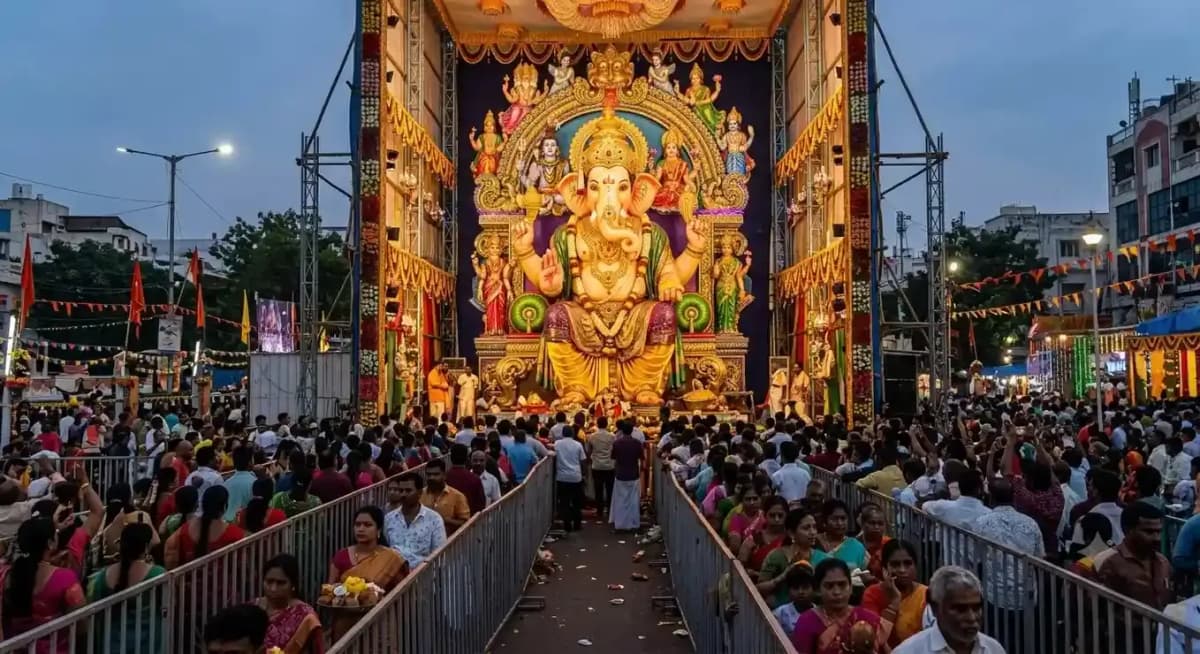
Chavath (also called Parab) is Goa’s largest and most cherished festival, and it is unlike the mandal-centred Ganeshotsav elsewhere. It is overwhelmingly home-centric: nearly every Hindu household installs a Ganpati, and the defining tradition is the matoli — a canopy hung above the idol, laden with local produce.
- Chavath (Ganesh Chaturthi) 2026Monday, 14 September 2026
- Local namesChavath / Parab
- Defining traditionThe matoli canopy
- Visarjan cycle1.5, 5, 7, 11 or 21 days (varies by family)
The matoli
The matoli is a wooden-framed canopy suspended above the Ganpati, traditionally decorated with a rich variety of local, seasonal and wild produce — fruits, vegetables, forest items, flowers and creepers. It celebrates Goa’s biodiversity and the harvest, and its assembly is a beloved family ritual. Typical matoli items include seasonal fruits such as banana, guava, custard apple, wild jackfruit and star fruit; vegetables and creepers; ears of grain; and forest produce gathered for the occasion, along with garlands and flowers. Families source these from the special Chavath bazaars in the days before the festival and tie them onto the frame above the idol.
The Chavath bazaars
In the days before Chavath, special markets spring up in Panaji, Margao, Mapusa and Ponda, selling matoli produce, clay idols, puja items, flowers and festival foods. Going to the Chavath bazaar to gather the matoli items is part of the celebration — visit early for the best fresh produce.
Home Ganpati and temple worship
Families perform the sthapana at home, worship with daily aartis, and gather across generations. Goa also has major Ganpati temples, such as the Shri Mahaganapati Temple at Khandola and the temple cluster around Ponda, which see festival worship. Confirm temple arrangements locally.
Goan Chavath foods
The naivedya is distinctively Goan: patoli (rice and coconut-jaggery parcels steamed in turmeric leaves), neuri (sweet fried karanji), modak, and other traditional sweets and dishes prepared for the family and offered to Lord Ganesh.
Visarjan and eco idols
Goan families immerse their Ganpati after 1.5, 5, 7, 11 or 21 days, in wells, village ponds, rivers or the sea depending on local custom, following the Goa State Pollution Control Board’s conditions. Goa has actively promoted natural clay idols; choose eco-friendly clay Ganpatis. Public installations require permission — note that in much of Goa this is at the village panchayat level rather than a city corporation, alongside police and other clearances. Always confirm the current requirements with the authority and never proceed without permission.
Chavath cultural life
The festival is filled with traditional performances — fugdi, dhalo and folk aartis — sung and danced by women in the courtyards and temples, giving Goan Chavath its distinctive warmth.
Related
See the main Ganesh Chaturthi / Vinayaka Chavithi 2026 complete guide for the date (14 September), madhyahna muhurat, puja vidhi and visarjan.
Frequently Asked Questions
When is Chavath 2026 in Goa?
Chavath (Ganesh Chaturthi) 2026 is on Monday, 14 September 2026. Families immerse their Ganpati after 1.5, 5, 7, 11 or 21 days, depending on custom.
What is the matoli?
The matoli is a canopy suspended above the Ganpati, decorated with local, seasonal and wild produce — fruits, vegetables, forest items and flowers — celebrating Goa’s biodiversity and the harvest.
What items go on the matoli?
Typical items include seasonal fruits (banana, guava, custard apple, wild jackfruit, star fruit), vegetables and creepers, ears of grain, forest produce, and garlands, sourced from the Chavath bazaars.
Where are the Chavath bazaars?
Special Chavath markets appear in Panaji, Margao, Mapusa and Ponda in the days before the festival, selling matoli produce, clay idols, puja items and festival foods.
How is Goan Chavath different from Ganeshotsav elsewhere?
It is home-centric rather than mandal-centric — nearly every household installs a Ganpati under a matoli — and it has distinctive foods, the varied day-cycle, and folk performances like fugdi and dhalo.
What foods are made for Chavath?
Distinctively Goan dishes include patoli (steamed in turmeric leaves), neuri (sweet karanji) and modak, prepared as naivedya and shared by the family.
Where do Goans immerse their Ganpati?
In wells, village ponds, rivers or the sea, depending on local custom, following Goa State Pollution Control Board conditions. Eco-friendly clay idols are encouraged.
Do public Ganpati installations need permission in Goa?
Yes. Public installations need permission — often at the village panchayat level in much of Goa, alongside police and other clearances. Confirm current requirements with the authority and never proceed without them.
You might also like
Ganesh Chaturthi in India: Celebrations Across the Country (2026 Guide)
How the UK Celebrated Ganesh Chaturthi & Visarjan 2026: A City-Wise Guide
How the USA Celebrated Ganesh Chaturthi & Visarjan 2026: A City-Wise Guide