How Sikhs Celebrate Diwali 2025: Bandi Chhor Divas - The Festival of Liberation
While millions across India light lamps to celebrate Lord Rama's return to Ayodhya, the Sikh community observes Diwali with equal fervor but for a profoundly…
While millions across India light lamps to celebrate Lord Rama's return to Ayodhya, the Sikh community observes Diwali with equal fervor but for a profoundly…
While millions across India light lamps to celebrate Lord Rama's return to Ayodhya, the Sikh community observes Diwali with equal fervor but for a profoundly different reason. For Sikhs, Diwali is celebrated as Bandi Chhor Divas (Prisoner Release Day), which in 2025 will take place on October 21st, commemorating one of the most inspiring episodes in Sikh history—the release of Guru Hargobind Sahib Ji and 52 Hindu princes from Mughal imprisonment in 1619. This celebration embodies the Sikh values of courage, justice, compassion, and standing up for the oppressed, transforming the festival of lights into a powerful statement about human rights and spiritual liberation.
The Historic Significance of Bandi Chhor Divas
The Story Behind the Festival
Bandi Chhor Divas was celebrated when Guru Hargobind was released from Gwalior prison with 52 prisoners and princes holding on to his robe or cape with 52 ropes. The story of this remarkable liberation is deeply intertwined with the history of Sikh resistance against Mughal oppression.
Guru Hargobind Sahib's father Guru Arjan Dev was arrested under the orders of the Mughal Emperor Jahangir and he was asked to convert to Islam. His refusal led to his torture and execution in 1606 CE. Following this martyrdom, Guru Hargobind, on 24 June 1606, at age 11, was crowned as the sixth Sikh Guru. At his succession ceremony, he put on two swords: one indicated his resolve to maintain spiritual authority (piri) and the other, his temporal authority (miri).
This young Guru transformed Sikhism by emphasizing both spiritual devotion and martial readiness. His imprisonment at Gwalior Fort came about when the Mughal authorities grew concerned about his growing influence and the strengthening of the Sikh community. However, the exact circumstances and duration of his imprisonment remain debated among historians, with some accounts suggesting he was held between 1617 and 1619.
The Extraordinary Act of Compassion
What makes this story truly remarkable is not just Guru Hargobind's release, but his insistence on securing freedom for all 52 Hindu princes imprisoned with him. When Emperor Jahangir offered to release the Guru, he refused to leave unless all the innocent prisoners were freed alongside him.
The Mughal authorities, trying to create an impossible condition, declared that only those who could hold onto the Guru's cloak as he exited the fort would be freed. In response, Guru Hargobind had a special cloak designed with 52 tassels—one for each prince to grasp. Thus, he led all 52 rulers to freedom without any conflict or bloodshed, demonstrating that true leadership means ensuring the liberation of all, not just oneself.
When Guru Hargobind returned to Amritsar after the release, it was the day of Diwali. The people of the city welcomed him with great joy. They lit hundreds of lamps around the Harmandir Sahib (Golden Temple) to celebrate his safe return and the liberation of the 52 princes.
The Spiritual Meaning
Bandi Chhor Divas commemorates Guru Hargobind Sahib Ji's release from Gwalior Fort alongside 52 innocent princes, transforming Diwali for Sikhs into a day that honors compassion, liberation, and selfless courage. The festival teaches several profound lessons:
- Justice and Equality: Standing up for the rights of all, regardless of religion or status
- Selfless Leadership: True freedom means ensuring liberation for everyone
- Courage in Adversity: Maintaining spiritual principles even under persecution
- Compassion Over Self-Interest: Choosing collective freedom over personal gain
- Miri-Piri: The balance between temporal power and spiritual authority
Diwali 2025: Dates and Significance
In 2025, Bandi Chhor Diwas will take place on October 21st. This day marks the day when in 1619 the 6th Guru, Guru Hargobind, after being released from prison along with 52 Hindu princes arrives at the holy city of Amritsar.
While the Hindu Diwali falls on October 20, 2025, the Sikh celebration of Bandi Chhor Divas is observed on October 21st, following the lunar calendar and commemorating the specific day when Guru Hargobind arrived in Amritsar.
The Magnificent Golden Temple Celebration
Transformation into a Sea of Light
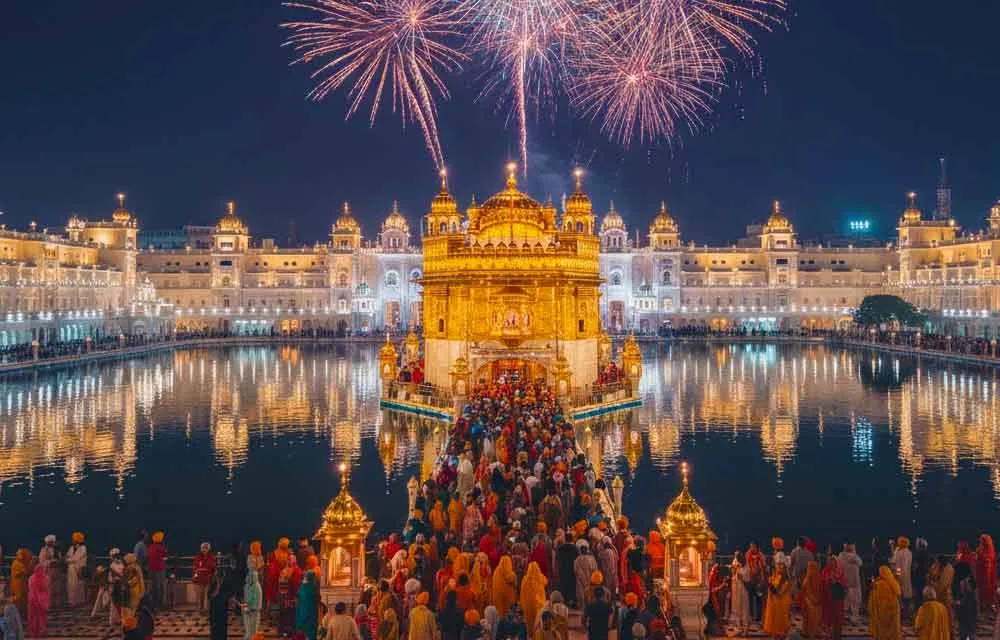
The epicenter of Sikh Diwali celebrations is undoubtedly the Harmandir Sahib (Golden Temple) in Amritsar, Punjab. The Golden Temple, in itself, is a beautiful marvel to see. But on the day of Diwali, Golden Temple is so illuminated and serene as if gods themselves were showering the light.
The entire temple, including the four entrances, the parikrama (circumambulation path), and the holy pool, is adorned with millions of oil lamps and candles. The sight of the gilded temple shimmering in the glow of these lamps is nothing short of breath taking. The reflection of the illuminated temple on the tranquil Sarovar adds to the enchantment.
The already golden structure becomes even more radiant, with every architectural detail highlighted by the warm glow of thousands of traditional diyas (clay oil lamps). The sacred pool surrounding the temple reflects this illumination, creating a doubled spectacle where heaven and earth seem to merge in a symphony of light.
The Evening Spectacle
The night kicks off with a wonderful display of fireworks best seen from the roof tops of surrounding buildings. Within the Golden temple Complex, pilgrims light thousands of candles around the holy pond and many brave the chilly weather and take a dip in the pond as well.
The evening celebrations include:
- Special Kirtan Sessions: Continuous devotional singing from the Guru Granth Sahib
- Akhand Paath: Many gurdwaras organize continuous 48-hour readings of the holy scripture
- Fireworks Display: A spectacular show illuminating the Amritsar sky
- Community Participation: Thousands of devotees lighting diyas together
- Holy Dip: Many take ritual baths in the Amrit Sarovar (sacred pool)
Accessibility and Inclusivity
One of the most remarkable aspects of the Diwali celebration at the Golden Temple is its inclusivity. The Golden Temple's principle of welcoming all people, regardless of religion, caste, creed, or nationality, is beautifully exemplified during Bandi Chhor Divas. Hindus, Muslims, Christians, and people of all faiths participate in the celebrations, lighting lamps and experiencing the spiritual atmosphere.
Traditional Sikh Diwali Celebrations
Home Preparations
In the weeks leading up to Bandi Chhor Divas, Sikh families engage in thorough preparations:
Cleaning and Decoration:
- Deep cleaning of the entire house, symbolizing the removal of negative energies
- Whitewashing or repainting walls
- Creating rangoli designs at the entrance
- Decorating with marigold flowers and mango leaves
- Installing strings of lights and lanterns
Spiritual Preparation:
- Increased prayer and meditation
- Reading from the Guru Granth Sahib
- Listening to kirtan (devotional music)
- Reflecting on Guru Hargobind's teachings
- Teaching children the history of Bandi Chhor Divas
The Day of Celebration
Morning Rituals:
- Early rising and ritual bathing
- Wearing new or freshly washed clothes, often traditional Punjabi attire
- Visiting the local gurdwara for morning prayers
- Participating in or listening to Akhand Paath readings
Afternoon Activities:
- Preparation of special foods and sweets
- Decorating homes with diyas and candles
- Arranging the family puja area with images of the Gurus
- Setting up small models of the Golden Temple in homes
Evening Ceremonies: On Bandi Chhor Divas, Sikh communities gather for kirtan (hymns) and Akhand Paath (continuous scripture reading), offering prayers for enlightenment and courage.
The evening includes:
- Lighting of diyas throughout the home and gurdwara
- Special evening prayers (Rehras Sahib and Kirtan Sohila)
- Ardas (congregational prayer) for peace and prosperity
- Distribution of Karah Prasad (sacred sweet offering)
- Community meals and celebrations
Gurdwara Celebrations Worldwide
Special Programs and Services
In addition to Nagar keertan (a street procession) and an Akhand paath (a continuous reading of Guru Granth Sahib), Bandi Chhor (Shodh) Divas is celebrated with a fireworks display.
Gurdwaras around the world organize elaborate celebrations:
Nagar Kirtan (Religious Procession):
- Colorful street processions featuring the Guru Granth Sahib
- The Panj Pyare (Five Beloved Ones) leading in traditional dress
- Gatka demonstrations (Sikh martial arts displays)
- Devotional singing and music
- Distribution of prasad to onlookers
- Community members walking barefoot as a sign of devotion
Continuous Worship:
- Round-the-clock kirtan sessions
- Special recitations of shabads (hymns) related to liberation
- Lectures and talks on Sikh history
- Children's programs teaching about Bandi Chhor Divas
- Multi-faith dialogues on freedom and justice
Langar (Community Kitchen): Serve or volunteer in the langar (community kitchen) to embrace humility and equality. Sharing food is an act of compassion that reflects Sikh values worldwide.
The langar during Bandi Chhor Divas is particularly elaborate:
- Extended service hours to accommodate large crowds
- Special festive dishes alongside regular meals
- Traditional Punjabi sweets like jalebi, gulab jamun, and kheer
- Volunteers from the community serving all visitors
- No discrimination based on religion, caste, or economic status
Traditional Foods and Sweets
Sikh families prepare elaborate feasts for Bandi Chhor Divas, combining devotion with culinary celebration:
Savory Dishes
Langar Staples:
- Dal Makhani (black lentils in creamy tomato gravy)
- Chole (spicy chickpea curry)
- Kadhi Pakora (yogurt-based curry with fritters)
- Rajma (red kidney beans in thick gravy)
- Mixed Vegetable Curry
Punjabi Specialties:
- Makki di Roti with Sarson da Saag (cornbread with mustard greens)
- Paneer Tikka (marinated cottage cheese)
- Aloo Paratha (stuffed potato flatbread)
- Punjabi Samosas
- Pakoras (vegetable fritters)
Sweet Offerings
Traditional Sweets:
- Karah Prasad: The sacred sweet made from wheat flour, ghee, and sugar
- Pinni: Traditional Punjabi sweet balls made from wheat flour, ghee, and jaggery
- Panjiri: Nutritious sweet preparation with whole wheat flour, ghee, and nuts
- Besan Ladoo: Chickpea flour balls sweetened with jaggery
- Gajrela: Carrot halwa with milk, ghee, and dry fruits
Festive Desserts:
- Jalebi (crispy sweet spirals soaked in syrup)
- Gulab Jamun (milk solid dumplings in sweet syrup)
- Kheer (rice pudding with saffron and cardamom)
- Suji Halwa (semolina pudding)
- Phirni (ground rice pudding)
- Barfi (milk-based confection in various flavors)
The Chhappan Bhog Tradition
On Govardhan Puja (the day after Diwali), many Sikh families also observe the tradition of preparing 56 different dishes as an offering, reflecting the cultural syncretism of Punjab where Sikh and Hindu traditions often interweave harmoniously.
Regional Variations in Sikh Diwali Celebrations
Punjab - The Heartland
In Punjab, particularly in Amritsar, The city Amritsar celebrates every festival with great delight, but Diwali celebrations in the city are one of a kind.
Amritsar Celebrations:
- Mass gatherings at the Golden Temple from dawn to midnight
- The entire city illuminated with lights and decorations
- Heritage Street near the Golden Temple becomes a vibrant marketplace
- Traditional melas (fairs) with food stalls, games, and cultural performances
- Visits to historical gurdwaras like Tarn Taran Sahib
Rural Punjab:
- Village-wide celebrations with community bonfires
- Traditional folk performances including Bhangra and Giddha
- Agricultural thanksgiving combined with spiritual observance
- Horse and livestock fairs
- Wrestling matches and Gatka demonstrations
Delhi and National Capital Region
- Large-scale celebrations at major gurdwaras like Bangla Sahib and Sis Ganj Sahib
- Nagar Kirtans through historic Delhi neighborhoods
- Integration of urban and traditional celebration styles
- Multi-faith participation reflecting Delhi's cosmopolitan character
- Corporate-sponsored community events
International Diaspora
Canada (particularly Toronto and Vancouver):
- Gurdwaras organize elaborate programs accommodating large Punjabi populations
- Nagar Kirtans through city streets with municipal support
- Community centers hosting cultural programs
- Blend of traditional and contemporary celebration styles
- Youth involvement in organizing and planning
United Kingdom (London, Birmingham, Leicester):
- Major celebrations at Southall, Hounslow, and other Sikh neighborhoods
- Gurdwaras open to wider British community
- Cultural exchange programs introducing Bandi Chhor Divas to non-Sikhs
- Traditional foods served alongside British tea and snacks
- Schools acknowledging the festival
United States (California, New York, Texas):
- Silicon Valley gurdwaras attracting tech-savvy diaspora
- Family-oriented celebrations accommodating American work schedules
- Educational programs for second-generation Sikhs
- Interfaith events promoting understanding
- Digital live-streaming for those unable to attend
Australia and New Zealand:
- Outdoor celebrations taking advantage of spring weather
- Barbecues combined with traditional langar
- Beach gatherings with diya lighting ceremonies
- Strong emphasis on teaching younger generation
The Spiritual Practices and Gurbani
Sacred Verses for Bandi Chhor Divas
Illuminating homes is not only a celebration, but a reminder that the true light is spiritual freedom and kindness towards all.
Specific verses from the Guru Granth Sahib are recited during Bandi Chhor Divas:
The Liberator Verse: ਸਤਿਗੁਰੁ ਬੰਦੀਛੋੜੁ ਹੈ ਜੀਵਣ ਮੁਕਤਿ ਕਰੈ ਓਡੀਣਾ "Satiguru Bandi Chhorru Hai Jeevan Mukti Karai Odiinaa" Meaning: The True Guru is the Liberator, granting freedom and spiritual liberation to devotees—those blessed with the Guru's teachings find inner peace and freedom from all bondages
The Eternal Lamp: ਸਬਦ ਦੀਪਕ ਵਰਤੈ ਤਿਹੁ ਲੋਇ ਜੋ ਚਾਖੈ ਸੋ ਨਿਰਮਲ ਹੋਇ "Sabad Deepak Vartai Tihu Loi Jo Chaakhai So Nirmal Hoi" Meaning: The Word of the Guru is the eternal lamp that lights all realms; those who realize this become truly pure and spiritually liberated
Meditation and Reflection
Sikhs use Bandi Chhor Divas as an opportunity for deep spiritual reflection:
- Contemplation on Freedom: Reflecting on what true liberation means—freedom from ego, attachment, and ignorance
- Simran (Meditation): Repetition of Waheguru (Wonderful Lord) or other sacred mantras
- Self-Examination: Reviewing one's conduct over the past year
- Gratitude Practice: Expressing thankfulness for blessings received
- Commitment to Justice: Renewing dedication to standing up for the oppressed
Unique Sikh Traditions and Customs
The Diya Lighting Ceremony
While lighting diyas is common across Diwali celebrations, Sikhs infuse it with specific meanings:
- Physical Light: Representing the illumination brought by the Guru's teachings
- Spiritual Awakening: Symbolizing the dispelling of ignorance
- Liberation: Commemorating the freedom of Guru Hargobind and the 52 princes
- Unity: The collective lighting emphasizing community solidarity
- Hope: Lighting the way toward a just and compassionate world
The 52 Diyas Tradition
Some Sikh families light exactly 52 diyas at their entrance or puja area, each representing one of the freed princes, symbolizing:
- The Guru's compassion for all
- The principle of collective liberation
- Interfaith harmony (as the princes were Hindu)
- The importance of standing for others' rights
Gatka Demonstrations
Gatka, the traditional Sikh martial art, features prominently in Bandi Chhor Divas celebrations:
- Demonstrations at gurdwaras and community centers
- Youth training programs during festival season
- Symbolic representation of the Miri-Piri (temporal-spiritual) balance
- Teaching self-defense as a form of protecting dharma
- Preserving ancient warrior traditions
The Golden Temple Model
Many Sikh homes, especially those unable to visit Amritsar, create miniature models of the Golden Temple:
- Placed in the center of home celebrations
- Surrounded by 52 small diyas
- Decorated with flowers and lights
- Becoming the focal point for family prayers
- Teaching children about Sikh heritage
Modern Adaptations and Contemporary Practices
Digital Age Celebrations
Virtual Participation:
- Live streaming of Golden Temple ceremonies
- Online Akhand Paath sessions
- WhatsApp groups sharing greetings and Gurbani
- YouTube channels offering educational content about Bandi Chhor Divas
- Virtual reality experiences of the Golden Temple
Social Media Engagement:
- Hashtags like #BandiChhorDivas and #SikhDiwali trending
- Sharing historical stories and Guru's teachings
- Digital greeting cards and wishes
- Educational infographics explaining the festival
- Online fundraising for charitable causes
Eco-Friendly Celebrations
In recent years, there has been a growing awareness of the environmental impact of Diwali celebrations, particularly the use of firecrackers. In response to this, the Golden Temple has taken steps to make its Diwali celebration eco-friendlier. They encourage visitors to avoid firecrackers and promote the use of traditional lamps and candles instead.
Modern eco-conscious practices include:
- Clay diyas instead of plastic decorations
- Solar-powered LED lights
- Minimal firecracker usage or complete avoidance
- Organic rangoli colors
- Biodegradable decorations
- Community cleanups after celebrations
- Tree planting initiatives
Youth Engagement
Second and third-generation Sikhs worldwide are finding creative ways to connect with Bandi Chhor Divas:
Educational Programs:
- History workshops at gurdwaras
- Storytelling sessions for children
- Quiz competitions on Sikh history
- Documentary screenings
- Guest lectures by historians
Cultural Activities:
- Youth-led Nagar Kirtans
- Traditional music and dance performances
- Gatka training camps
- Punjabi language classes
- Art exhibitions depicting Sikh history
Social Service Projects:
- Food drives for the homeless
- Blood donation camps
- Visits to hospitals and care homes
- Free medical camps
- Educational support for underprivileged children
The Interfaith Dimension
Inclusivity and Universal Values
Though the reasons for celebration differ, the festival shows how Diwali and Bandi Chhor Divas bring communities together. For Hindus, Sikhs, and Jains, lighting lamps on this day symbolizes the victory of truth over falsehood and good over evil.
The Sikh celebration of Diwali embodies several universal principles:
Religious Harmony:
- The story itself involves Hindu princes being liberated
- Gurdwaras welcome people of all faiths
- Shared symbolism of light over darkness
- Mutual respect among communities
Social Justice:
- Standing up for oppressed minorities
- Fighting against tyranny and injustice
- Protecting human rights regardless of religion
- Collective liberation over individual gain
Compassionate Leadership:
- Putting others' wellbeing before personal interest
- Leading by example
- Courage combined with compassion
- Wisdom in negotiation and conflict resolution
Community Outreach
Many gurdwaras use Bandi Chhor Divas as an opportunity for interfaith dialogue:
- Open house events for non-Sikh neighbors
- Explanatory materials about Sikh history
- Interfaith prayer services
- Cultural exchange programs
- Shared langar meals with diverse communities
Charitable and Service Dimensions
Seva (Selfless Service)
Bandi Chhor Divas emphasizes seva as a core spiritual practice:
At Gurdwaras: Serving or volunteering in the langar (community kitchen) to embrace humility and equality
- Cooking and serving langar
- Cleaning utensils and spaces
- Parking assistance and crowd management
- Shoe keeping services
- Distribution of prasad
Community Service:
- Organizing free medical camps
- Providing clothes and blankets to the needy
- Blood donation drives
- Free coaching classes for students
- Visiting prisons and juvenile homes
- Supporting elderly and disabled community members
Donations and Charity
The festival emphasizes giving:
- Donations to gurdwaras for langar and programs
- Supporting Sikh charitable organizations
- Sponsoring education for underprivileged children
- Contributing to disaster relief funds
- Supporting healthcare initiatives
- Funding historical gurdwara restorations
Lessons and Modern Relevance
Timeless Teachings
Bandi Chhor Divas offers profound lessons for contemporary times:
Freedom and Human Rights: The story resonates powerfully in today's world where:
- Human rights violations continue globally
- Religious persecution remains a reality
- Political prisoners languish in jails
- Marginalized communities face oppression
Compassionate Leadership: Guru Hargobind's example teaches modern leaders to:
- Prioritize collective welfare over personal gain
- Stand up for justice even at personal cost
- Use wisdom and negotiation over violence
- Ensure inclusive liberation, not selective freedom
Interfaith Harmony: The liberation of Hindu princes by a Sikh Guru demonstrates:
- Religious boundaries should not limit compassion
- Fighting for justice transcends faith differences
- True spirituality embraces all humanity
- Cooperation across communities strengthens society
Relevance in 2025
As Sikhs celebrate Bandi Chhor Divas in 2025, the festival's message remains urgently relevant:
Global Context:
- Rising authoritarianism worldwide
- Increasing religious intolerance
- Human rights challenges
- Need for compassionate leadership
- Importance of community solidarity
Personal Application:
- Liberation from ego and attachment
- Freedom from negative thought patterns
- Standing up against injustice in daily life
- Practicing compassion in ordinary interactions
- Balancing worldly responsibilities with spiritual growth
Preparing for Bandi Chhor Divas 2025
Global Sikhs can celebrate Bandi Chhor Divas respectfully by focusing on its deep spiritual message, connecting the festivities to the Guru's legacy of compassion, justice, and liberation.
Respectful Celebration Guidelines
Participate in special prayers, kirtan (devotional singing), and listen to the story of Guru Hargobind Sahib Ji's selfless courage. Many communities organize Akhand Paaths (continuous readings of the Guru Granth Sahib).
Spiritual Preparation:
- Learn the history and significance of Bandi Chhor Divas
- Read about Guru Hargobind's life and teachings
- Practice daily meditation and prayer
- Teach children about Sikh values
- Reflect on personal and collective liberation
Community Engagement:
- Participate in gurdwara programs and services
- Volunteer for langar preparation and serving
- Join Nagar Kirtan processions
- Support community charitable initiatives
- Invite non-Sikh friends to experience celebrations
Personal Observance: Light candles or diyas at home and the Gurdwara, remembering that physical lights symbolize spiritual illumination—the triumph of good over evil and light over darkness
- Clean and decorate homes mindfully
- Prepare traditional foods with devotion
- Light 52 diyas commemorating the liberated princes
- Share the Bandi Chhor Divas story with family
- Practice acts of kindness and justice
Conclusion: A Festival of Universal Liberation
Bandi Chhor Divas is not just a historical event—it is a lesson for humanity. As Sikhs worldwide prepare to celebrate Bandi Chhor Divas on October 21, 2025, they honor not just a historical event but a timeless principle—that true liberation means ensuring freedom for all, that courage must be tempered with compassion, and that standing up for justice is the highest form of devotion.
The illumination of the Golden Temple and gurdwaras across the world serves as a beacon reminding humanity that even in the darkest times, the light of courage, compassion, and justice can prevail. The story of Guru Hargobind refusing freedom unless all prisoners were freed alongside him offers a powerful counter-narrative to today's individualistic culture, emphasizing that our liberation is interconnected with others'.
As millions of Sikhs light diyas on this sacred day, they are not merely commemorating a 400-year-old event. They are renewing their commitment to the principles their Guru embodied—fighting for the oppressed, standing against tyranny, maintaining both spiritual devotion and temporal strength, and ensuring that freedom and justice prevail for all people, regardless of faith or background.
In 2025, as the Golden Temple sparkles with millions of lights reflected in the sacred Amrit Sarovar, as Nagar Kirtans wind through streets in Punjab and diaspora communities worldwide, as families gather to light 52 diyas and share traditional meals, Bandi Chhor Divas continues its powerful message: that true celebration lies not in personal enjoyment alone, but in working toward collective liberation, justice, and compassion for all humanity.
May the lights of Bandi Chhor Divas 2025 illuminate the path toward freedom, justice, and universal compassion. Waheguru Ji Ka Khalsa, Waheguru Ji Ki Fateh!
For more insights on Hindu and Sikh festivals and traditions, visit www.hindutone.com
Frequently Asked Questions
When is How Sikhs Celebrate Diwali?
How Sikhs Celebrate Diwali is observed on its traditional tithi in the Hindu lunar calendar; refer to the year's panchang for the exact date in your region.
What is the significance of How Sikhs Celebrate Diwali?
While millions across India light lamps to celebrate Lord Rama 's return to Ayodhya, the Sikh community observes Diwali with equal fervor but for a profoundly different reason. For Sikhs, Diwali is celebrated as Bandi Chhor Divas (Prisoner Release Day), which in 2025 will take place on October 21st, commemorating one of the most inspiring episodes in Sikh hi
How is How Sikhs Celebrate Diwali celebrated?
Devotees observe it with puja, fasting or special offerings, visiting temples, chanting mantras, and gathering with family. Customs vary by region and tradition.
What should devotees do on How Sikhs Celebrate Diwali?
Take a sacred bath, perform the day's puja and charity (dana), observe any prescribed fast, and chant mantras with sincere devotion.
You might also like
Gita Jayanti 2026 Prasad Recipes — Tulsi-Honoring Sweets, Krishna's Favourites & December 10 Bhog Plate
Shani Deva Temples Worldwide & Must-Performed Rituals — Complete Devotee's Guide
Maha Shivratri 2026 Vrat Recipes — Sabudana Khichdi, Singhada Halwa, Phalahara Foods Complete Fasting Guide