

Eco-Friendly Clay Ganesha Murti in the USA 2026: Sourcing & Home Visarjan
A practical guide to choosing an eco-friendly clay Ganesha in America for 2026 — why natural clay matters, how to order in time, and how to immerse it cleanly at home.
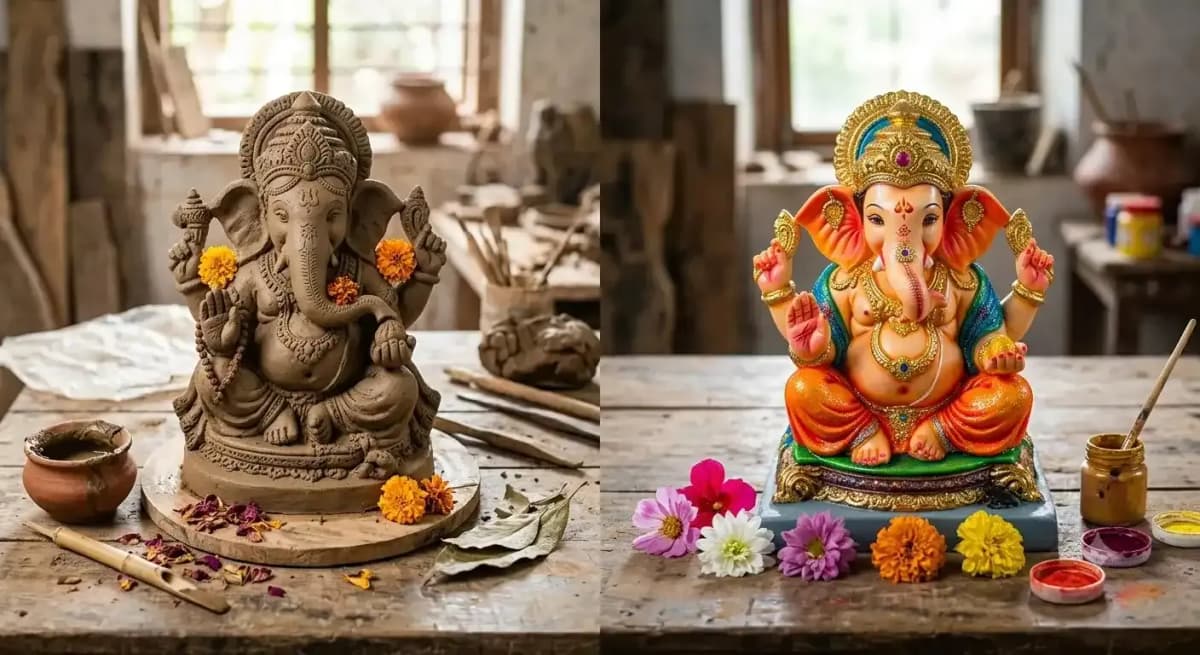
A practical guide to choosing an eco-friendly clay Ganesha in America for 2026 — why natural clay matters, how to order in time, and how to immerse it cleanly at home.
Quick answer: For Ganesh Chaturthi 2026 (14 September), choose a natural Shadu-clay Ganesha rather than Plaster of Paris: it dissolves cleanly for home or temple immersion. Order early from a reputable maker, and immerse in a home tub, using the clay water for plants.
An eco-friendly Ganesha lets US families celebrate fully while protecting local water and soil. This guide explains what makes a murti eco-friendly, how to source one in time for 14 September 2026, and how to immerse it responsibly at home.
Natural clay vs Plaster of Paris
Natural Shadu clay dissolves in water within hours and carries no harmful chemicals, which is why it is preferred for immersion. Plaster of Paris (PoP) is cheaper and lighter but does not dissolve easily, and PoP idols often use chemical paints that can pollute water. For an eco-friendly celebration, choose unpainted or naturally coloured clay.
| Feature | Natural clay (Shadu) | Plaster of Paris (PoP) |
|---|---|---|
| Dissolves in water | Yes, within hours | No, persists for long periods |
| Paints | Natural / water-based | Often chemical |
| Home immersion | Easy and clean | Not recommended |
| Eco impact | Minimal | Higher pollution risk |
How to source an eco Ganesha in the USA
- Order early — clay murtis are handmade and popular ones sell out weeks before the festival.
- Buy from a reputable eco-murti maker or a temple bazaar that states the murti is natural clay.
- For apartments, choose a small tabletop size that fits a home tub for immersion.
- Consider a "tree Ganesha" with embedded seeds, or a reusable brass/panchaloha murti with a small clay token for symbolic visarjan.
- Check shipping timelines carefully so the murti arrives well before 14 September 2026.
Avoid stating you will hotlink or copy temple photos; if you want images of your murti, photograph your own. Support makers who disclose their clay and paint materials.
Immersing your clay Ganesha at home
- Perform the final aarti and prayers before immersion.
- Immerse the murti in a bucket or tub of water and let the clay dissolve fully.
- Use the clay-rich water for potted plants or a garden bed.
- Set aside cloth, ornaments and any non-clay parts to reuse next year.
For immersion timing and US water-body rules, see Ganesh visarjan 2026 in the USA. To set up your shrine, see Ganesh sthapana at home in America.
Related
See the main Ganesh Chaturthi / Vinayaka Chavithi 2026 complete guide for the date (14 September), madhyahna muhurat, puja vidhi and visarjan.
Frequently Asked Questions
What makes a Ganesha murti eco-friendly?
An eco-friendly Ganesha is made of natural Shadu clay with natural or water-based colours, so it dissolves cleanly in water without polluting soil or water bodies.
When should I order my eco Ganesha for 2026?
Order several weeks ahead. Handmade clay murtis are popular and sell out, so buy early to ensure delivery before 14 September 2026.
Is a PoP idol bad for the environment?
PoP does not dissolve easily and its chemical paints can harm water and soil, so it is discouraged for immersion. Natural clay is the eco-friendly choice.
Can I immerse a clay Ganesha in my home?
Yes. Immerse it in a bucket or tub, let the clay dissolve over a few hours, and use the clay water for plants — a clean, apartment-friendly method.
What is a tree or seed Ganesha?
A tree Ganesha is a clay murti with embedded seeds; after immersion in a pot, the seeds sprout, turning the visarjan into a growing plant.
Can I reuse a Ganesha every year?
Yes. A brass or panchaloha murti can be worshipped yearly with a small clay token immersed symbolically, which is both traditional and eco-friendly.
Where can I buy an eco Ganesha in the US?
Reputable eco-murti makers and many temple bazaars offer natural clay murtis. Choose sellers who clearly state the clay and paint materials.
How big a murti suits an apartment?
A small tabletop murti that fits a home bucket or tub is ideal for apartments, making home immersion easy and mess-free.
You might also like

How the USA Celebrated Ganesh Chaturthi & Visarjan 2026: A City-Wise Guide
How the UK Celebrated Ganesh Chaturthi & Visarjan 2026: A City-Wise Guide

Navratri 2026 USA: Dates, Garba, Dandiya, Durga Puja & NRI Celebration Guide