Ganesh Visarjan 2026 in the USA: Eco-Immersion & Water-Body Rules
Ganesh Visarjan 2026 falls on 25 September. Here is how immersion works in America — temple eco-tanks, home visarjan in a tub, and the water-body rules US devotees should respect.
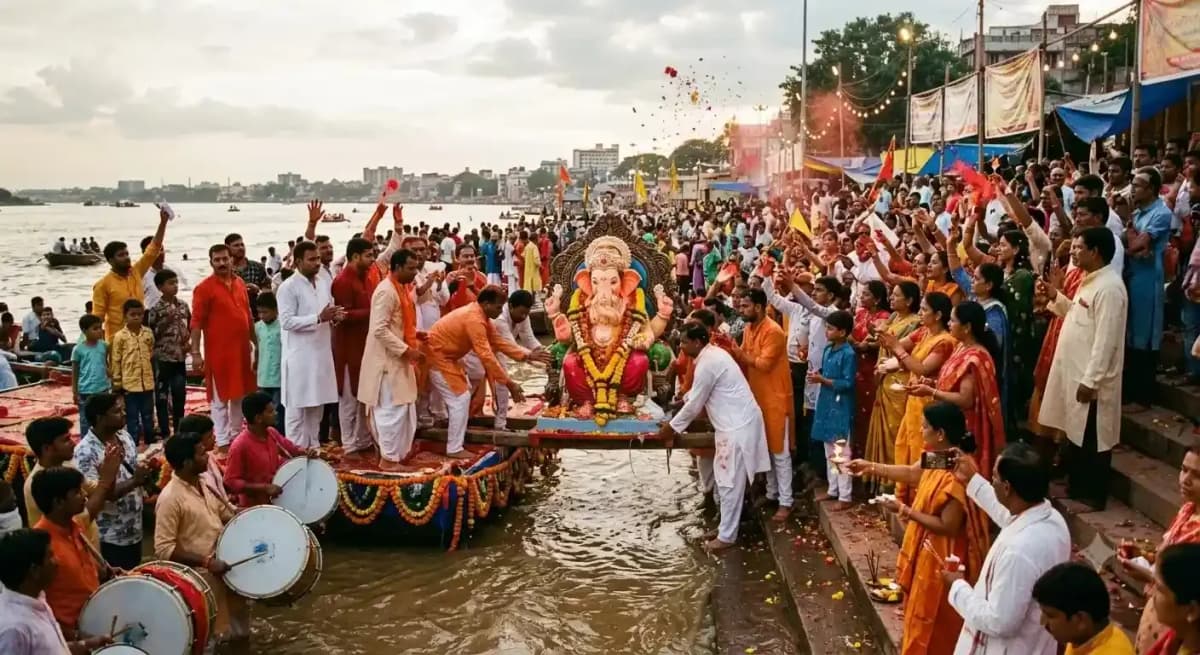
Ganesh Visarjan 2026 falls on 25 September. Here is how immersion works in America — temple eco-tanks, home visarjan in a tub, and the water-body rules US devotees should respect.
Quick answer: Ganesh Visarjan 2026 on Anant Chaturdashi is Friday, 25 September 2026. In the USA, most immersions use temple eco-tanks or a home tub with clay recycling, because natural lakes, rivers and the ocean are protected under the Clean Water Act and local ordinances.
Visarjan — the ceremonial immersion of the Ganesh murti — marks the joyful, tearful close of Ganeshotsav. In the United States, immersion follows the spirit of tradition while respecting American environmental law. This guide covers the 2026 dates, immersion options, and how to do an eco-friendly visarjan at home or at a temple.
- Main visarjan (Anant Chaturdashi)Friday, 25 September 2026
- Common shorter options1.5-day, 3-day, 5-day, 7-day immersions
- Preferred method (US)On-site temple eco-tank or home tub with clay recycling
- Idol materialNatural (Shadu) clay strongly preferred over PoP
When is Ganesh Visarjan 2026?
The grand visarjan on Anant Chaturdashi is Friday, 25 September 2026. Households that keep the murti for a shorter time immerse after 1.5, 3, 5 or 7 days, so US temples often run several immersion days across the festival window. Check your temple’s schedule for its tank timings.
Why US devotees use eco-tanks instead of lakes
In India, murtis are traditionally immersed in rivers, lakes and the sea. In the United States, natural water bodies are protected under the federal Clean Water Act and by state and local ordinances, and Plaster of Paris idols with chemical paints can harm aquatic life. As a result, most American temples set up artificial immersion tanks on their grounds, then recycle or respectfully dispose of the clay. This keeps the tradition alive without violating environmental rules. Ocean immersion, where considered, is tightly regulated (for example by the California Coastal Commission) and generally avoided in favour of tanks.
How to do an eco-friendly home visarjan
- Use a natural clay (Shadu) murti so it dissolves cleanly without chemical paints.
- Fill a large bucket or tub with water and perform the final aarti and prayers.
- Gently immerse the murti and let the clay dissolve fully over a few hours.
- Use the clay-rich water for potted plants or a garden, or dispose of it responsibly; do not pour large clay loads into storm drains.
- Keep any non-dissolvable decorations (cloth, ornaments) aside for reuse.
Temple immersion etiquette
- Follow the temple’s tank schedule and volunteer directions.
- Bring the murti in a clean cloth; remove non-clay ornaments before immersion.
- Keep the procession respectful and clean up after the aarti.
- Ask whether the temple recycles the clay — many US temples do.
Choosing your murti first? See eco-friendly clay Ganesha sourcing in the USA. For the full festival overview, visit the Ganesh Chaturthi 2026 USA guide.
Plantable Seed Ganesha — Grow a Living Blessing
Seed-embedded (plantable) clay idols let the farewell become new life. Instead of dissolving the murti in a bucket, you plant it:
- Place the seed Ganesha directly in a pot filled with good potting soil.
- During the final aarti, pour water slowly over the idol so the clay begins to soften.
- Once it settles, lightly cover it with a little more soil.
- Keep the soil moist (not waterlogged) and place the pot in bright, indirect sunlight.
- Sprouts usually appear in 7 to 15 days — tulsi, marigold, herbs or vegetables, depending on the embedded seeds.
- Water regularly and nurture the plant as a living reminder of Ganesha's presence through the year.
Tip: avoid over-watering (it rots the seeds) and never let the pot dry out completely.
Community Immersion Tanks by US Region
Many temples and Telugu/Marathi cultural associations set up permitted artificial immersion tanks that handle disposal for you. Check the specific temple or association website a few weeks ahead for the 2026 schedule — dates and venues change every year:
- New York / New Jersey — temple and association-run tanks across the tri-state area.
- California — Bay Area and Los Angeles temple immersion events.
- Texas — Houston and Dallas-Fort Worth community tanks.
- Illinois — Chicago-area temples and associations.
- Georgia — Atlanta-metro temple tanks.
- Florida — South Florida and Tampa/Orlando temple events.
Always confirm timing, idol-size limits and any pre-registration directly with the organiser; larger community processions may need city permits secured 4 to 6 weeks in advance.
Symbolic Visarjan When Immersion Isn't Possible
When space, weather or circumstances make physical immersion difficult, a heartfelt symbolic visarjan is fully valid. Offer the final aarti and prayers, mentally release the murti with gratitude, and immerse a small clay token or sprinkle a few drops of water on a permanent metal murti as udvasana. The spiritual essence — detachment, gratitude, and the cycle of arrival and farewell — remains complete.
If You Already Have a Plaster of Paris (PoP) Idol
- Do not immerse a PoP idol in water — it does not dissolve and can violate local rules.
- After the final puja, perform a symbolic udvasana, then wrap the idol respectfully.
- Dispose of it as solid household waste per your local municipal guidelines.
- Switch to natural clay or a seed idol next year to keep the tradition eco-friendly.
Explore the Ganesh Chaturthi 2026 Complete Guide
This page is part of Hindutone’s Ganesh Chaturthi 2026 cluster:
- Complete Ganesh Chaturthi 2026 guide (hub)
- Date & city-wise muhurat
- Ganesh Sthapana (setup at home)
- Vinayaka Vrata Vidhanam (full puja)
- Ganesh Visarjan mantra
- Stories of Ganesha
- Wishes & quotes
Related
See the main Ganesh Chaturthi / Vinayaka Chavithi 2026 complete guide for the date (14 September), madhyahna muhurat, puja vidhi and visarjan.
Frequently Asked Questions
When is Ganesh Visarjan 2026 in the USA?
The main visarjan on Anant Chaturdashi is Friday, 25 September 2026. Shorter 1.5, 3, 5 and 7-day immersions are also common, so temples run several immersion days.
Can I immerse my Ganesh idol in a lake or the ocean in the US?
Generally no. Natural water bodies are protected under the Clean Water Act and local rules, and ocean immersion is tightly regulated. Most temples use on-site eco-tanks instead.
How do I do a home visarjan?
Use a clay murti, immerse it in a bucket or tub with a final aarti, let the clay dissolve over a few hours, and use the clay water for plants or dispose of it responsibly.
Why is PoP discouraged for immersion?
Plaster of Paris does not dissolve easily and its chemical paints can harm water and soil. Natural Shadu clay is preferred because it dissolves cleanly.
Do US temples recycle the immersion clay?
Many do. Temples with artificial tanks often collect and recycle or respectfully dispose of the clay after the festival. Ask your temple about its process.
Can I keep my Ganesha for fewer than 10 days?
Yes. Households commonly immerse after 1.5, 3, 5 or 7 days. The full Ganeshotsav ends on Anant Chaturdashi, 25 September 2026.
What should I do with flowers and decorations after visarjan?
Compost natural flowers where possible and set aside reusable cloth and ornaments. Avoid putting plastic or thermocol into water or drains.
Is symbolic visarjan acceptable?
Yes. Many US families perform a symbolic immersion in a home tub or use a reusable murti with a small clay token, which is fully respectful and environmentally sound.
You might also like
How the USA Celebrated Ganesh Chaturthi & Visarjan 2026: A City-Wise Guide
How the UK Celebrated Ganesh Chaturthi & Visarjan 2026: A City-Wise Guide
Ganesh Chaturthi in India: Celebrations Across the Country (2026 Guide)