

Ganesh Sthapana 2026: Idol Installation, Muhurat and Direction Rules
A step-by-step guide to Ganesh Sthapana 2026 — the chowki and cloth, the kalash, the traditionally preferred Madhyahna window, which way the idol should face, and how pran pratishtha is done at home.
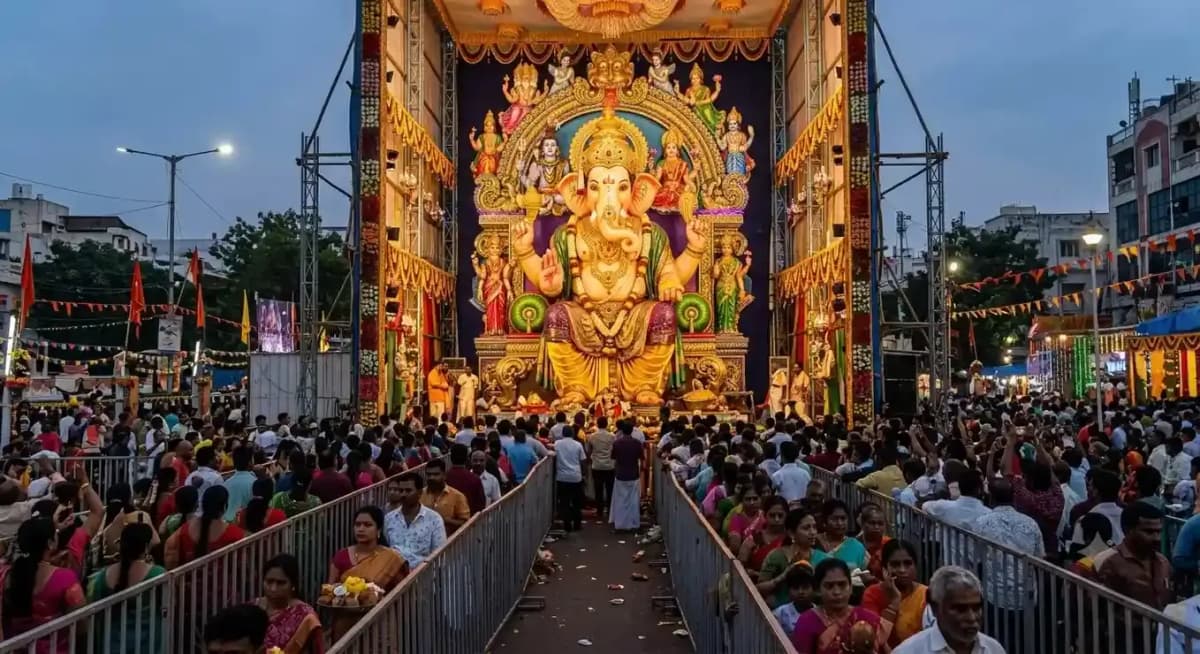
A step-by-step guide to Ganesh Sthapana 2026 — the chowki and cloth, the kalash, the traditionally preferred Madhyahna window, which way the idol should face, and how pran pratishtha is done at home.
Quick answer: Ganesh Sthapana 2026 is done on Monday 14 September 2026, Bhadrapada Shukla Chaturthi. The idol is traditionally installed during the Madhyahna (midday) kaal because Ganesha is said to have been born at midday. Confirm the exact local Madhyahna muhurat from a regional panchang, as timings vary by city.
Ganesh Sthapana is the ceremonial installation of the Ganesha murti at home or in a pandal on the morning of Ganesh Chaturthi. In 2026 the festival falls on Monday, 14 September 2026 (Bhadrapada Shukla Chaturthi), and families across Maharashtra, the Telugu states, Karnataka, Tamil Nadu and North India welcome Bappa with a chowki, a kalash, flowers and the traditional durva grass. Sthapana is the moment the clay or eco-friendly idol is seated, invited and, through a simple pran pratishtha, treated as a living guest for the days of the festival.
The practices below are shared as living tradition, not as a promise of any particular result. Regional customs differ, and every one of them is valid — a Maharashtrian household, a Telugu family doing Vinayaka Chavithi, and a Tamil home each keep their own beautiful details. Use this as a framework and adapt it to your family's paddhati.
When to do Ganesh Sthapana in 2026
The traditionally preferred window for installing Ganesha is the Madhyahna kaal — the midday portion of the day — because scripture holds that Ganesha was born at midday. Because the Madhyahna window is calculated from local sunrise and sunset, it is different for every city and cannot be reduced to one clock time. Look up the Madhyahna muhurat for 14 September 2026 in a panchang for your own town, or ask your family purohit.
- Date: Monday, 14 September 2026
- Tithi: Bhadrapada Shukla Chaturthi
- Preferred window: Madhyahna (midday) kaal
- Why midday: Ganesha is traditionally said to have been born at midday
- Confirm timing from: your local/regional panchang or family purohit
Many families who cannot install at midday do the sthapana in the morning after their bath and puja preparation; this too is widely accepted. The important thing is a clean, unhurried ceremony done with devotion.
Setting up the chowki (peeta) and kalash
Before the idol arrives, prepare the seat. A wooden chowki or a raised peeta is placed on a clean, freshly washed spot, ideally in the north-east or east of the puja area. Spread a fresh cloth over it — red or yellow is the most common choice, as these colours are considered auspicious for Ganesha, though many Telugu and southern households use yellow or a bright new cloth. Draw a swastika or rangoli, scatter a few grains of unbroken rice (akshata), and keep the kalash ready.
- A wooden chowki or peeta, wiped clean and dry
- A fresh red or yellow cloth to drape it
- A kalash (copper/brass pot) with water, a coin, betel nut, akshata and mango or betel leaves at the mouth, topped with a coconut
- Durva grass (durva/garike), red flowers such as hibiscus, and akshata
- A lamp (diya), incense, camphor, haldi-kumkum and a small bell
- Modak or undrallu and fruit for naivedya
For the leaves offered during the puja, many families gather the classic set described in our 21 patri (leaves) guide for Ganesh puja — each leaf has its own name and significance.
Which direction should the idol face?
Tradition places the idol so that the devotees face east or north while performing the puja; this commonly means the idol itself is set facing west or south, so that worshipper and deity face each other. Practices differ by region and by home architecture, so treat this as a guideline rather than a rigid law. What matters more is that the spot is clean, undisturbed and not directly under a beam, staircase or in a cluttered corner.
| Element | Common practice | Note |
|---|---|---|
| Idol placement | North-east or east of the room | A clean, calm, well-lit corner |
| Devotee faces | East or north while worshipping | So you and Bappa face each other |
| Cloth colour | Red or yellow | Both widely used; regional taste varies |
| Kalash | To the right of the idol | Represents the invited divine presence |
| Lamp (diya) | Kept lit through the aarti | Never place directly behind the idol |
Pran pratishtha, explained simply
Pran pratishtha means inviting the living presence of the deity into the murti. In simple terms, the idol begins as clay; through a short sequence of mantras, sankalpa (a stated intention), and gestures such as touching the heart and eyes of the murti with durva and akshata, the family requests Ganesha to reside in the form for the festival. From that moment the idol is treated as an honoured guest — offered a seat, water to wash the feet, a bath (abhishekam where done), new cloth, flowers, food and aarti.
You do not need to be a Sanskrit scholar to do this with sincerity. Many families invite a purohit; many others do a heartfelt home version with the Sankashti/Ganapati prayers they know. If you wish to recite a complete traditional hymn, the Ganapati Atharvashirsha full text and meaning is a widely used and public-domain choice.
Step-by-step Ganesh Sthapana
- Bathe, wear clean clothes, and clean the puja area; wash the chowki and set it in the north-east or east.
- Drape the fresh red or yellow cloth, draw a swastika, and sprinkle akshata on the seat.
- Prepare the kalash — water, coin, betel nut, leaves and a coconut — and place it to the right of where the idol will sit.
- Light the lamp and incense; take a sankalpa stating the day (Bhadrapada Shukla Chaturthi 2026), your name and gotra, and your intention.
- Carry the idol in with respect and seat it on the chowki during the local Madhyahna window (confirm from your panchang).
- Perform pran pratishtha — invite Ganesha with mantra and durva, touching the heart and eyes of the murti.
- Offer the sixteen upacharas as you are able: seat, water, bath, cloth, sacred thread, sandal paste, akshata, durva, flowers, incense, lamp, naivedya (modak/undrallu) and betel.
- Recite the names or a hymn you know, then perform aarti with camphor and conclude with pushpanjali (offering flowers).
Offer durva grass in particular — it is Ganesha's most beloved offering — and the sweet he loves best. Our modak and undrallu recipe for Ganesh prasadam walks through both the Maharashtrian and Telugu versions.
Ganesh Chaturthi Puja Samagri List
Print this and gather everything a day ahead — missing one item at 11am on Chaturthi morning is the most avoidable stress of the festival.
For the sthapana
- Clay (shadu maati) Ganesha idol, unpainted or naturally coloured
- Chowki or wooden platform
- Red or yellow cloth
- Kalash, coin, coconut and five mango leaves
For the puja
- Haldi, kumkum, gulal, abir
- Akshata (unbroken rice mixed with a little haldi)
- Chandan (sandalwood paste) and janeu (sacred thread)
- Panchamrita — milk, curd, ghee, honey, sugar
- Gangajal or clean water
- Camphor, incense, dhoop
- Two oil lamps, cotton wicks, ghee or sesame oil
- Aarti thali, bell, and a conch if you have one
Flowers, leaves and naivedya
- Red hibiscus (japa pushpa), marigold and red flowers
- Durva grass — at least 21 blades, ideally more
- The 21 patri (see below), plus mango and banana leaves
- Modak — 21 is traditional, ukadiche or fried; ladoo, undrallu/kudumulu in Telugu homes, kozhukattai in Tamil homes
- Bananas, coconut, jaggery and seasonal fruit; betel leaves, areca nut and a few coins
Building the Mandap at Home
The makhar or mandap is the decorated seat and canopy. It need not be expensive — only clean, stable and made with attention. Build it before the idol arrives, so you are not hammering nails around Bappa once He is installed.
- Banana stems tied at the two front corners, a mark of auspiciousness and prosperity
- Mango-leaf toran across the top, with marigold and hibiscus (hibiscus is especially dear to Ganesha)
- Palavelli — in Telugu households, a canopy hung above the idol strung with seasonal fruits, vegetables and leaves; one of the most distinctive features of Vinayaka Chavithi in Andhra and Telangana, worth reviving where it has lapsed
- Sugarcane placed at the sides, and two oil lamps at the front, lit before the puja and kept burning through the festival
- Natural materials only — thermocol and plastic backdrops cannot be immersed and end up as festival waste; keep lamps away from cloth drapes
The 21 Patri: Ekavimshati Patra Puja
Offering twenty-one leaves is the heart of Vinayaka Chavithi in the Telugu, Kannada and much of the South Indian tradition. Each leaf is offered with one of Ganesha’s names. Regional lists vary by two or three entries — follow the paddhati your family observes.
- Machi patram (Machi patri)
- Bruhati patram (vakkaya / brinjal leaf)
- Bilva patram (maredu / bael)
- Durvayugmam (garika / durva grass)
- Dattura patram (ummetta)
- Badari patram (regu / jujube)
- Apamarga patram (uttareni)
- Tulasi patram (tulasi)
- Chuta patram (mamidi / mango)
- Karaveera patram (ganneru / oleander)
- Vishnukranta patram
- Daadimi patram (danimma / pomegranate)
- Devadaru patram
- Maruvaka patram (maruvamu)
- Sindhuvara patram (vavili)
- Jaji patram (jaji / jasmine)
- Gandaki patram (devakanchanamu)
- Shami patram (jammi)
- Ashwattha patram (raavi / peepal)
- Arjuna patram (maddi)
- Arka patram (jilledu)
On tulsi — the question everyone asks. Tulsi is ordinarily never offered to Ganesha, following the legend of Tulsi’s curse. The Ekavimshati Patra Puja is the recognised exception: a single tulsi leaf is included on this one day, in this one sequence. Some family traditions still omit it and substitute another leaf. Both practices are followed by observant households — do what your family does.
If you cannot source 21 leaves — the reality for most urban and diaspora families — offer what you can find and complete the count with durva grass, the most prized offering of all. Intent completes what availability cannot.
Shodashopachara: the Sixteen Offerings
After avahana and pran pratishtha, worship the installed idol with the sixteen traditional upacharas, in order:
- Asanam — offer a seat (akshata on the chowki)
- Padyam — water for the feet
- Arghyam — water for the hands
- Achamaniyam — water for sipping
- Snanam — bathe with panchamrita, then clean water
- Vastram — offer cloth
- Yajnopaveetam — offer the sacred thread
- Gandham — sandalwood paste
- Akshata — unbroken rice
- Pushpam — flowers, hibiscus foremost
- Patra puja — the 21 leaves and durva
- Dhoopam — incense
- Deepam — lamp
- Naivedyam — modak and offerings
- Tambulam — betel leaves, areca nut, coins
- Neerajanam — camphor aarti
Offer durva separately in bunches of three or five blades, twenty-one bunches in all, each with a name of Ganesha or with Om Gaṁ Gaṇapataye Namaḥ. Then read the Vinayaka Vrata Katha, including the Syamantaka Mani episode, holding akshata in the palm and placing them on your head at the end.
Setting Up a Community Mandapam
If you are organising a public pandal rather than a home sthapana, the ritual is the same but the responsibility is not.
Before the festival
- Obtain municipal permission for the structure and site — typically the local corporation, the police station, and a separate noise permission for amplified sound
- Get fire-safety clearance and a licensed electrical connection — improvised wiring is the single largest cause of pandal accidents
- Fix and publish the daily aarti schedule, and assign named volunteer roles (overnight security, queue management, prasad, cleaning, donations, and one person accountable for the lamps)
During the ten days
- Keep a written donation record and display the total publicly — transparency is what sustains a mandal across generations
- Manage prasad hygiene carefully; large-scale distribution in September humidity goes wrong quickly
- Observe local noise limits and cut-off times, keep fire extinguishers and a clear exit path, and never leave the mandap completely unattended
Eco norms
- Clay idols with natural pigments — the Central Pollution Control Board’s immersion guidelines discourage Plaster of Paris
- Cloth and paper decoration rather than thermocol; separate nirmalya collection for composting
- Plan the immersion arrangement before installation, not on the tenth morning
What to avoid
- Do not leave the idol on the bare floor or in a cluttered, dusty corner; the seat should be raised and clean.
- Avoid installing in a rushed, distracted way — a short sincere ceremony is better than a hurried one.
- Do not let the lamp go out during aarti if you can help it; tend it with care.
- Avoid arguments and harsh words in the house during the festival days; keep the mood warm and welcoming.
- Once installed, do not move the idol around casually until visarjan.
A note on moon-sighting
By long tradition, one avoids gazing at the moon on Bhadrapada Shukla Chaturthi, linked to the Shyamantaka story and the so-called Mithya Dosha. It is a gentle custom, not a cause for fear, and there is a simple remedy in the tradition if the moon is seen by accident. Read the background in our Ganesh Chaturthi moon-sighting and Shyamantaka guide.
When the days of worship are complete, the idol is given a loving farewell with visarjan, carrying the prayer that Bappa return the following year. Plan the immersion using our visarjan guide so the send-off is as thoughtful as the welcome.
What if I cannot get all 21 patri?
Offer what you can find and complete the count with durva grass. Availability has never been the measure of this puja.
Can tulsi be offered to Ganesha?
Not on ordinary days. The Ekavimshati Patra Puja includes a single tulsi leaf as a recognised exception, though some family traditions omit it. Both practices are observed.
Can I install Ganesha in an apartment or small flat?
Yes. A small clay murti on a clean chowki in the northeast corner of the living room is a complete sthapana. Scale has never been the measure of it.
Explore the Ganesh Chaturthi 2026 Complete Guide
This page is part of Hindutone’s Ganesh Chaturthi 2026 cluster:
- Complete Ganesh Chaturthi 2026 guide (hub)
- Date & city-wise muhurat
- Vinayaka Vrata Vidhanam (full puja)
- Ganesh Visarjan mantra
- Stories of Ganesha
- Wishes & quotes
Related reading
- Ganesh Chaturthi 2026 date and city-wise muhurat
- Ganesh Visarjan 2026 dates and vidhi
- Ganesha 108 names (Ashtottara) mantra
- The birth story of Lord Ganesha and the elephant head
Related
See the main Ganesh Chaturthi / Vinayaka Chavithi 2026 complete guide for the date (14 September), madhyahna muhurat, puja vidhi and visarjan.
Frequently Asked Questions
When is Ganesh Sthapana in 2026?
Ganesh Sthapana in 2026 is on Monday, 14 September 2026, which is Bhadrapada Shukla Chaturthi. The idol is traditionally installed during the Madhyahna (midday) kaal because Ganesha is said to have been born at midday. Since this window is calculated from local sunrise and sunset, confirm the exact time from a panchang for your own city.
Why is midday preferred for installing the idol?
The Madhyahna, or midday portion of the day, is preferred because tradition holds that Ganesha was born at midday. Installing the murti in that window aligns the ceremony with his birth time. The exact Madhyahna period differs from city to city, so look it up in your local or regional panchang rather than assuming a single clock time.
Which direction should the Ganesha idol face?
Devotees traditionally face east or north while performing the puja, so the idol is commonly set facing west or south, letting worshipper and deity face each other. Regional and household practices differ and all are valid. More important than an exact compass point is a clean, calm, undisturbed spot not placed under a beam, staircase or in a cluttered corner.
What colour cloth should I use on the chowki?
Red and yellow are the most common choices, as both are considered auspicious for Ganesha. Many Maharashtrian homes favour red, while several Telugu and southern households use yellow or simply a bright new cloth. There is no single correct colour — pick a fresh, clean cloth in an auspicious shade that suits your family's custom.
What is pran pratishtha in simple words?
Pran pratishtha means inviting the living presence of the deity into the murti. Through a short sequence of sankalpa, mantras and gestures — touching the heart and eyes of the idol with durva and akshata — the family asks Ganesha to reside in the form for the festival. From then the idol is honoured as a living guest with bath, cloth, food and aarti.
Do I need a priest for Ganesh Sthapana?
No, a priest is not mandatory. Many families invite a purohit, but many others perform a sincere home version with the prayers they know. Devotion and cleanliness matter more than perfect Sanskrit. If you wish to recite a full traditional hymn, the Ganapati Atharvashirsha is a widely used, public-domain choice you can add to your home ceremony.
What should be in the kalash for the puja?
A typical kalash is a copper or brass pot filled with clean water, into which a coin, a betel nut and a few grains of akshata are placed. Mango or betel leaves are arranged at the mouth and a coconut sits on top. It is usually placed to the right of the idol and represents the invited divine presence during the festival.
Why avoid looking at the moon on Ganesh Chaturthi?
By tradition, one avoids gazing at the moon on Bhadrapada Shukla Chaturthi, linked to the Shyamantaka gem story and the Mithya Dosha. It is a gentle custom rather than a cause for fear, and the tradition offers a simple remedy if the moon is seen by accident. You can read the full background in our dedicated moon-sighting and Shyamantaka guide.
Related festivals & guides
You might also like
Diwali 2026 in Nepal: Date, Lakshmi Puja Muhurat & City-by-City Celebration Guide
Diwali 2026 in Fiji: Date, Lakshmi Puja Muhurat & City-by-City Celebration Guide
Diwali 2026 in Guyana: Date, Lakshmi Puja Muhurat & City-by-City Celebration Guide