Hanuman Jayanti 2026: Complete Birth Story of Lord Hanuman & Its Spiritual Significance
Hanuman Jayanti, also known as Hanuman Janmotsava, celebrates the divine birth of Lord Hanuman (Anjaneya, Bajrangbali, Pavan Putra).

Hanuman Jayanti, also known as Hanuman Janmotsava, celebrates the divine birth of Lord Hanuman (Anjaneya, Bajrangbali, Pavan Putra).
Hanuman Jayanti, also known as Hanuman Janmotsava, celebrates the divine birth of Lord Hanuman (Anjaneya, Bajrangbali, Pavan Putra). In 2026, it falls on Thursday, April 2, aligning with Chaitra Purnima (full moon day of Chaitra month). The Purnima tithi begins on April 1 morning and ends on April 2 morning, making April 2 the primary day of celebration across most regions.
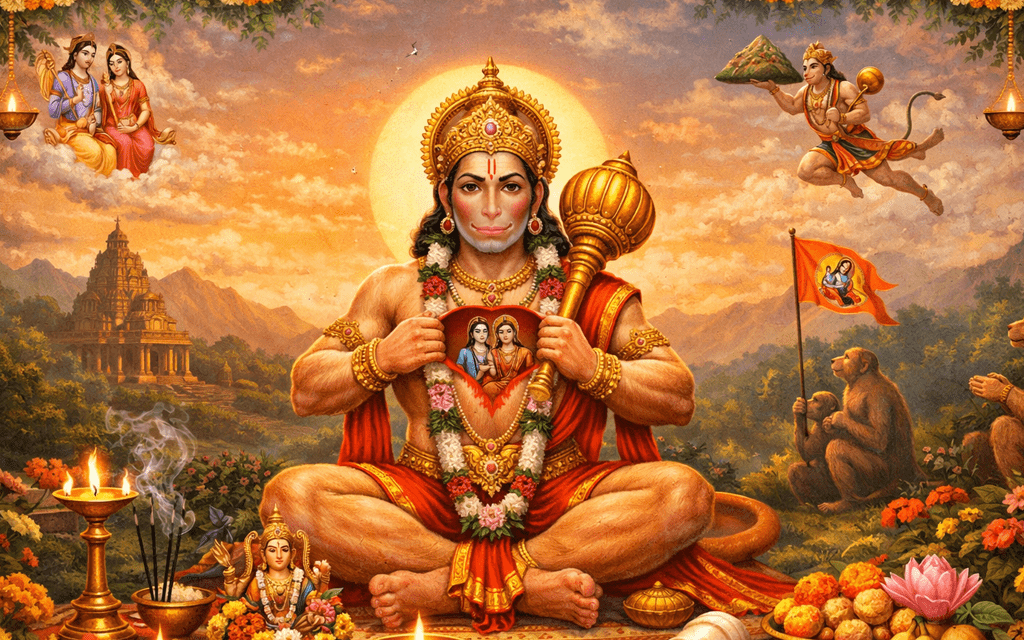
Lord Hanuman is revered as the epitome of unwavering devotion (bhakti), immense physical and mental strength, selfless service, humility, and loyalty — especially to Lord Sri Rama. His blessings are sought for courage, protection from obstacles, victory over enemies, and removal of Shani dosha.
The Complete Divine Birth Story of Lord Hanuman
The enchanting story of Hanuman's birth is narrated in ancient scriptures like the Valmiki Ramayana (Kishkindha Kanda), Shiva Purana, and other Puranas. It is a tale of curses, boons, divine intervention, and celestial grace.
Long ago, in the heavenly realms, there lived an apsara (celestial nymph) named Punjikastala (or Anjana in her earthly form). She was extraordinarily beautiful and proud of her charms. Once, while roaming the skies, she disturbed the meditation of a great sage. Enraged by her vanity, the sage cursed her to be born on earth as a vanara (monkey-like being), where her beauty would no longer matter.
Punjikastala (now Anjana) descended to earth and married Kesari, a brave and virtuous vanara king, son of Brihaspati. The couple lived happily but yearned for a child. Anjana performed intense penance for 12 long years, worshipping Lord Shiva. Pleased with her devotion, Shiva granted her a boon: she would bear a son who would be an incarnation of his own power — immensely strong, wise, and devoted.
Around the same time, King Dasharatha of Ayodhya performed the Putrakameshti Yagna to beget sons. The gods offered sacred payasam (divine pudding) to be shared among his queens, which led to the birth of Rama, Lakshmana, Bharata, and Shatrughna.
By divine ordinance, a kite snatched a portion of this sacred payasam and dropped it while flying over the forest where Anjana was worshipping. Lord Vayu (the Wind God) carried the divine fragment gently and placed it in Anjana’s outstretched hands. Anjana consumed the payasam with reverence.
Thus, Hanuman was born with the combined divine energies of:
- Shiva (for power and fearlessness)
- Vayu (making him Pavan Putra – son of the Wind God, granting him the ability to fly and immense speed)
- The sacred payasam linked to Lord Vishnu’s incarnation (Sri Rama)
Baby Hanuman was extraordinarily powerful from birth. In one famous childhood incident, he mistook the rising sun for a ripe fruit and leaped into the sky to catch it. Indra struck him with his vajra (thunderbolt) in fear, causing the infant to fall. Vayu, enraged, withdrew all winds from the world. The gods then descended, pacified Vayu, and bestowed multiple boons on the child Hanuman — granting him immortality, invulnerability, wisdom, and the power to change his size at will.
Anjana’s curse was lifted upon giving birth to this divine child. Hanuman grew up in the forests, later serving Sugriva and playing a pivotal role in the Ramayana — leaping across the ocean to Lanka, burning the city with his tail, finding Sita Mata, and carrying the Sanjeevani mountain for Lakshmana.
This birth story symbolizes how divine grace transforms curses into blessings and how true devotion overcomes all limitations.
Significance of Hanuman Jayanti (Especially in South India)
In South India, particularly Andhra Pradesh and Telangana, Hanuman Jayanti holds unique importance. Devotees often begin a 41-day Hanuman Deeksha (spiritual vow or observance) starting from Chaitra Purnima (around April 1–2, 2026). This deeksha concludes on the Telugu/Kannada Hanuman Jayanti date (usually in Vaishakha month), but the initiation on Chaitra Purnima is highly auspicious.
Key Practices during 41-Day Hanuman Deeksha:
- Wear a Hanuman Deeksha Mala (Tulasi or Rudraksha with Hanuman pendant) or a kankanam (sindoor-applied thread with knots) on the right wrist.
- Daily recitation of Hanuman Chalisa (7, 11, or 108 times).
- Reading Sundara Kanda from Ramayana (the chapter glorifying Hanuman’s exploits).
- Offerings of bananas, betel leaves, coconuts, and kesari halwa (suji halwa).
- Strict sattvic diet, celibacy (brahmacharya), and avoidance of negative company.
- Tuesday and Saturday pujas are emphasized.
Benefits of the Deeksha and Hanuman Worship:
- Grants physical and mental strength
- Removes obstacles and fear
- Protects from planetary afflictions, especially Shani (Saturn)
- Enhances focus, courage, and success in endeavors
- Fosters selfless devotion and humility
At Tirumala / Tirupati: Hanuman Jayanti is celebrated with special pujas, Veda parayanam, and abhishekam at various Anjaneya Swamy temples on the Tirumala hills (including Bedi Anjaneya, Prasanna Anjaneya, and others). It is considered highly meritorious to combine Hanuman Jayanti darshan with Lord Venkateswara (Balaji) darshan, as Hanuman is an eternal devotee of Lord Rama (an incarnation of Vishnu). Many pilgrims visit Tirumala on or around April 2, 2026, seeking dual blessings.
Offerings on Hanuman Jayanti:
- Betel leaves and bananas (Hanuman’s favorite)
- Red flowers, sindoor, and jasmine garlands
- Lighting ghee lamps and incense
- Charity of food and clothes
Mantra to Chant:
“Om Han Hanumate Namah” or the powerful Hanuman Chalisa starting with “Shri Guru Charan Saroj Raj…”
How to Celebrate Hanuman Jayanti 2026
- Wake up early, take a holy bath, and visit a Hanuman temple.
- Perform abhishekam (if possible) or simple puja with fruits and flowers.
- Recite Hanuman Chalisa and Sundara Kanda.
- Observe a fast or consume only sattvic food.
- In South India, initiate or continue the 41-day deeksha for deeper spiritual benefits.
- End the day with community bhajans or watching Ramayana episodes.
Pro Tip for Tirumala Visitors: April 1–2, 2026 coincides with the concluding days of Vasanthotsavam. Combining both brings immense spiritual merit.
Jai Shri Ram! Jai Bajrangbali! May Lord Hanuman bless you with strength, devotion, and victory over all challenges this Hanuman Jayanti 2026.
You might also like
Hanuman Jayanti 2026: The Complete Devotional Guide — Date, Significance, Pooja Rituals, Mantras & Celebration
How India Celebrated Hanuman Jayanti 2026 — Devotion, Rituals & Grand Processions
Major Hindu News, Events, Temple Updates, and Court Developments in April 2026: A Comprehensive Roundup for India and the USA