Kulasekarapattinam Dasara 2026: Mutharamman Temple, Vesham Vows and Mahishasura Samharam
In the coastal village of Kulasekarapattinam near Tiruchendur, Dasara belongs to Goddess Mutharamman. Devotees take vows, dress as gods, kings and many other characters, collect alms through Navaratri, and gather on the seashore for the Mahishasura Samharam on Vijayadashami night. Here is what to know for 2026.
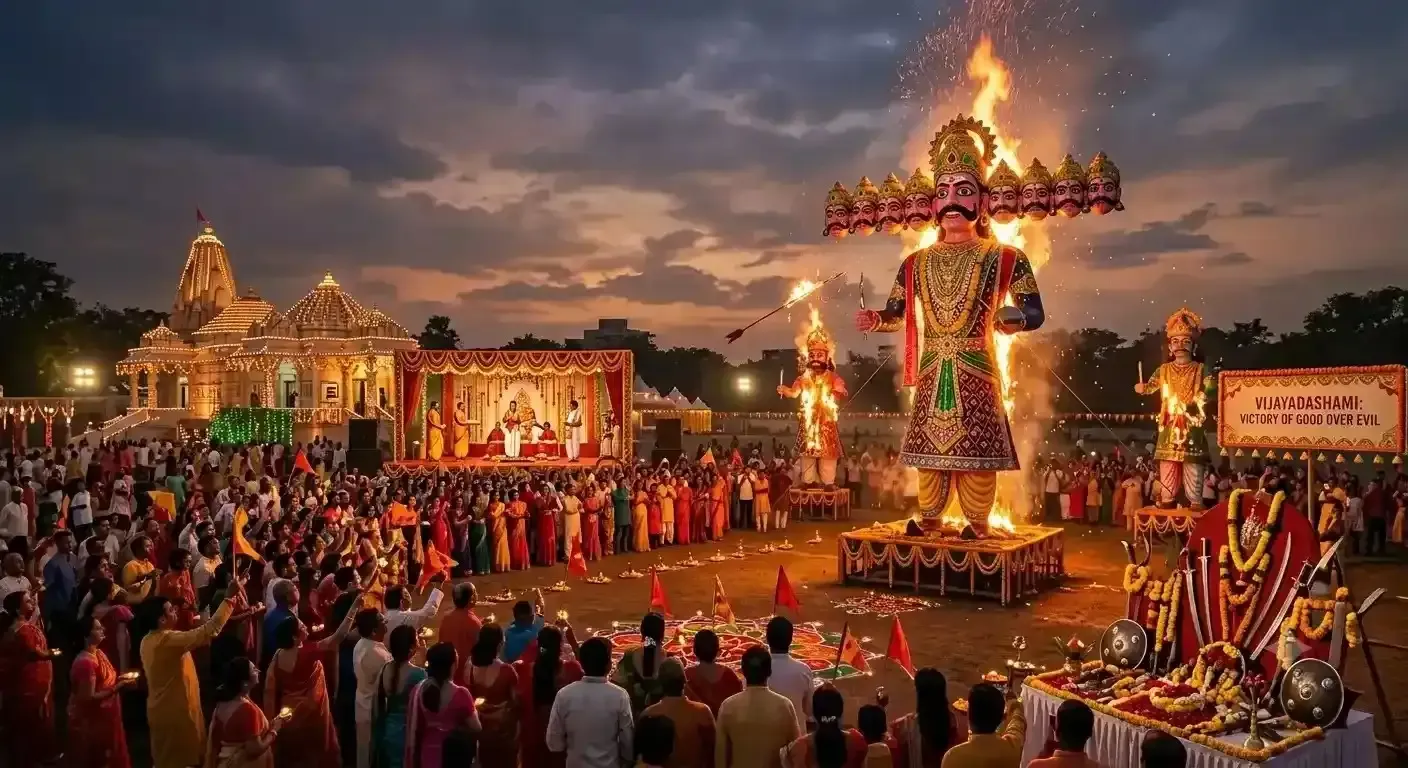
In the coastal village of Kulasekarapattinam near Tiruchendur, Dasara belongs to Goddess Mutharamman. Devotees take vows, dress as gods, kings and many other characters, collect alms through Navaratri, and gather on the seashore for the Mahishasura Samharam on Vijayadashami night.
Quick answer: Kulasekarapattinam Dasara is the Navaratri festival of Goddess Mutharamman at her temple in Kulasekarapattinam, Thoothukudi district, Tamil Nadu. Devotees tie a sacred thread (kappu), take vows, dress in vesham (costumes) of deities, kings and many other characters and collect alms for the Goddess through Navaratri (Sunday 11 to Monday 19 October 2026). On Vijayadashami night, Tuesday 20 October 2026 (Drik Panchang), the Mahishasura Samharam is enacted on the seashore. Vijay Muhurat for Kulasekarapattinam: 2:01 to 2:49 PM.
Kulasekarapattinam Dasara at a glance
| What | Details |
|---|---|
| Deity | Goddess Mutharamman (with Lord Gnanamoortheeswarar), as commonly described |
| Where | Kulasekarapattinam, near Tiruchendur, Thoothukudi district, Tamil Nadu |
| Navaratri 2026 | Sun 11 to Mon 19 Oct (India, Drik Panchang) |
| Vijayadashami 2026 | Tue 20 Oct |
| Vijay Muhurat | 2:01–2:49 PM local time, Tue 20 Oct |
| Signature rituals | Kappu vow, vesham costumes, alms collection, Mahishasura Samharam on the shore |
The Mutharamman temple
The Mutharamman temple stands near the sea at Kulasekarapattinam, in the coastal belt south of Tiruchendur, the famous abode of Lord Murugan. As commonly described, the Goddess Mutharamman is worshipped here together with Lord Shiva as Gnanamoortheeswarar, and the shrine is revered across southern Tamil Nadu as a powerful seat of the Mother Goddess. Like other amman shrines of the Tamil south, it is a place where devotees approach the Goddess for protection and health and to fulfil vows.
For most of the year it is a village temple with a strong local following. During Navaratri it becomes a pilgrimage centre for people from Thoothukudi, Tirunelveli, Kanyakumari and far beyond, many of them returning every year to keep a family vow. For current darshan timings, check the temple's official announcements.
Kappu, vows and the discipline before Dasara
The festival begins with the hoisting of the temple flag and the tying of the kappu, a sacred thread worn on the wrist by devotees who have taken a vow. As commonly described, those who take the vow keep a period of discipline beforehand, which may include vegetarian food, abstinence and daily prayer; the length of this period varies from devotee to devotee and group to group.
People take vows for many reasons: to give thanks for recovery from illness, a child's birth, success after hardship, or simply as devotion. The vow is a personal offering to the Goddess, and the costumes and alms that follow are its outward form.
Vesham: dressing as gods, kings and everyone else
The most famous feature of Kulasekarapattinam Dasara is the vesham. Once the kappu is tied, devotees dress in costumes and go from village to village and town to town through the Navaratri days, collecting alms (kanikkai) that they later offer at the temple. The best-known vesham is Kali, with a fierce painted face, long hair and a crown, but devotees also appear as Shiva, Murugan, Rama, Hanuman, kings, queens, sadhus, police officers, animals and many other characters.
Many devotees travel in organised groups called Dasara groups or Dasara kuzhus, often from a particular village, with their own drummers, musicians and sometimes dancers. In the weeks around Dasara you may see these colourful groups in towns across southern Tamil Nadu, performing and asking for offerings in the Goddess's name. Begging for alms in humility, whatever one's status at home, is understood as a way of surrendering ego before the Goddess.
Mahishasura Samharam on the seashore
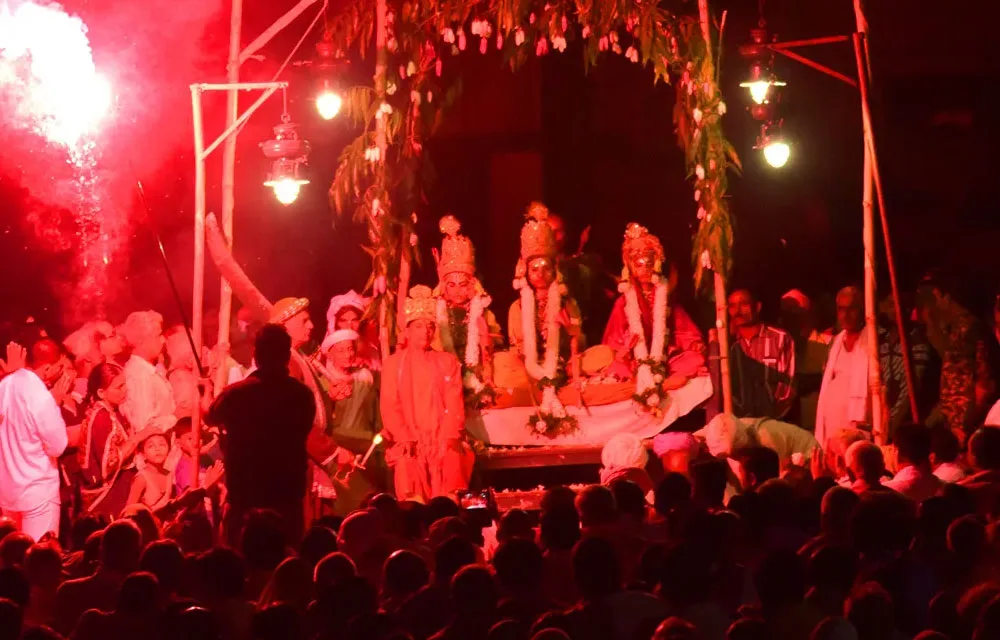
The climax comes on the night of Vijayadashami. As commonly described, the Goddess is brought out in procession from the temple to the seashore, where the Mahishasura Samharam (the slaying of Mahishasura) is enacted before a vast gathering of devotees and vesham groups. As the story is commonly told there, the demon takes different forms before he is vanquished by the Goddess, re-enacting the story of the Devi Mahatmya in which Durga destroys the buffalo demon after nine nights of battle.
After the Samharam, the Goddess returns to the temple, and on the following day devotees remove their kappu and complete their vows, offering the alms they have collected. Read the full legend in the story of Goddess Durga and Mahishasura.
Navaratri elsewhere in Tamil Nadu
Kulasekarapattinam is one of Tamil Nadu's most distinctive Navaratri traditions, but across the state the season is also marked by Golu doll displays, Saraswati Puja and Ayudha Puja on Mahanavami (Monday 19 October 2026), and Vidyarambham for young children on Vijayadashami. For Vijay Muhurat timings in Chennai, Madurai, Coimbatore and more, see the Dussehra 2026 Tamil Nadu guide.
| Tamil Nadu city | Vijay Muhurat (Tue 20 Oct 2026, local time) |
|---|---|
| Kulasekarapattinam | 2:01–2:49 PM |
| Madurai | 2:01–2:48 PM |
| Chennai | 1:51–2:38 PM |
| Coimbatore | 2:05–2:52 PM |
The Dashami tithi runs from 12:50 PM IST on 20 October to 2:11 PM IST on 21 October. The temple's own calendar governs its festival dates.
Visiting tips
- Reach Kulasekarapattinam by road from Tiruchendur, Thoothukudi or Tirunelveli; Tiruchendur also has a railway station.
- Book stays early in Tiruchendur or Thoothukudi, as rooms fill up around Dasara.
- The final night draws very large crowds on the shore. Keep children and elders close and agree a meeting point.
- Dress modestly, remove footwear where required and ask before photographing devotees in vesham, especially during rituals.
- October can be hot and humid on the coast during the day; carry water.
For Tamil families abroad
Many Tamil families abroad whose roots are in the Thoothukudi and Tirunelveli region keep Mutharamman as their family deity. Even if you cannot travel, you can light a lamp for the Goddess through Navaratri, set up Golu, perform Saraswati and Ayudha Puja, and offer a donation to the temple in fulfilment of a vow through its official channels. Use a panchang for your own city for muhurat timings; the Indian times do not apply abroad. See the Navratri 2026 NRI guide and the Dussehra / Vijayadashami 2026 pillar guide.
Frequently asked questions
When is Kulasekarapattinam Dasara 2026?
Navaratri runs from Sunday 11 to Monday 19 October 2026, and the all-India Vijayadashami is Tuesday 20 October (Drik Panchang). The Mahishasura Samharam is traditionally held on the night of Vijayadashami. The temple announces the exact 2026 dates, including the flag hoisting and kappu tying, so check its official announcement.
What is the Vijay Muhurat in Kulasekarapattinam on 20 October 2026?
The Vijay Muhurat for Kulasekarapattinam on Tuesday 20 October 2026 is 2:01 to 2:49 PM local time, calculated by the Drik Panchang method.
Why do devotees wear costumes at Kulasekarapattinam Dasara?
As commonly described, devotees take a vow (nercha) to Goddess Mutharamman, often in gratitude for a prayer answered. They tie a sacred thread (kappu), observe a period of discipline and then dress as the Goddess Kali, gods, kings, ascetics, animals or everyday characters, going from place to place to collect alms, which they offer to the temple.
What is the Mahishasura Samharam?
It is the ritual re-enactment of the Goddess slaying the buffalo demon Mahishasura, held on the seashore near the temple on Vijayadashami night. The Goddess is brought in procession to the beach, where the demon is symbolically vanquished, celebrating the victory of good over evil.
Where is Kulasekarapattinam?
Kulasekarapattinam is a coastal village in Thoothukudi (Tuticorin) district of Tamil Nadu, a short distance south of Tiruchendur. It is usually reached by road from Tiruchendur, Thoothukudi or Tirunelveli.
Can visitors who have not taken a vow attend?
Yes. Pilgrims and visitors come to see the Goddess, the vesham groups and the Samharam. Expect very large crowds on the final night, dress modestly, and follow the instructions of the temple and police.
Editor's note (9 October 2026)
This guide was written in October 2026. Navaratri and Vijayadashami dates and the Vijay Muhurat timings are from Drik Panchang calculations for India. The rituals of Kulasekarapattinam Dasara are described as commonly told; vow practices vary between devotees and groups, and the temple fixes its own festival dates each year. We do not give darshan timings, schedules or crowd figures; check the temple's official announcements.
Related guides
You might also like
Navratri vs Durga Puja vs Dussehra vs Dasara vs Vijayadashami: The Differences Explained (2026)
Madikeri Dasara 2026, Coorg: The Four Karagas, the Night Mantapa Procession and Date Guide
Mangaluru Dasara 2026: Kudroli Navadurga and Sharada Utsav, Pili Vesha Tiger Dance and Vijay Muhurat