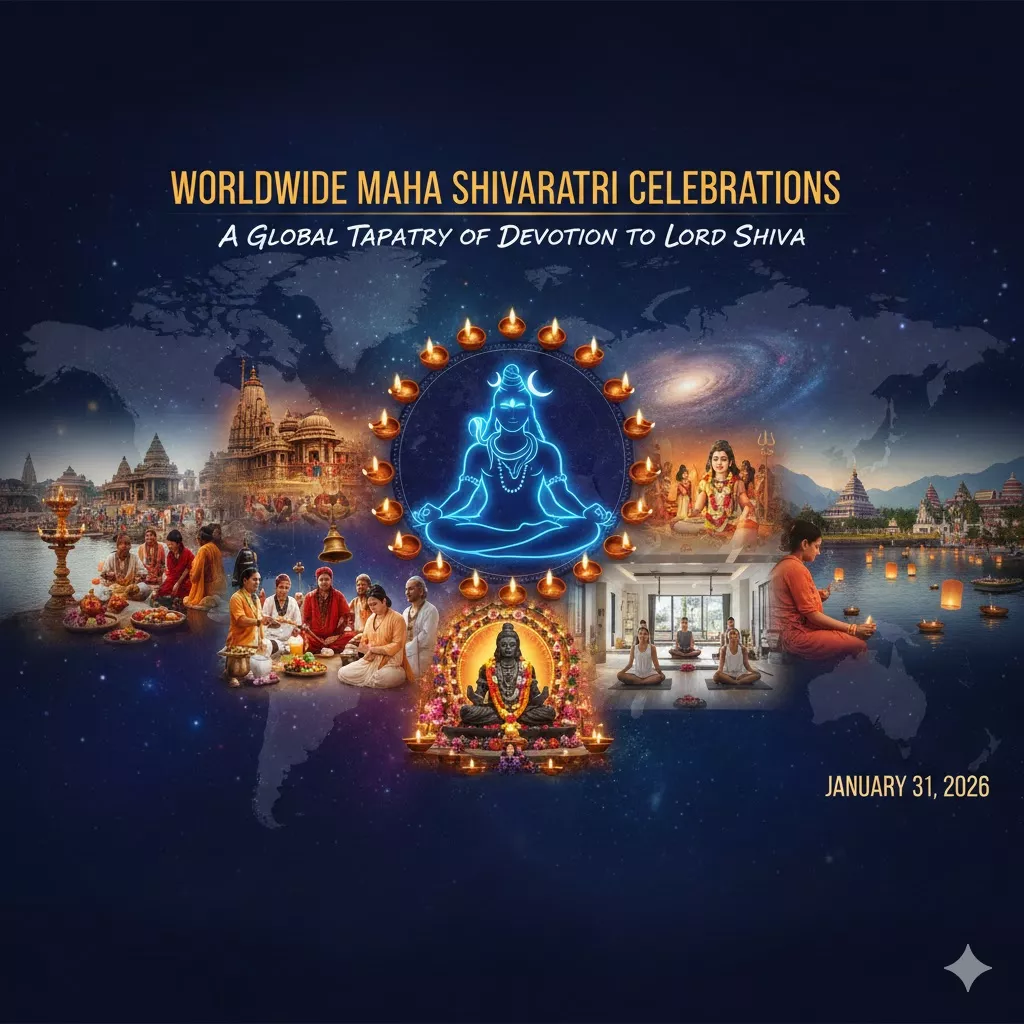
Maha Shivaratri 2026 Date: When Is Shivratri This Year?
Muhurat, Nishita Kaal Timings & Panchang Details (South India) Maha Shivaratri 2026 is one of the most sacred Hindu festivals dedicated to Lord Shiva, observed…
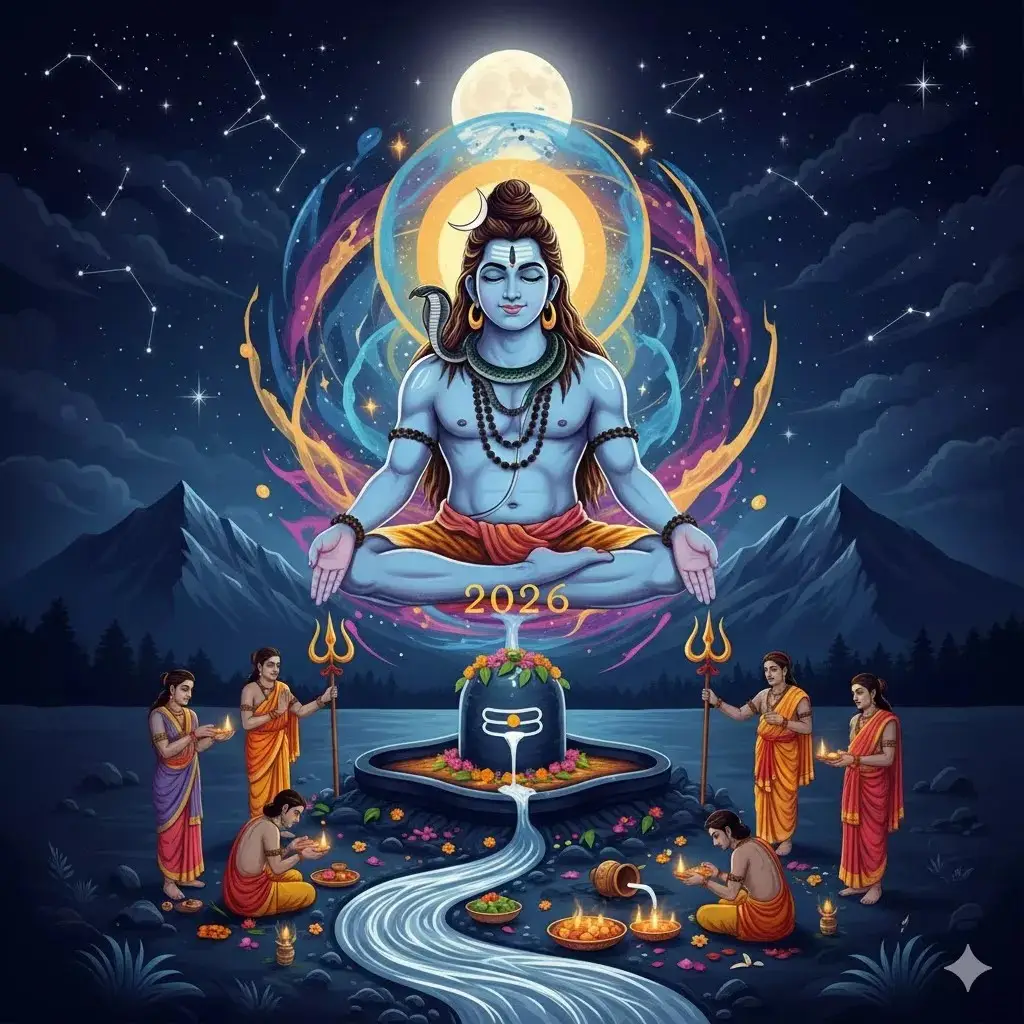
Muhurat, Nishita Kaal Timings & Panchang Details (South India) Maha Shivaratri 2026 is one of the most sacred Hindu festivals dedicated to Lord Shiva, observed…
Muhurat, Nishita Kaal Timings & Panchang Details (South India)
Maha Shivaratri 2026 is one of the most sacred Hindu festivals dedicated to Lord Shiva, observed with night-long worship, fasting, and deep spiritual discipline. In South India, this festival holds special importance with Abhishekam, Rudrabhishekam, Jagaran, and Pradosha-based rituals performed according to the Drik Panchang system.
This detailed guide explains the exact Shivratri 2026 date, Nishita Kaal, puja muhurat, tithi, and South Indian panchang details.
[image: 📅] When Is Maha Shivaratri in 2026?
- Maha Shivaratri Date: Sunday, 15 February 2026
- Main Night of Worship: Sunday night (15 Feb) continuing till early morning of Monday, 16 February 2026
[image: 👉] In South India, Maha Shivaratri is observed on the Krishna Paksha Chaturdashi of Magha Masam, when the Chaturdashi tithi prevails during the night.
[image: 🌙] Shivaratri 2026 Tithi Details (South India – IST)
- Chaturdashi Tithi Begins: Evening of 15 February 2026
- Chaturdashi Tithi Ends: Evening of 16 February 2026
Since the Chaturdashi tithi is present throughout the night, 15 February 2026 is the correct and widely accepted date for Maha Shivaratri fasting and night worship.
[image: ⏰] Nishita Kaal Puja Timings – Maha Shivaratri 2026
Nishita Kaal is considered the most powerful time to worship Lord Shiva, symbolizing the moment of divine cosmic awakening.
- Nishita Kaal Puja Time:
12:09 AM to 01:01 AM
(Early hours of Monday, 16 February 2026 – IST)
[image: 🔱] This is the most auspicious muhurat for:
- Rudrabhishekam
- Maha Mrityunjaya Mantra Japa
- Offering Bilva leaves and sacred water
[image: 🕯️] Four Prahar Puja Timings (Night Vigil)
Devotees in South India traditionally divide Shivaratri night into four Prahars, each with unique spiritual significance.
[image: 🌺] Maha Shivaratri 2026 Panchang Details (South India)
- Month: Magha Masam
- Paksha: Krishna Paksha
- Tithi: Chaturdashi
- Day: Sunday
- Moon Phase: Waning Moon
- Yoga & Nakshatra: As per local Drik Panchang (may slightly vary by location)
[image: 📌] Temples in Tamil Nadu, Telangana, Andhra Pradesh, Karnataka, and Kerala follow local temple calendars but align with these timings.
[image: 🙏] Parana (Fast Breaking) Time
- Parana Date: Monday, 16 February 2026
- Ideal Time: After sunrise, once morning puja and Abhishekam are completed
Devotees break the fast with:
- Fruits or milk
- Sacred water (Theertham)
- Light satvik food
[image: 🔔] Spiritual Significance of Maha Shivaratri
Maha Shivaratri symbolizes:
- The union of Shiva and Shakti
- Destruction of ignorance and ego
- Inner awakening through silence and meditation
According to Shaiva tradition, this is the night when Lord Shiva manifested as an infinite Jyotirlinga, making midnight worship extremely powerful.
[image: 🪔] Maha Shivaratri Puja Practices in South India
Common rituals include:
- Abhishekam with water, milk, honey, curd, and vibhuti
- Offering Bilva Patra (Bilva leaves)
- Chanting:
- Om Namah Shivaya
- Maha Mrityunjaya Mantra
- Night-long Jagaran (spiritual vigil)
[image: 📌] Maha Shivaratri 2026 – Quick Summary
[image: 🔱] Final Note
Observing Maha Shivaratri with devotion, discipline, and awareness is believed to grant spiritual liberation, peace of mind, and divine grace of Lord Shiva.
Why Is Maha Shivaratri Celebrated on Krishna Paksha Chaturdashi?
The Shiva Purana explains that on the Krishna Paksha Chaturdashi of Magha month, Lord Shiva manifested as an infinite column of light — the Jyotirlinga — to settle the dispute between Brahma and Vishnu over supremacy. This cosmic event is considered the original reason for the night's sanctity, and Shiva himself declared that whoever worships him on this tithi with fasting and vigil will attain liberation from the cycle of birth and death.
The waning moon (Krishna Paksha) carries additional significance in Shaiva theology. As the moon adorns Shiva's matted hair, its diminishing phase on Chaturdashi is said to intensify Shiva's austere, meditative aspect — making the night especially potent for inner renunciation and Vairagya. The Skanda Purana further notes that the confluence of the nighttime hours and the Chaturdashi tithi creates a rare spiritual window called Shivaratri Yoga, which amplifies the effect of every mantra, Abhishekam, and Dhyana performed during it.
What Are the Four Prahars of Shivaratri Night and Their Significance?
South Indian tradition divides the Shivaratri night into four Prahars (watches), each roughly three hours long, beginning after sunset on 15 February 2026. The first Prahar spans from approximately 6:00 PM to 9:00 PM, the second from 9:00 PM to 12:00 AM, the third — which includes the supremely auspicious Nishita Kaal — from 12:00 AM to 3:00 AM, and the fourth from 3:00 AM to 6:00 AM. Each Prahar has its own prescribed form of Shiva worship and represents one of the four cosmic states: creation, preservation, dissolution, and grace.
During each Prahar, a distinct Abhishekam substance is traditionally offered: milk (Dugdha) in the first, curd (Dadhi) in the second, ghee (Ghrita) in the third, and honey with sugarcane juice (Madhu-Ikshu) in the fourth. The Shiva Purana's Vidyeshvara Samhita prescribes this four-fold Abhishekam cycle as a complete sacrament that honours Shiva as Sadashiva — the eternal, ever-auspicious reality beyond time. Devotees who complete all four Prahars of worship are said to earn the spiritual merit equivalent to performing an Ashvamedha Yajna.
Which Are the Most Important Shiva Temples in South India for Maha Shivaratri 2026?
Among South India's premier pilgrimage centres, the Brihadeeswarar Temple in Thanjavur (Tamil Nadu) — a UNESCO World Heritage Site — conducts an elaborate series of Rudrabhishekam ceremonies across all four Prahars, drawing tens of thousands of devotees. The Mallikarjuna Jyotirlinga at Srisailam in Andhra Pradesh observes Maha Shivaratri with a special Sahasra Kalasha Abhishekam, in which one thousand sacred water vessels are consecrated and poured over the Swayambhu Linga. Both temples follow the Agamic tradition of the Shaiva Siddhanta school, which prescribes precise rituals outlined in texts such as the Kamikagama.
In Karnataka, the Murdeshwar Temple on the Arabian Sea coast and the Ghati Subramanya complex observe all-night Jagarana with Vedic chanting of the Sri Rudram and Chamakam. The Kapaleeswarar Temple in Chennai and the Arunachaleswarar Temple at Thiruvannamalai — where the hill itself is revered as the Shiva Linga of fire (Agni Linga) — are among the most spiritually charged locations for Maha Shivaratri night worship in the entire South Indian region. At Thiruvannamalai, the Girivalam (circumambulation of the sacred Arunachala hill, approximately 14 kilometres) is traditionally completed during the Shivaratri night.
What Is the Correct Method of Fasting (Upavasa) for Maha Shivaratri?
The Shiva Purana specifies two levels of fasting for Maha Shivaratri: Nirjala Upavasa, in which the devotee abstains from both food and water for the entire duration of the Chaturdashi tithi, and Phalahari Upavasa, in which fruits, milk, and roots (Kanda-Mula) are permitted. Both forms of fasting are considered valid, with Nirjala Upavasa recommended for those in good health and practising a deeper sadhana. The fast begins at sunrise on 15 February 2026 and is broken only after sunrise on 16 February 2026, following the Parana (breaking of fast) during the auspicious morning window.
South Indian tradition particularly emphasises the consuming of Vibhuti (sacred ash) and the wearing of Rudraksha beads during the fast as part of body-purification. Foods explicitly avoided include rice, lentils, onion, garlic, and non-vegetarian items. Many devotees consume Sabudana (tapioca pearls), rock sugar, and coconut-based preparations as permitted Sattvic alternatives. The internal dimension of the fast, according to Shaiva Agamas, is the restraint of the five senses — a practice called Indriya Nigraha — without which external dietary abstinence alone is considered incomplete.
What Is the Spiritual Meaning of Bilva Leaves and Rudrabhishekam in Shivaratri Worship?
The Bilva (Bael) leaf, known as Vilva in Tamil, holds a place of supreme honour in Shiva worship that no other botanical offering matches. The Shiva Purana's Kotirudra Samhita declares that offering a single Bilva leaf with devotion to Shiva is worth more than donating gold, performing ten thousand Ashvamedha Yajnas, or bathing in all holy rivers simultaneously. The leaf's three lobes (Tripatra) are said to symbolise the Trimurti, the three eyes of Shiva, the three Gunas, and the sacred syllable Om — making it a living representation of Advaita philosophy.
Rudrabhishekam — the ritual bathing of the Shivalinga with sacred substances while chanting the Sri Rudram from the Krishna Yajurveda — is the definitive act of Shivaratri worship. The eleven Anuvakas (sections) of the Sri Rudram address Rudra in his eleven cosmic forms (Ekadasha Rudras), and the concluding Chamakam invokes specific blessings for health, prosperity, and liberation. When performed during the Nishita Kaal window of 12:09 AM to 1:01 AM on 16 February 2026, priests and devoted practitioners consider this the single most efficacious spiritual act of the entire year in the Shaiva calendar.
How Does Maha Shivaratri Differ from Monthly Shivaratri (Masa Shivaratri)?
Every lunar month has a Krishna Paksha Chaturdashi that is observed as Masa Shivaratri — a monthly Shiva observance. However, the Chaturdashi of Magha Masam (in South India) or Phalguna Masam (in North India) is elevated to Maha Shivaratri — the 'great night of Shiva' — because it coincides with the most cosmically significant alignment in the Shaiva year, as described in both the Linga Purana and the Shiva Purana. While Masa Shivaratri is observed largely through a single night of limited ritual, Maha Shivaratri demands the full four-Prahar vigil and a complete day-and-night fast.
The distinction also matters for pilgrimage: major Jyotirlinga temples such as Somnath (Gujarat), Kashi Vishwanath (Varanasi), and Rameshwaram (Tamil Nadu) conduct their grandest annual rituals exclusively on Maha Shivaratri, not on the monthly Shivaratri. For householders (Grihastha), the Dharmashastra tradition holds that missing Maha Shivaratri worship is spiritually far more significant than missing a monthly observance, and special expiation (Prayaschitta) is prescribed for it. Maha Shivaratri is therefore understood not as a bigger version of the monthly night, but as a qualitatively distinct cosmic event.
Frequently Asked Questions
When is Maha Shivaratri in 2026?
Maha Shivaratri falls on Sunday, 15 February 2026. The main night of worship continues into the early morning of Monday, 16 February 2026.
What is the Nishita Kaal puja time for Maha Shivaratri 2026?
Nishita Kaal puja is from 12:09 AM to 01:01 AM in the early hours of Monday, 16 February 2026 (IST). It is considered the most powerful time for Rudrabhishekam and Maha Mrityunjaya Mantra japa.
When should the Shivaratri fast be broken?
Parana is on Monday, 16 February 2026, after sunrise, once the morning puja and Abhishekam are completed. Devotees break the fast with fruits or milk, sacred water (Theertham) and light satvik food.
What are the four Prahars of Shivaratri night?
Shivaratri night is divided into four Prahars of roughly three hours each, beginning after sunset: about 6:00 PM to 9:00 PM, 9:00 PM to 12:00 AM, 12:00 AM to 3:00 AM, and 3:00 AM to 6:00 AM. Nishita Kaal falls within the third Prahar.
Which offerings and mantras are used in Maha Shivaratri puja?
Abhishekam is done with water, milk, honey, curd and vibhuti, along with Bilva leaves. Devotees chant Om Namah Shivay and the Maha Mrityunjaya Mantra during the night-long Jagaran.
Why is Maha Shivaratri observed on Krishna Paksha Chaturdashi?
As commonly told, the Shiva Purana says Shiva appeared as an infinite column of light, the Jyotirlinga, on the Krishna Paksha Chaturdashi of Magha. In South India the festival is observed when Chaturdashi prevails through the night.
You might also like
Maha Shivaratri 2027 Celebrations in Australia: How the Hindu Diaspora Honored Lord Shiva Yesterday – A Complete Guide to Cities, Temples, and Events
Maha Shivaratri 2026: Spiritual Significance, Legends, Rituals & Inner Awakening
Maha Shivaratri 2026 Celebrations in New Zealand: How the Hindu Community Honored Lord Shiva Yesterday – A Complete Guide to Cities, Temples, and Events