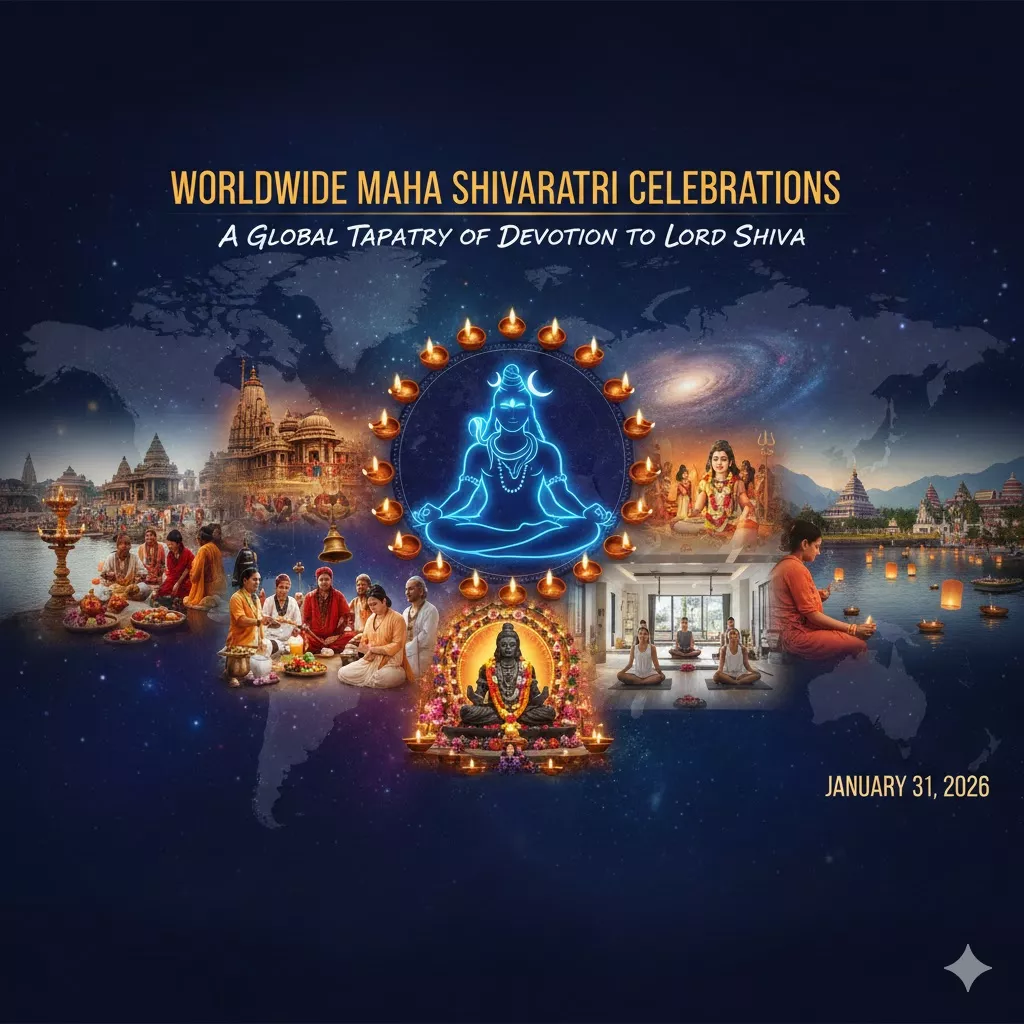
Maha Shivaratri: Awakening the Shiva Consciousness Within
A Mystical Shaiva Reflection on Inner Transformation Invocation: Entering the Night of Infinite Awareness Maha Shivaratri is not merely a date on the lunar…
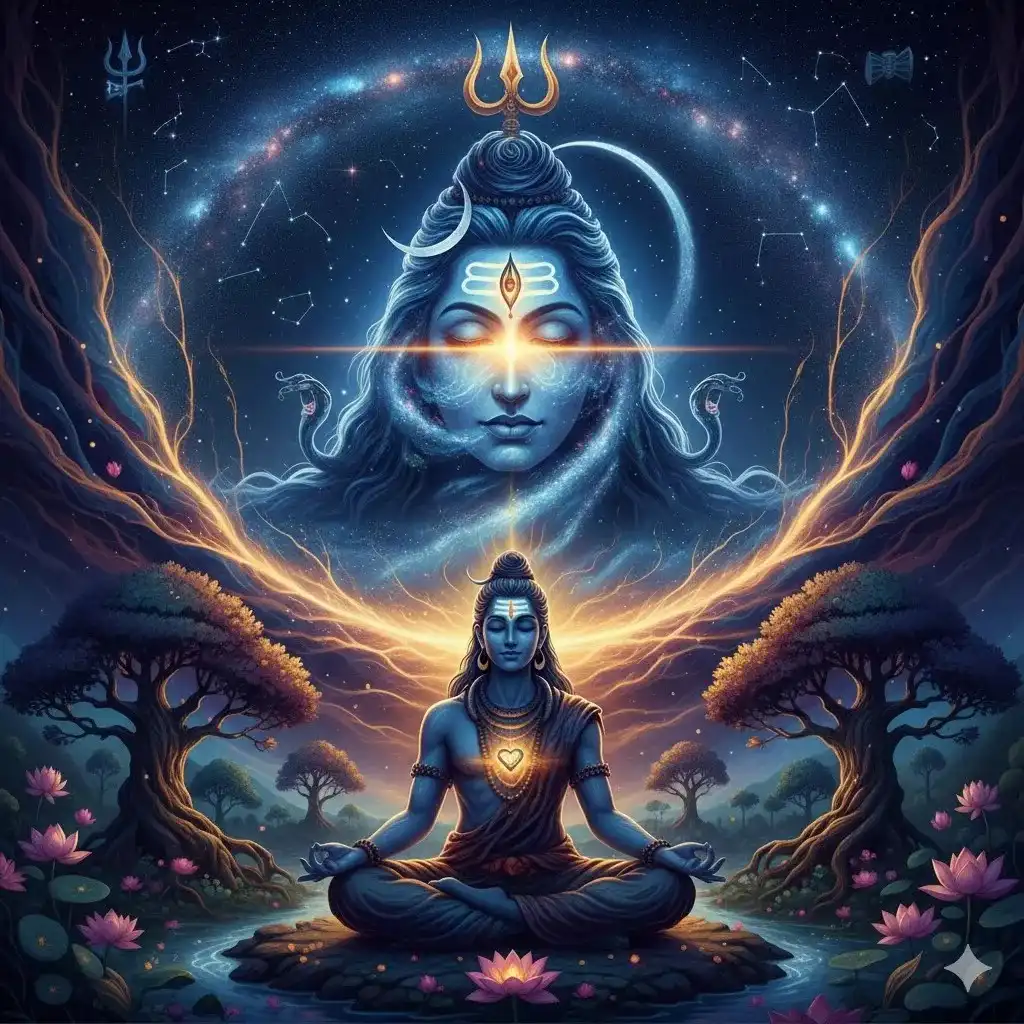
A Mystical Shaiva Reflection on Inner Transformation Invocation: Entering the Night of Infinite Awareness Maha Shivaratri is not merely a date on the lunar…
A Mystical Shaiva Reflection on Inner Transformation
Invocation: Entering the Night of Infinite Awareness
Maha Shivaratri is not merely a date on the lunar calendar. It is a living doorway—a sacred threshold where the finite dissolves into the infinite, where the restless mind bows into silence, and where the seeker remembers their true nature.
This is the night of Shiva, not as a distant deity seated on Mount Kailasa, but as Chaitanya—pure, luminous consciousness—pulsating within every breath, every thought, every moment of awareness.
Adi Shankaracharya, the great expounder of Advaita Vedanta, did not worship Shiva as an external god alone. For him, Shiva was the Self—the unchanging witness behind the play of creation. Maha Shivaratri is the night when this truth can be experienced, not merely understood.
This article is an invitation—not to perform rituals mechanically—but to awaken the Shiva consciousness within, through stillness, introspection, fasting, silence, and deep meditation.
Shiva as Chaitanya: The Ever-Awake Consciousness
In Shaiva philosophy, Shiva is not confined to form. He is Sat-Chit-Ananda—existence, consciousness, and bliss itself. The Kena Upanishad points toward this subtle truth when it declares:
“That which cannot be seen by the eye, but by which the eye sees—know That to be Brahman.”
That seer behind the seeing is Shiva.
Maha Shivaratri is the night dedicated to this realization. When external distractions are minimized, and the senses withdraw, awareness naturally turns inward. In that inward gaze, the seeker may glimpse Shiva—not as an object, but as the very subject, the knower of all experiences.
Shiva is not something to be attained. He is what remains when all false identifications fall away.
The Sacred Meaning of Darkness and Stillness
Why is Shivaratri celebrated at night? Why is darkness revered rather than avoided?
Darkness, in Shaiva understanding, is not evil—it is potential. It is the womb of creation, the silent field from which light arises. The Mandukya Upanishad speaks of Turiya, the fourth state of consciousness—beyond waking, dreaming, and deep sleep. This Turiya is neither light nor dark; it is pure awareness.
The night of Shivaratri symbolically guides the seeker into this Turiya state.
Stillness is the language of Shiva. In stillness, the mind loosens its grip. In stillness, the ego loses ground. In stillness, truth reveals itself effortlessly.
To sit awake on this night is not about resisting sleep—it is about remaining aware, watching thoughts dissolve into silence.
Shiva and the Destruction of Ego
Shiva is often called the destroyer, but what does He truly destroy?
Not the world—but ignorance.
Not life—but false identity.
Not the body—but ego.
Ego is the greatest obstacle on the spiritual path. It is the illusion of separateness, the belief that “I am this limited body-mind.” Shiva’s role is to shatter this illusion.
Adi Shankaracharya, in his hymns, repeatedly reminds the seeker:
“You are not the body, not the mind, not the intellect. You are Shiva.”
On Maha Shivaratri, the seeker consciously offers the ego into the inner fire. Fasting weakens bodily identification. Silence loosens mental chatter. Meditation dissolves the sense of doership.
What remains is Shiva-awareness—vast, silent, compassionate.
Mauna: The Sacred Power of Silence
Silence (Mauna) is not merely the absence of speech. It is the presence of awareness without disturbance.
The Vijnana Bhairava Tantra—a profound Shaiva text—teaches that liberation can arise in the gap between two thoughts, in the still point between inhalation and exhalation. Maha Shivaratri magnifies this gap.
Observing silence on Shivaratri is a powerful spiritual discipline:
- Speech withdraws inward
- The mind becomes subtle
- Inner listening awakens
In silence, Shiva speaks—not in words, but in direct knowing.
Shiva as Adiyogi and the Kundalini Awakening
Shiva is revered as Adiyogi, the first yogi, the source of all yogic sciences. He is the master of inner alchemy—the transformation of base awareness into enlightened consciousness.
On Maha Shivaratri, yogic traditions emphasize the natural upward movement of energy within the subtle body. This is the awakening of Kundalini Shakti—the dormant spiritual energy coiled at the base of the spine.
When Kundalini rises through the central channel (Sushumna Nadi), it pierces the energy centers, dissolving karmic blockages. Shiva represents the still awareness at the crown, while Shakti represents the dynamic energy rising upward. Shivaratri symbolizes their sacred union.
This is why meditation on this night feels deeper, more effortless, more expansive.
The Third Eye: Vision Beyond Duality
Shiva’s third eye is not a mythological ornament—it is a symbol of transcendent perception.
The two physical eyes see duality—subject and object, pleasure and pain. The third eye sees truth beyond opposites. When it opens, ignorance is burned to ashes.
In inner practice, the third eye corresponds to the Ajna Chakra, the center of intuition and insight. Fasting, meditation, and vigilance on Shivaratri purify this center, allowing clarity to arise.
The opening of the third eye is not dramatic—it is quiet. It is the recognition that the seer and the seen are one.
Fasting as Spiritual Purification
In Shaiva tradition, fasting (Upavasa) literally means “to dwell near the Self.” It is not about punishment of the body, but refinement of awareness.
When digestion rests, energy flows inward. The senses soften. The mind becomes less turbulent. This creates an ideal inner environment for meditation.
Fasting on Maha Shivaratri:
- Reduces tamasic inertia
- Breaks habitual patterns
- Heightens sensitivity to subtle states
The Rudram Chamakam speaks of offering everything to Shiva—including the body itself. Fasting is a symbolic offering, a surrender of dependence on external nourishment, trusting the inner source.
Meditation on Shivaratri: Entering the Cave of the Heart
Shiva dwells not only on Mount Kailasa, but in the cave of the heart (Hridaya Guha).
The Shiva Sutras declare:
“Chaitanyam Atma” — Consciousness is the Self.
Meditation on Maha Shivaratri is not about visualizing forms, but about resting in awareness. Watch the breath. Observe thoughts without involvement. Allow silence to deepen naturally.
In this meditative absorption, the boundary between meditator and meditation dissolves. This is Shiva-anubhava—direct experience of Shiva.
Rudram: The Vibration of Cosmic Order
The chanting of Sri Rudram, especially the Namakam and Chamakam, is considered supremely auspicious on Shivaratri.
Rudra is Shiva in his raw, untamed aspect—the force that dissolves stagnation and restores cosmic harmony. Each mantra is a vibration aligning the individual with universal order (Rta).
Chanting Rudram is not merely recitation—it is resonance. The sound purifies the mind, the breath, and the subtle body.
Shivaratri as an Inner Pilgrimage
Maha Shivaratri is not a festival to be completed—it is a journey to be entered.
Even a few moments of sincere stillness on this night can transform the seeker. Because this night does not belong to time—it belongs to eternity.
When awareness remains unbroken through the night, even briefly, the mind tastes freedom.
Living Shivaratri Beyond One Night
The true fruit of Maha Shivaratri is not confined to one night. It is the gradual integration of Shiva-consciousness into daily life.
- Acting without ego
- Speaking with awareness
- Living with detachment and compassion
- Resting in inner silence amidst activity
This is the living worship of Shiva.
Conclusion: You Are That Shiva
The Upanishads whisper the ultimate truth:
“Tat Tvam Asi” — You are That.
Maha Shivaratri is the night when this whisper can become a realization.
Shiva is not someone you worship—Shiva is who you are, when all illusions fall away.
Sit in silence. Stay awake. Let go.
The Shiva you seek is already awake within you.
Om Namah Shivaya
Har Har Mahadev
Frequently Asked Questions
Why is Maha Shivaratri celebrated at night?
In Shaiva understanding, darkness is not evil but potential, the womb of creation from which light arises. The night symbolically guides the seeker toward Turiya, the fourth state of consciousness beyond waking, dreaming and deep sleep.
What is the purpose of fasting on Maha Shivaratri?
Fasting (Upavasa) literally means "to dwell near the Self". When digestion rests, energy flows inward and the mind becomes less turbulent, which creates a good inner setting for meditation. It reduces tamasic inertia and breaks habitual patterns.
How should one meditate on Maha Shivaratri?
Meditation here is about resting in awareness rather than visualizing forms. Watch the breath, observe thoughts without involvement and let silence deepen naturally, entering the cave of the heart (Hridaya Guha).
Which chant is considered especially auspicious on Maha Shivaratri?
Sri Rudram, especially the Namakam and Chamakam, is considered supremely auspicious on Shivaratri. Each mantra is a vibration that aligns the individual with universal order (Rta), purifying the mind, breath and subtle body.
What does staying awake on Maha Shivaratri mean?
Sitting awake is not about resisting sleep but about remaining aware and watching thoughts dissolve into silence. Observing silence (Mauna) is also a spiritual discipline on this night, letting speech withdraw inward.
How can devotees living abroad observe Maha Shivaratri meaningfully?
The practice centres on stillness, fasting, silence, meditation and Rudram chanting, which can be done anywhere. Even a few moments of sincere stillness on this night can matter, and the date follows the Hindu lunar calendar.
You might also like

Devotion in the Sands: The Inspiring Story of a Karnataka Couple Crafting 1008 Shiva Lingams Every Maha Shivaratri
Maha Shivaratri 2026 Date: When Is Shivratri This Year?
Maha Shivaratri 2027 Celebrations in Australia: How the Hindu Diaspora Honored Lord Shiva Yesterday – A Complete Guide to Cities, Temples, and Events