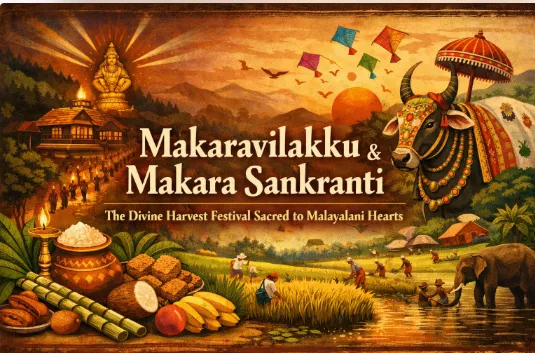
Makaravilakku and Makara Sankranti: The Divine Harvest Festival Sacred to Malayalam Hearts
Makaravilakku and Makara Sankranti: The Divine Harvest Festival Sacred to Malayalam Hearts Introduction: Kerala's Most Auspicious Celebration For Malayalam-speaking people of Kerala, the period of Makara Sankranti brings twin blessings - the divine Makaravilakku (Makara Jyothi) at Sabarimala and the harvest festival celebrating agricultural abundance. This sacred time, when the Sun transitions into Makara Rashi (Capricorn), represents the spiritual and cultural essence of Malayalam identity, weaving together devotion to Lord Ayyappa, gratitude for nature's bounty, and the timeless wisdom of Kerala's ancient traditions.
Makaravilakku and Makara Sankranti: The Divine Harvest Festival Sacred to Malayalam Hearts
Introduction: Kerala's Most Auspicious Celebration
For Malayalam-speaking people of Kerala, the period of Makara Sankranti brings twin blessings - the divine Makaravilakku (Makara Jyothi) at Sabarimala and the harvest festival celebrating agricultural abundance. This sacred time, when the Sun transitions into Makara Rashi (Capricorn), represents the spiritual and cultural essence of Malayalam identity, weaving together devotion to Lord Ayyappa, gratitude for nature's bounty, and the timeless wisdom of Kerala's ancient traditions.
The Spiritual Foundation in Kerala Tradition
Makaravilakku: The Divine Light of Sabarimala
The most significant spiritual event for Malayalam people during this season is the Makaravilakku - the celestial light that appears at Sabarimala on Makara Sankranti day. This mystical phenomenon witnessed by millions of devotees is considered a darshan of Lord Ayyappa himself.
The Sacred Legend: According to tradition, the Makaravilakku represents the divine presence of Lord Ayyappa (also known as Dharma Sastha), manifesting as a celestial light on Ponnambalamedu hills. The light appears precisely when the sacred jewels (Thiruvabharanam) reach the sanctum sanctorum from Pandalam Palace.
Spiritual Significance:
- Represents Jyoti Swaroopa (the luminous form of the divine)
- Symbolizes spiritual enlightenment and inner awakening
- Marks the culmination of the 41-day Mandala-Makaravilakku season
- Embodies the principle "Tamasom Jyotirgamaya" (Lead us from darkness to light)
Connection to Kerala's Vedic Heritage
Kerala's ancient spiritual texts, including the Keralolpathi and works of Adi Shankaracharya (born in Kalady, Kerala), emphasize this period's spiritual potency. The Sankranti marks Uttarayana, considered the most auspicious six-month period for spiritual practices, temple rituals, and seeking moksha.
Makara Sankranti: The Harvest Festival of Kerala
Agricultural Significance in God's Own Country
While Makaravilakku dominates spiritual consciousness, Makara Sankranti also celebrates Kerala's agricultural prosperity. The festival coincides with the harvest of:
- Paddy (Nellu): The primary crop from the fertile Kuttanad and Palakkad regions
- Coconut: Kerala's pride and prosperity
- Spices: Pepper, cardamom, and turmeric
- Bananas: An integral part of Kerala cuisine
- Tapioca and other crops: Supporting agricultural communities
The Malayalam Saying: "Makaram Vannal, Varum Samrudhi" (When Makara arrives, prosperity follows)
The Three-Fold Celebration
Kerala's Makara Sankranti observance includes:
- Spiritual Devotion: Makaravilakku pilgrimage and temple rituals
- Agricultural Thanksgiving: Honoring farmers and nature
- Community Celebration: Family gatherings and cultural programs
Sacred Rituals and Observances
1. Makaravilakku Pilgrimage: The Ultimate Devotion
For millions of Malayalam devotees, the Sabarimala Yatra culminating in Makaravilakku darshan represents life's most sacred journey.
The Vratham (Vow) Observance: Devotees undergo 41 days of strict discipline:
- Wearing black/blue clothing (symbolizing humility)
- Vegetarianism and celibacy
- Daily prayers and temple visits
- Addressing each other as "Swami" (acknowledging divinity in all)
- Following 18 steps discipline (representing the 18 hills crossed)
The Sacred Trek: The journey through forests, climbing 18 sacred steps while chanting:
"Swamiye Saranam Ayyappa!" (Lord Ayyappa is my refuge!)
This mantra, repeated millions of times, embodies complete surrender to the divine.
The Makaravilakku Darshan: When the celestial light appears on Ponnambalamedu:
- Devotees experience divine ecstasy
- Chanting intensifies: "Swamiye Saranam Ayyappa, Harivarasanam!"
- Believed to bestow spiritual liberation and fulfillment of prayers
- Symbolizes the guru's light dispelling ignorance
2. Sankranti Day Rituals at Home
Malayalam households observe sacred customs:
Twilight Rituals (Sandhya Vandanam): Special prayers during the transitional moment when Sun enters Makara Rashi:
"Makara Sankramanam, Uttarayana Punyakalam Surya Bhagavane Namaha, Sarva Aishwaryam Sampadaya" (Makara transition, auspicious Uttarayana period, salutations to Sun God, grant all prosperity)
Holy Bath (Snanam):
- Bathing in sacred rivers like Bharathapuzha, Periyar, or Pamba
- Adding Tulsi leaves and sesame to bath water at home
- Reciting Surya mantras during bath
- Wearing fresh clothes after purification
Puja at Home Temples:
- Lighting nilavilakku (traditional brass lamps) with coconut oil
- Offering payasam (sweet rice pudding) to deities
- Special prayers to Surya Bhagavan and family deities
- Adorning the puja room with fresh flowers
3. Temple Celebrations Across Kerala
Major Kerala temples conduct special rituals:
Guruvayur Sri Krishna Temple:
- Grand Sankranti Utsavam
- Special Abhishekam to Lord Krishna
- Distribution of Anna Prasadam
Ambalapuzha Temple:
- Famous Palpayasam distribution
- Cultural performances
- Traditional Kathakali and temple arts
Thrissur Vadakkunnathan Temple:
- Ancient Sankranti rituals following Tantric traditions
- Panchari Melam (temple percussion orchestra)
Attukal Bhagavathy Temple:
- Women devotees' special prayers
- Preparation for upcoming Pongala festival
Traditional Makara Sankranti Foods in Kerala
Sacred Offerings to Deities
Kerala's traditional Sankranti preparations reflect devotion:
1. Paal Payasam (Milk Pudding): The most sacred offering, made with:
- Raw rice or vermicelli
- Fresh cow's milk
- Jaggery or sugar
- Cardamom, cashews, and raisins
- Ghee for richness
Preparation as Worship: Cooking payasam is itself a meditative act. Women prepare it with ritualistic cleanliness, considering it naivedyam (divine offering).
2. Ela Ada (Rice Parcels): Steamed rice flour parcels with coconut-jaggery filling, wrapped in banana leaves, symbolizing nature's bounty.
3. Unniyappam (Sweet Fritters): Small round fritters made from rice flour, jaggery, banana, and ghee - offered to Lord Krishna and Lord Ayyappa.
4. Chakka Varatti (Jackfruit Preserve): Traditional delicacy made from ripe jackfruit and jaggery, representing Kerala's agricultural richness.
5. Vellayappam (Rice Pancakes): Soft, fluffy pancakes made with fermented rice batter and coconut milk.
6. Fresh Produce:
- Tender coconut water: Symbol of purity
- Bananas: Representing fertility and abundance
- Seasonal vegetables: From Kerala's lush gardens
The Sacred Harivarasanam: Ayyappa's Lullaby
The Harivarasanam, composed by Kambankudi Kulathur Srinivasa Iyer, holds supreme devotional importance. This lullaby sung every night at Sabarimala becomes especially poignant during Makaravilakku:
"Harivarasanam Viswamohanam Haridadhiswaram Aaradhyapadhukam Arivimardhanam Nithyanarthanam Hariharatmajam Devamashraye"
(I take refuge in the son of Hari and Hara, who enchants the universe, whose sacred feet are worshipped by Shiva, who destroys enemies of devotees, who dances eternally)
Devotional Significance:
- Sung as the temple closes each night
- Represents devotees' love for Ayyappa
- Induces deep meditative state
- Symbolizes the devotee-deity relationship
Regional Variations Across Kerala
Northern Kerala (Malabar Region)
Kasaragod to Kozhikode:
- Strong influence of Theyyam traditions
- Agricultural celebrations in farming communities
- Special rituals at ancient Kavu (sacred groves)
- Mappilapattu (folk songs) celebrating harvest
Central Kerala (Kochi-Thrissur Belt)
Cultural Heartland:
- Grand temple festivals
- Pooram preparations begin post-Sankranti
- Traditional Kaikottikali (group dance) performances
- Family gatherings with traditional feasts
- Chavittu Nadakam (Latin Christian art form) performances
Southern Kerala (Travancore Region)
Thiruvananthapuram to Kollam:
- Intense focus on Sabarimala Makaravilakku
- Padmanabhaswamy Temple special rituals
- Coastal communities' unique harvest celebrations
- Traditional Kathakali performances depicting Ayyappa stories
High Range Regions
Idukki and Wayanad:
- Tribal communities' harvest thanksgiving
- Cardamom and tea plantation celebrations
- Nature worship integrating with Sankranti
- Unique folk traditions
Why Makaravilakku-Sankranti is Sacred to Malayalam Identity
Spiritual Unity and Secular Harmony
Kerala's celebration transcends religious boundaries:
- Hindus observe Makaravilakku with devotion
- Christians participate in harvest thanksgiving
- Muslims respect the cultural significance
- All communities celebrate agricultural prosperity together
This embodies Kerala's tradition of communal harmony and shared cultural heritage.
Cultural Identity and Literary Heritage
Malayalam literature immortalizes this period:
- Ezhuthachan's Adhyatma Ramayanam read during vratham
- Kumaran Asan's philosophical works on divine light
- Changampuzha's poetry celebrating Kerala's nature
- Folk songs (Vanchipattu, Nadanpattu) about harvest
The Ayyappa Movement: Spiritual Egalitarianism
Lord Ayyappa's shrine represents Kerala's spiritual democracy:
- No caste discrimination during pilgrimage
- All devotees equal as "Swami"
- Women of all ages (except menstruating age as per tradition) historically participated
- Rich and poor undergo same hardships and rituals
This reflects Narayana Guru's teaching: "Oru Jathi, Oru Matham, Oru Daivam Manushyanu" (One Caste, One Religion, One God for Humanity)
The Philosophy of Light: Jyothi Swaroopa
Symbolic Meanings of Makaravilakku
The divine light carries profound philosophical meanings:
1. Inner Illumination: The external light reminds devotees to kindle their inner spiritual light through:
- Self-inquiry (Atma Vichara)
- Meditation (Dhyana)
- Devotion (Bhakti)
- Service (Seva)
2. Unity of Divinity: Ayyappa, born of Shiva and Vishnu (as Mohini), represents:
- Harmony between Shaivite and Vaishnavite traditions
- Unity of all divine forces
- Transcendence of sectarian divisions
3. The Guru Principle: The light symbolizes the guru who dispels ignorance: "Gurur Brahma, Gurur Vishnu, Gurur Devo Maheshwara" (The guru is Brahma, Vishnu, and Maheshwara)
Environmental and Ecological Wisdom
Sustainable Pilgrimage Practices
Traditional Sabarimala yatra emphasized environmental consciousness:
- Minimal plastic usage (traditional cloth bags - Irumudi)
- Natural materials for offerings
- Respecting forest sanctity
- No littering (considered sacrilege)
Agricultural Sustainability
Kerala's traditional Sankranti practices promote:
- Crop diversity: Multiple crops honoring biodiversity
- Organic farming: Natural methods blessed during festival
- Water conservation: Respecting rivers and water bodies
- Seed preservation: Traditional varieties protected
Modern Eco-Initiatives
Contemporary Malayalam communities embrace:
- Eco-friendly pilgrimage campaigns
- Organic food offerings at temples
- Reforestation programs in Western Ghats
- Waste management during mass gatherings
Makara Sankranti Mantras and Prayers
Morning Surya Mantra
"Aadityaya Namaha, Om Bhaskharaya Namaha Makara Sankramana Samaye Uttarayana Punyakaale Sarva Mangalam Bhavastu" (Salutations to the Sun God, during Makara transition, in auspicious Uttarayana period, may all be auspicious)
Ayyappa Sarana Mantram
"Swamiye Saranam Ayyappa Swamiye Saranam Ayyappa Swamiye Saranam Ayyappa"
(Lord Ayyappa is my refuge - chanted 108 times)
Makara Jyothi Prayer
"Jyothi Swaroopane, Karuna Sagarane Makara Jyothi Darshanam Alikkename Ella Dukhangalum Nashikkatte" (O luminous form, O ocean of compassion, grant us the vision of Makara Jyothi, may all sorrows be destroyed)
Family Blessing
"Makara Masam Vannu, Mangalam Vannu Kudumbathinu Samrudhi, Ella Aashamsagalum Saphalikaratte" (Makara month arrived, auspiciousness arrived, prosperity to family, may all wishes be fulfilled)
Contemporary Relevance in Modern Kerala
Urban Adaptations
Modern Malayalam families maintain traditions through:
- Online Harivarasanam sessions during vratham
- Virtual darshan for those unable to visit Sabarimala
- Apartment community Sankranti celebrations
- Technology-aided pilgrimage planning
Youth Engagement
Connecting younger generations:
- Malayalam language classes during festival season
- Traditional cooking workshops
- Cultural competitions celebrating Kerala heritage
- Social media campaigns (#Makaravilakku #KeralaCulture)
Global Malayalam Community
Malayalis worldwide celebrate through:
- Gulf countries: Massive celebrations due to large diaspora
- USA/UK/Australia: Community gatherings at Malayalam associations
- Virtual participation: Live streaming of Makaravilakku darshan
- Cultural preservation: Teaching children traditional practices
The Message for Humanity
Universal Teachings
Makaravilakku-Sankranti teaches eternal wisdom:
- Spiritual Equality: All souls equally worthy of divine grace
- Discipline: The 41-day vratham teaching self-control
- Devotion: Pure bhakti transcending ritualism
- Gratitude: Thanksgiving for nature's abundance
- Unity: Communal celebration beyond differences
Kerala's Unique Contribution
The celebration embodies Kerala's cultural synthesis:
- Religious harmony in shared celebrations
- Social reform through spiritual egalitarianism
- Environmental consciousness in traditional practices
- Literary richness preserving ancient wisdom
- Gender participation (historically inclusive)
The Eighteen Sacred Steps: Symbolic Journey
The Pathinettampadi (18 steps) at Sabarimala represent:
1-5: Five senses (control over material desires) 6-13: Eight emotions (Ashtaragas - lust, anger, greed, attachment, pride, jealousy, boastfulness, conceit) 14-15: Knowledge and ignorance (Vidya-Avidya) 16-17: Goodness and evil (Sukha-Duhkha) 18: Ahamkara (ego - the final barrier to divine union)
Climbing these steps symbolizes transcending worldly limitations to reach divine consciousness.
Conclusion: A Festival That Illuminates Malayalam Soul
For Malayalam people, the Makaravilakku-Sankranti period represents the pinnacle of spiritual and cultural expression. As the divine light appears on Ponnambalamedu and the harvest fills Kerala's granaries, Malayalam hearts overflow with devotion, gratitude, and joy.
The journey to Sabarimala - through dense forests, across rivers, up steep hills, chanting Ayyappa's name - mirrors life's spiritual journey. The Makaravilakku darshan represents the ultimate goal: experiencing divine light that dispels all darkness.
When millions of voices unite in "Swamiye Saranam Ayyappa!" they're not just calling upon a deity - they're affirming the eternal truth that the divine light dwells within every heart, waiting to be kindled through devotion, discipline, and surrender.
As the Sun begins its northward journey during Uttarayana, may it illuminate every Malayalam home with wisdom, prosperity, and spiritual awakening. May Lord Ayyappa's divine grace shower upon all devotees, and may the sacred Makaravilakku continue to inspire millions toward spiritual enlightenment.
Swamiye Saranam Ayyappa! Makara Sankranti Aashamsagal! (Lord Ayyappa is our refuge! Happy Makara Sankranti!)
🌸 For More Devotional Journey, Follow
- Temples
/temples/ - Tirumala Updates
/tirumala/ - Sabarimala Yatra
/category/sabarimala-yatra/ - Pooja, Slokas & Mantras
/pooja-slokas-and-mantras/ - Hindu Gods
/hindu-gods/
Frequently Asked Questions
Q: What is the significance of Makaravilakku for Malayalam people? A: Makaravilakku is the most sacred spiritual event, representing Lord Ayyappa's divine manifestation as celestial light. It marks the culmination of the 41-day pilgrimage season and symbolizes spiritual enlightenment, drawing millions of devotees to Sabarimala.
Q: Why is the 41-day vratham observed before Makaravilakku? A: The 41-day discipline purifies body, mind, and soul, preparing devotees for divine darshan. It represents complete surrender to Lord Ayyappa through vegetarianism, celibacy, daily prayers, and righteous living.
Q: How do Malayalam families celebrate Makara Sankranti at home? A: Families perform special Surya puja, take holy baths, prepare traditional payasam and sweets, light nilavilakku (brass lamps), visit temples, and gather for festive meals celebrating the harvest season.
Q: What makes Sabarimala pilgrimage unique in Hindu tradition? A: Sabarimala embodies spiritual egalitarianism where all devotees, regardless of caste or economic status, are equal as "Swami." The rigorous vratham, forest trek, and communal devotion create a transformative spiritual experience.
Q: How do Malayalis worldwide maintain connection to Makaravilakku traditions? A: Through Malayalam associations, live streaming of temple rituals, virtual darshan, community gatherings, maintaining vratham discipline abroad, and teaching children through cultural programs and Malayalam language education.
For more devotional content and authentic Kerala spiritual traditions, visit www.hindutone.com - Your sacred source for Malayalam Hindu culture and divine wisdom.
You might also like
Akshaya Tritiya 2026 in Canada – Timings, Puja Muhurat & Rituals for Toronto, Vancouver, Calgary, Montreal & More
Akshaya Tritiya 2026 in India – Date, City-Wise Puja Muhurat, Timings & Rituals | Complete Guide
Diwali 2026 Recipes — 35+ Traditional Sweets, Snacks & Festive Dishes