
Dussehra 2026 in Guyana, City by City: Date, Vijay Muhurat and Hindu Mandirs
Vijayadashami falls on Tuesday 20 October 2026 across Guyana. Local Vijay Muhurat, Aparahna and Dashami times for Georgetown, New Amsterdam, Rose Hall and Parika, historic mandirs from Albouystown to Berbice, Ramleela traditions and how to do the puja at home.
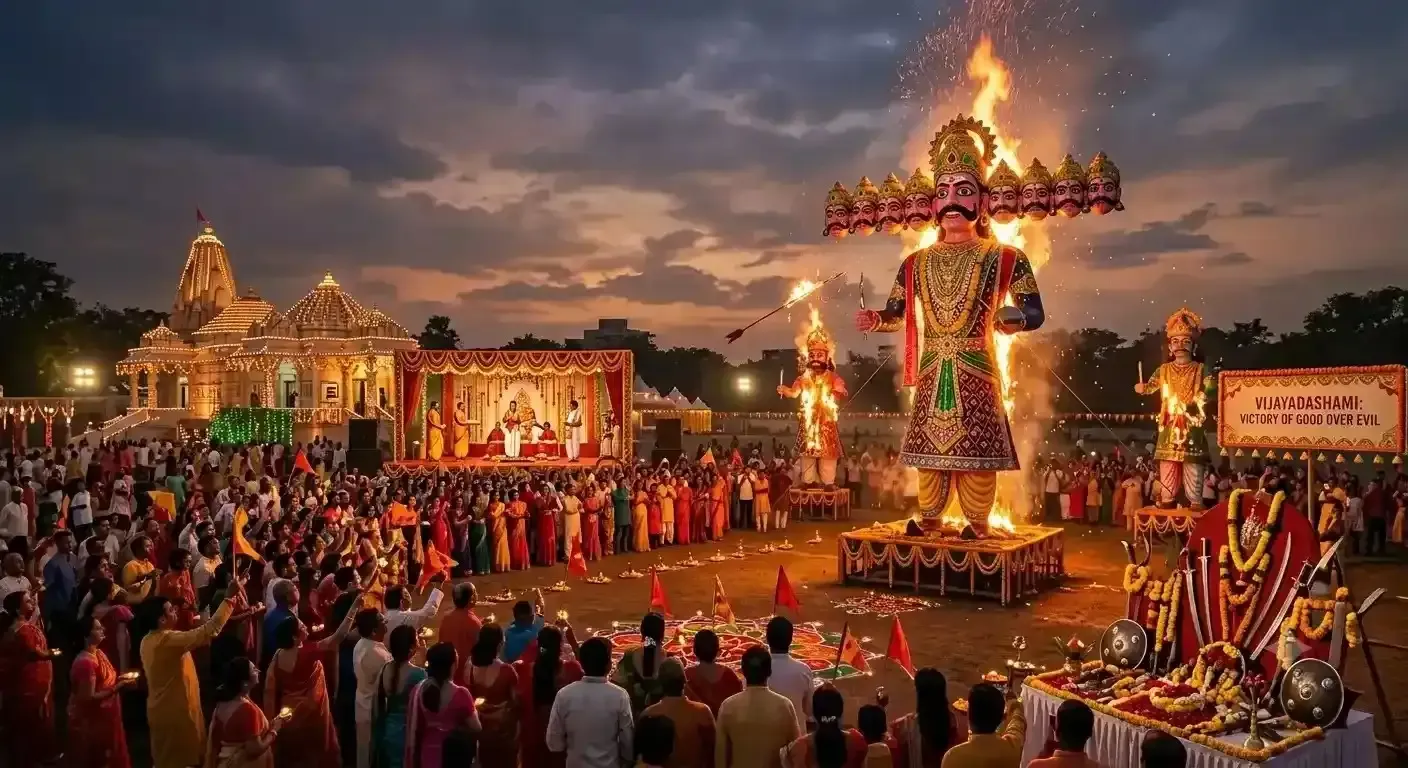
Vijayadashami falls on Tuesday 20 October 2026 across Guyana. Local Vijay Muhurat, Aparahna and Dashami times for Georgetown, New Amsterdam, Rose Hall and Parika, historic mandirs from Albouystown to Berbice, Ramleela traditions and how to do the puja at home.
Quick answer: Dussehra (Vijayadashami) 2026 in Guyana is on Tuesday 20 October 2026 everywhere in the country. The Vijay Muhurat, calculated by the Drik Panchang method, is 1:36 PM – 2:24 PM in Georgetown, 1:34 PM – 2:22 PM in New Amsterdam and 1:37 PM – 2:25 PM in Parika (Guyana Time, UTC-4). Navratri runs from Sunday 11 to Monday 19 October 2026.
Editor's note (5 October 2026): The local times on this page were calculated for each place from the Drik Panchang tithi (Dashami from 12:50 PM IST on 20 October to 2:11 PM IST on 21 October 2026), shown in Guyana Time. Guyana does not use daylight saving, so there is no clock change to allow for. The Vijay Muhurat is the 11th of the 15 daytime muhurtas, calculated by the Drik Panchang method. We do not list 2026 event schedules, because mandirs and organisations announce their own programmes; please check with them directly.
Guyana has one of the largest Hindu communities in the Americas. Most Indo-Guyanese descend from the indentured labourers who arrived from India from 5 May 1838 onwards to work on the sugar estates, the great majority from what are now Uttar Pradesh and Bihar, with a smaller number from South India. Hindus today make up roughly a quarter of the population, and Hindu life is strongest in the old sugar belt: the villages of the East Coast and East Bank of Demerara, West Demerara and the Essequibo coast, and above all Berbice and the Corentyne. Mandirs are a familiar sight along every coastal road, and Diwali and Phagwah are national holidays. Navratri and Dussehra are kept with nine nights of Devi worship, fasting, Ramayan recitation and the open-air Ramleela, one of the oldest Indian dramatic traditions in the Caribbean.
Dussehra 2026 in Guyana: dates and Vijay Muhurat by city
The whole country is on Guyana Time (UTC-0400) all year. The Dashami tithi begins and ends at the same moment everywhere, so only the sun-based windows differ, and only by a few minutes: the Corentyne, in the east, has the earliest Vijay Muhurat and Parika, west of the Demerara River, the latest.
| Region | City | Dussehra date | Vijay Muhurat (Drik Panchang method) | Dashami begins → ends |
|---|---|---|---|---|
| Demerara-Mahaica (Region 4) | Georgetown | Tue 20 Oct | 1:36 PM – 2:24 PM | Tue 20 Oct, 3:20 AM → Wed 21 Oct, 4:41 AM |
| East Berbice-Corentyne (Region 6) | New Amsterdam | Tue 20 Oct | 1:34 PM – 2:22 PM | Tue 20 Oct, 3:20 AM → Wed 21 Oct, 4:41 AM |
| East Berbice-Corentyne (Region 6) | Rose Hall | Tue 20 Oct | 1:33 PM – 2:21 PM | Tue 20 Oct, 3:20 AM → Wed 21 Oct, 4:41 AM |
| Essequibo Islands-West Demerara (Region 3) | Parika | Tue 20 Oct | 1:37 PM – 2:25 PM | Tue 20 Oct, 3:20 AM → Wed 21 Oct, 4:41 AM |
The Aparahna (afternoon period) is the traditional window for Aparajita and Shami puja, and sunset marks the time for any evening aarti, Ravan Dahan or the closing night of Ramleela:
| City | Aparahna, 20 Oct | Sunset, 20 Oct |
|---|---|---|
| Georgetown | 12:49 PM – 3:12 PM | 5:35 PM |
| New Amsterdam | 12:46 PM – 3:10 PM | 5:33 PM |
| Rose Hall | 12:45 PM – 3:09 PM | 5:32 PM |
| Parika | 12:50 PM – 3:13 PM | 5:36 PM |
Key Navratri and Dussehra dates 2026
| Observance | Date (2026) |
|---|---|
| Navratri begins (Ghatasthapana) | Sunday 11 October |
| Durga Ashtami and Maha Navami | Monday 19 October |
| Dussehra / Vijayadashami in Guyana | Tuesday 20 October |
| Dashami tithi, Guyana Time | Tue 20 Oct, 3:20 AM → Wed 21 Oct, 4:41 AM |
| Bijoya Dashami / Sindoor Khela (India, Bengal tradition) | Wednesday 21 October |
Ashtami and Navami share Monday 19 October in India's calendar this year, so families who do Kanya pujan on either day will hold it then. Because Guyana is several hours behind India, the Dashami tithi begins in the early hours of 20 October and lasts through the whole Aparahna, so there is no doubt about the date. Guyana's Hindu organisations publish their own calendars, which may differ slightly for some observances; follow your mandir and pandit.
Hindu mandirs in Guyana for Navratri & Dussehra
The mandirs and organisations below have been confirmed to exist in or near each city. We list name and area only; check their own websites or social pages for opening hours and festival plans. Temples and community groups usually announce Navratri garba, Durga Puja, Ramlila and Ravan Dahan programmes a few weeks ahead — check their websites/social pages.
Demerara-Mahaica: Georgetown
Georgetown's Vijay Muhurat is 1:36 PM – 2:24 PM, within an Aparahna of 12:49 PM – 3:12 PM; sunset is at 5:35 PM. The capital is home to the headquarters of the main Hindu organisations, and its mandirs are joined by many more in the villages of the East Coast and East Bank of Demerara.
- Albouystown Hindu Temple — Albouystown, Georgetown. Completed in 1923, it is recorded by the National Trust of Guyana as the first Hindu temple built in the city.
- Guyana Hindu Dharmic Sabha (Pandit Reepu Daman Persaud Sanskritik Kendra) — Prashad Nagar, Georgetown. The Sabha, founded in 1974, is one of the country's largest Hindu organisations, with affiliated mandirs across the coast.
- Swami Vivekananda Cultural Centre — Georgetown. The cultural centre of the High Commission of India, which has hosted Navratri and dandiya evenings in recent years.
- Peter's Hall Mandir — Peter's Hall, East Bank Demerara, on the outskirts of Georgetown.
In Georgetown and along the Demerara coast, Navratri is a time of fasting and nightly Devi puja, with bhajans, Durga Path and Ramayan readings in the mandirs. Many families observe the nine days with vegetarian food, and some sabhas organise Ramleela, kirtan and youth programmes. Newer arrivals from India, together with the Indian High Commission's cultural centre, have also made garba and dandiya nights part of the capital's autumn.
East Berbice-Corentyne: New Amsterdam and Rose Hall
New Amsterdam's Vijay Muhurat is 1:34 PM – 2:22 PM and Rose Hall's is 1:33 PM – 2:21 PM, the earliest in the country; sunset is at 5:33 PM and 5:32 PM. Berbice and the Corentyne coast are the heartland of Hinduism in Guyana, with mandirs in almost every village from Canje to Skeldon.
- Shri Krishna Mandir (Hindu Society of Berbice) — Gay Park, Greater New Amsterdam. A South Indian–style mandir opened in 2014, with Maha Kali and Shiva mandirs on either side in the same compound.
- Fort Canje Mandir — near the Canje Bridge, New Amsterdam. An early twentieth-century timber temple listed as a heritage site by the National Trust of Guyana.
- Berbice Central Arya Samaj — Berbice. The umbrella for Arya Samaj groups across the county.
- Free Yard Hindu Mandir and Miss Phoebe Hindu Mandir — Port Mourant, the neighbouring village to the east of Rose Hall, which has several historic mandirs recorded by the National Trust.
The Corentyne villages are famous for their Ramleela: over the nights of Navratri, local players stage the story of Rama in open grounds near the mandir, from his birth and exile to the abduction of Sita, Hanuman's search and the battle of Lanka, with the victory over Ravana on Dussehra. Berbice also has a strong Shakti tradition, including Kali Mai worship, and Navratri brings special pujas to the Goddess in many village mandirs.
Essequibo Islands-West Demerara: Parika
Parika's Vijay Muhurat is 1:37 PM – 2:25 PM, the latest in the country, with sunset at 5:36 PM. The town is the gateway to the Essequibo islands and coast, and the villages of West Demerara and the West Coast have many mandirs.
- Shree Krishna Dharmic Mandir — Parika. A Dharmic Sabha mandir that serves the local community for sabha and festival activities.
- Gaura Nitai Ashirvad Mandir (ISKCON) — Crane Village, West Coast Demerara.
Families in West Demerara and on the Essequibo coast keep Navratri much as on the East Coast, with fasting, Devi puja and Ramayan satsang, and many travel to larger mandirs or to Georgetown for bigger community celebrations at the weekend.
How Guyana celebrates Navratri and Dussehra
Guyanese Hindu tradition is mostly North Indian in origin, and Navratri is centred on the worship of Durga in her nine forms. Families set up a kalash, keep a lamp burning, fast or eat simple vegetarian food, and gather in the mandir for evening puja, bhajans and readings from the Ramcharitmanas. On Ashtami or Navami many honour young girls as forms of the Devi with Kanya pujan and prasad.
Ramleela is the signature tradition. Brought by indentured labourers from North India, it is the longest-running open-air drama in the Caribbean, and in many villages it still takes nine nights, ending on Dussehra with Rama's victory and, where permitted, the burning of a Ravan effigy. Arya Samaj families mark the day with havan and Vedic prayers. Gujarati-style garba and dandiya, and Bengali-style Durga Puja, are newer additions brought mainly by people who have moved from India. South Indian customs such as Golu, Ayudha Puja or Bathukamma are not widely kept as community festivals in Guyana, though some families observe them at home.
Dussehra puja at home
If you cannot reach a mandir on a Tuesday, a short puja at home in the afternoon is entirely traditional. Ideally do it during your Vijay Muhurat, or at least within the Aparahna:
- Aparajita puja: draw an eight-petalled lotus with kumkum or rice flour, place a diya, and worship Devi Aparajita, the goddess of victory, with flowers, akshat and a simple prayer for success over obstacles.
- Shami puja: if you have Shami leaves, or a substitute that your pandit recommends, offer them to the Devi and exchange them with family as "gold".
- Ayudha Puja / Shastra puja: clean and decorate tools, cutlasses, books, laptops and the car, apply sindoor or kumkum and turmeric, and offer flowers, thanking them for their service.
- Vidyarambham: Vijayadashami is a traditional day for small children to begin learning, writing "Om" or the first letters of the alphabet in rice.
- New beginnings: starting a course, opening a business or a short walk beyond your village (seemollanghan) are traditional symbols of victory on this day.
A simple order: bathe, light a diya, pray to Ganesh, do the Aparajita and Shami puja, then Shastra puja, offer naivedya (mohan bhog, fruit, sweets), do aarti and share prasad. For full step-by-step vidhi and the stories behind the festival, see our Dussehra / Vijayadashami 2026 pillar guide.
Practical tips for Dussehra in Guyana
- Working day: Tuesday 20 October is a normal working and school day. The Vijay Muhurat falls in the early afternoon, so consider a short break, or do the puja later within the Aparahna.
- Fireworks and effigies: fireworks and open fires are regulated by law and by the local authorities and police. Check the rules before lighting anything, and never burn effigies without permission.
- Getting to mandirs: parking near popular mandirs and Ramleela grounds fills up quickly in the evening. Share a car or minibus with family and keep valuables out of sight.
- Weather: October is usually one of the drier, hotter months on the coast, but showers are always possible. Carry water and something to sit on for outdoor Ramleela.
- Puja items: markets and shops in Georgetown, New Amsterdam and the coastal villages stock flowers, diyas and sindoor, but buy a few days early as stock runs short before Navratri weekends.
- Muhurat: use your own city's times from the table above; never convert India's times into Guyana Time.
Guyanese families in New York, Toronto and London should use a panchang for their own city rather than these times; our USA, Canada and UK guides list local Vijay Muhurat.
Frequently asked questions
When is Dussehra 2026 in Guyana?
Tuesday 20 October 2026 in every part of Guyana. The Dashami tithi begins at 3:20 AM Guyana Time on Tuesday 20 October and ends at 4:41 AM on Wednesday 21 October, so it covers the whole day and afternoon of the 20th.
What is the Vijay Muhurat in Georgetown and Berbice?
Calculated by the Drik Panchang method for each place: Georgetown 1:36 PM – 2:24 PM, New Amsterdam 1:34 PM – 2:22 PM, Rose Hall 1:33 PM – 2:21 PM and Parika 1:37 PM – 2:25 PM on Tuesday 20 October 2026, all in Guyana Time (UTC-4).
Can I convert India's Dussehra muhurat into Guyana time?
No. The Vijay Muhurat depends on local sunrise and sunset, so it has to be calculated for your own location. Use the Guyana times on this page or your mandir's calendar, not India's times shifted by the time difference.
Where can I see Ramleela or Ravan Dahan in Guyana?
Ramleela has a long history in villages along the coast, especially on the Corentyne and in Demerara, and mandirs and community groups still organise it. Temples and community groups usually announce Navratri garba, Durga Puja, Ramlila and Ravan Dahan programmes a few weeks ahead — check their websites/social pages.
When is Bijoya Dashami and Sindoor Khela in 2026?
In India, Bengal-tradition Bijoya Dashami and Sindoor Khela fall on Wednesday 21 October 2026 (Drik Panchang, Kolkata). Any Durga Puja held in Guyana follows its own committee's schedule, so check their announcements.
Is Dussehra a public holiday in Guyana?
No. Diwali and Phagwah are national holidays in Guyana, but Tuesday 20 and Wednesday 21 October 2026 are normal working and school days, so many families do the afternoon puja at home and go to the mandir in the evening or at the weekend.
Related guides
- Dussehra / Vijayadashami 2026: complete guide
- Navratri 2026: complete guide for NRI families
- Dussehra 2026 in Trinidad and Tobago, city by city
- Dussehra 2026 in Suriname, city by city
- Dussehra 2026 USA, state by state
- Dussehra 2026 Canada, province by province
- Dussehra 2026 UK, region by region
- October 2026 Hindu festival calendar
You might also like
Dussehra 2026 in Victoria, BC: Date, Vijay Muhurat, Temples and Navratri Celebrations
Dussehra 2026 in Surrey: Date, Vijay Muhurat, Temples and Navratri Celebrations
Dussehra 2026 in Vancouver: Date, Vijay Muhurat, Temples and Navratri Celebrations