
Dussehra 2026 in Trinidad and Tobago, City by City: Date, Vijay Muhurat and Hindu Temples
Vijayadashami falls on Tuesday 20 October 2026 across Trinidad and Tobago, the same day as India. Local Vijay Muhurat, Aparahna and Dashami times for Port of Spain, Chaguanas, San Fernando, Couva and Scarborough, verified mandirs, Ramleela traditions and how to mark the day at home.
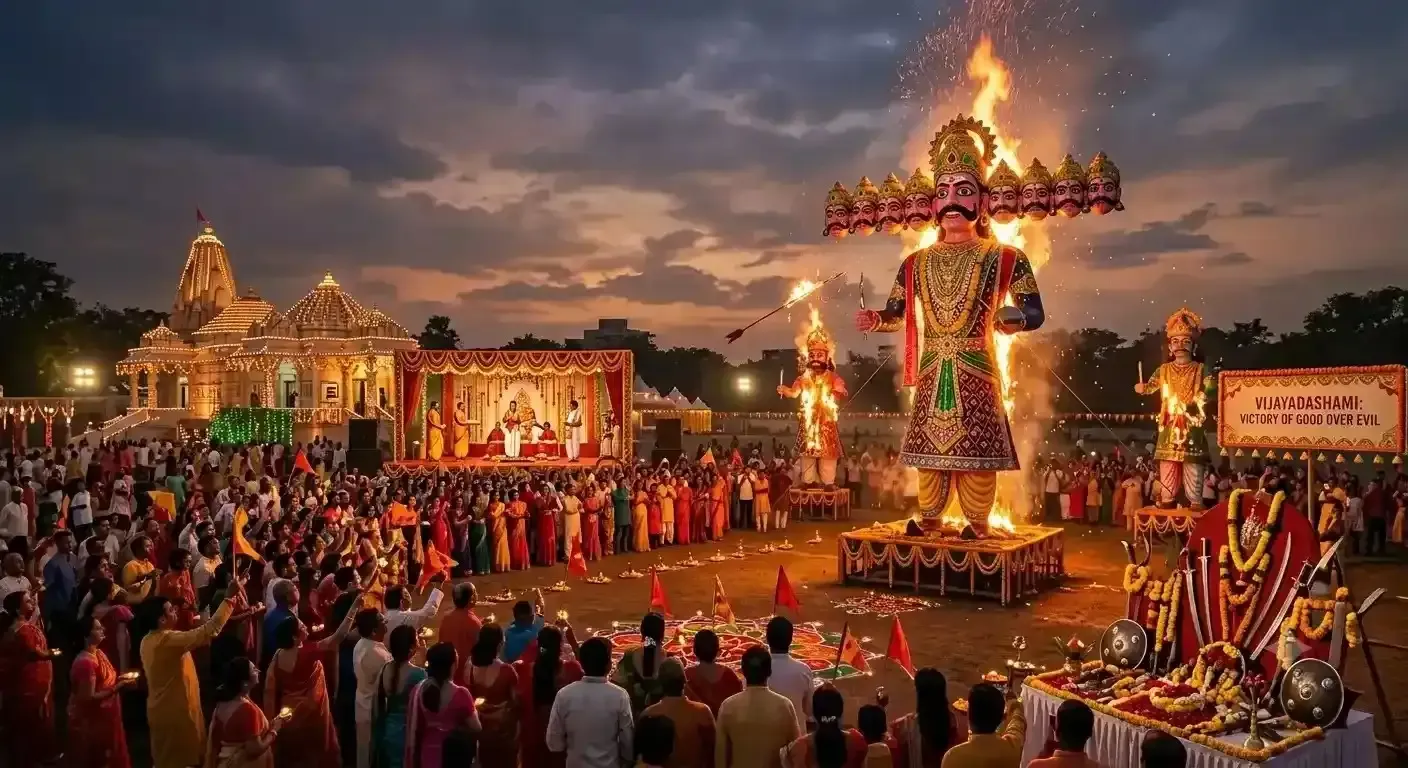
Vijayadashami falls on Tuesday 20 October 2026 across Trinidad and Tobago, the same day as India. Local Vijay Muhurat, Aparahna and Dashami times for Port of Spain, Chaguanas, San Fernando, Couva and Scarborough, verified mandirs, Ramleela traditions and how to mark the day at home.
Quick answer: Dussehra (Vijayadashami) 2026 in Trinidad and Tobago is on Tuesday 20 October 2026, the same day as India. The Vijay Muhurat, calculated by the Drik Panchang method, is 1:49 PM – 2:36 PM in Port of Spain, 1:48 PM – 2:36 PM in Chaguanas and 1:46 PM – 2:33 PM in Scarborough, Tobago (local time, UTC-4). In India's calendar Navratri runs from Sunday 11 to Monday 19 October 2026.
Editor's note (5 October 2026): The local times on this page were calculated for each town from the Drik Panchang tithi (Dashami from 12:50 PM IST on 20 October to 2:11 PM IST on 21 October 2026, India time), using Trinidad and Tobago's time zone, which stays on UTC-4 all year with no daylight saving. The Vijay Muhurat is the 11th of the 15 daytime muhurtas, calculated by the Drik Panchang method. We do not list 2026 event schedules, because mandirs, Ramleela committees and associations announce their own programmes; please check with them directly.
Trinidad and Tobago has one of the oldest and largest Hindu communities in the Western Hemisphere. Its roots go back to the indentured labourers who came from India, mostly from what are now Uttar Pradesh and Bihar, between 1845 and 1917 to work on the sugar estates. Their descendants kept the Ramayan, the Bhojpuri-Hindi bhajan tradition and village Ramleela alive for more than 175 years, and Hindus today make up roughly a fifth of the population, with the largest numbers in central and south Trinidad. The Sanatan Dharma Maha Sabha, headquartered in St Augustine, runs many of the country's mandirs and schools, alongside the Arya Samaj, the Kabir Panth, the Hindu Prachar Kendra, the Chinmaya Mission and many independent temples. This means Navratri and Dussehra here have a distinct Indo-Caribbean character: fasting, Devi puja and Ramayan katha in the mandirs, and open-air Ramleela in the villages.
Dussehra 2026 in Trinidad and Tobago: dates and Vijay Muhurat by town
Both islands share one time zone, UTC-4, and do not change their clocks, so the Dashami tithi begins and ends at the same moment everywhere: at 3:20 AM on Tuesday 20 October and 4:41 AM on Wednesday 21 October. The sun-based windows differ by only a few minutes, with Tobago, further east, slightly earlier than Trinidad.
| Region | Town | Dussehra date | Vijay Muhurat (Drik Panchang method) | Dashami begins → ends |
|---|---|---|---|---|
| Port of Spain | Port of Spain | Tue 20 Oct | 1:49 PM – 2:36 PM | Tue 20 Oct, 3:20 AM → Wed 21 Oct, 4:41 AM |
| Chaguanas | Chaguanas | Tue 20 Oct | 1:48 PM – 2:36 PM | Tue 20 Oct, 3:20 AM → Wed 21 Oct, 4:41 AM |
| Couva-Tabaquite-Talparo | Couva | Tue 20 Oct | 1:49 PM – 2:36 PM | Tue 20 Oct, 3:20 AM → Wed 21 Oct, 4:41 AM |
| San Fernando | San Fernando | Tue 20 Oct | 1:49 PM – 2:36 PM | Tue 20 Oct, 3:20 AM → Wed 21 Oct, 4:41 AM |
| Tobago | Scarborough | Tue 20 Oct | 1:46 PM – 2:33 PM | Tue 20 Oct, 3:20 AM → Wed 21 Oct, 4:41 AM |
The Aparahna (afternoon period) on Tuesday 20 October is the traditional window for Aparajita and Shami puja, and sunset marks the time for evening aarti or the burning of Ravan:
| Town | Aparahna, 20 Oct | Sunset, 20 Oct |
|---|---|---|
| Port of Spain | 1:01 PM – 3:24 PM | 5:46 PM |
| Chaguanas | 1:01 PM – 3:23 PM | 5:46 PM |
| Couva | 1:01 PM – 3:24 PM | 5:46 PM |
| San Fernando | 1:01 PM – 3:24 PM | 5:46 PM |
| Scarborough | 12:58 PM – 3:20 PM | 5:42 PM |
Key Navratri and Dussehra dates 2026
| Observance | Date (2026) |
|---|---|
| Navratri begins (Ghatasthapana), India | Sunday 11 October |
| Durga Ashtami and Maha Navami, India | Monday 19 October |
| Dussehra / Vijayadashami, India | Tuesday 20 October |
| Dussehra / Vijayadashami in Trinidad and Tobago | Tuesday 20 October |
| Dashami tithi, Trinidad and Tobago time | Tue 20 Oct, 3:20 AM → Wed 21 Oct, 4:41 AM |
| Bijoya Dashami / Sindoor Khela (India, Bengal tradition) | Wednesday 21 October |
Why the same day as India? Trinidad is nine and a half hours behind India. Dashami begins at 12:50 PM IST, which is 3:20 AM in Trinidad, before sunrise on Tuesday 20 October. Because Vijayadashami is kept on the day when Dashami covers the afternoon (Aparahna), and Dashami covers the entire Aparahna on the 20th, there is no doubt about the date: every town observes Tuesday 20 October.
Hindu temples in Trinidad and Tobago for Navratri & Dussehra
These mandirs and organisations have been confirmed to exist in or near each town. We list name and area only; check their own websites or social pages for opening hours and festival plans. Temples and community groups usually announce Navratri garba, Durga Puja, Ramlila and Ravan Dahan programmes a few weeks ahead — check their websites/social pages. In Trinidad, Ramlila is usually spelt Ramleela.
Port of Spain
Port of Spain's Vijay Muhurat is 1:49 PM – 2:36 PM on Tuesday 20 October, within an Aparahna of 1:01 PM – 3:24 PM, and sunset is at 5:46 PM. The capital's Hindu community is smaller than in central and south Trinidad, but it is home to one of the country's best-known mandirs and draws families from the East–West Corridor and Diego Martin.
- Paschim Kaashi Hindu Mandir — St James, Port of Spain. A branch mandir of the Sanatan Dharma Maha Sabha and one of the largest Hindu temples in Trinidad, known for its images of the ten avatars of Vishnu.
- Sanatan Dharma Maha Sabha (head office) — St Augustine, on the East–West Corridor. The country's largest Hindu organisation, whose network of mandirs and schools observes Navratri and Dussehra across both islands.
In and around the capital, Navratri is mostly observed in the mandirs, with nightly Devi puja, bhajans and Durga Saptashati path, while families fast for the nine days.
Chaguanas
Chaguanas has the earliest Vijay Muhurat in Trinidad at 1:48 PM – 2:36 PM, with an Aparahna of 1:01 PM – 3:23 PM and sunset at 5:46 PM. Trinidad's largest borough sits at the heart of the Indo-Trinidadian community, and many of the country's best-known Hindu institutions are based here or nearby.
- Edinburgh Hindu Temple — Edinburgh, Chaguanas. Founded by Pundit Ramesh Tiwari, the temple has life-size murtis of Lord Shiva and Lord Hanuman and an active congregation.
- National Council of Indian Culture (NCIC) — Divali Nagar site — Endeavour, Chaguanas. Home of the annual Divali Nagar, the NCIC's grounds are a focus for Indian culture, Ramayan readings and religious performances in the festival season.
- Hindu Prachar Kendra — central Trinidad. An influential Hindu education and missionary organisation known for its Ramayan and heritage programmes.
Around Chaguanas, the nine nights are marked with Devi puja in the mandirs, jhandi flags raised in home yards and Ramayan katha. Ramleela grounds in the surrounding villages draw large evening crowds during the season, and the burning of Ravan is a much-loved finale.
Couva-Tabaquite-Talparo: Couva and Carapichaima
Couva's Vijay Muhurat is 1:49 PM – 2:36 PM, within an Aparahna of 1:01 PM – 3:24 PM, and sunset is at 5:46 PM. This largely rural region of former sugar estates is a heartland of Ramleela, and two of Trinidad's most famous Hindu landmarks are in nearby Carapichaima and Waterloo.
- Sri Dattatreya Yoga Centre and Mandir — Orange Field, Carapichaima. A South Indian-style temple complex founded by Sri Ganapathy Sachchidananda Swamiji, with an 85-foot murti of Lord Hanuman, reputed to be the largest outside India.
- Temple in the Sea (Sewdass Sadhu Shiv Mandir) — Waterloo, Carapichaima. Built out into the Gulf of Paria by Sewdass Sadhu, an indentured labourer's son, and rebuilt in 1995; it is regarded as a national treasure.
Hanuman, the hero of Rama's victory, has a special place in Trinidad's Ramleela, and the Hanuman murti at Carapichaima makes this area a natural pilgrimage stop during the season. Village Ramleelas in the region are known for their hand-made costumes, masks and effigies, built by volunteers over weeks.
San Fernando
San Fernando's Vijay Muhurat is 1:49 PM – 2:36 PM, with an Aparahna of 1:01 PM – 3:24 PM and sunset at 5:46 PM. Trinidad's southern city is surrounded by towns and villages with large Hindu populations, from Marabella and Princes Town to Penal and Debe.
- Krishna Mandir — San Fernando. A branch mandir of the Sanatan Dharma Maha Sabha, serving Hindu families in the city.
South Trinidad has a strong tradition of village Ramleela and Ramayan singing. Many mandirs in the area hold Navratri puja every evening, and Durga Ashtami and Navami are marked with havan and the honouring of young girls as forms of the Devi.
Tobago: Scarborough
Scarborough's Vijay Muhurat is 1:46 PM – 2:33 PM, the earliest in the country, with an Aparahna of 12:58 PM – 3:20 PM and sunset at 5:42 PM. Tobago's Hindu community is small, and the island has not had a large purpose-built mandir.
- Tobago Hindu Society — Scarborough area. A member organisation of the Sanatan Dharma Maha Sabha, which received land at Signal Hill near Scarborough for a Hindu mandir.
In Tobago, Navratri and Dussehra are usually kept with home puja, shared satsangs and community gatherings, and some families travel to Trinidad for the larger mandir and Ramleela events.
How Trinidad and Tobago celebrates Navratri and Dussehra
Ramleela is the heart of the season. Brought by indentured labourers in the nineteenth century, it is often described as the oldest open-air theatre in the Caribbean. Village committees stage the Ramayan on open grounds over several evenings, with volunteers playing Rama, Sita, Lakshman, Hanuman and Ravan, live tassa and dholak, and the Ramcharitmanas sung by a chorus. The cast can run to a hundred people, and the finale is the defeat of Ravan, whose giant effigy is burned to cheers. Some Ramleelas end on Dussehra itself, while others run on into the weeks before Divali, so check your local committee.
Navratri in Trinidad is above all a time of fasting and devotion: many families give up meat and alcohol, keep a sattvic diet and attend nightly puja and bhajans at the mandir, ending with Kanya pujan and a havan. Durga Saptashati path, Devi kirtans and Ramayan katha are common. Gujarati-style garba and dandiya, Bengali Durga Puja, Tamil Golu, Telugu Bathukamma and Ayudha Puja are less widespread than in newer diaspora communities, but more recent arrivals from India and the growing interest in Indian culture mean garba nights and Saraswati puja are increasingly seen. Diaspora Durga Pujas follow their committee's schedule; in the Bengal tradition, Bijoya Dashami and Sindoor Khela fall on Wednesday 21 October 2026 in India.
Dussehra puja at home
If you cannot reach a mandir on a Tuesday, a short puja at home in the afternoon is entirely traditional. Ideally do it during your town's Vijay Muhurat, or at least within the Aparahna on 20 October:
- Aparajita puja: draw an eight-petalled lotus with kumkum or rice flour, place a deya, and worship Devi Aparajita, the goddess of victory, with flowers, rice and a simple prayer for success over obstacles.
- Shami puja: if you have Shami leaves (or a local substitute), offer them to the Devi and exchange them with family as "gold", a symbol of prosperity.
- Ayudha Puja / Shastra puja: clean and decorate tools, cutlasses, books, laptops and the car, apply sindoor or kumkum and offer flowers, thanking them for their service.
- Vidyarambham: Vijayadashami is a traditional day for small children to begin learning, by writing "Om" or the first letters of the alphabet in rice.
A simple order: bathe, light a deya, pray to Ganesh, do the Aparajita and Shami puja, then Ayudha puja, offer prasad (mohan bhog, fruit, sweets), do aarti and share the prasad. For full step-by-step vidhi and the stories behind the festival, see our Dussehra / Vijayadashami 2026 pillar guide.
Practical tips for Dussehra in Trinidad and Tobago
- Working day: 20 October is a normal working and school day. The Vijay Muhurat falls in the early afternoon, so consider a short break; if that is not possible, any time within your town's Aparahna is also traditional.
- Fireworks and effigies: rules on fireworks, open fires and effigy burning are set by the national and local authorities. Ramleela committees make their own arrangements; do not burn effigies at home without checking the rules.
- Ramleela grounds: village grounds can be crowded and parking is limited. Arrive early, car-share, keep children close and stand well back when the effigy is lit.
- Weather: October is still the rainy season, with heavy afternoon showers possible. Bring an umbrella or rain jacket for outdoor puja and Ramleela.
- Muhurat: use your own town's times from the table above; never convert India's times into Trinidad time.
Frequently asked questions
When is Dussehra 2026 in Trinidad and Tobago?
Tuesday 20 October 2026, the same day as India, in every town on both islands. The Dashami tithi begins at 3:20 AM local time on Tuesday 20 October and runs until 4:41 AM on Wednesday 21 October, so it covers the whole afternoon of the 20th.
What is the Vijay Muhurat in Port of Spain, Chaguanas and San Fernando?
Calculated by the Drik Panchang method for Tuesday 20 October 2026 in Trinidad and Tobago time (UTC-4): Port of Spain 1:49 PM – 2:36 PM, Chaguanas 1:48 PM – 2:36 PM, San Fernando 1:49 PM – 2:36 PM, Couva 1:49 PM – 2:36 PM and Scarborough, Tobago 1:46 PM – 2:33 PM.
Can I convert India's Dussehra muhurat into Trinidad time?
No. The Vijay Muhurat depends on local sunrise and sunset, so it has to be calculated for your own location. Use the Trinidad and Tobago times on this page or your mandir's calendar, not India's times shifted by the time difference.
Where can I see Ramleela and the burning of Ravan in Trinidad?
Ramleela is staged by village committees and mandirs across Trinidad, especially in central and south Trinidad, and the season traditionally ends with the burning of Ravan's effigy. Temples and community groups usually announce Navratri, Durga Puja, Ramleela and Ravan Dahan programmes a few weeks ahead — check their websites/social pages.
Is Dussehra a public holiday in Trinidad and Tobago?
No. Divali is a national public holiday, but Dussehra is not. Tuesday 20 October 2026 is a normal working and school day, so many families do the afternoon puja at home within the Aparahna and join mandir or Ramleela events in the evening or at the weekend.
Do Trinidad mandirs follow the same Navratri dates as India?
Most Trinidad mandirs follow a calendar close to India's, with Navratri from Sunday 11 October and Vijayadashami on Tuesday 20 October 2026, but each organisation publishes its own calendar. Follow your mandir or pundit for Ashtami, Navami and Kanya pujan.
Related guides
- Dussehra / Vijayadashami 2026: complete guide
- Dussehra 2026 in Guyana, city by city
- Dussehra 2026 in Suriname, city by city
- Dussehra 2026 USA, state by state
- Dussehra 2026 Canada, province by province
- Dussehra 2026 UK, region by region
- Navratri 2026: complete guide for NRI families
- October 2026 Hindu festival calendar
You might also like
Dussehra 2026 in Victoria, BC: Date, Vijay Muhurat, Temples and Navratri Celebrations
Dussehra 2026 in Surrey: Date, Vijay Muhurat, Temples and Navratri Celebrations
Dussehra 2026 in Vancouver: Date, Vijay Muhurat, Temples and Navratri Celebrations