
Dussehra 2026 in Hong Kong, Area by Area: Date, Vijay Muhurat and Hindu Temples
Vijayadashami falls on Tuesday 20 October 2026 in Hong Kong, but the Dashami tithi only begins at 3:20 PM local time. Local Vijay Muhurat, Aparahna and Dashami times for Hong Kong Island, Kowloon and the New Territories, verified Hindu temples and organisations, and how to mark the day at home.
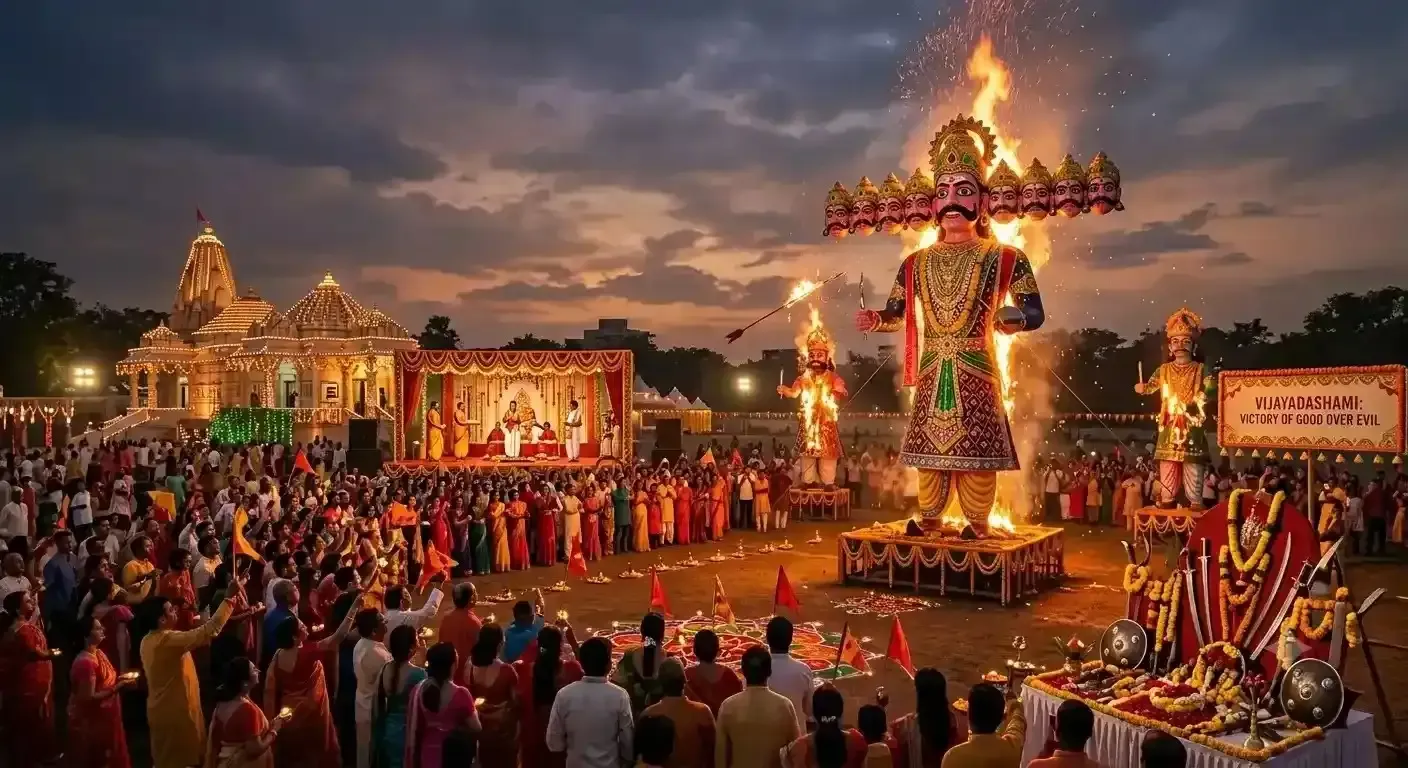
Vijayadashami falls on Tuesday 20 October 2026 in Hong Kong, but the Dashami tithi only begins at 3:20 PM local time. Local Vijay Muhurat, Aparahna and Dashami times for Hong Kong Island, Kowloon and the New Territories, verified Hindu temples and organisations, and how to mark the day at home.
Quick answer: Dussehra (Vijayadashami) 2026 in Hong Kong is on Tuesday 20 October 2026, the same day as India. The Vijay Muhurat, calculated by the Drik Panchang method, is 2:03 PM – 2:49 PM across Hong Kong Island, Kowloon and Sha Tin (Hong Kong Time, UTC+8). But the Dashami tithi only begins at 3:20 PM local time, so do Shami, Aparajita and Vijay puja after 3:20 PM, within the Aparahna, which ends at 3:36 PM (3:35 PM in Sha Tin).
Editor's note (5 October 2026): The local times on this page were calculated for each area from the Drik Panchang tithi (Dashami from 12:50 PM IST on 20 October to 2:11 PM IST on 21 October 2026, India time), shown in Hong Kong Time, which has no daylight saving. The Vijay Muhurat is the 11th of the 15 daytime muhurtas, calculated by the Drik Panchang method. Because the Dashami overlaps Hong Kong's afternoon by only about 16 minutes, most calendars give Tuesday 20 October, but a few may list Wednesday 21 October; follow your temple. We do not list 2026 event schedules, because temples and associations announce their own programmes; please check with them directly.
Hong Kong's Hindu community is small in number but old and closely knit. Sindhi and other Indian trading families settled in the city from the nineteenth century, and the Hindu Association of Hong Kong opened the territory's first Hindu temple in Happy Valley in 1953. Today the community includes Sindhi, Punjabi, Gujarati, Marwari, Bengali, Tamil and other Indian families, many professionals working in finance and trade, and a large Nepali community, many with ancestral ties to the Gurkha regiments once stationed here. For the Nepali families, Vijayadashami is Dashain, the most important festival of the year.
Dussehra 2026 in Hong Kong: dates and Vijay Muhurat by area
All of Hong Kong is on Hong Kong Time (UTC+0800) on 20 and 21 October, and because the territory is so compact, the sun-based windows differ by a minute at most. Hong Kong is two and a half hours ahead of India, so India's Dashami start of 12:50 PM IST arrives at 3:20 PM local time, well into the afternoon.
| Region | Area | Dussehra date | Vijay Muhurat (Drik Panchang method) | Dashami begins → ends |
|---|---|---|---|---|
| Hong Kong Island | Happy Valley / Wan Chai | Tue 20 Oct | 2:03 PM – 2:49 PM | Tue 20 Oct, 3:20 PM → Wed 21 Oct, 4:41 PM |
| Kowloon | Tsim Sha Tsui | Tue 20 Oct | 2:03 PM – 2:49 PM | Tue 20 Oct, 3:20 PM → Wed 21 Oct, 4:41 PM |
| New Territories | Sha Tin | Tue 20 Oct | 2:03 PM – 2:49 PM | Tue 20 Oct, 3:20 PM → Wed 21 Oct, 4:41 PM |
The Aparahna (afternoon period) on Tuesday 20 October is the traditional window for Aparajita and Shami puja. Because the Vijay Muhurat falls before Dashami begins, the part of the Aparahna that lies inside Dashami is the window to use. Sunset marks the time for any evening aarti or Ravan Dahan:
| Area | Aparahna, 20 Oct | Aparahna within Dashami | Sunset, 20 Oct |
|---|---|---|---|
| Happy Valley / Wan Chai | 1:17 PM – 3:36 PM | 3:20 PM – 3:36 PM | 5:54 PM |
| Tsim Sha Tsui | 1:17 PM – 3:36 PM | 3:20 PM – 3:36 PM | 5:54 PM |
| Sha Tin | 1:17 PM – 3:35 PM | 3:20 PM – 3:35 PM | 5:54 PM |
Key Navratri and Dussehra dates 2026
| Observance | Date (2026) |
|---|---|
| Navratri begins (Ghatasthapana), India | Sunday 11 October |
| Durga Ashtami and Maha Navami, India | Monday 19 October |
| Dussehra / Vijayadashami, India | Tuesday 20 October |
| Dussehra / Vijayadashami in Hong Kong | Tuesday 20 October |
| Dashami tithi, Hong Kong Time | Tue 20 Oct, 3:20 PM → Wed 21 Oct, 4:41 PM |
| Vijay Muhurat, Hong Kong (Drik Panchang method) | 2:03 PM – 2:49 PM, Tue 20 Oct |
| Bijoya Dashami / Sindoor Khela (India, Bengal tradition) | Wednesday 21 October |
Navratri runs from 11 to 19 October 2026 in India's calendar. Hong Kong Durga Pujas follow their committee's own schedule for Saptami, Ashtami, Navami and Bijoya Dashami, and Nepali families follow their own Dashain calendar for the Tika day. Because Hong Kong's Dashami covers only the last few minutes of Tuesday's Aparahna, it is worth checking which day your own temple or association will observe.
Hindu temples in Hong Kong for Navratri & Dussehra
These temples and organisations have been confirmed to exist in Hong Kong. We list name and area only; check their own websites or social pages for opening hours and festival plans. Temples and community groups usually announce Navratri garba, Durga Puja, Ramlila and Ravan Dahan programmes a few weeks ahead — check their websites/social pages.
Hong Kong Island: Happy Valley and Wan Chai
In Happy Valley and Wan Chai the Vijay Muhurat is 2:03 PM – 2:49 PM, the Aparahna runs 1:17 PM – 3:36 PM and sunset is at 5:54 PM on Tuesday 20 October. Dashami begins at 3:20 PM, leaving a short window from 3:20 PM to 3:36 PM for Vijay puja within the Aparahna.
- Hindu Temple, Happy Valley — Wong Nai Chung Road, Happy Valley. Opened in 1953 by the Hindu Association of Hong Kong, it was the territory's first Hindu temple and remains the centre of the community's religious, cultural and social life, with shrines to several deities and a small Hindu cemetery behind it. It is the traditional home of Hong Kong's Diwali, Dussehra and Holi observances.
- Hindu Association of Hong Kong — Happy Valley. The body that built and manages the Happy Valley temple, and the main point of contact for community festival announcements.
During Navratri the Happy Valley temple is busy each evening with Devi puja, bhajans and aarti, and many families visit for Kanya puja on Ashtami or Navami and for blessings on Vijayadashami. Because the temple sits in a dense residential neighbourhood, large public events such as an effigy burning are not part of its usual pattern; expect worship, bhajans, discourses and community meals instead.
Kowloon: Tsim Sha Tsui
Tsim Sha Tsui has the same times as the Island: Vijay Muhurat 2:03 PM – 2:49 PM, Aparahna 1:17 PM – 3:36 PM, sunset 5:54 PM, with Dashami beginning at 3:20 PM. The district has long had a large Indian business and residential presence, and Yau Ma Tei and Jordan, just to the north, are home to many Nepali families.
- ISKCON Hong Kong — Chatham Road South, Tsim Sha Tsui. The Hare Krishna temple of Hong Kong, with Sri Sri Gaura-Nitai as presiding deities; the centre has been in Tsim Sha Tsui since 1987.
- Chinmaya Seva Ashram (Chinmaya Mission Hong Kong) — Mody Road, Tsim Sha Tsui. Inaugurated in 1991, with a murti of Kaliya Nartana Krishna; the Mission runs Vedanta and children's classes in English.
- Hong Kong Bengali Association — community organisation that has organised a public Durga Puja in Hong Kong for many years; venues are announced by the committee each year.
At ISKCON, Dussehra is remembered as the day of Lord Rama's victory, with kirtan, Ramayana readings and prasadam. The Bengali Durga Puja, with its idol, pushpanjali, bhog, dhunuchi dance and Sindoor Khela on Bijoya Dashami, is the season's biggest public Hindu gathering for many families. The Sathya Sai Baba Centre of Hong Kong, founded in the 1970s, also holds bhajans for its members.
New Territories: Sha Tin and beyond
Sha Tin's Vijay Muhurat is 2:03 PM – 2:49 PM, its Aparahna 1:17 PM – 3:35 PM and sunset 5:54 PM; Dashami begins at 3:20 PM, so the Vijay puja window inside Dashami is 3:20 PM – 3:35 PM. We have not been able to verify an active Hindu temple in Sha Tin, so families in the New Territories usually travel to Happy Valley or Tsim Sha Tsui for temple worship, or keep the festival at home and in community halls.
The New Territories hold an important piece of Hindu heritage: the former Gurkha temple at Burma Lines, in Fanling, a Shiva temple built for the soldiers of the British Army's Gurkha regiments. It has stood empty since 1996 and is a graded historic building, not a place of worship today. Dashain was the biggest annual festival of the Gurkhas, and it is still kept by Nepali families from Yau Ma Tei to Yuen Long, many of whose parents or grandparents served in the regiments.
How Hong Kong celebrates Navratri and Dussehra
Hong Kong's Navratri is mostly a festival of temple worship, home puja and community gatherings. Many North Indian and Sindhi families keep the nine-day fast, set up a kalash, recite the Durga Saptashati or Durga Chalisa and end the fast with Kanya puja. Gujarati families and their friends look forward to garba and dandiya nights, which are usually held in hotel ballrooms, clubs or community halls on weekends, since space is scarce in the city.
The Bengali community's Durga Puja brings an idol, the beat of the dhak, cultural programmes and shared bhog to the city, ending with Sindoor Khela on Bijoya Dashami. Tamil, Telugu and Kannada families may set up a Golu of dolls at home, keep Saraswati Puja and Ayudha Puja near the end of the nine days, and mark Vidyarambham for young children on Vijayadashami. Telugu women sometimes gather for Bathukamma.
For Nepali Hindus, the tenth day is Dashain's great day of Tika, when elders place red tika and jamara (barley shoots) on the foreheads of younger relatives and give their blessings. Families visit one another across Kowloon and the New Territories, and community associations often hold Dashain gatherings at the weekend. Large Ramlila stagings and Ravan Dahan effigy burnings are not typical in Hong Kong; where a community does mark Rama's victory, it is usually with a Ramayana reading, a play or a symbolic celebration indoors.
Dussehra puja at home
Because Tuesday 20 October is a working day, a short puja at home is entirely traditional. In Hong Kong this year, wait until Dashami begins at 3:20 PM and, if you can, do the core rituals before the Aparahna ends at 3:36 PM (3:35 PM in Sha Tin). If that is not possible, do the puja later in the day with sincerity; your priest can advise.
- Aparajita puja: draw an eight-petalled lotus with kumkum or rice flour, place a diya, and worship Devi Aparajita, the goddess of victory, with flowers, akshat and a simple prayer for success over obstacles.
- Shami puja: if you have Shami leaves, or a traditional substitute, offer them to the Devi and share them with family as a sign of prosperity and good fortune.
- Ayudha Puja / Shastra puja: clean and decorate tools, books, laptops, phones and the car, apply kumkum and offer flowers, thanking them for their service.
- Vidyarambham: Vijayadashami is the traditional day for small children to begin learning, writing "Om" or the first letters of the alphabet in rice.
- Dashain tika: Nepali families receive tika and jamara from elders, following the time given by their own Dashain calendar.
A simple order: bathe, light a diya, pray to Ganesha, do the Aparajita and Shami puja, then Ayudha puja, offer naivedya (sweets, fruit), do aarti and share prasad. For full step-by-step vidhi and the stories behind the festival, see our Dussehra / Vijayadashami 2026 pillar guide.
Practical tips for Dussehra in Hong Kong
- Mind the Dashami start: the Vijay Muhurat of 2:03 PM – 2:49 PM falls before Dashami begins at 3:20 PM, so do the Vijay puja after 3:20 PM, within the Aparahna.
- Working day: Tuesday 20 October is a normal working and school day. The puja window is short and mid-afternoon, so plan a brief break, or ask your temple about doing it in the evening.
- Fireworks and fire: fireworks and open fires are tightly controlled in Hong Kong, and rules are set by the authorities. Use diyas safely indoors and follow building management rules; do not attempt any effigy burning without official permission.
- Getting there: the MTR is the easiest way to reach Happy Valley (via Causeway Bay) and Tsim Sha Tsui. Parking near temples and halls is very limited on festival evenings.
- Weather: late October is usually warm, and sunset is at 5:54 PM, so evening programmes start after dark. Carry water for crowded halls.
- Muhurat: use the Hong Kong times on this page; never convert India's times into Hong Kong time.
Frequently asked questions
When is Dussehra 2026 in Hong Kong?
Tuesday 20 October 2026, the same day as India. The Dashami tithi begins at 3:20 PM Hong Kong time on Tuesday 20 October and ends at 4:41 PM on Wednesday 21 October. Because Dashami overlaps the afternoon (Aparahna) of the 20th by only about 16 minutes, most calendars give Tuesday 20 October, but a few may list Wednesday 21 October; follow your temple.
What is the Vijay Muhurat in Hong Kong on Dussehra 2026?
Calculated by the Drik Panchang method, the Vijay Muhurat is 2:03 PM – 2:49 PM on Tuesday 20 October in Happy Valley, Tsim Sha Tsui and Sha Tin. However, this window falls before the Dashami tithi begins at 3:20 PM, so do Shami, Aparajita and Vijay puja after 3:20 PM, within the Aparahna, which ends at 3:36 PM (3:35 PM in Sha Tin).
Why should I wait until 3:20 PM for the Dussehra puja in Hong Kong?
Vijayadashami rituals belong to the Dashami tithi. India's Dashami starts at 12:50 PM IST, which is 3:20 PM in Hong Kong, two and a half hours ahead. By then Hong Kong's Vijay Muhurat is already over, so the short stretch of Aparahna from 3:20 PM is the traditional window that falls inside Dashami.
Can I convert India's Dussehra muhurat into Hong Kong time?
No. The Vijay Muhurat and Aparahna depend on local sunrise and sunset, so they must be calculated for Hong Kong itself. Use the Hong Kong times on this page or your temple's calendar, not India's times shifted by the time difference.
Where are Navratri, Durga Puja and Dussehra celebrated in Hong Kong?
The Hindu Temple in Happy Valley, run by the Hindu Association of Hong Kong, is the community's main centre, and ISKCON and the Chinmaya Mission have centres in Tsim Sha Tsui. The Hong Kong Bengali Association has organised a public Durga Puja for many years. Temples and community groups usually announce Navratri garba, Durga Puja, Ramlila and Ravan Dahan programmes a few weeks ahead — check their websites/social pages.
Is Dussehra a public holiday in Hong Kong?
No. Tuesday 20 October 2026 is a normal working and school day in Hong Kong, so many families do a short puja at home in the late afternoon and join temple or community programmes in the evening or at the weekend.
Related guides
- Dussehra / Vijayadashami 2026: complete guide
- Navratri 2026: complete guide for NRI families
- Dashain 2026 in Nepal
- Dussehra 2026 Singapore, area by area
- Dussehra 2026 Malaysia, state by state
- Dussehra 2026 in Japan, city by city
- Dussehra 2026 in Thailand, city by city
- Durga Puja and Bijoya Dashami 2026 in West Bengal
- October 2026 Hindu festival calendar
You might also like
Dussehra 2026 in Victoria, BC: Date, Vijay Muhurat, Temples and Navratri Celebrations
Dussehra 2026 in Surrey: Date, Vijay Muhurat, Temples and Navratri Celebrations
Dussehra 2026 in Vancouver: Date, Vijay Muhurat, Temples and Navratri Celebrations